Why this works
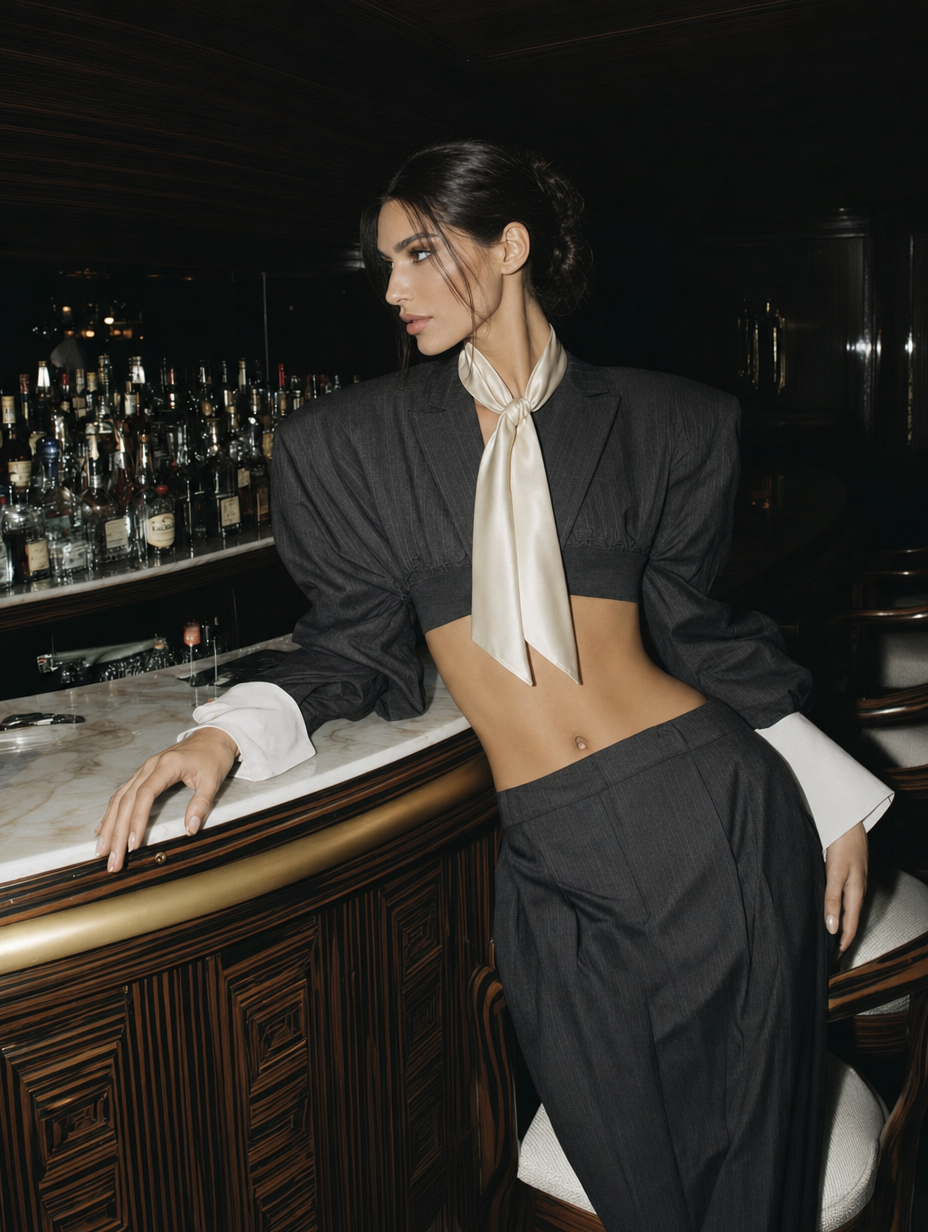
The portrait’s sophisticated restraint comes from “charcoal tailored coat,” “cream satin neck tie detail,” and the model’s “elegant side profile,” while “dramatic low-key lighting” keeps the gray, white, and brown palette moody rather than bright. The “glossy marble counter” and “warm amber highlights reflecting off the marble” add controlled luxury, and “backlit liquor bottles softly blurred” pushes them into atmospheric context instead of competing with the subject. “Sharp focus on the model” within the “cinematic composition” makes the full-body figure the visual anchor, while “subtle rim light along her cheek and coat” separates her dark silhouette from the interior.
FAQ
→How do I make the portrait feel brighter and more welcoming without losing the luxury-bar setting?
Replace “dramatic low-key lighting” with “bright diffused key lighting with soft window-like illumination,” and change “moody upscale interior” to “airy upscale cocktail lounge with polished marble and softly glowing pendant lights.” Keep “warm amber highlights reflecting off the marble” to preserve the brown-and-gold luxury accent.
→How do I make the model’s outfit and face more prominent than the bar?
Replace “portrait-full-body” and “cinematic composition” with “three-quarter fashion portrait, model centered from mid-thigh up,” and change “backlit liquor bottles softly blurred” to “strongly defocused bar background with indistinct amber bokeh.” Keep “sharp focus on the model” and strengthen it to “razor-sharp focus on her face, cream satin neck tie, and coat texture.”
→How do I create a consistent series of variations from this image?
Keep the fixed phrases “slim female fashion model,” “charcoal tailored coat,” “cream satin neck tie detail,” “loose low bun,” “elegant side profile,” and “warm luxury cinematic color grading.” For controlled variations, replace only “luxury bar” with settings such as “marble hotel elevator,” “dark art-deco restaurant,” or “private penthouse lounge,” and swap “side profile” for “direct editorial gaze” or “three-quarter profile” while retaining “dramatic low-key lighting” and “subtle rim light.”
Learn the technique behind this
- Why can't AI spell, and how do I get readable text in an image? — Older diffusion models had no character-level representation of text, so they produced letterform-shaped texture instead of words.
- How should a prompt be structured, and does word order matter? — A prompt that behaves predictably names one subject first, then what it is doing, then where, then the light, then the lens or medium, then the style.
- Which aspect ratio should I use, and how does it change the image? — Aspect ratio determines what the model composes, not how it's cropped afterwards.
Related prompts
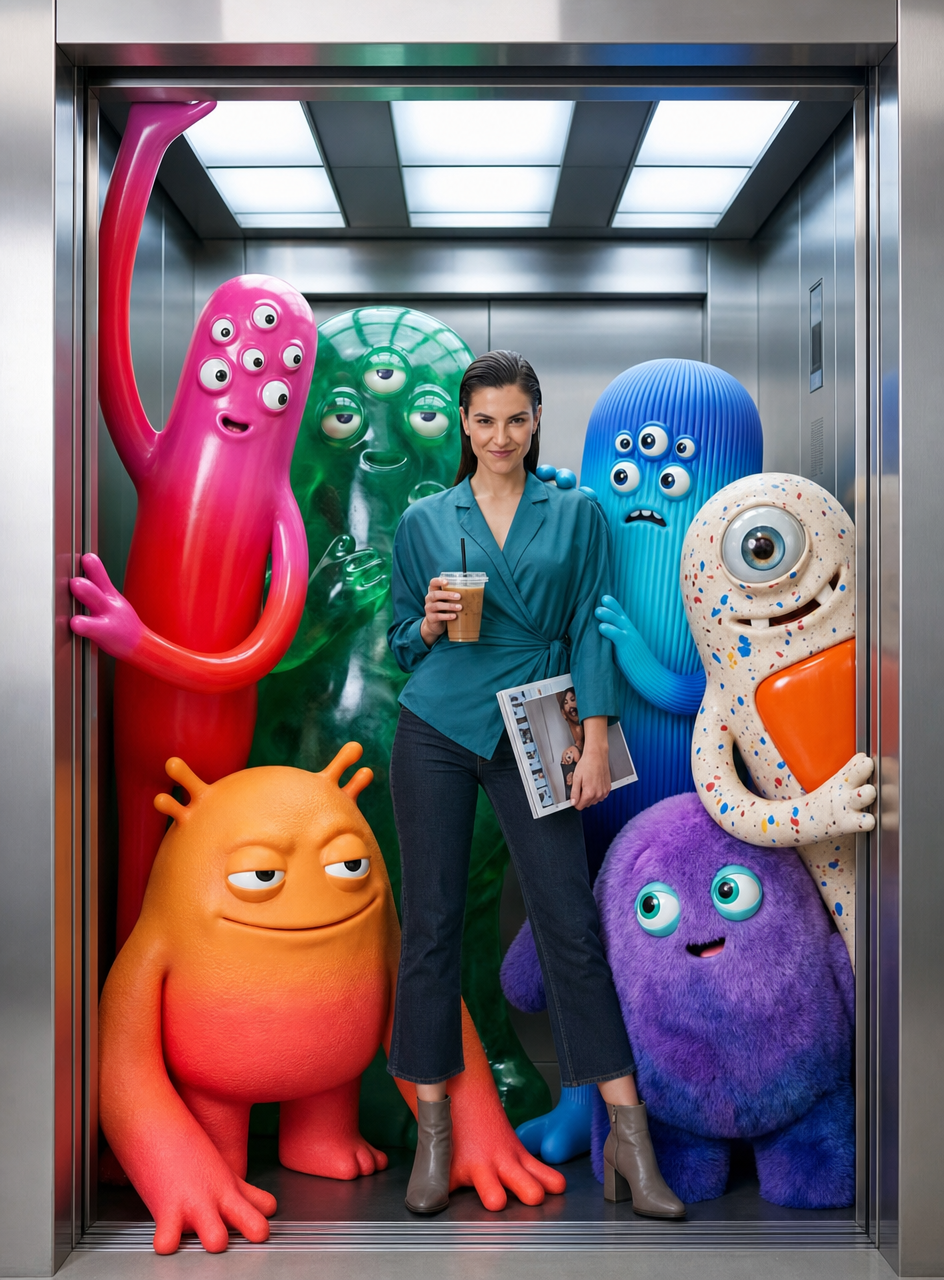
Teal fashion editorial in monster-filled lift
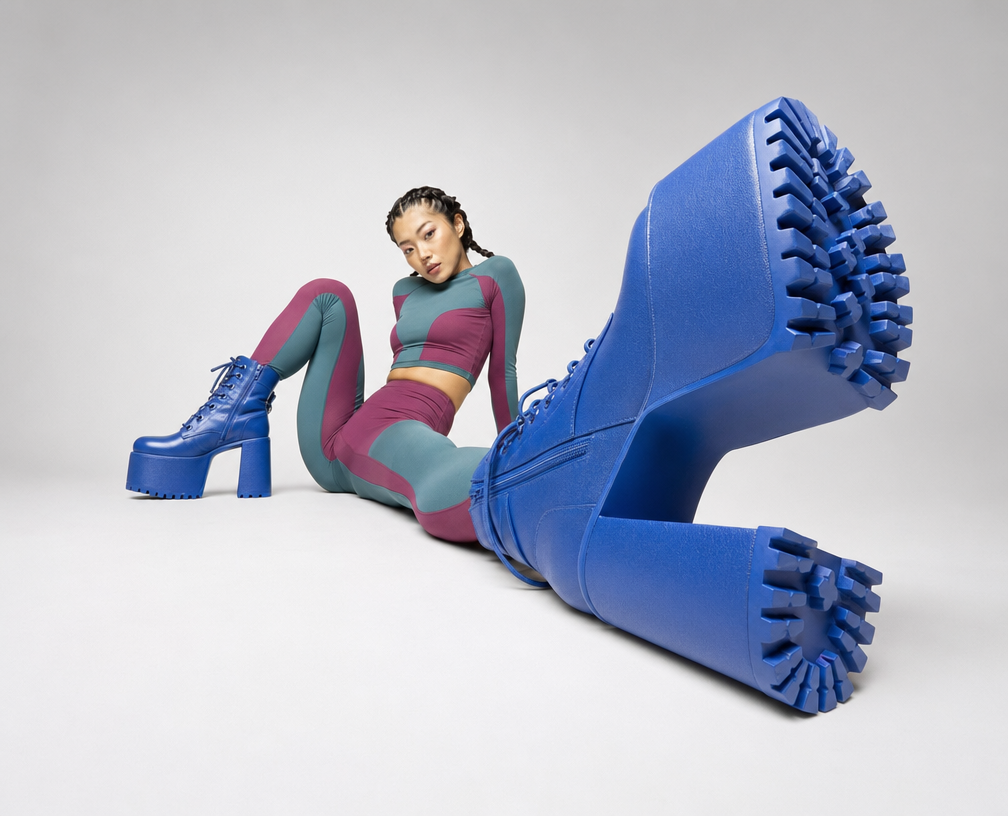
Cobalt Boots in Sleek Studio Edit
Silhouette Influencer by Sunlit Window
Sunlit editorial on striped beach towel