Why this works
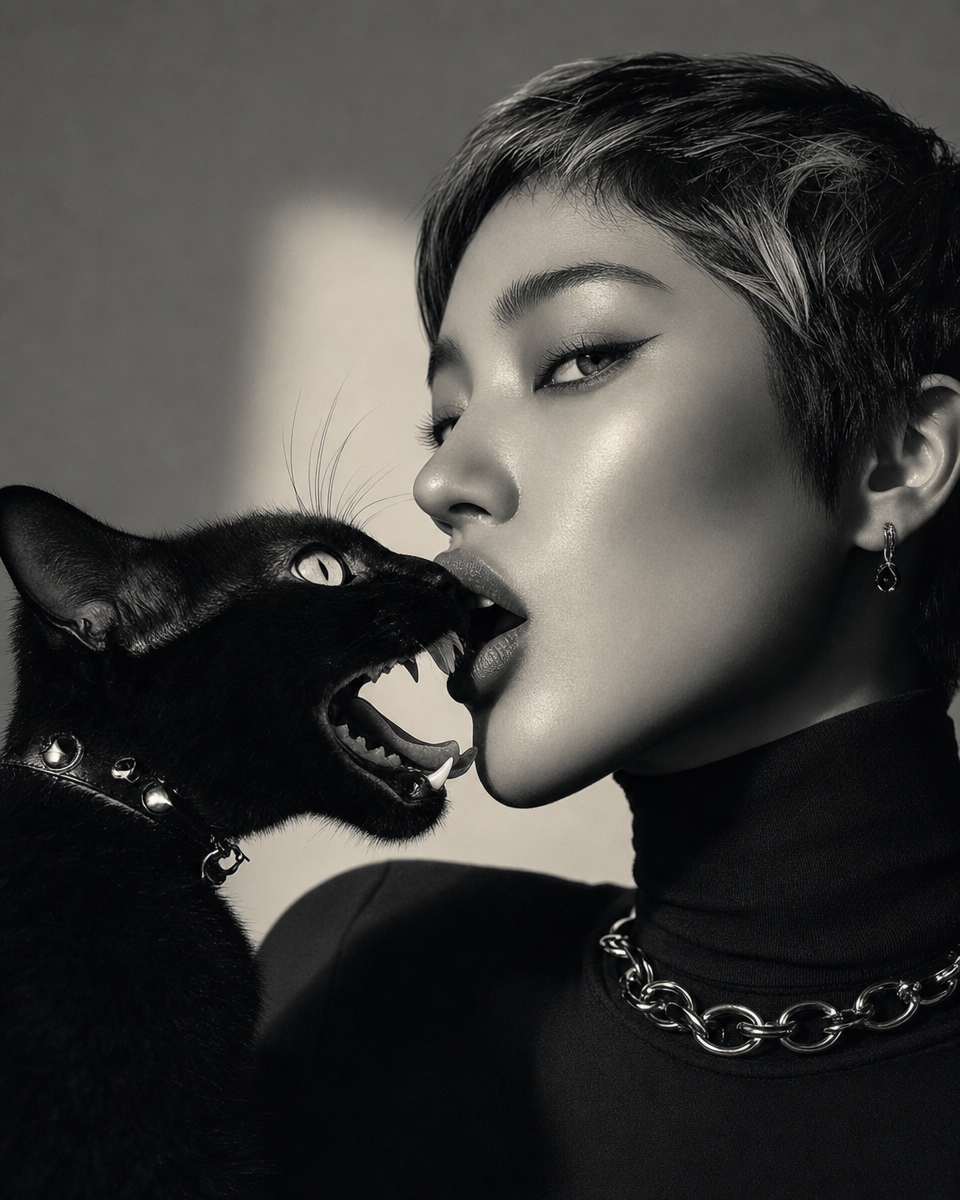
The tense mood comes from the specific combination of “cat hissing with bared fangs,” “dramatic studio lighting,” and “deep shadow falloff,” while “tight fashion portrait framing in side profile” compresses the woman and cat into a confrontational close-up. “Sleek silver-streaked pixie cut,” “fitted matte black turtleneck,” and the “dark minimal studio background” create a controlled gray-to-black palette, with “high-contrast black and white” preserving the stark editorial structure. The prompt’s “sharp fur and skin detail” keeps attention on the cat’s raised texture and the woman’s facial profile, while “selective color accents only in the woman’s and cat’s eyes” provides the sole visual interruption to the monochrome image.
FAQ
→How do I make the cat more prominent and threatening in the composition?
Replace “holding a black cat close to her face” with “the black cat occupying the foreground beside her face, head and bared fangs dominant in frame.” Change “tight fashion portrait framing in side profile” to “extreme close-up centered on the cat’s face, with the woman receding into partial profile,” and add “sharpest focus on the cat’s eyes, teeth, and fur.”
→How do I shift this from tense gothic drama to a colder, more restrained editorial mood?
Replace “moody, dramatic, edgy, tense” with “ austere, icy, controlled, quietly severe.” Change “open-mouth hiss and bared fangs” to “closed mouth, alert pale eyes, rigid stillness,” and replace “deeper rim light on both faces” with “thin cool rim light with soft, even frontal fill and restrained shadow falloff.”
→How do I build a consistent series of variations from this portrait?
Keep the fixed phrases “black-and-white gothic fashion editorial,” “sleek silver-streaked pixie cut,” “fitted matte black turtleneck,” and “selective color accents only in the woman’s and cat’s eyes.” For each variation, replace only “dark minimal studio background” with settings such as “crumbling monochrome chapel interior,” “rain-streaked black glass,” or “fog-filled brutalist corridor,” and swap “side profile” for “direct frontal gaze” or “three-quarter profile” while preserving the same dramatic rim light and deep shadow falloff.
Learn the technique behind this
- Why can't AI spell, and how do I get readable text in an image? — Older diffusion models had no character-level representation of text, so they produced letterform-shaped texture instead of words.
- Why does AI get hands and faces wrong, and how do I fix it? — Hands fail because they're small in frame, extremely variable in pose, and self-occluding — the model has less usable signal per pixel than for any other body part.
- How do I keep the same character across multiple images? — Text prompts alone won't hold a face across images — a description defines a type, not a person.
Related prompts
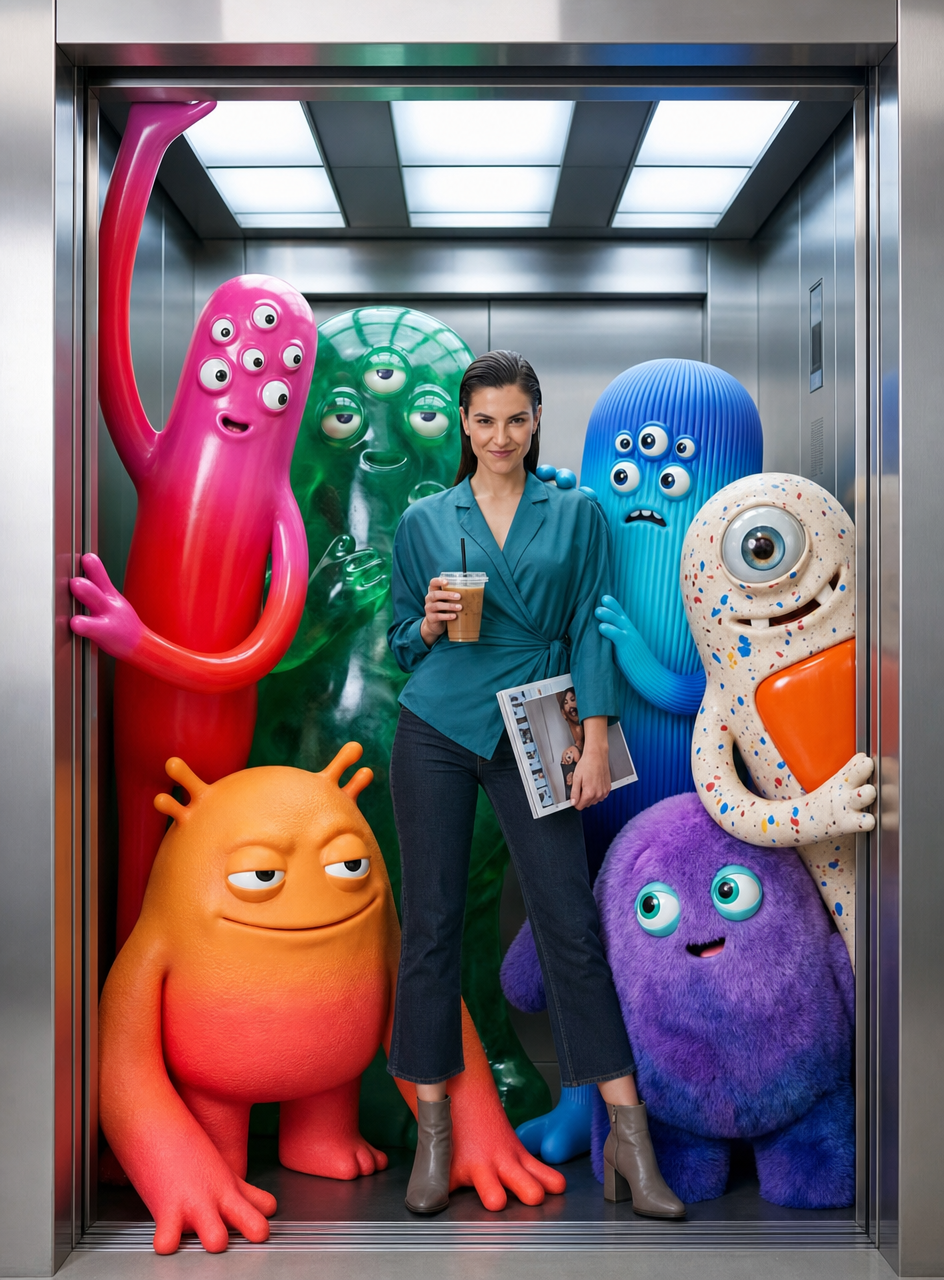
Teal fashion editorial in monster-filled lift
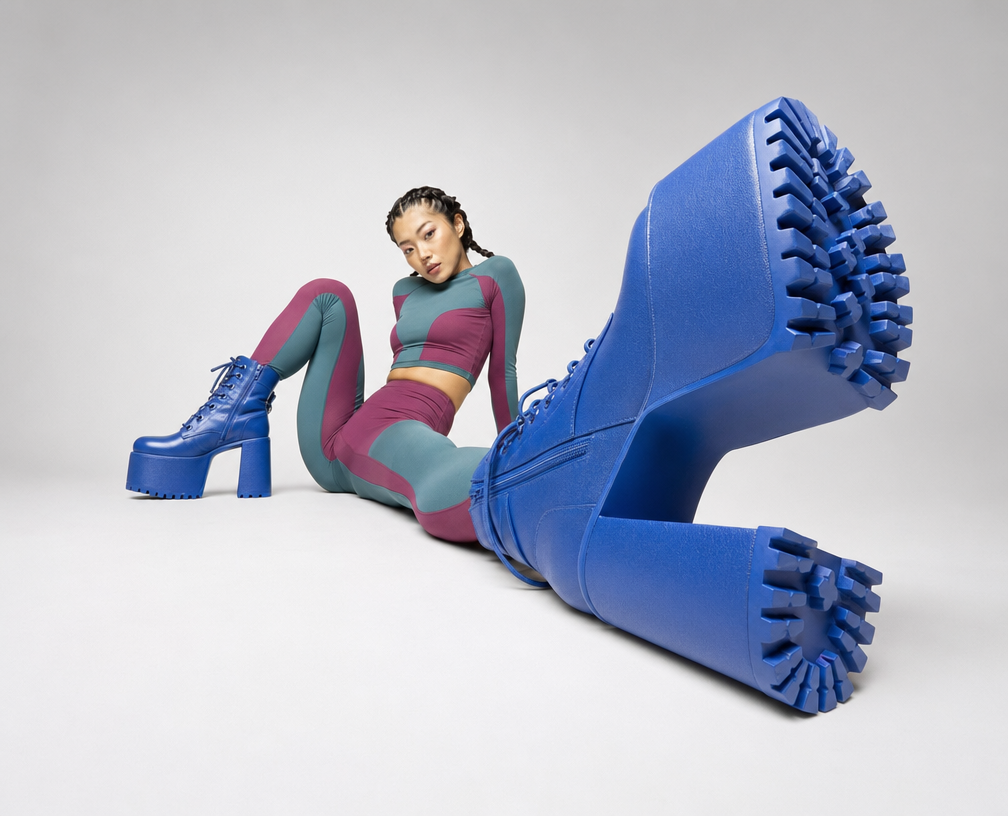
Cobalt Boots in Sleek Studio Edit
Silhouette Influencer by Sunlit Window

Sunlit editorial on striped beach towel