Why this works
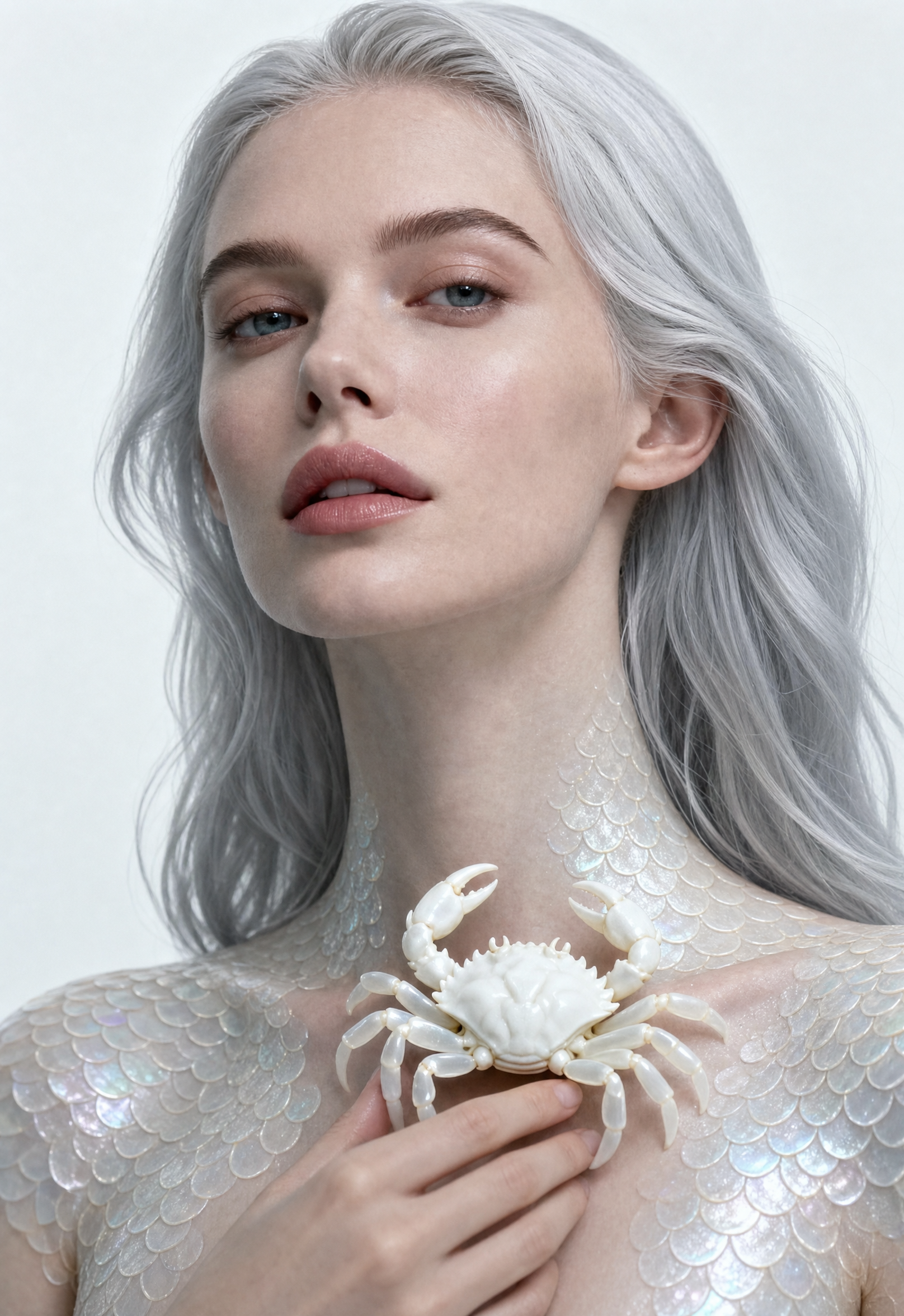
The close portrait framing comes from “fantasy fashion editorial portrait” and “posed gracefully toward camera,” keeping the face, collarbones, and throat-level crab ornament as the visual hierarchy. “Clean off-white background” and “soft high-key studio lighting” produce the pale beige-gray field and serene, low-contrast mood, while “long silver hair,” “porcelain skin,” and “iridescent scale-like textures” add restrained tonal variation without breaking the neutral palette. “Shallow depth of field” and “crisp focus on face and ornament” make those two details read sharply against the softened studio background.
FAQ
→How do I make the white crab ornament the main focal point?
Replace “crisp focus on face and ornament” with “crisp macro focus on the small white crab ornament, face softly secondary,” and change “She holds a small white crab ornament at the base of her throat” to “she presents a small white crab ornament prominently in the center foreground at the base of her throat.”
→How do I shift this from serene couture to a darker, more dramatic mood?
Replace “clean off-white background” with “deep charcoal studio background,” and replace “soft high-key studio lighting” with “dramatic low-key side lighting with controlled shadows and cool rim light.” Change “ethereal, serene, otherworldly” to “mysterious, gothic, otherworldly” while keeping the silver hair and iridescent scales for continuity.
→How do I turn this into a consistent series of related portraits?
Keep the fixed phrases “editorial beauty photography with shallow depth of field,” “crisp focus on face and ornament,” and “elegant surreal couture aesthetic,” then vary only the subject detail and setting. For example, replace “small white crab ornament” with “small pearl seahorse brooch,” and replace “clean off-white studio background” with “pale blue-gray studio background,” while preserving “long silver hair,” “porcelain skin,” and “iridescent scale-like textures” as recurring identifiers.
Learn the technique behind this
- Why can't AI spell, and how do I get readable text in an image? — Older diffusion models had no character-level representation of text, so they produced letterform-shaped texture instead of words.
- Why does AI get hands and faces wrong, and how do I fix it? — Hands fail because they're small in frame, extremely variable in pose, and self-occluding — the model has less usable signal per pixel than for any other body part.
- How do I keep the same character across multiple images? — Text prompts alone won't hold a face across images — a description defines a type, not a person.
Related prompts
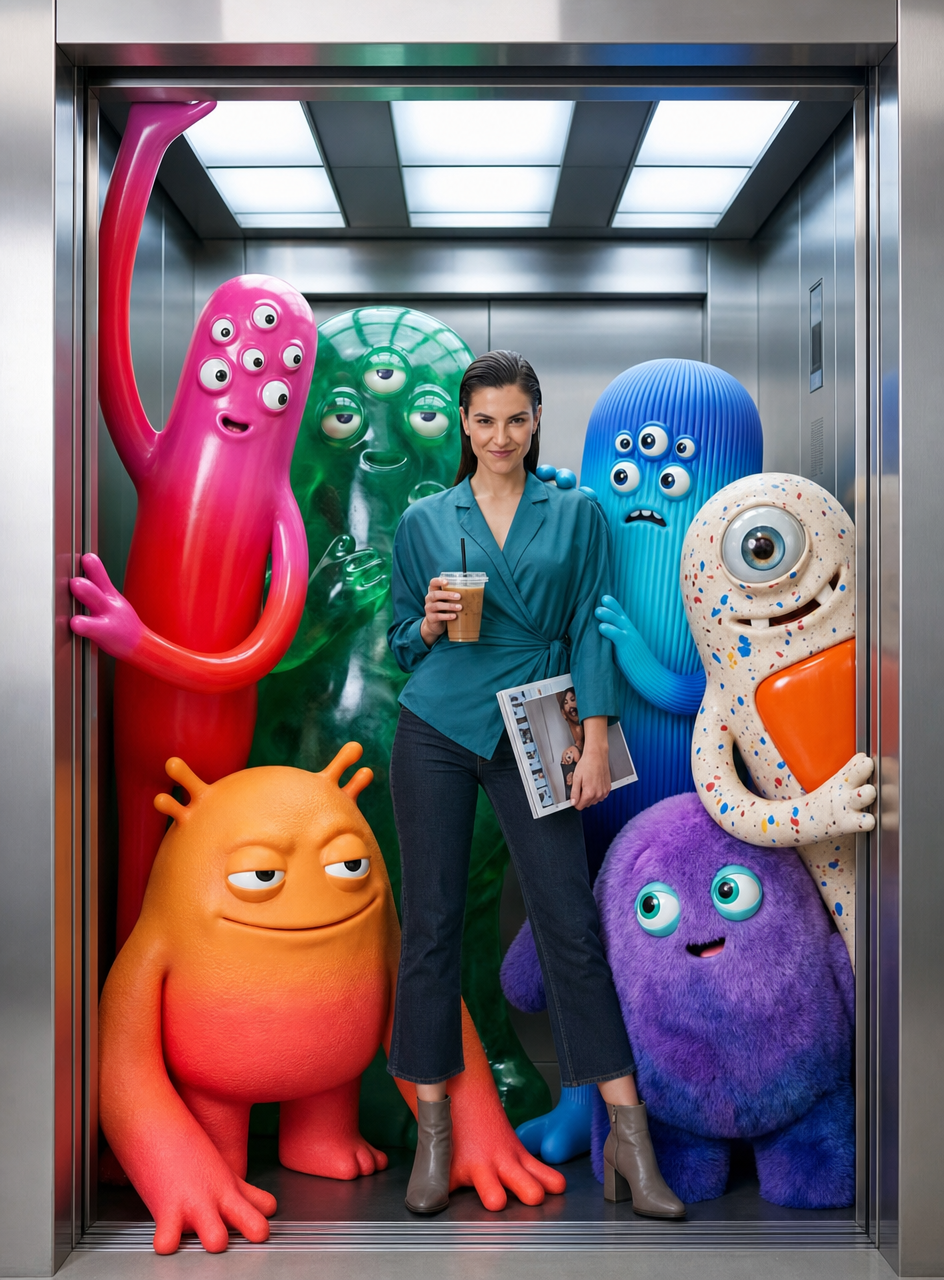
Teal fashion editorial in monster-filled lift
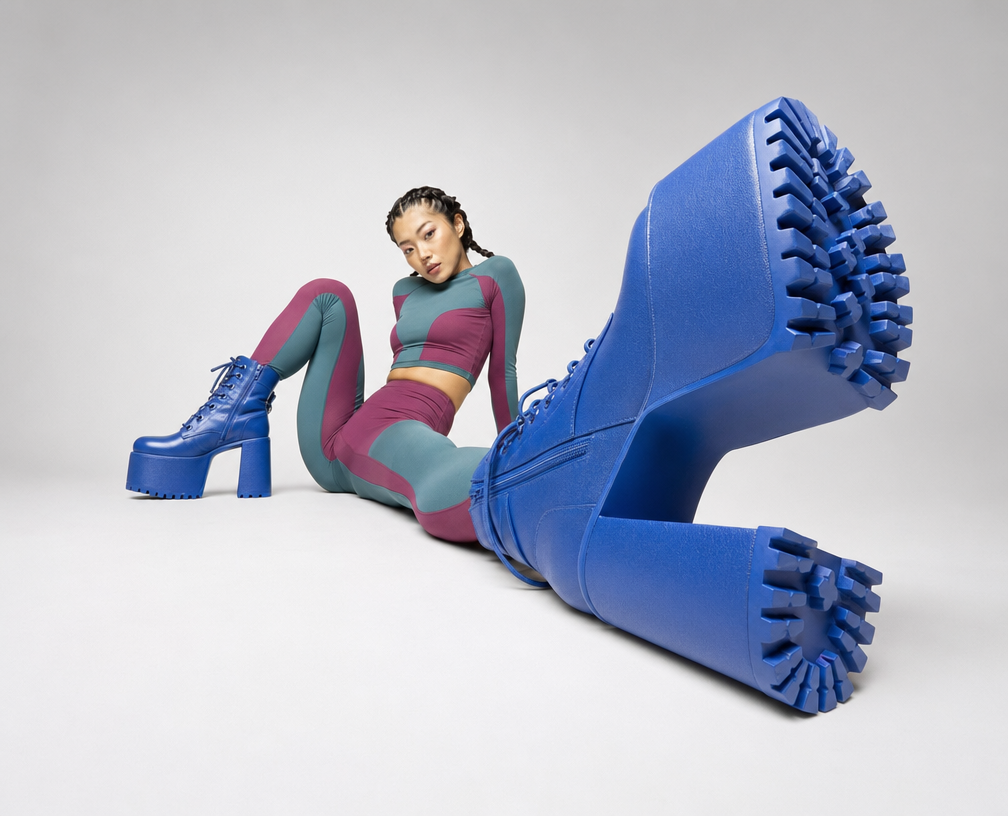
Cobalt Boots in Sleek Studio Edit
Silhouette Influencer by Sunlit Window
Sunlit editorial on striped beach towel