Why this works
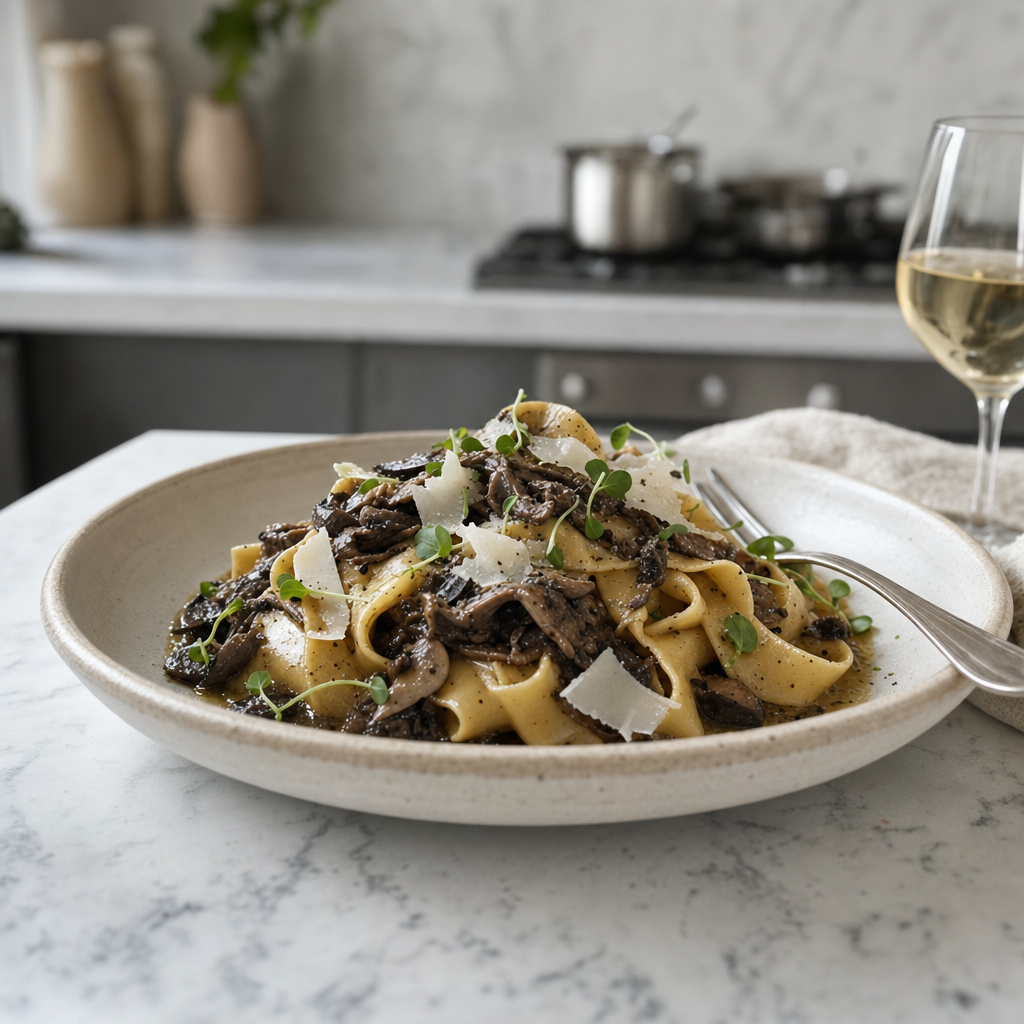
The dominant tan and brown palette comes directly from naming the ragù, pecorino, and truffle oil together, since these ingredients naturally cluster in the same warm neutral range and the prompt never introduces a clashing color to break that harmony. 'Shallow depth of field' combined with the marble countertop setting is what pushes the copper cookware and wine glass into a soft blur, letting the centered pasta nest hold focus without any explicit instruction to blur the background. 'Soft natural window lighting with cool silvery tones' is the load-bearing phrase for the mood tension here: it's what keeps the gray undertones in the highlights even while the food itself reads warm and rustic, producing that cozy-but-editorial contrast. 'Coiled' and 'generous nest' are doing the work of scale, telling the model to pile the pappardelle high enough to dominate the plate rather than lie flat.
FAQ
→How do I make the copper cookware and wine glass more prominent instead of just background blur?
Change 'shallow depth of field' to 'medium depth of field with background elements in soft focus' and move 'hanging copper cookware and a glass of white wine' earlier in the sentence, right after the setting description, so it reads as a co-subject rather than an afterthought.
→How do I shift this from warm and rustic to a cooler, more clinical editorial look?
Drop 'wild mushroom ragù' in favor of something lighter like 'lemon butter sauce' or 'white wine cream sauce', swap 'cream-colored ceramic plate' for 'matte white plate', and change 'cool silvery tones' to 'crisp cool-white studio lighting' to strip out the remaining warmth from the shadows.
→How would I turn this into a series with different pasta dishes on the same set?
Keep 'pale marble countertop', 'hanging copper cookware and a glass of white wine', and 'soft natural window lighting with cool silvery tones' fixed as your constants, then just swap the subject line, for example replacing 'pappardelle pasta nest with wild mushroom ragù' with 'saffron risotto with seared scallops' or 'squid ink linguine with garlic shrimp' to vary the dish while keeping the set and lighting identical across the series.
Learn the technique behind this
- Why can't AI spell, and how do I get readable text in an image? — Older diffusion models had no character-level representation of text, so they produced letterform-shaped texture instead of words.
- Do negative prompts work, and what should go in one? — Negative prompts work on models that support a separate negative conditioning channel — mainly Stable Diffusion and FLUX-family models.
- How should a prompt be structured, and does word order matter? — A prompt that behaves predictably names one subject first, then what it is doing, then where, then the light, then the lens or medium, then the style.
Related prompts
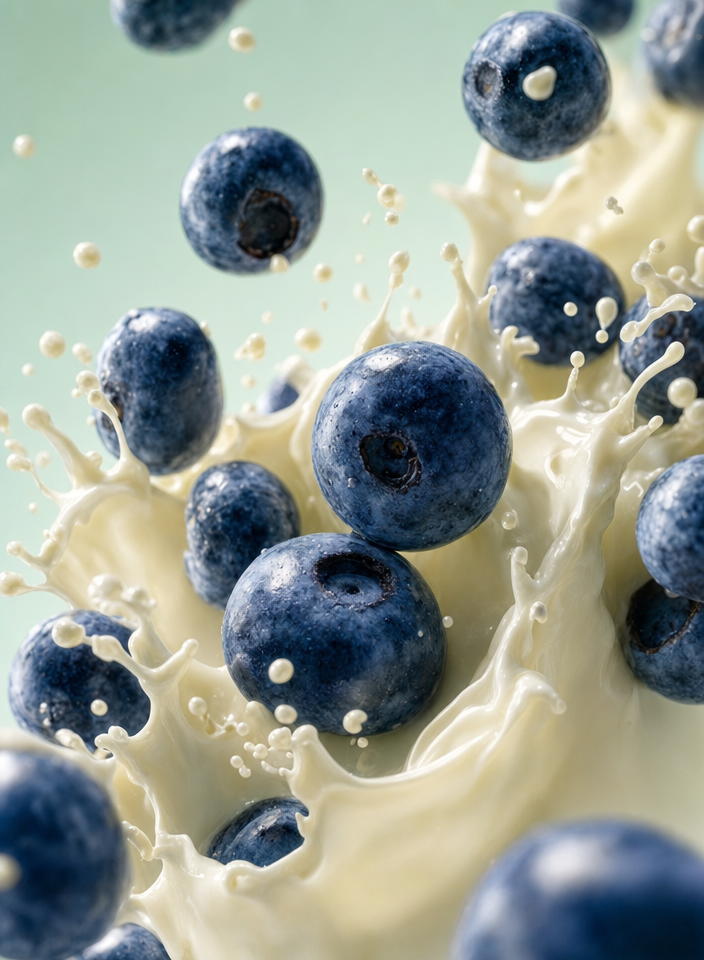
Blueberries Bursting Into Vanilla Cream
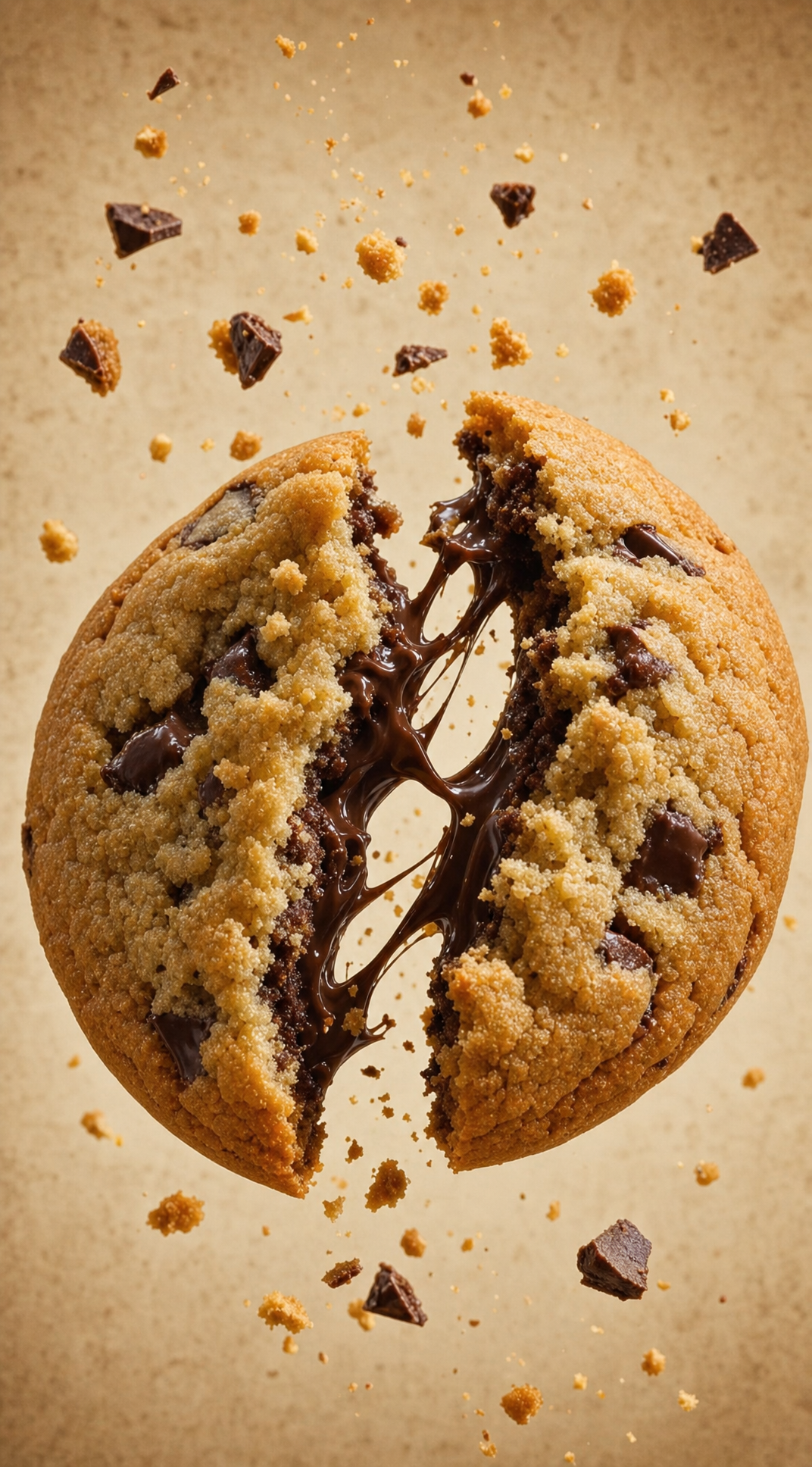
Chocolate Filled Cookie Splitting Midair With Dark Drip

Partially Peeled Banana on Blue
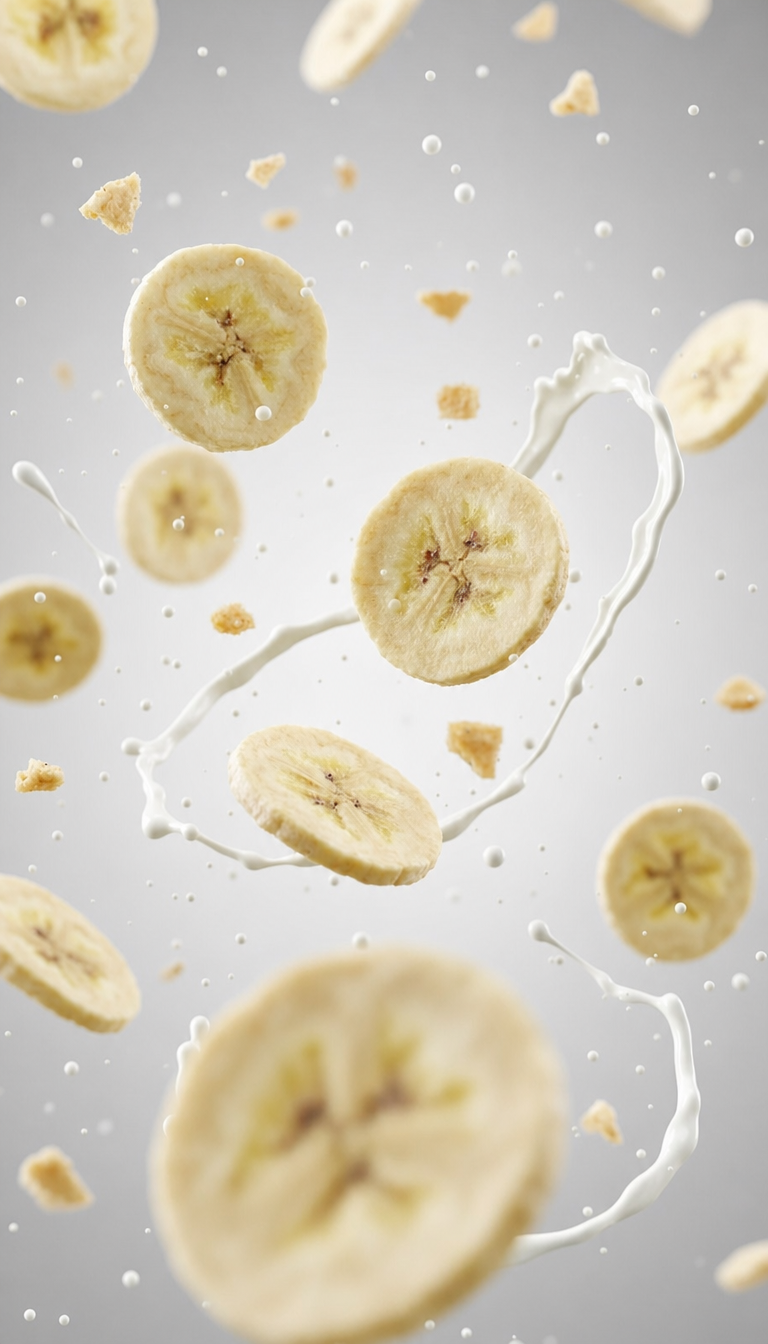
Banana slices in cool milk splash background