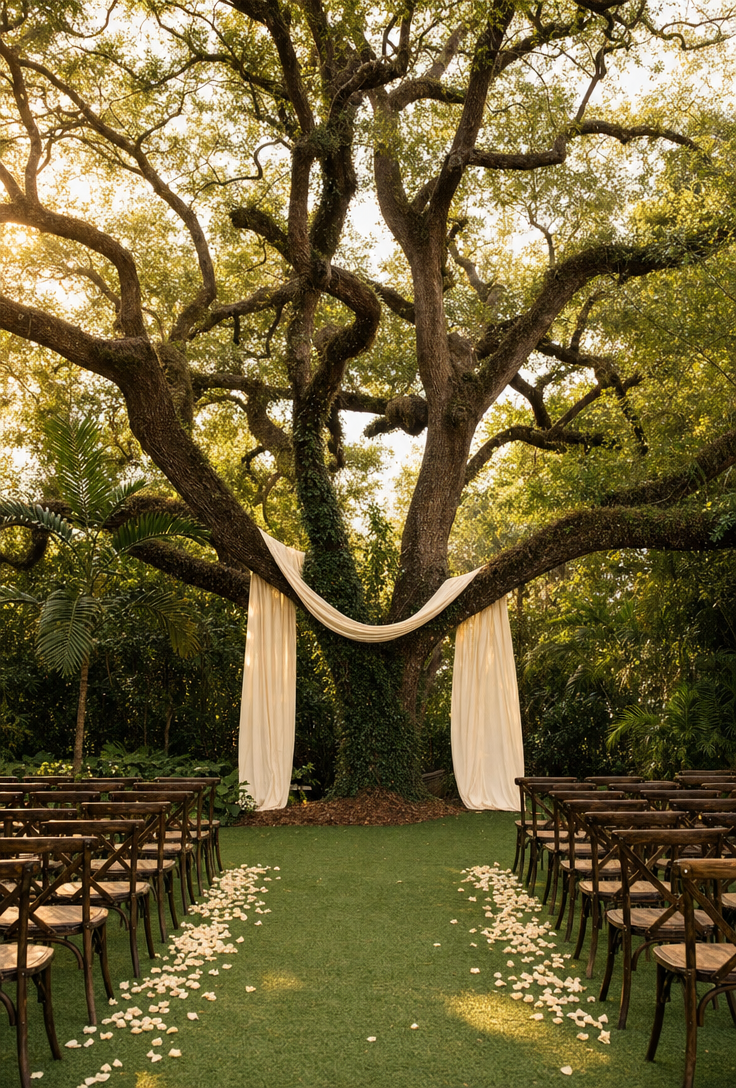
Why this works
The phrase “beneath a massive sprawling old tree” establishes a strong natural canopy and gives the wide-shot composition a clear architectural anchor. “Soft ivory fabric swags instead of white drapery” introduces beige highlights against the dominant brown chairs and trunk, while “warm late-afternoon natural daylight with a gentle golden tint” supplies the gold cast and serene romantic mood. “Rows of rustic dark-brown wooden chairs lining both sides of a green aisle” creates bilateral framing that guides attention toward the ceremony, while “shallow depth of field” keeps the intimate event-photography feel despite the broad view.
FAQ
→How do I make the ceremony altar or couple more central and prominent?
Replace “wide-shot” and “intimate low-to-mid framing” with “medium-wide centered shot focused on the ceremony altar and couple,” and add “the couple occupies the central focal point beneath the tree.” Keep “rows of rustic dark-brown wooden chairs lining both sides” to preserve the aisle’s leading lines, but reduce background detail with “softly blurred tropical garden.”
→How do I change the romantic golden mood into a brighter, airy daytime look?
Replace “warm late-afternoon natural daylight with a gentle golden tint” with “clear bright morning daylight with soft neutral-white illumination,” and change “serene, elegant, romantic” to “fresh, joyful, airy.” Replace “beige” emphasis from the ivory swags with “crisp ivory fabric with subtle pale-blue accents” if you want cooler highlights while retaining the tree and garden setting.
→How do I create a coordinated series of wedding variations from this prompt?
Keep the fixed phrases “photorealistic event photography,” “realistic fabric and foliage textures,” and “natural color grading,” then swap only the setting and ceremony anchor: replace “massive sprawling old tree” with “weathered stone garden arch,” “tropical gardens with hints of palm fronds” with “formal rose garden,” and “green aisle” with “cream gravel aisle.” For a second variation, retain the same composition and replace the palette cues “dark-brown,” “ivory,” and “golden tint” with “charcoal,” “blush,” and “soft overcast daylight.”
Learn the technique behind this
- Why can't AI spell, and how do I get readable text in an image? — Older diffusion models had no character-level representation of text, so they produced letterform-shaped texture instead of words.
- How should a prompt be structured, and does word order matter? — A prompt that behaves predictably names one subject first, then what it is doing, then where, then the light, then the lens or medium, then the style.
- Do negative prompts work, and what should go in one? — Negative prompts work on models that support a separate negative conditioning channel — mainly Stable Diffusion and FLUX-family models.
Related prompts
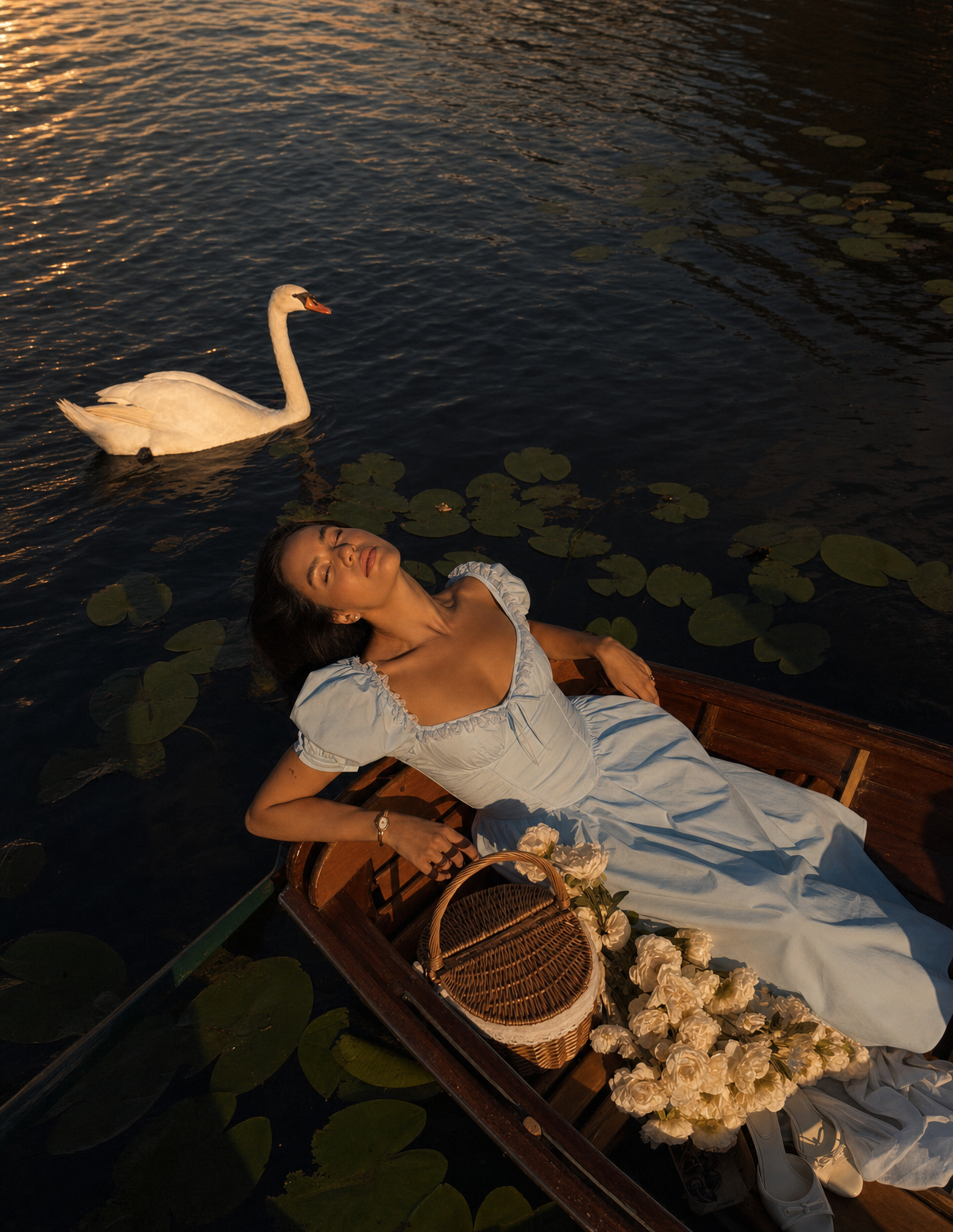
Woman in pale blue dress in lily boat

Woman and Man in Intimate Studio Portrait
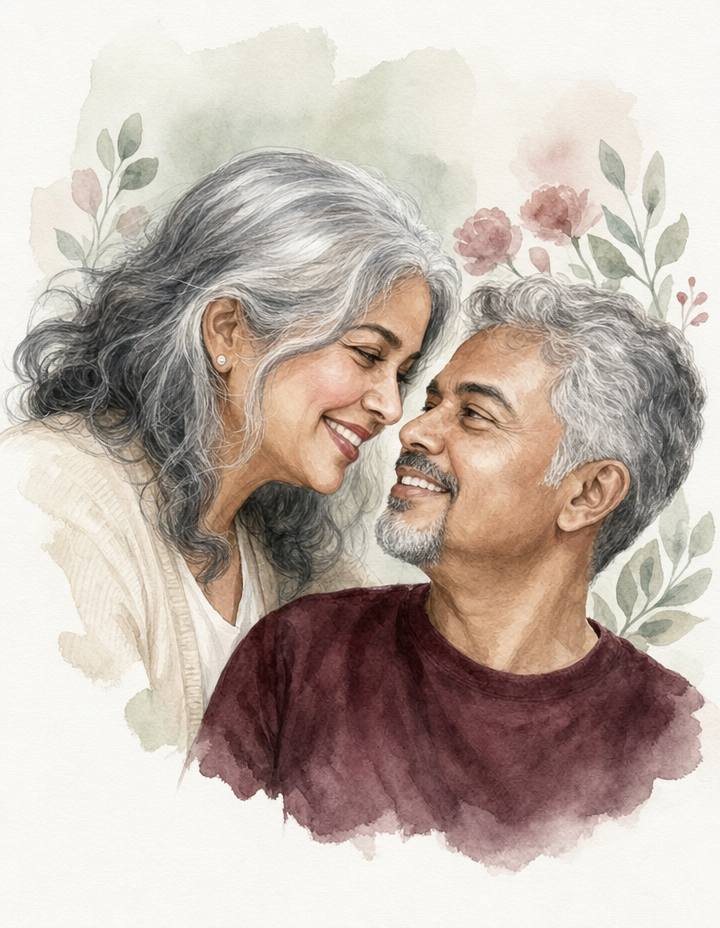
Older Couple in Tender Watercolor Embrace
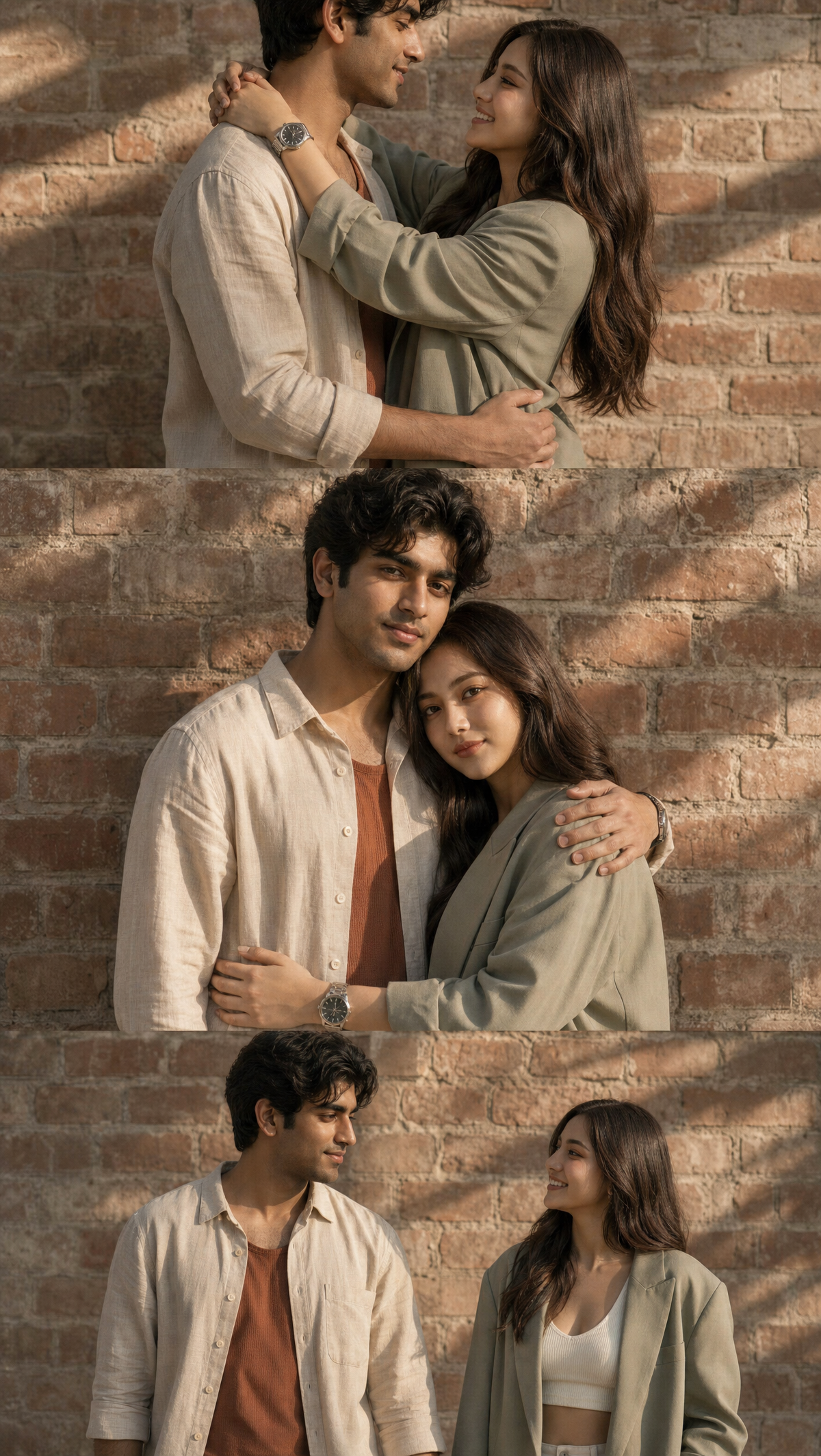
South Asian Couple in Sage and Cream