Why this works
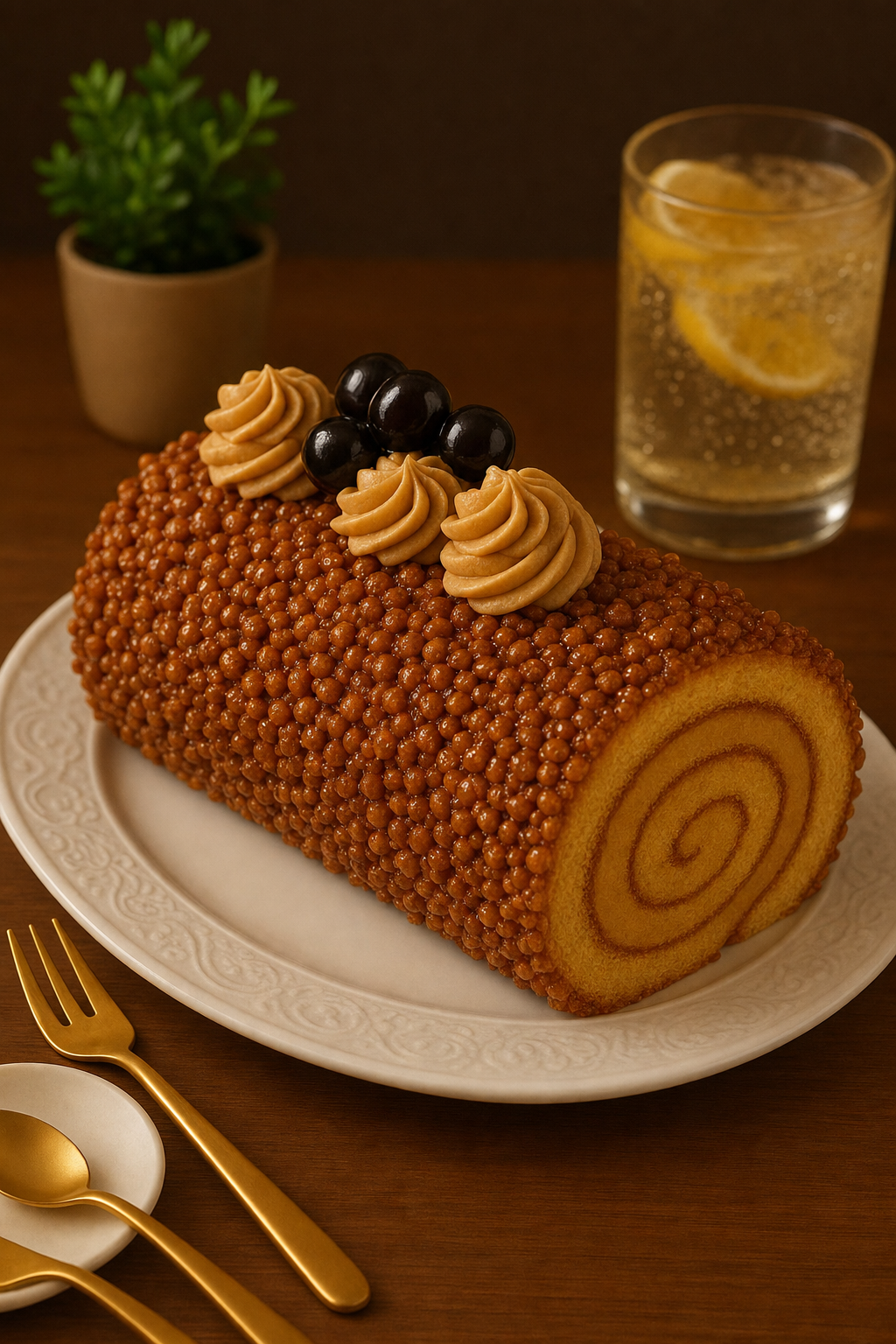
The centered close framing makes the rolled cake log the clear anchor, while “shallow depth of field” and “background softly blurred” push the plant and citrus drink into supporting roles. “Deep amber, toffee-colored crispy crunch pearls,” “rich caramel brown and golden highlights,” and “gold cutlery” build a tightly coordinated beige-orange-gold palette against the dark walnut tabletop, with glossy black cherries supplying sharp contrast. “Warm cozy ambient lighting” and “natural surface reflections” give the photorealistic styling a welcoming, polished finish without losing the tactile crunch of the coating.
FAQ
→How do I make the cream rosettes and cherries more prominent?
Replace “three piped cream rosettes and a small cluster of glossy black cherries” with “five large piped cream rosettes and a generous cluster of glossy black cherries arranged prominently across the cake,” and change “centered” close framing to “tight close-up framing focused on the rosettes and cherries.” Keep “shallow depth of field,” but specify that these toppings remain in sharp focus.
→How do I change the warm luxury mood into a cool, modern dessert scene?
Replace “Warm cozy ambient lighting” with “cool diffused daylight with crisp soft shadows,” and replace “rich caramel brown and golden highlights” with “ivory, slate blue, and silver highlights.” Change “gold cutlery” to “brushed stainless-steel cutlery” and “dark walnut tabletop” to “pale gray stone tabletop” for a cleaner contemporary setting.
→How do I create a coordinated series with different cake flavors?
Keep the structure “Photorealistic luxury dessert photography” and the setting details, then replace “deep amber, toffee-colored crispy crunch pearls” with a controlled flavor variation such as “pale pistachio-green crumb coating” or “ruby-red raspberry glaze.” Match the toppings to each version, for example replacing “glossy black cherries” with “fresh raspberries and pistachio pieces,” while retaining “white round plate,” “centered” composition, and “shallow depth of field” for visual consistency.
Learn the technique behind this
- Why can't AI spell, and how do I get readable text in an image? — Older diffusion models had no character-level representation of text, so they produced letterform-shaped texture instead of words.
- Why does the model ignore parts of my prompt? — Ignored instructions are almost always conflicts, counts, or spatial relationships — three things current models handle badly — rather than the model failing to read you.
- Do negative prompts work, and what should go in one? — Negative prompts work on models that support a separate negative conditioning channel — mainly Stable Diffusion and FLUX-family models.
Related prompts
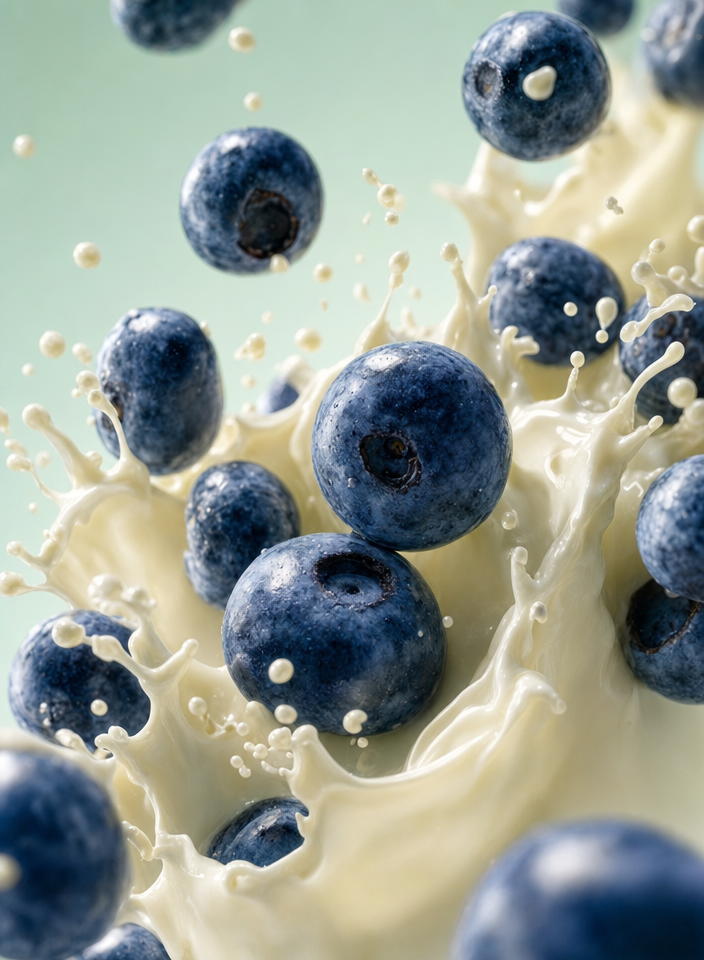
Blueberries Bursting Into Vanilla Cream

Chocolate Filled Cookie Splitting Midair With Dark Drip

Partially Peeled Banana on Blue
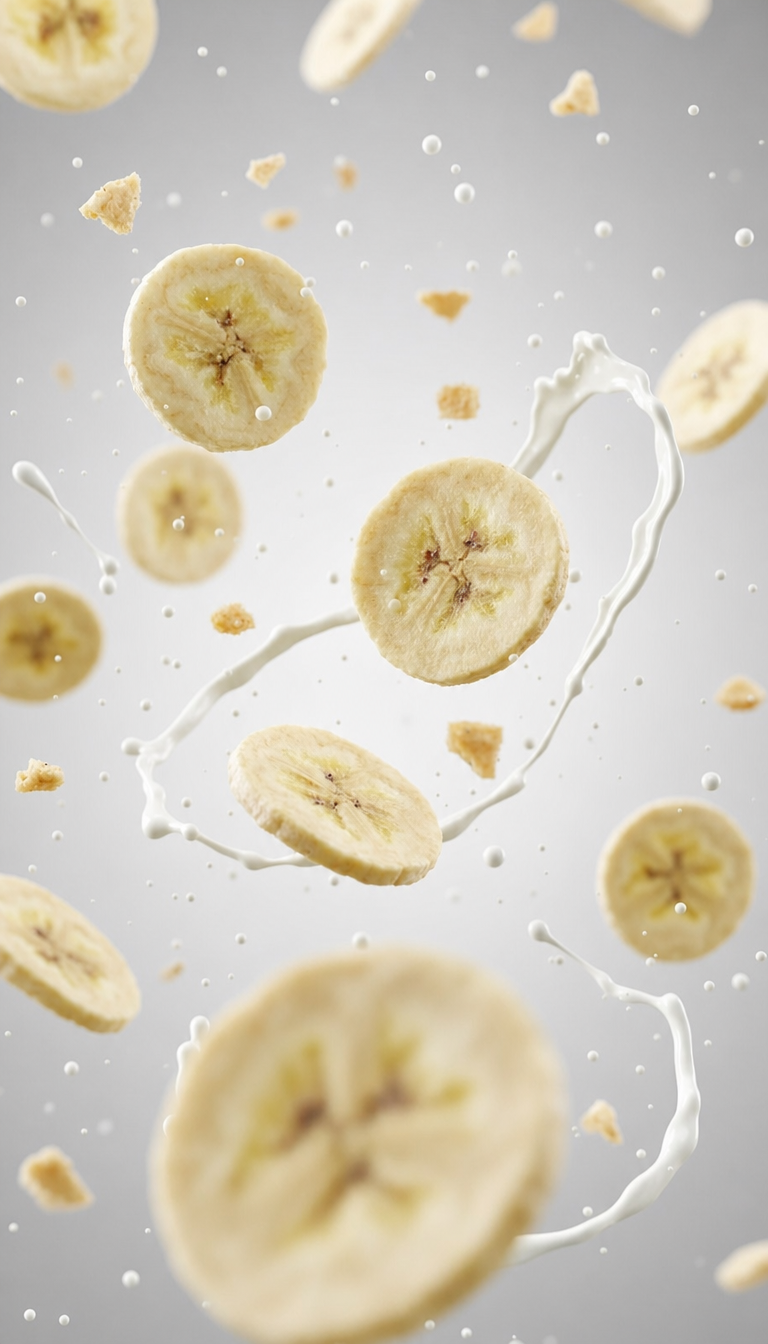
Banana slices in cool milk splash background