Why this works
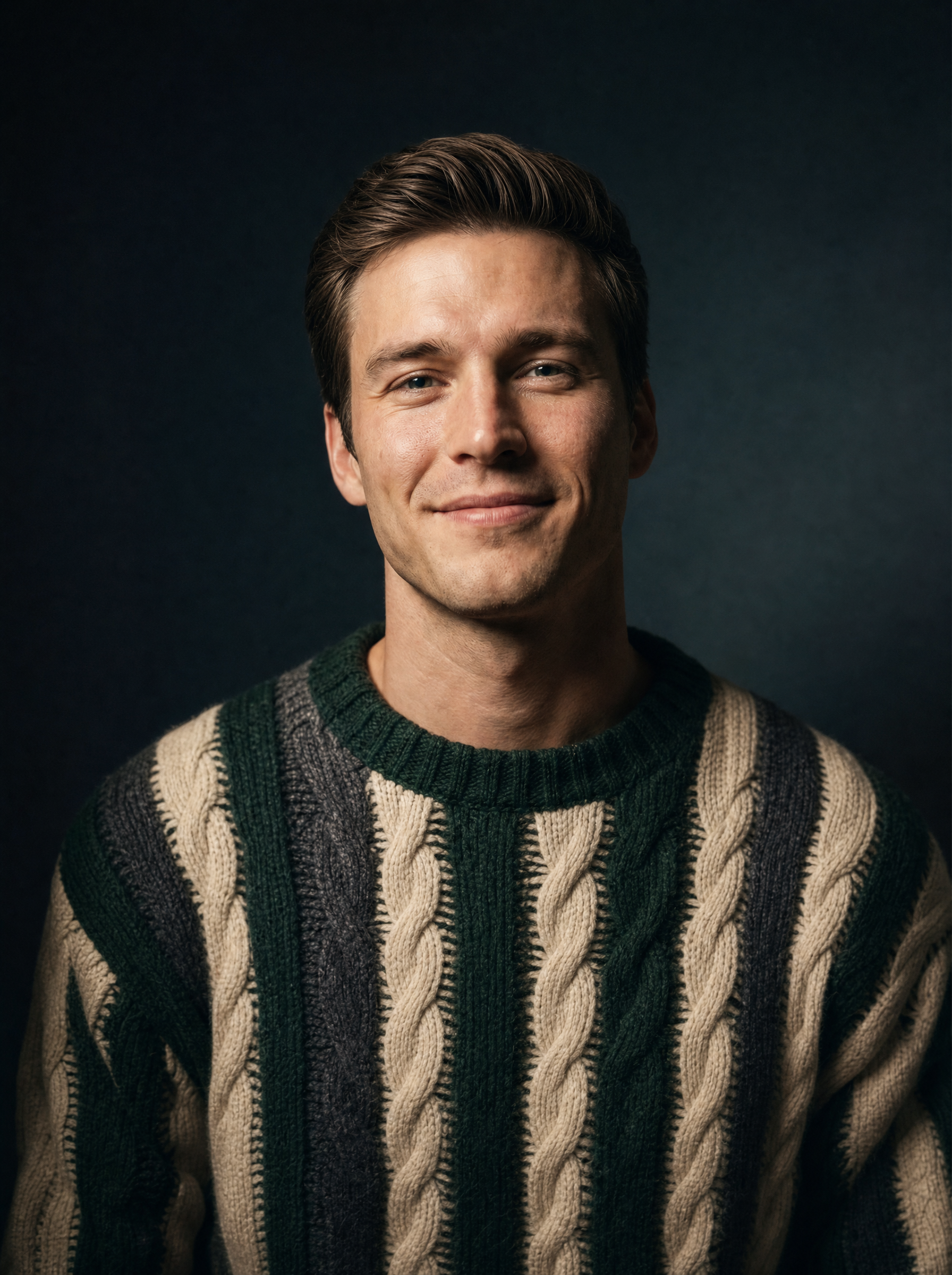
The “centered composition” and “young man” keep the portrait direct, while “crisp facial detail and realistic skin pores” make the face the visual anchor despite the portrait-full-body framing. The dark teal-to-ink gradient, “subtle vignette,” and forest green, cream, and charcoal sweater create a restrained beige-green-black palette; “soft, directional studio lighting from the upper-left” adds gentle sculpted shadows without disrupting the calm relaxed slight smile. “Clean minimal backdrop” and “shallow depth of field” remove distractions and give the image its editorial fashion-photography finish.
FAQ
→How do I make the portrait feel more dramatic and less relaxed?
Replace “calm relaxed slight smile” with “serious, intense expression with a controlled gaze,” and change “soft, directional studio lighting from the upper-left” to “hard directional chiaroscuro lighting from the side with deep shadows.” Replace the “dark teal-to-ink gradient” with “near-black textured backdrop” for stronger tonal contrast.
→How do I make the sweater more visually central?
Replace “crisp facial detail and realistic skin pores” with “high-detail focus on the chunky cable-knit texture,” and change “portrait-full-body” to “waist-up fashion portrait.” Keep “forest green, cream, and charcoal” but add “sweater prominently filling the lower half of the frame” so the garment occupies more of the composition.
→How do I build a series of variations while keeping this visual identity?
Keep “editorial fashion photography,” “centered composition,” “dark teal-to-ink gradient background,” and “soft, directional studio lighting from the upper-left” unchanged. Vary only “chunky cable-knit sweater in forest green, cream, and charcoal” with replacements such as “structured charcoal wool coat,” “cream ribbed turtleneck,” or “forest green velvet jacket,” and swap “calm relaxed slight smile” for expressions such as “thoughtful neutral gaze” or “confident subtle smile.”
Learn the technique behind this
- Why can't AI spell, and how do I get readable text in an image? — Older diffusion models had no character-level representation of text, so they produced letterform-shaped texture instead of words.
- How should a prompt be structured, and does word order matter? — A prompt that behaves predictably names one subject first, then what it is doing, then where, then the light, then the lens or medium, then the style.
- Which aspect ratio should I use, and how does it change the image? — Aspect ratio determines what the model composes, not how it's cropped afterwards.
Related prompts
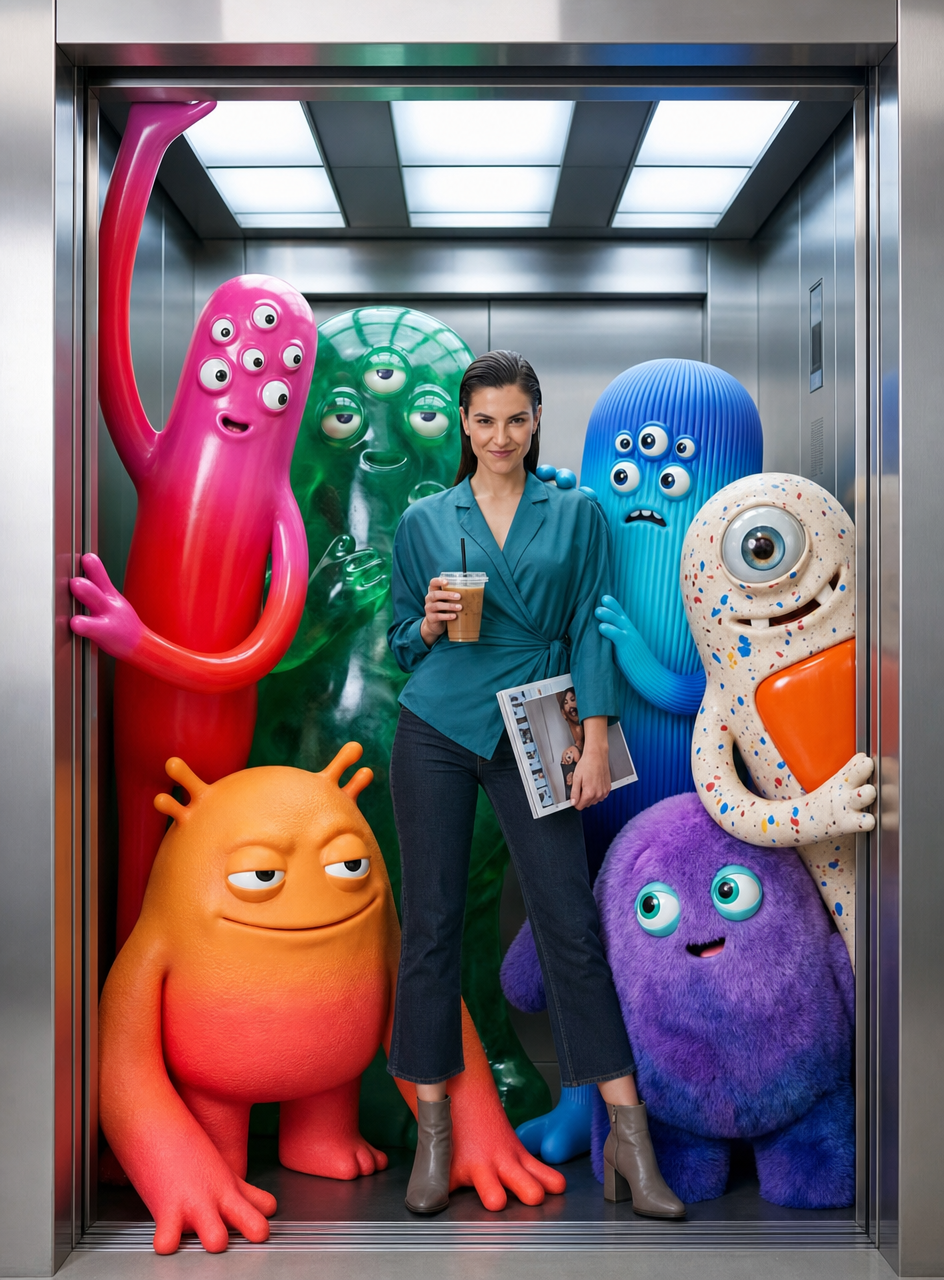
Teal fashion editorial in monster-filled lift
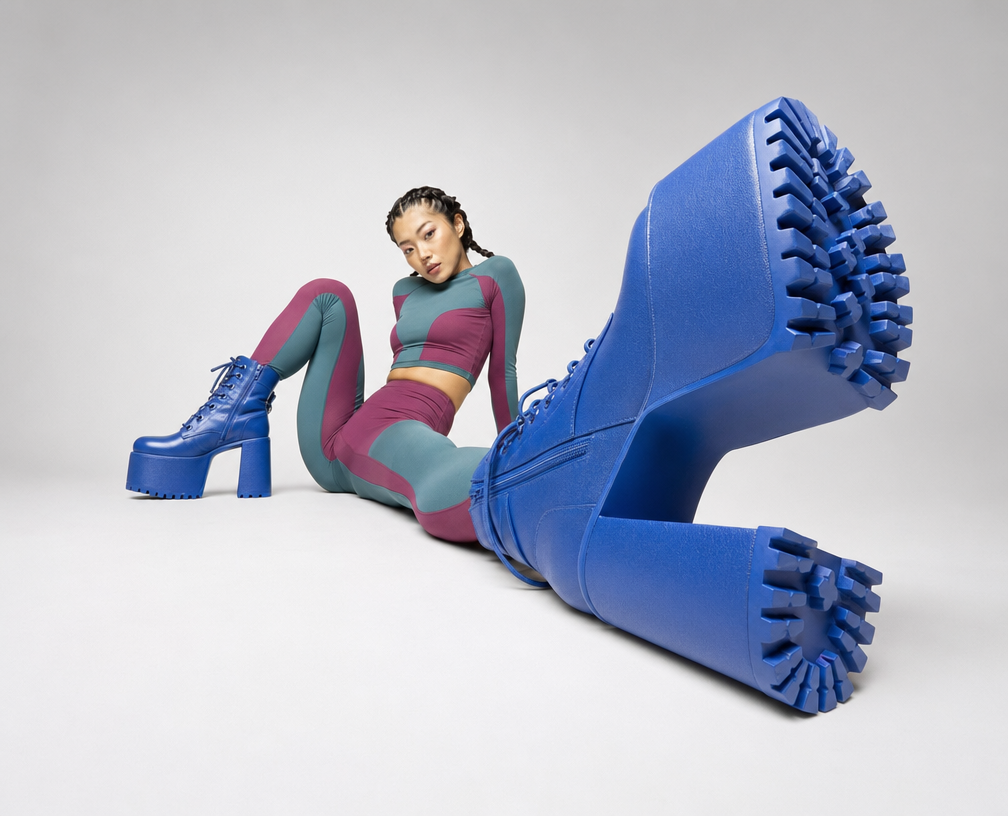
Cobalt Boots in Sleek Studio Edit
Silhouette Influencer by Sunlit Window
Sunlit editorial on striped beach towel