Why this works
“Multiple close-up portrait frames” creates the overhead-flatlay collage structure, while “clean negative-space white page background” keeps the gray-and-black palette restrained and gives each face room to read. “Soft, intimate poses” and “high-contrast monochrome lighting emphasizing natural skin texture” balance contemplative mood with crisp facial detail; “subtle film-grain realism” adds tactile photographic texture without disrupting the minimal fashion-magazine finish.
FAQ
→How do I make the woman’s face the clear focal point instead of giving every collage panel equal weight?
Replace “multiple close-up portrait frames of her face and upper torso in soft, intimate poses” with “one dominant extreme close-up portrait of her face occupying most of the page, with two small secondary detail panels.” Keep “crisp facial detail,” and add “sharpest focus on the eyes and lips” to direct attention to the main frame.
→How do I shift this from contemplative elegance to a darker, more dramatic editorial mood?
Replace “soft, intimate poses” with “direct, self-possessed poses with an intense gaze,” and change “clean negative-space white page background” to “deep charcoal page background with narrow areas of white margin.” Replace “soft, high-contrast monochrome lighting” with “hard side-lighting producing sculpted shadows across the face” for stronger tonal drama.
→How do I build a coordinated series of variations from this prompt?
Keep “black-and-white editorial fashion photography,” “collage layout with multiple portrait frames,” and “subtle film-grain texture” unchanged as the series anchors. Swap “long red hair styled in loose waves” for recurring styling variations such as “sleek blunt bob,” “short textured pixie cut,” or “long hair pulled into a low knot,” and replace “tailored dark blazer layered over a high-neck blouse” with consistent wardrobe sets such as “structured white suit” or “minimal sleeveless black dress.”
Learn the technique behind this
- Why can't AI spell, and how do I get readable text in an image? — Older diffusion models had no character-level representation of text, so they produced letterform-shaped texture instead of words.
- Why does AI get hands and faces wrong, and how do I fix it? — Hands fail because they're small in frame, extremely variable in pose, and self-occluding — the model has less usable signal per pixel than for any other body part.
- How do I keep the same character across multiple images? — Text prompts alone won't hold a face across images — a description defines a type, not a person.
Related prompts
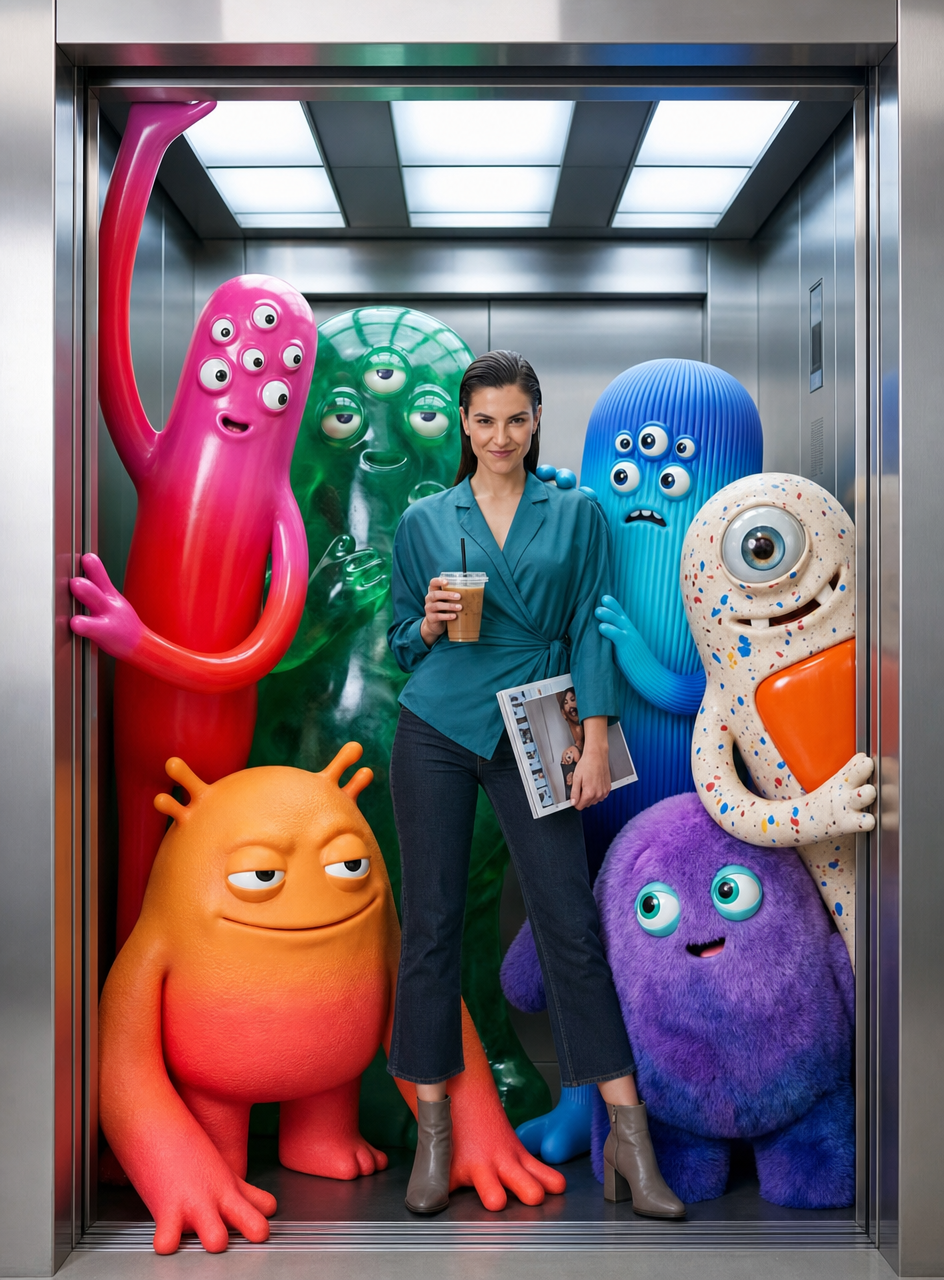
Teal fashion editorial in monster-filled lift
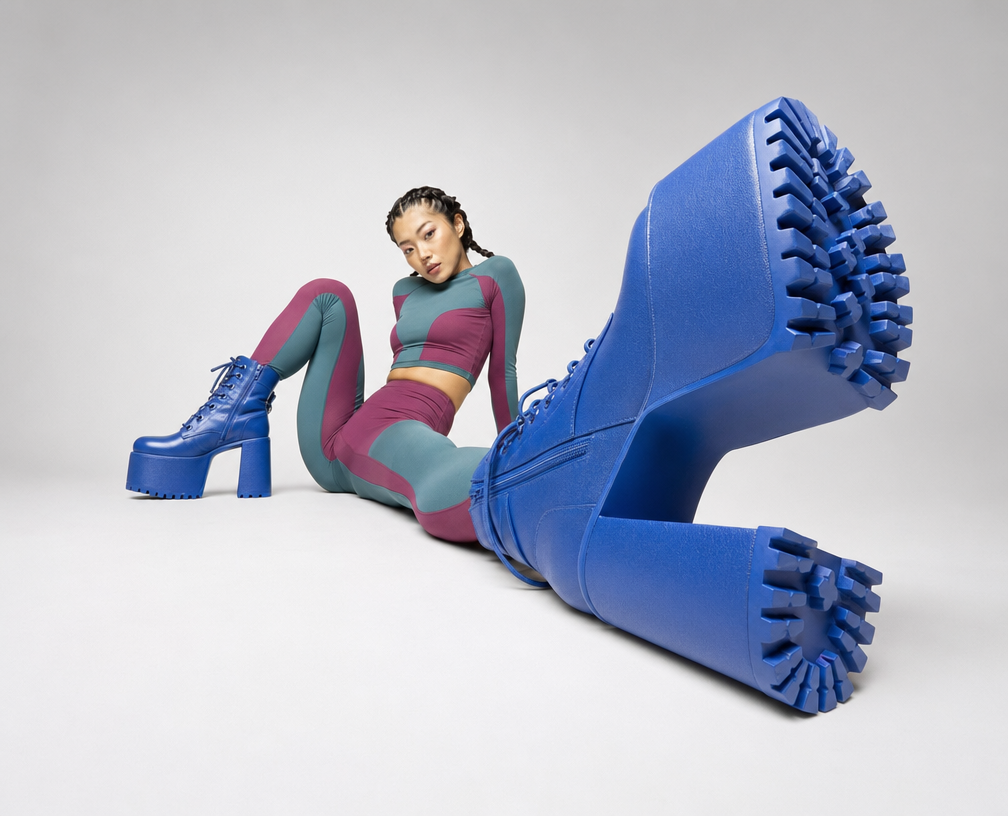
Cobalt Boots in Sleek Studio Edit

Silhouette Influencer by Sunlit Window

Sunlit editorial on striped beach towel