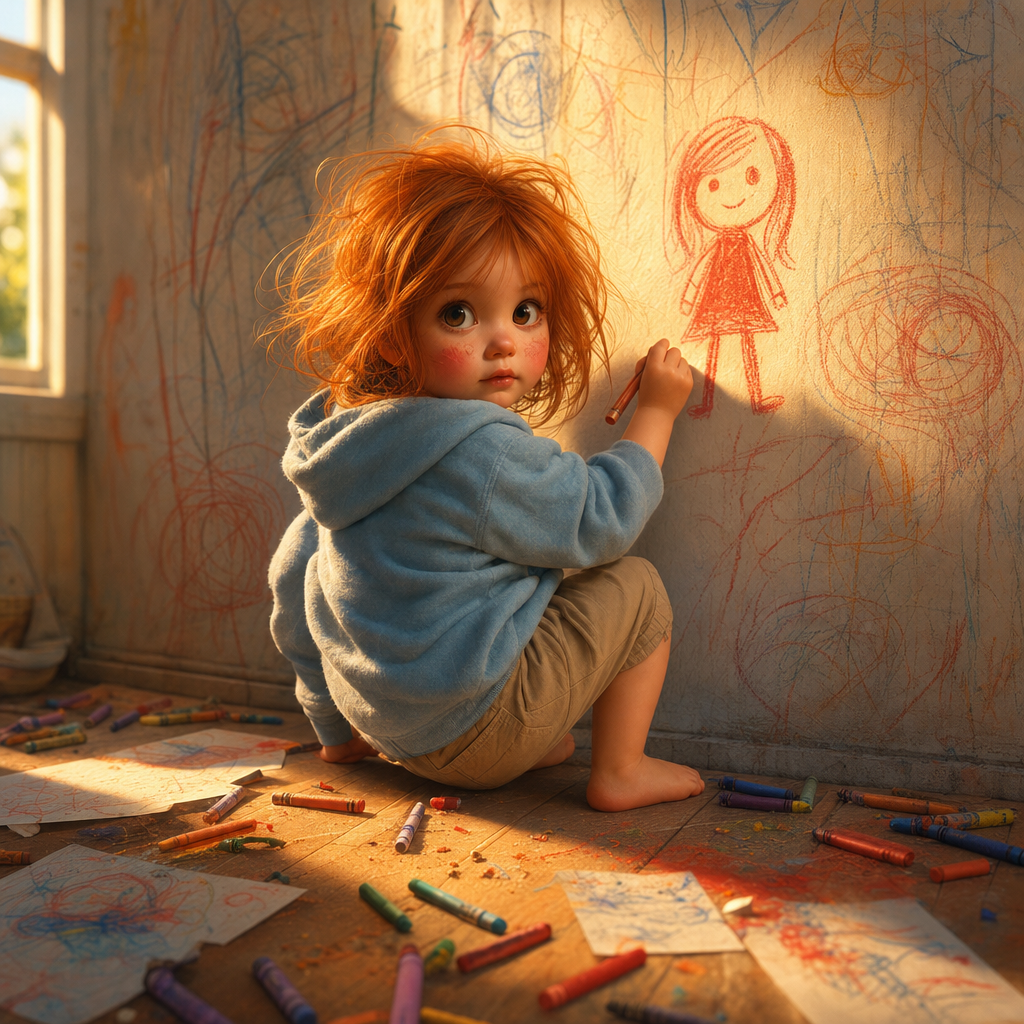
Why this works
The playful, mischievous mood comes from the specific pairing of “small red-haired child” and “drawing a cheerful girl on a wall filled with colorful crayon scribbles,” while “late-afternoon warm window light with gentle highlights and soft shadows” adds the nostalgic warmth. “Portrait-full-body” keeps the entire seated figure, floor clutter, and wall drawing readable, and “shallow depth of field with a softly blurred background clutter” separates those subjects from the beige-and-brown room without losing the blue hoodie, red hair, and colorful marks. The tactile realism is anchored by “detailed textures in the child’s clothing and crayon marks,” which keeps the whimsical idea grounded in a photorealistic scene.
FAQ
→How do I make the wall drawing more prominent than the child?
Replace “crisp focus on the child and wall drawing” with “crisp focus on the wall drawing, with the child softly secondary,” and change “portrait-full-body” to “medium-wide composition centered on the wall.” Add “the cheerful girl drawing occupies most of the frame” so the artwork becomes the visual anchor.
→How do I turn the nostalgic afternoon scene into a brighter, more energetic image?
Replace “late-afternoon warm window light with gentle highlights and soft shadows” with “bright midday sunlight with lively, clean highlights and minimal shadows.” Change “playful, mischievous, nostalgic mood” to “vibrant, energetic, joyful mood,” and add “high-saturation primary crayon colors” to intensify the red, blue, and scribbled wall marks.
→How do I create a matching series with different children and drawings?
Keep the fixed visual structure, including “whimsical cinematic composition,” “shallow depth of field,” “cluttered indoor room,” and “late-afternoon warm window light.” For each variation, replace “small red-haired child” with a new age, hair color, and clothing description, and replace “drawing a cheerful girl” with subjects such as “drawing a friendly blue whale” or “drawing a rocket ship,” while retaining “detailed textures in the child’s clothing and crayon marks” for consistency.
Learn the technique behind this
- Why can't AI spell, and how do I get readable text in an image? — Older diffusion models had no character-level representation of text, so they produced letterform-shaped texture instead of words.
- How should a prompt be structured, and does word order matter? — A prompt that behaves predictably names one subject first, then what it is doing, then where, then the light, then the lens or medium, then the style.
- Do negative prompts work, and what should go in one? — Negative prompts work on models that support a separate negative conditioning channel — mainly Stable Diffusion and FLUX-family models.
Related prompts
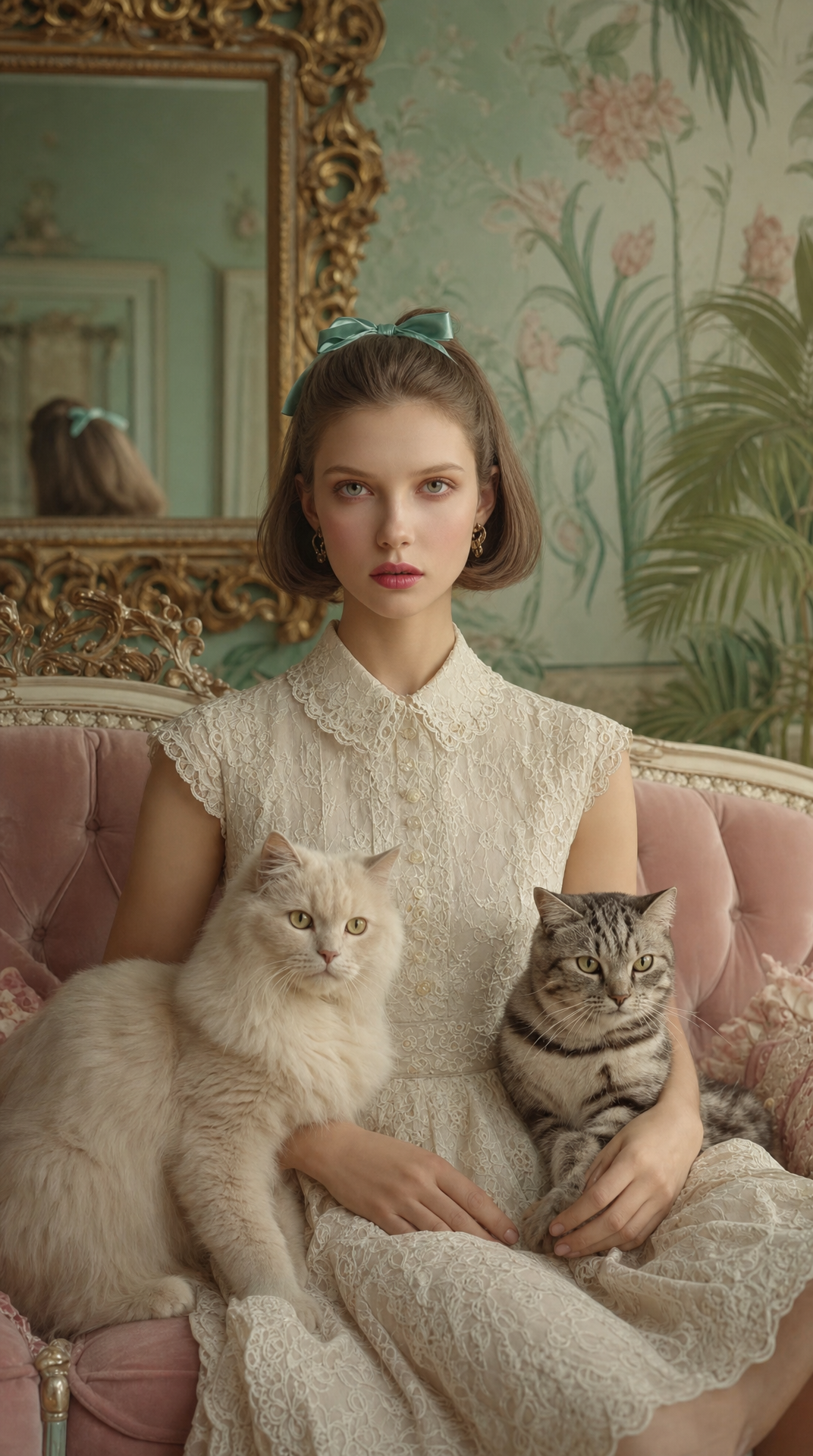
Young woman with two cats
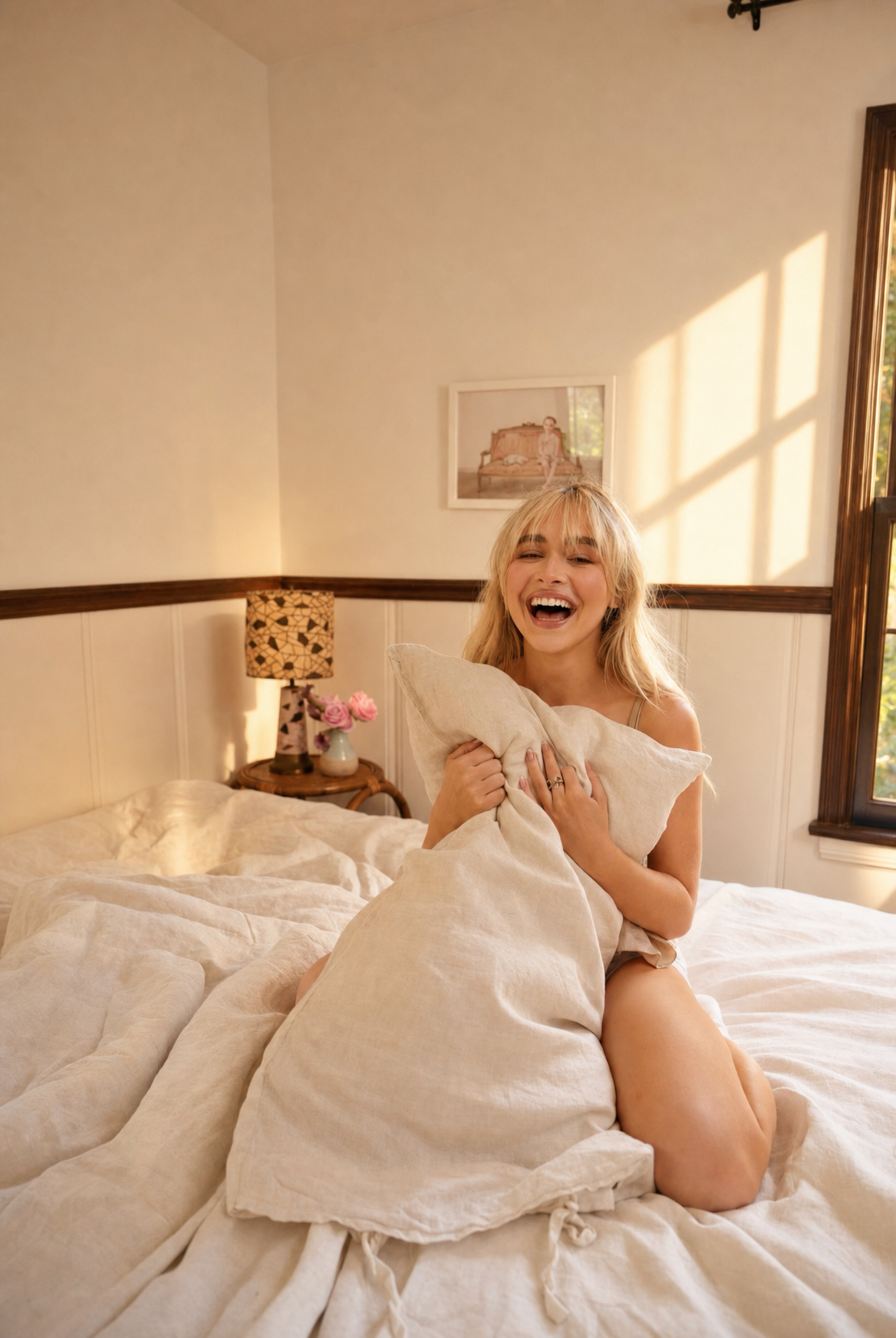
Blonde woman hugging beige pillow on off-white bed

Black tower fan on gray rug by window
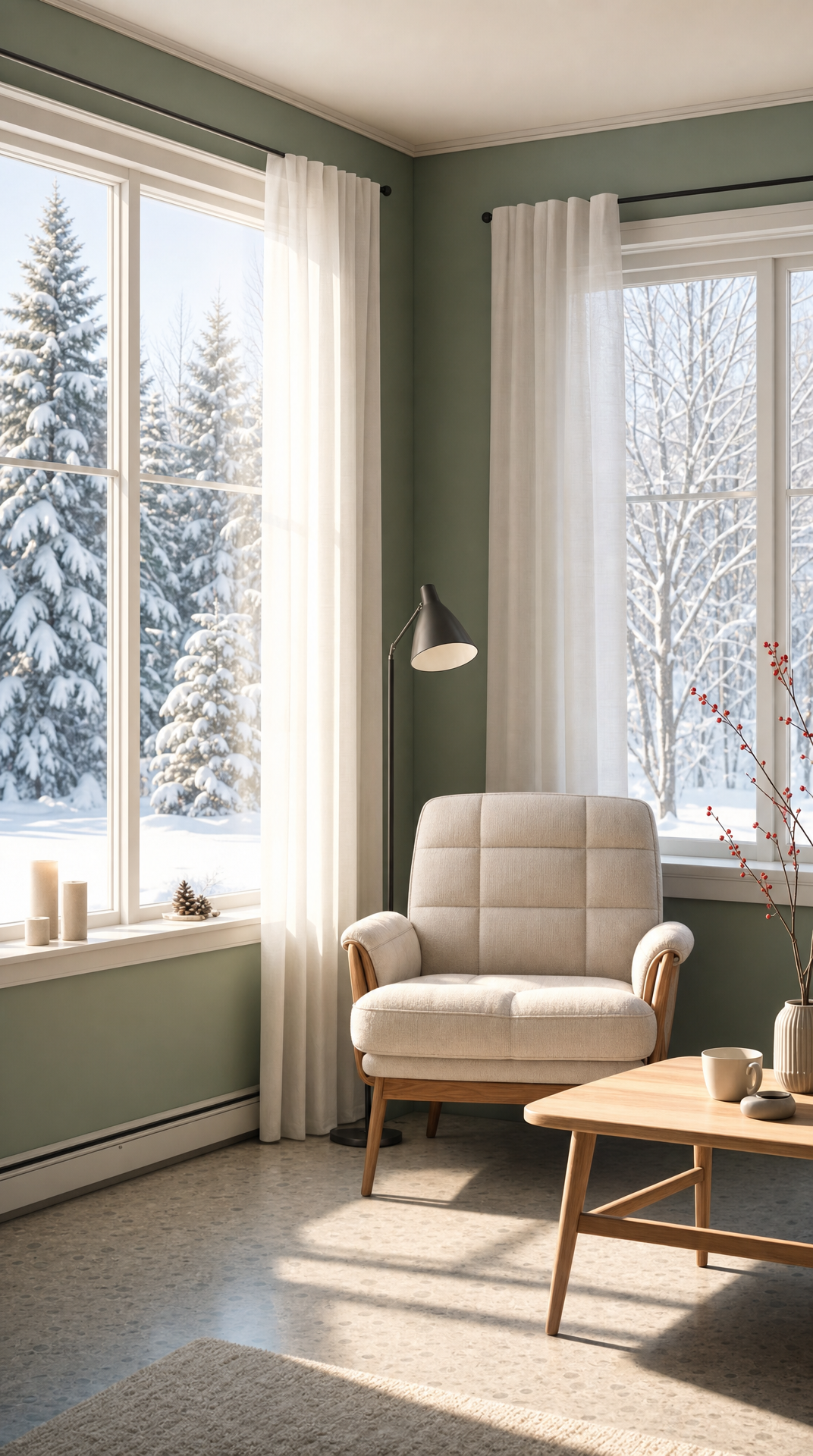
Cozy Winter Living Room in Sage