Why this works
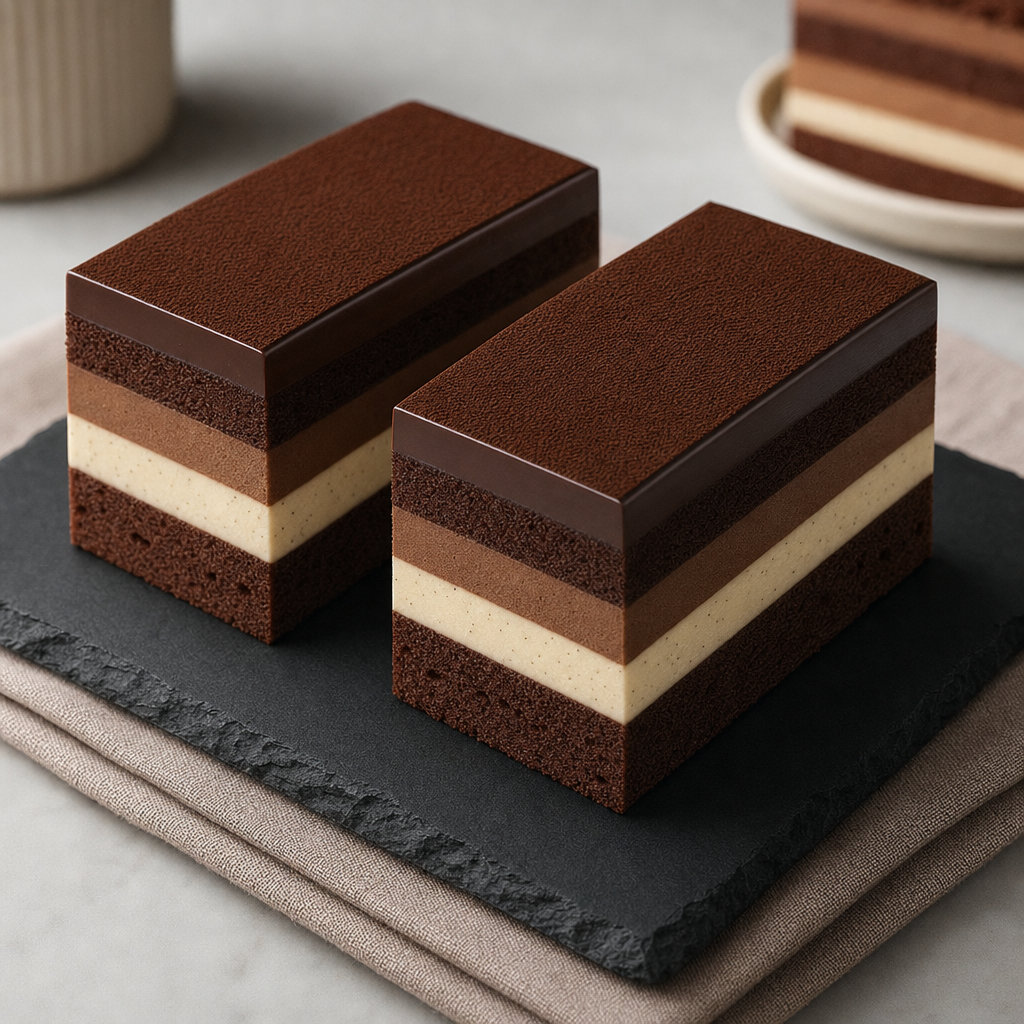
“Two rectangular layered chocolate mousse cakes” gives the centered composition a clear paired subject, while “slightly angled toward the camera” adds depth without disrupting the clean, symmetrical presentation. “Matte slate serving board,” “elegant negative space,” and the dominant black-and-beige palette create a restrained luxury contrast against the cakes’ dark mousse and vanilla-bean cream layers. The refined mood comes from “soft diffused daylight,” “warm neutral tones,” and “indulgent refined styling,” while “shallow depth of field” and “ultra-realistic surface detail” keep the ganache glaze and cocoa-dust texture visually prominent.
FAQ
→How do I make the cakes feel darker, moodier, and more dramatic?
Replace “soft diffused daylight” and “warm neutral tones” with “dramatic side lighting, deep shadows, and cool charcoal tones.” Keep “matte slate serving board” but change “elegant negative space” to “dark editorial backdrop with controlled pools of light” for a more cinematic result.
→How do I make the layered interior more prominent?
Replace “two rectangular layered chocolate mousse cakes” with “two rectangular chocolate mousse cakes, one cut open to reveal sharply defined alternating dark chocolate mousse and vanilla-bean cream layers.” Change “slightly angled toward the camera” to “one whole cake beside one prominently sliced cake, cut face aimed directly at the camera.”
→How do I build a coordinated series with different dessert flavors?
Keep “luxury dessert photography,” “clean modern plating,” “soft diffused daylight,” and “shallow depth of field” unchanged as the visual system. Swap “dark chocolate mousse and vanilla-bean cream layers” for variations such as “pistachio mousse and raspberry gel layers,” “coffee mousse and caramel cream layers,” or “lemon curd and white-chocolate mousse layers,” then replace “fine cocoa-dust texture” with a flavor-specific finish such as “crushed pistachio,” “freeze-dried raspberry powder,” or “delicate caramel shards.”
Learn the technique behind this
- Why can't AI spell, and how do I get readable text in an image? — Older diffusion models had no character-level representation of text, so they produced letterform-shaped texture instead of words.
- Do negative prompts work, and what should go in one? — Negative prompts work on models that support a separate negative conditioning channel — mainly Stable Diffusion and FLUX-family models.
- How should a prompt be structured, and does word order matter? — A prompt that behaves predictably names one subject first, then what it is doing, then where, then the light, then the lens or medium, then the style.
Related prompts
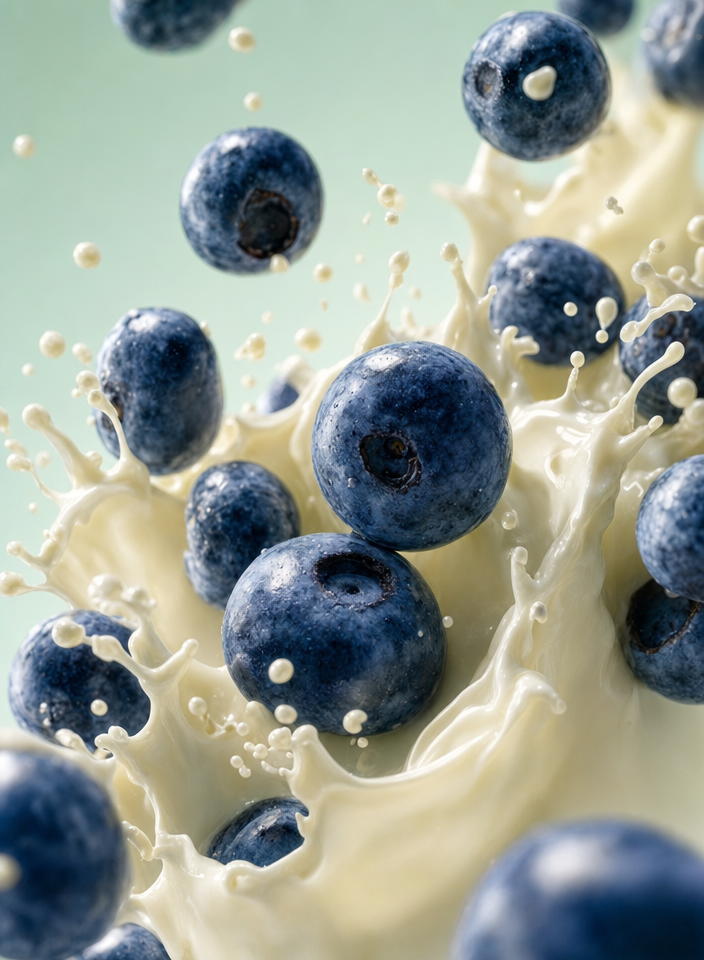
Blueberries Bursting Into Vanilla Cream
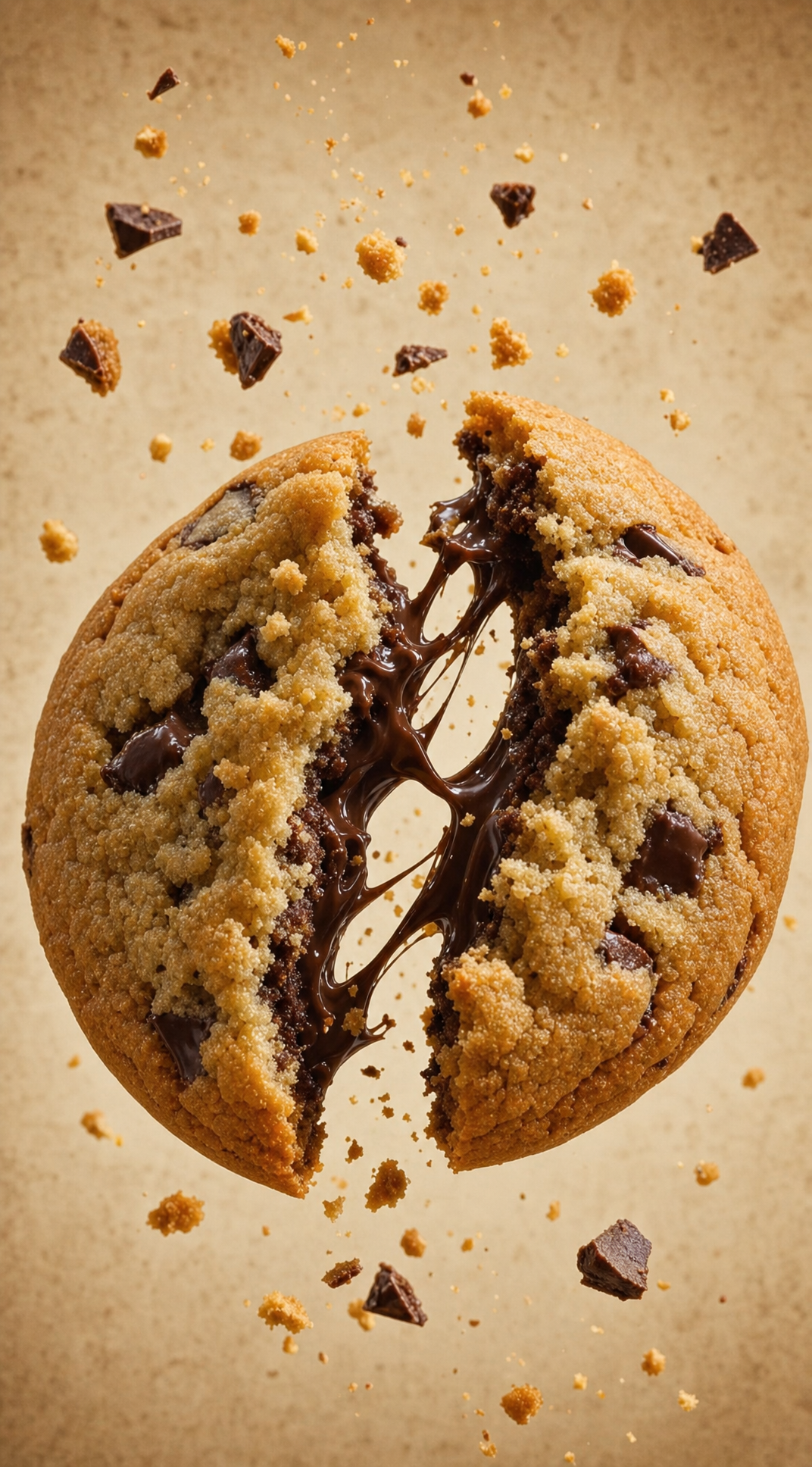
Chocolate Filled Cookie Splitting Midair With Dark Drip
Partially Peeled Banana on Blue
Banana slices in cool milk splash background