Why this works
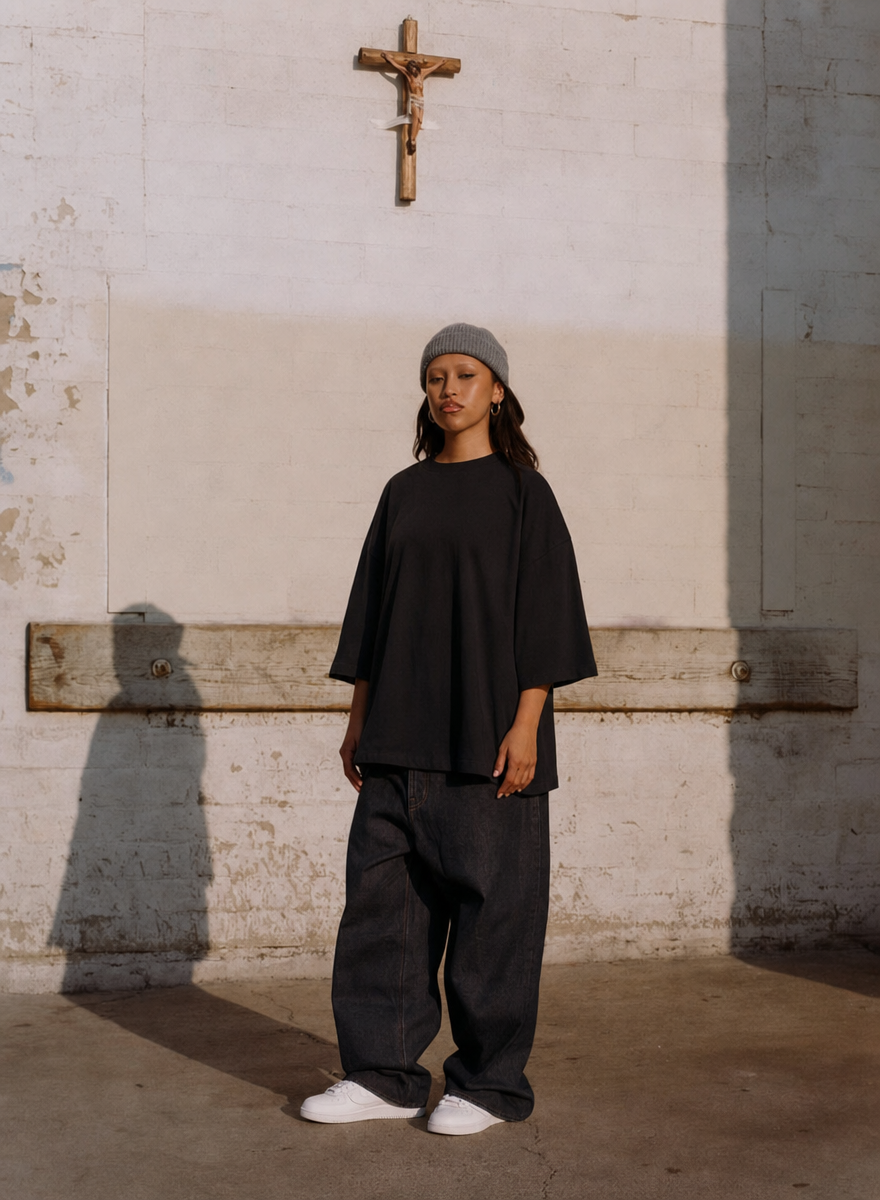
“Full-body photorealistic editorial streetwear fashion portrait” establishes a complete, magazine-style figure study, while “minimalist composition” keeps the industrial interior from competing with the outfit. The raw, cool, understated mood comes from the explicit phrase “raw cool understated aesthetic,” tempered by “warm natural light” and “pronounced wall shadows,” which add brown-toned warmth and graphic structure behind the black, white, and dark-wash clothing. “Sharp realistic textures” preserves the knit beanie, leather sneakers, denim, and T-shirt surfaces, while “shallow depth of field” separates the woman from the sunlit background without losing the strong wall-shadow geometry.
FAQ
→How do I make the woman’s face and upper body more prominent while keeping the streetwear styling?
Replace “Full-body” with “three-quarter-length portrait” and change “shallow depth of field” to “shallow depth of field focused sharply on her face and upper torso.” Keep “minimalist composition,” but add “medium framing with the subject centered” so the camera gives her expression more visual weight.
→How do I make this image moodier and less sunlit?
Replace “warm natural light” with “cool directional window light” and “pronounced wall shadows” with “deep architectural shadows and high contrast.” Change “sunlit industrial space” to “dim industrial interior with a single side-lit window,” while retaining “raw cool understated aesthetic” to preserve the restrained editorial tone.
→How do I build a coordinated series from this prompt with different outfits and locations?
Keep the fixed visual language, including “full-body photorealistic editorial streetwear fashion portrait,” “minimalist composition,” “sharp realistic textures,” and “shallow depth of field.” For each variation, replace the clothing clause with a new outfit such as “cropped utility jacket, wide-leg cargo trousers, and black platform sneakers,” and replace “sunlit industrial space” with settings such as “concrete parking garage,” “quiet subway platform,” or “weathered warehouse corridor,” while keeping “warm natural light with pronounced wall shadows” when you want the same color and shadow structure.
Learn the technique behind this
- Why can't AI spell, and how do I get readable text in an image? — Older diffusion models had no character-level representation of text, so they produced letterform-shaped texture instead of words.
- Which aspect ratio should I use, and how does it change the image? — Aspect ratio determines what the model composes, not how it's cropped afterwards.
- Why does AI get hands and faces wrong, and how do I fix it? — Hands fail because they're small in frame, extremely variable in pose, and self-occluding — the model has less usable signal per pixel than for any other body part.
Related prompts

Teal fashion editorial in monster-filled lift
Cobalt Boots in Sleek Studio Edit
Silhouette Influencer by Sunlit Window
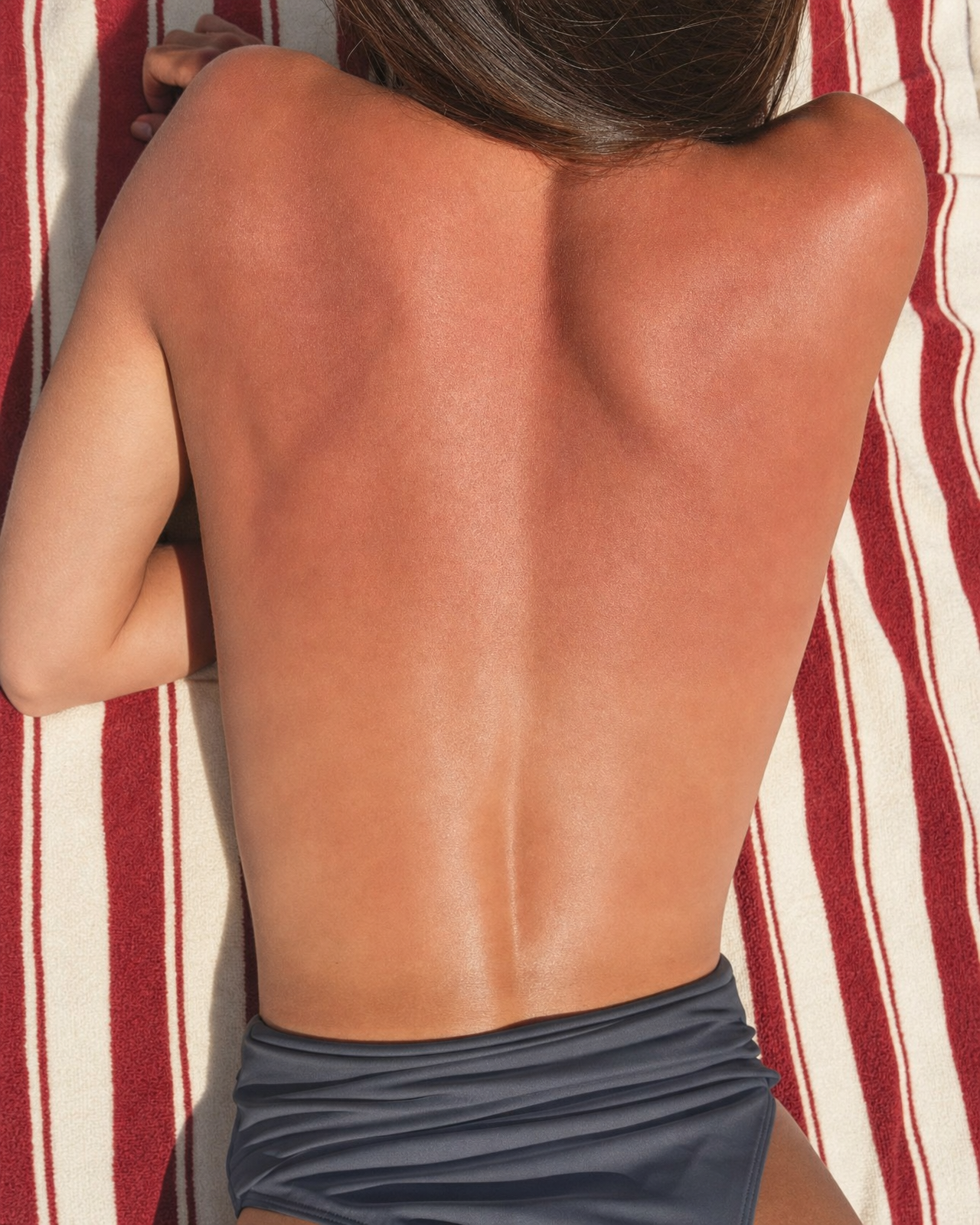
Sunlit editorial on striped beach towel