Why this works
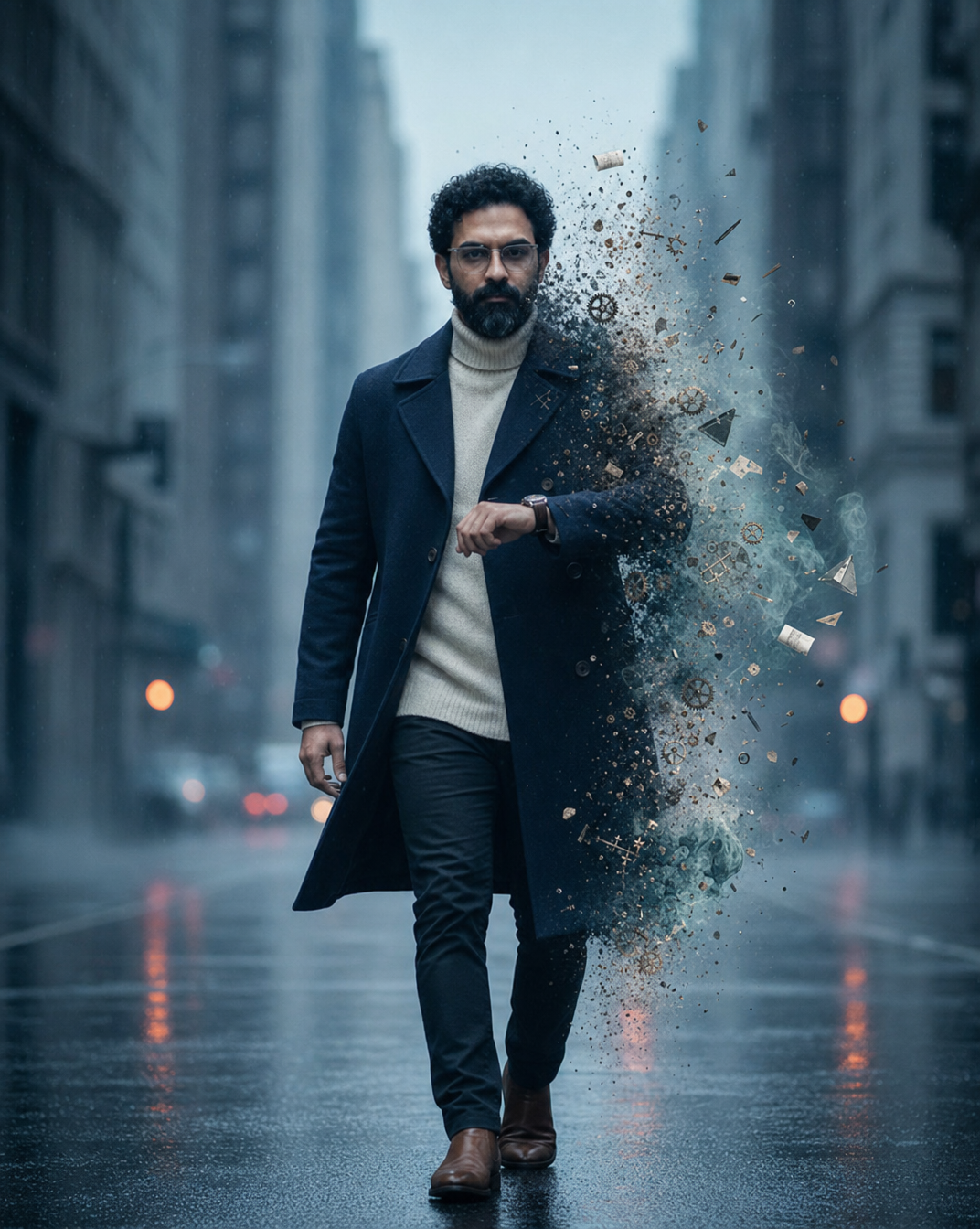
The centered lower-third placement and “dramatic three-quarter view” give the full-body portrait a stable editorial frame while preserving the forward walking motion. The phrase “right side of his body is dissolving” establishes the main visual tension, and “curling smoke tendrils, brass-toned clockwork gears, cracked glass-like shards” supplies layered contours that pull the eye from the navy coat toward the warm silver, bronze, and muted teal burst. “Misty city canyon,” “cold streetlights,” “wet reflections,” and “shallow depth of field” create the gray-black urban atmosphere, while the cream turtleneck, brown boots, and bronze effects provide the beige and brown accents visible against it.
FAQ
→How do I make the clockwork-and-shard effect more prominent than the model?
Replace “the right side of his body is dissolving” with “the entire right half of his body is engulfed by a dominant foreground explosion,” and add “large gears and glass shards crossing the center of the frame.” Change “centered in the lower third” to “model placed on the left third, with the effect occupying the central and right half of the image.”
→How do I shift this from mysterious and contemplative to aggressive and high-energy?
Replace “dramatic mysterious contemplative mood” with “violent kinetic fashion editorial energy.” Change “curling smoke tendrils” to “whipping smoke trails,” “drifting paper scraps” to “torn papers propelled by strong wind,” and “moody cinematic lighting” to “hard directional streetlight with sharp contrast and intense specular highlights.”
→How do I build a variation series with a different visual identity while keeping the same composition?
Keep “centered in the lower third” and “dramatic three-quarter view,” then replace “rain-slicked urban street” and “misty city canyon” with a consistent alternate setting such as “sunlit brutalist plaza with pale concrete planes.” Swap “brass-toned clockwork gears, cracked glass-like shards” for a series motif such as “ivory botanical roots, translucent petals, and glowing pollen,” and replace the navy, cream, and brown wardrobe with “rust-red jacket, black shirt, and white sneakers” for a clear color-coded variation.
Learn the technique behind this
- Why can't AI spell, and how do I get readable text in an image? — Older diffusion models had no character-level representation of text, so they produced letterform-shaped texture instead of words.
- Why does the model ignore parts of my prompt? — Ignored instructions are almost always conflicts, counts, or spatial relationships — three things current models handle badly — rather than the model failing to read you.
- How should a prompt be structured, and does word order matter? — A prompt that behaves predictably names one subject first, then what it is doing, then where, then the light, then the lens or medium, then the style.
Related prompts
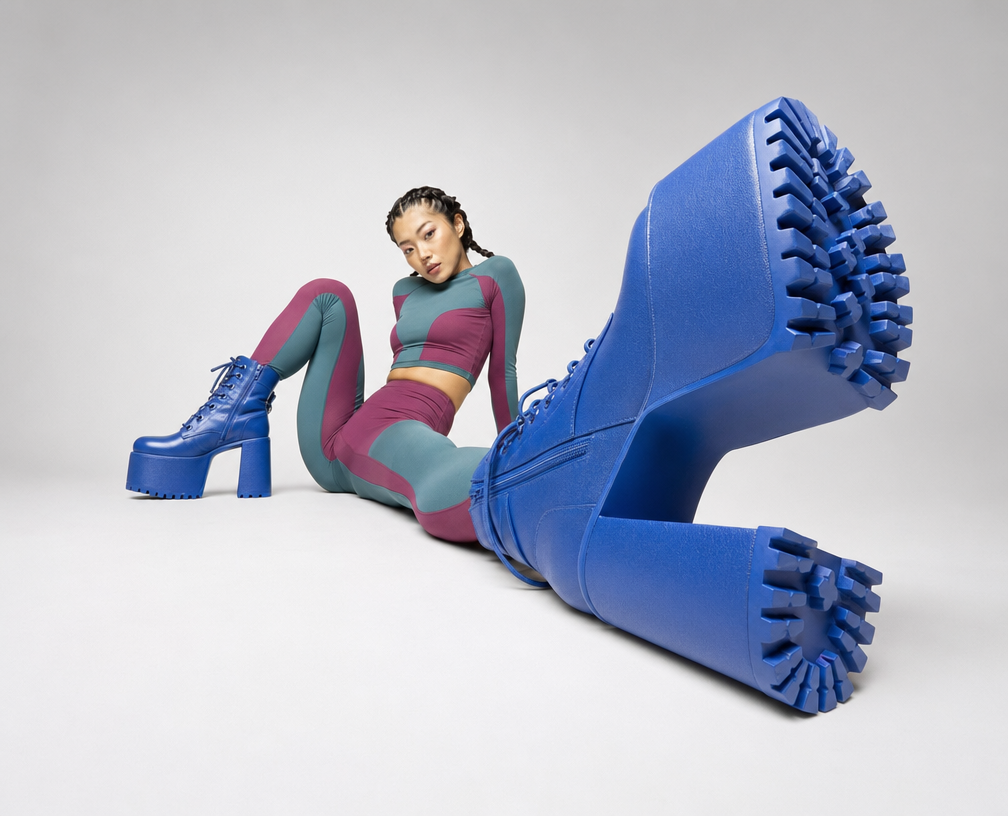
Cobalt Boots in Sleek Studio Edit
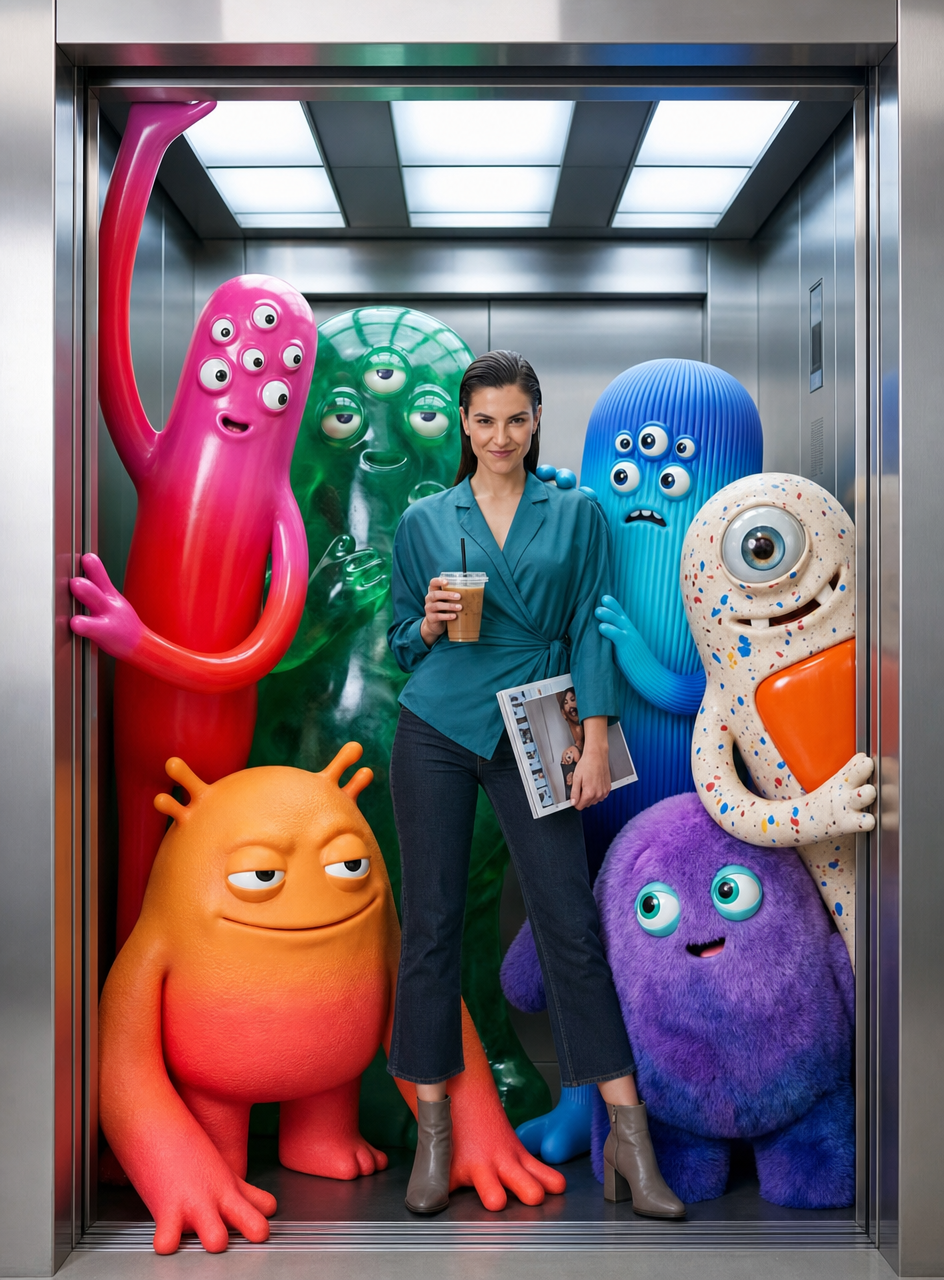
Teal fashion editorial in monster-filled lift
Sunlit editorial on striped beach towel
Silhouette Influencer by Sunlit Window