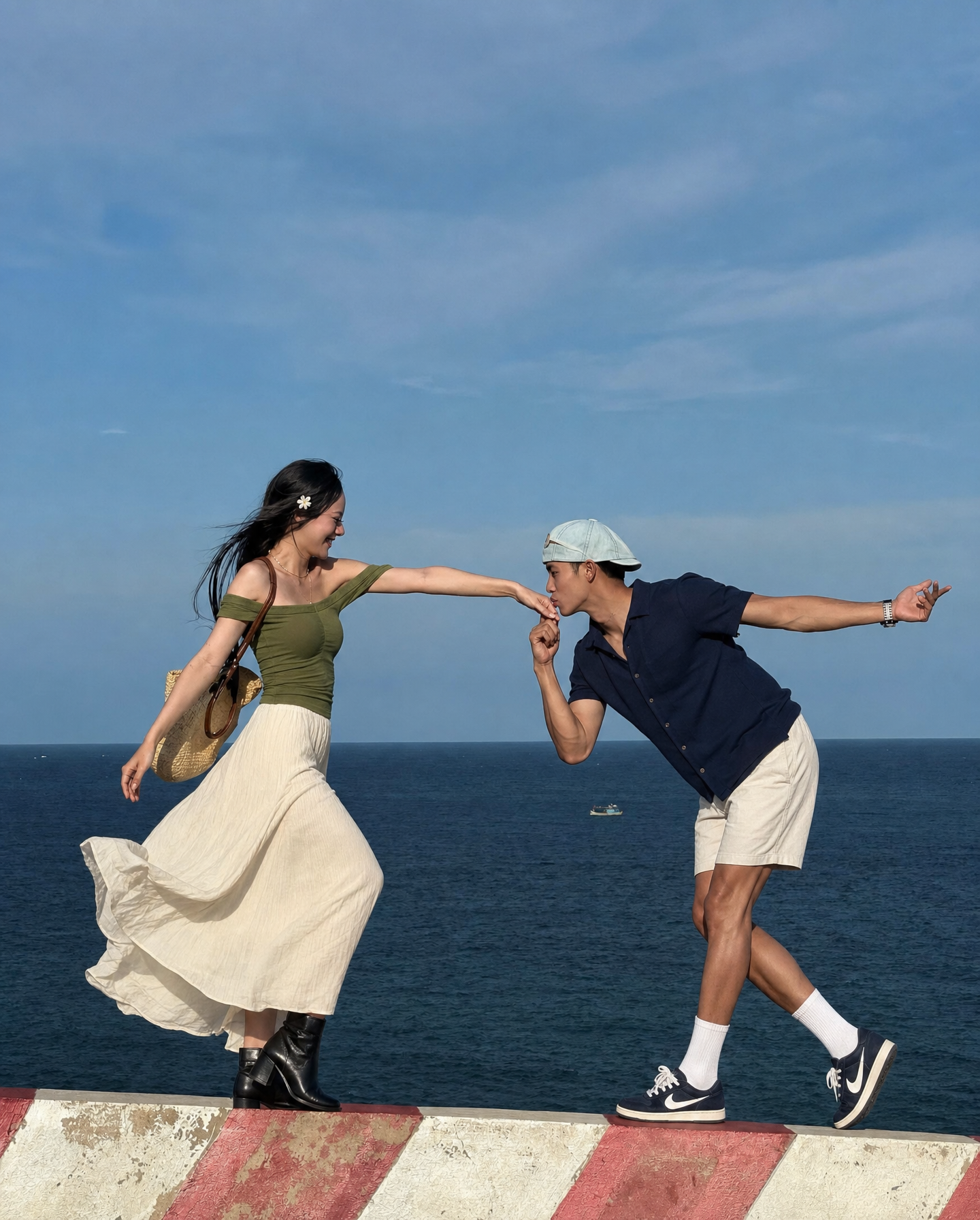
Why this works
The phrase “both lean toward each other in a dance-like, romantic pose” supplies the playful intimacy, while “bright natural daylight with soft sea breeze feel” and “partly cloudy sky” keep the mood breezy rather than dramatic. “Vertical composition” with “crisp focus on the couple” produces a portrait-full-body frame that makes their coordinated pose the clear focal point, while the “deep teal ocean background” adds cool contrast to the woman’s green top and flowing cream skirt. “Photorealistic,” “high detail,” and “realistic skin and fabric texture” are the load-bearing terms for the tactile fashion-editorial finish, especially in the skirt, boots, and clothing folds.
FAQ
→How do I make the couple feel more intimate and emotionally connected?
Replace “both lean toward each other in a dance-like, romantic pose” with “foreheads touching, hands gently clasped, relaxed intimate embrace.” Keep “crisp focus on the couple,” but add “soft eye contact and subtle smiles” to make the connection read clearly without losing the candid fashion-photography feel.
→How do I make the ocean and seaside setting more prominent?
Change “crisp focus on the couple” to “moderate depth of field with the couple and ocean both sharply readable,” and replace “deep teal ocean background” with “wide deep teal ocean horizon, visible whitecaps, and striped concrete ledge extending into the frame.” Add “slightly wider vertical framing with generous sky and sea space” to preserve the full-body pose while giving the location more visual weight.
→How do I build a coordinated variation with different wardrobe colors?
Replace “fitted green off-shoulder top with a flowing cream maxi skirt” and “navy short-sleeve shirt with light beige shorts” with a new paired palette such as “rust off-shoulder blouse with ivory wide-leg trousers” and “off-white linen shirt with rust shorts.” Retain “small white blossom,” “black ankle boots,” and “dark sneakers” as anchors so the new colors vary while the couple still reads as a coordinated seaside fashion series.
Learn the technique behind this
- Why can't AI spell, and how do I get readable text in an image? — Older diffusion models had no character-level representation of text, so they produced letterform-shaped texture instead of words.
- Why does the model ignore parts of my prompt? — Ignored instructions are almost always conflicts, counts, or spatial relationships — three things current models handle badly — rather than the model failing to read you.
- Which aspect ratio should I use, and how does it change the image? — Aspect ratio determines what the model composes, not how it's cropped afterwards.
Related prompts
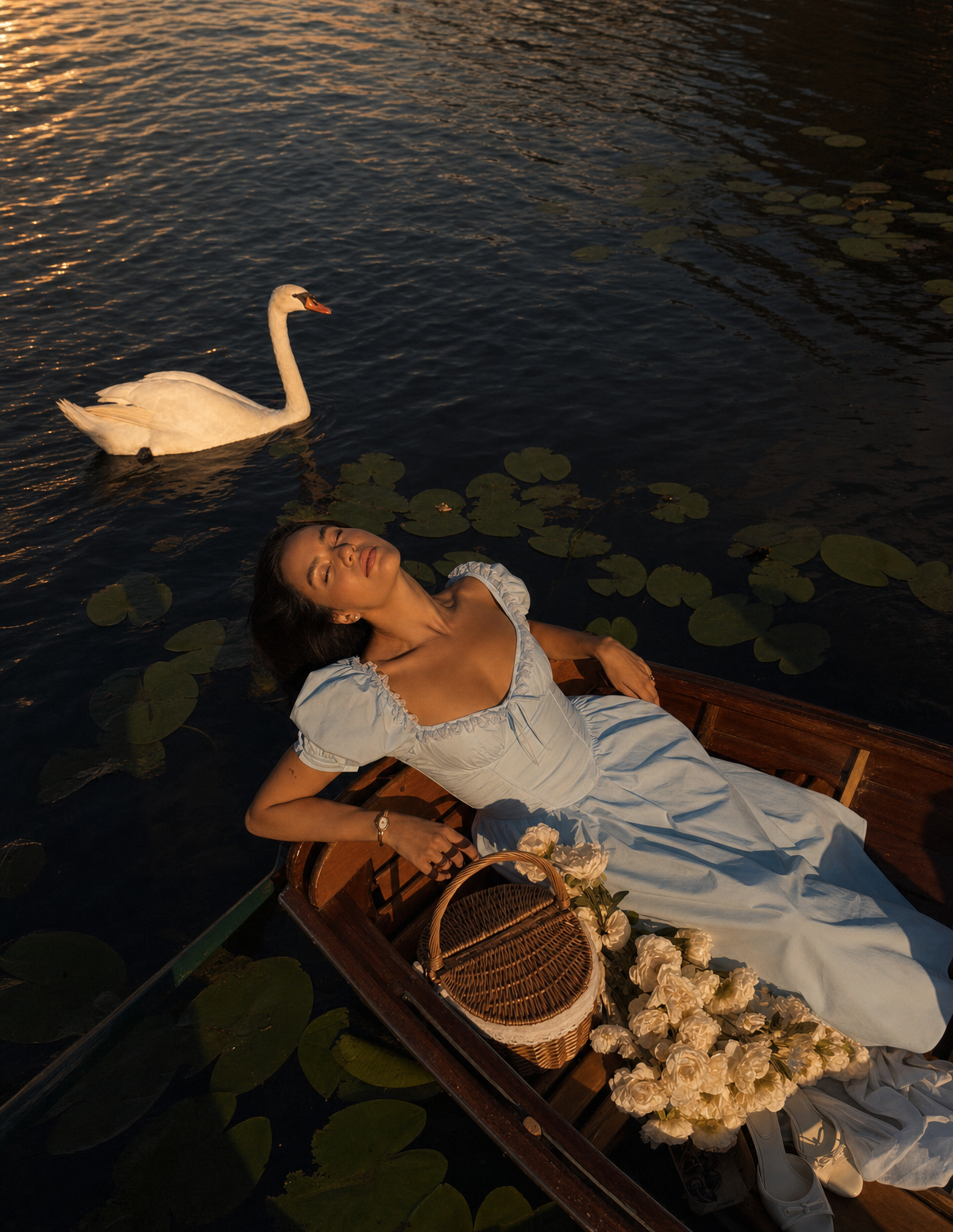
Woman in pale blue dress in lily boat
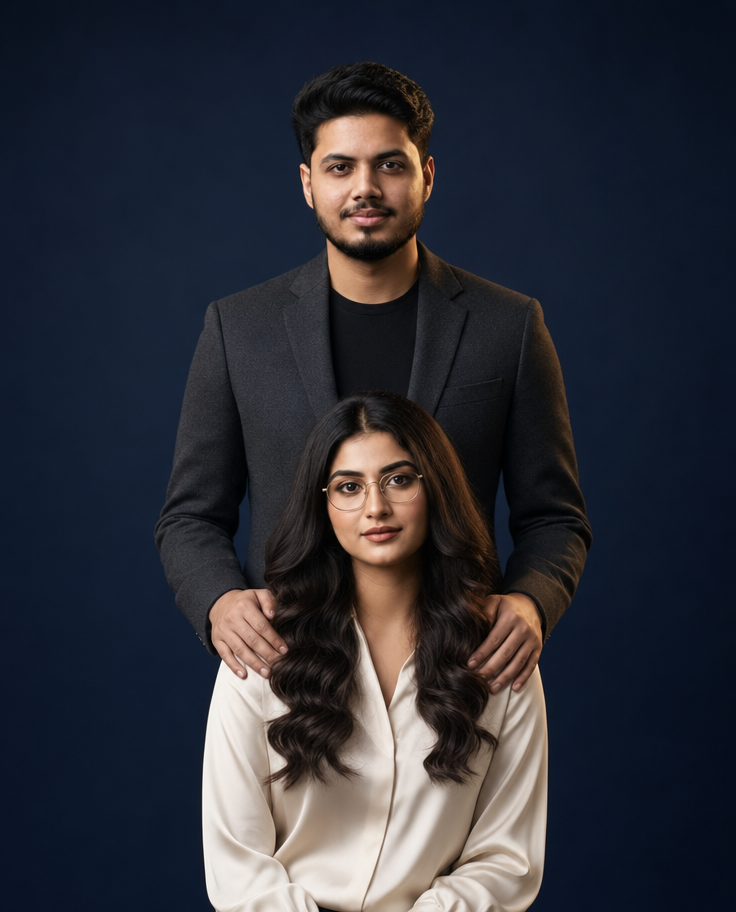
Woman and Man in Intimate Studio Portrait
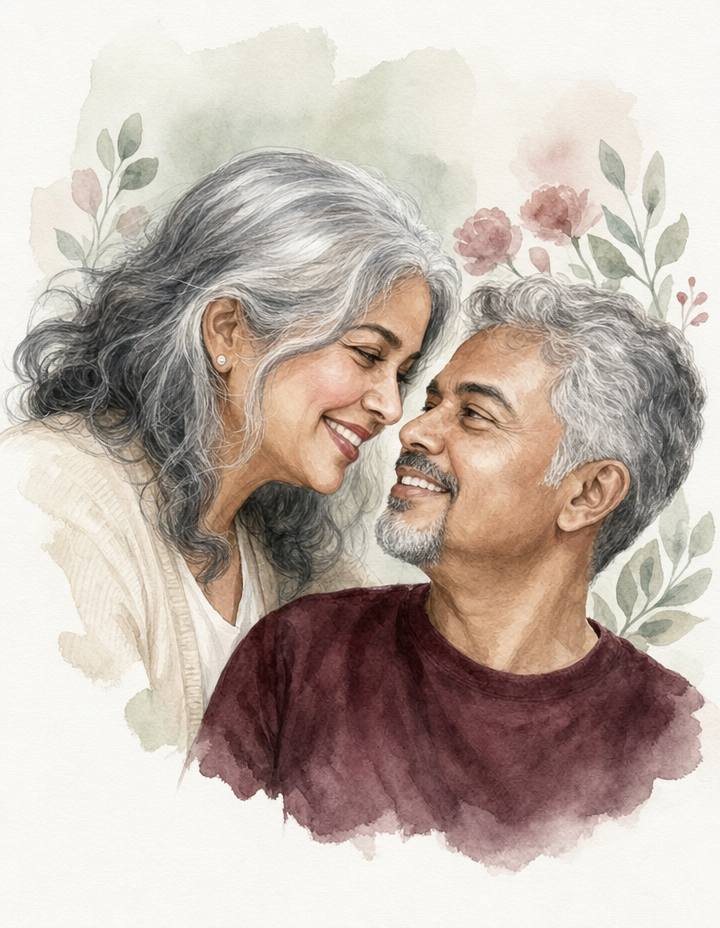
Older Couple in Tender Watercolor Embrace
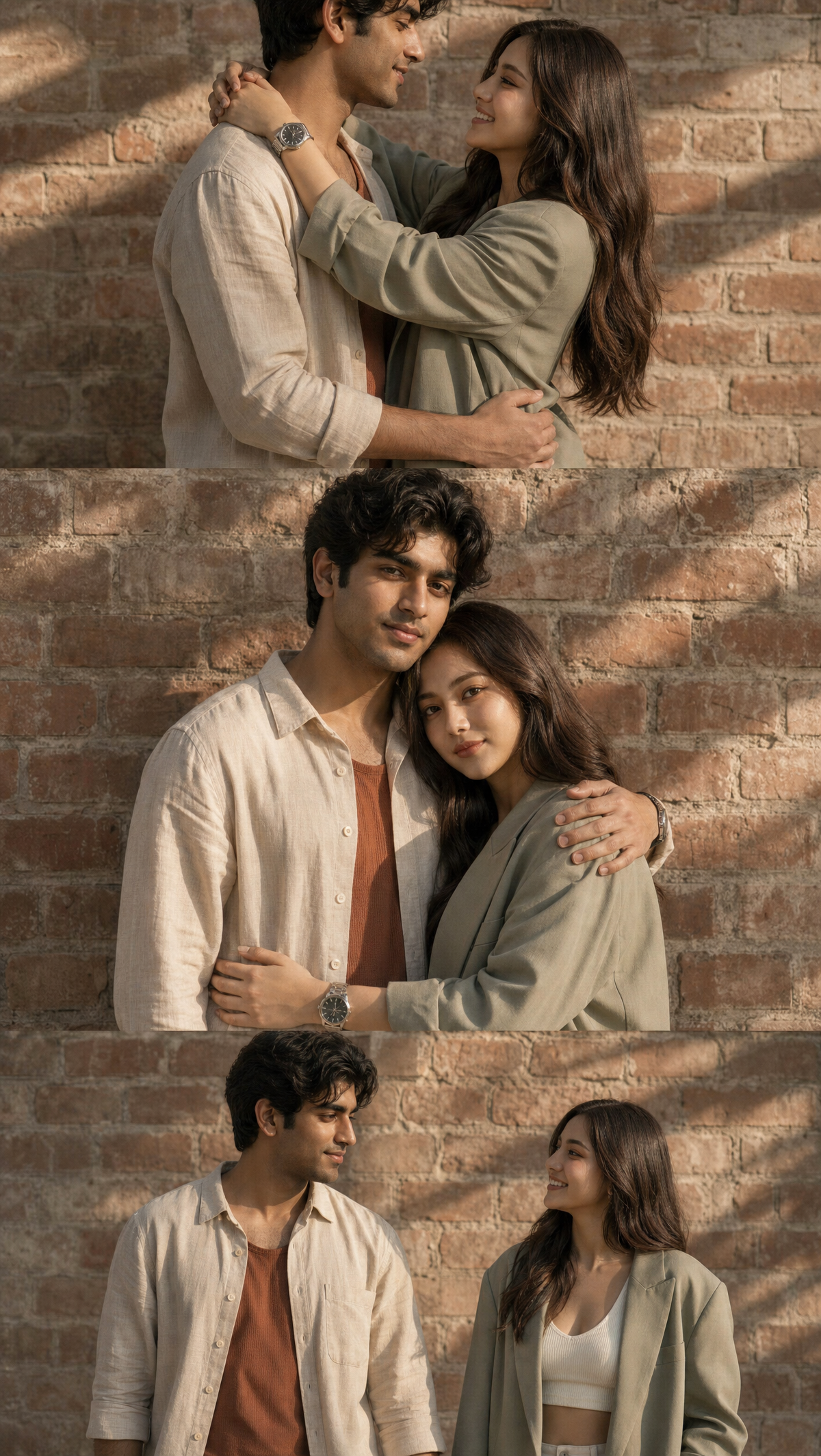
South Asian Couple in Sage and Cream