Why this works
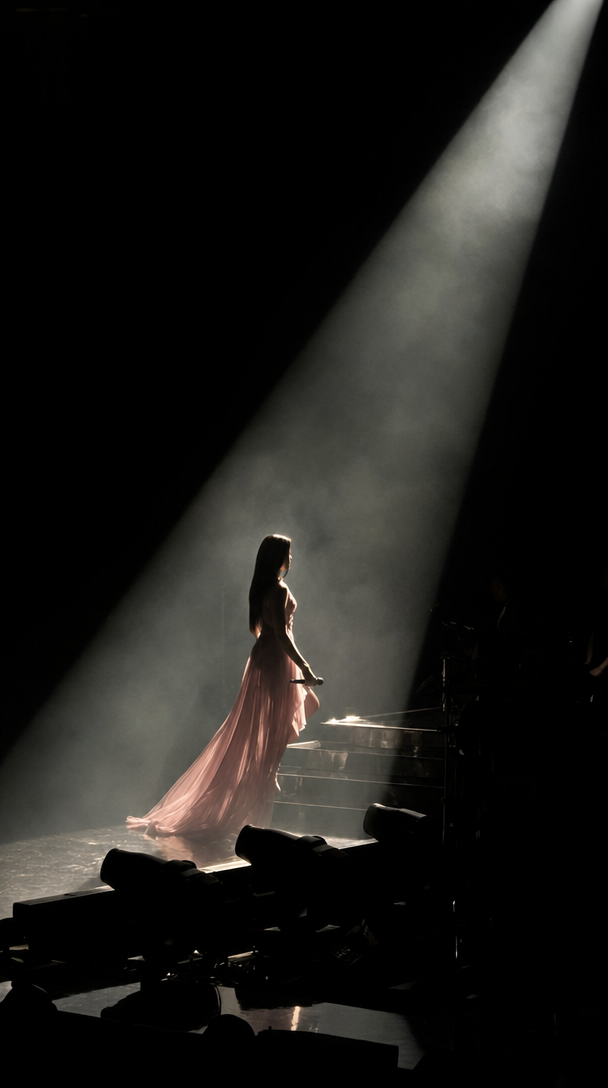
The phrase “bold diagonal spotlight cutting through atmospheric haze” supplies the image’s strongest directional structure, while “wide-angle composition” preserves a full-body portrait and the surrounding dark stage. “Dusty-rose gown” introduces the dominant pink accent against gray-black scenery, and “deep shadows carve an elegant, mysterious silhouette” directly supports the high-contrast, restrained mood. “Dramatic chiaroscuro” and “photorealistic concert photography style” keep the result grounded in realistic shadow falloff rather than a soft fashion-editorial look.
FAQ
→How do I make the woman’s face and gown more prominent than the surrounding stage?
Replace “Wide-angle composition” with “medium telephoto portrait framing” and change “standing on a dark concert stage” to “centered near the front edge of a dark concert stage.” Keep “bold diagonal spotlight cutting through atmospheric haze,” but add “spotlight concentrated on her face and flowing gown, background falling into near-black shadow.”
→How do I shift this from mysterious and elegant to energetic and triumphant?
Replace “Deep shadows carve an elegant, mysterious silhouette” with “bright, open lighting reveals her expressive face and sweeping movement,” and change “Dramatic, elegant, mysterious mood” to “exhilarated, triumphant performance mood.” Replace “dramatic chiaroscuro” with “vibrant concert lighting with warm gold and magenta beams,” while keeping the “flowing dusty-rose gown” as the visual anchor.
→How do I create a series of variations without losing the same visual identity?
Keep the fixed phrases “flowing dusty-rose gown,” “photorealistic concert photography style,” and “high-contrast, cinematic lighting.” For each variation, replace only “bold diagonal spotlight” with controlled alternatives such as “vertical white spotlight,” “two intersecting amber spotlights,” or “soft backlight with a pink rim,” and swap “dark concert stage” for “empty theater stage,” “rain-slick outdoor festival stage,” or “ornate opera stage.”
Learn the technique behind this
- Why can't AI spell, and how do I get readable text in an image? — Older diffusion models had no character-level representation of text, so they produced letterform-shaped texture instead of words.
- Which aspect ratio should I use, and how does it change the image? — Aspect ratio determines what the model composes, not how it's cropped afterwards.
- How do I keep one consistent style across a whole set of images? — Style consistency is more achievable than character consistency because style lives in describable attributes.
Related prompts

Teal fashion editorial in monster-filled lift
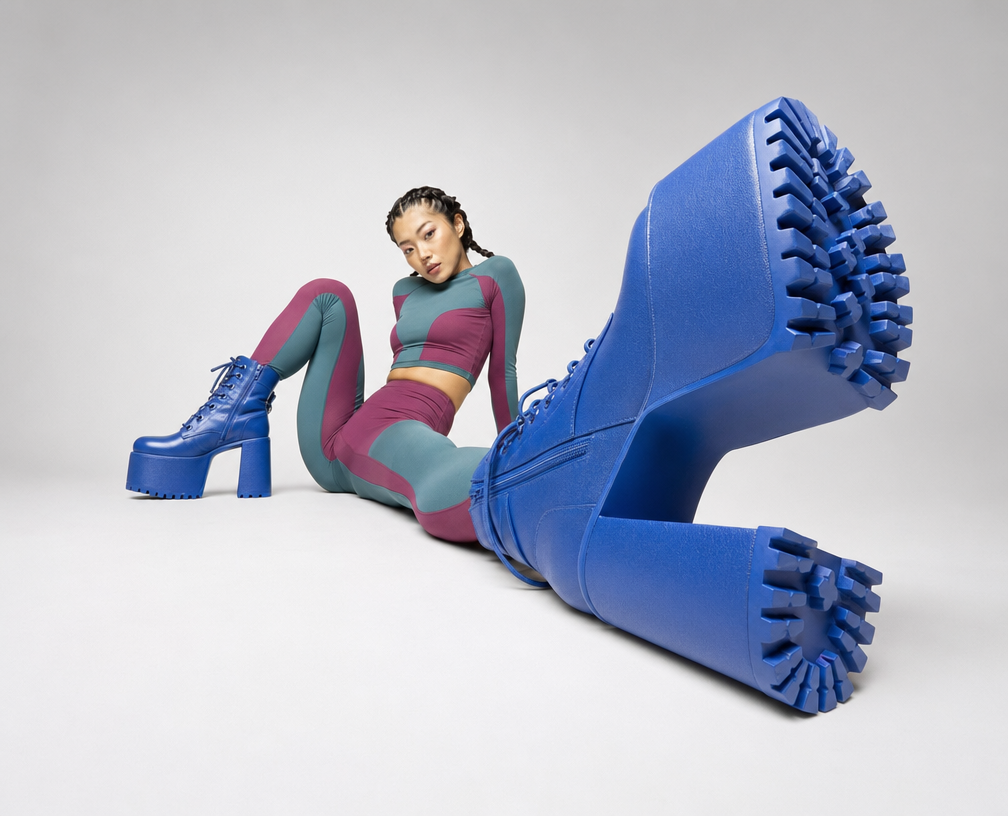
Cobalt Boots in Sleek Studio Edit
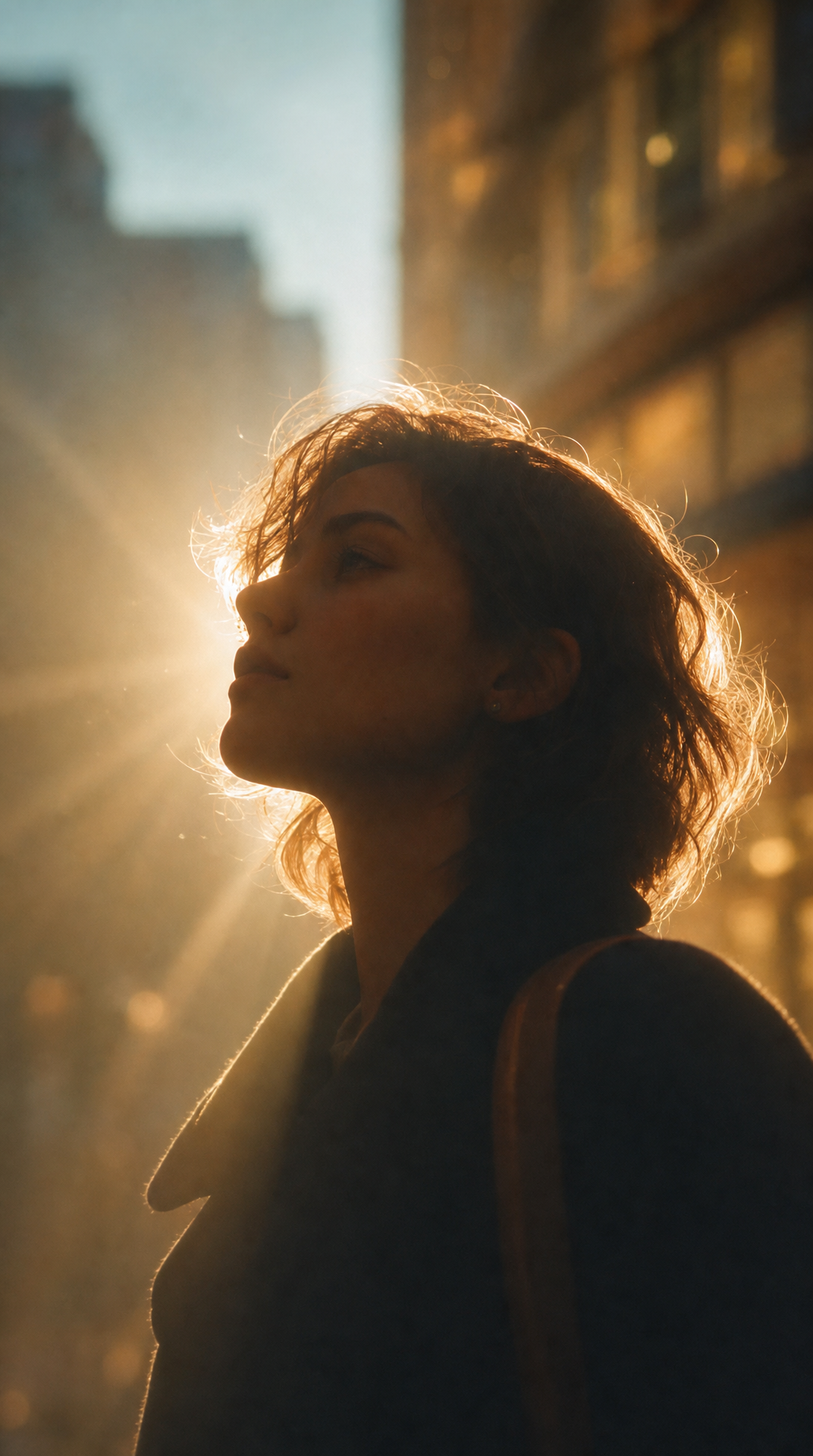
Silhouette Influencer by Sunlit Window
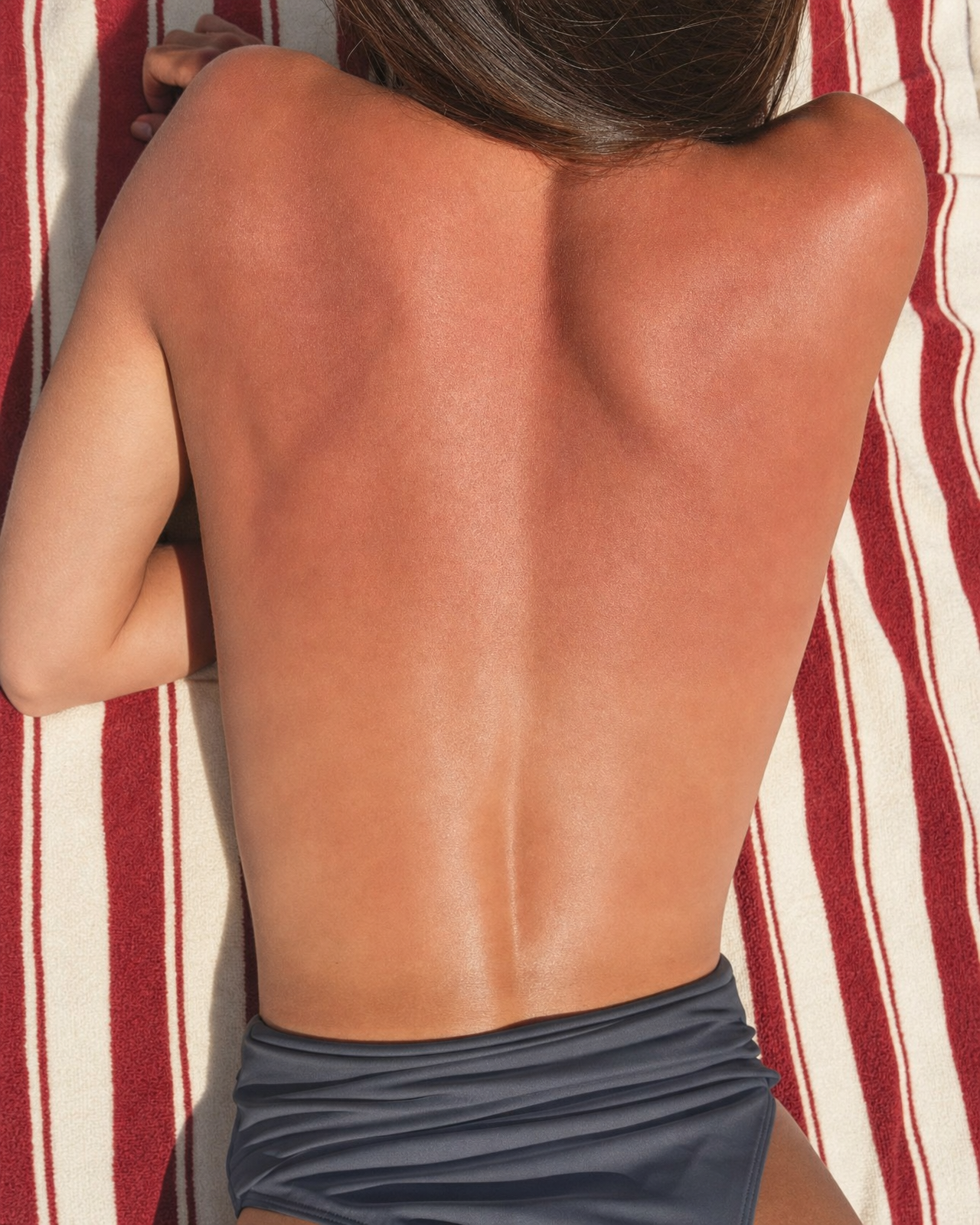
Sunlit editorial on striped beach towel