Why this works
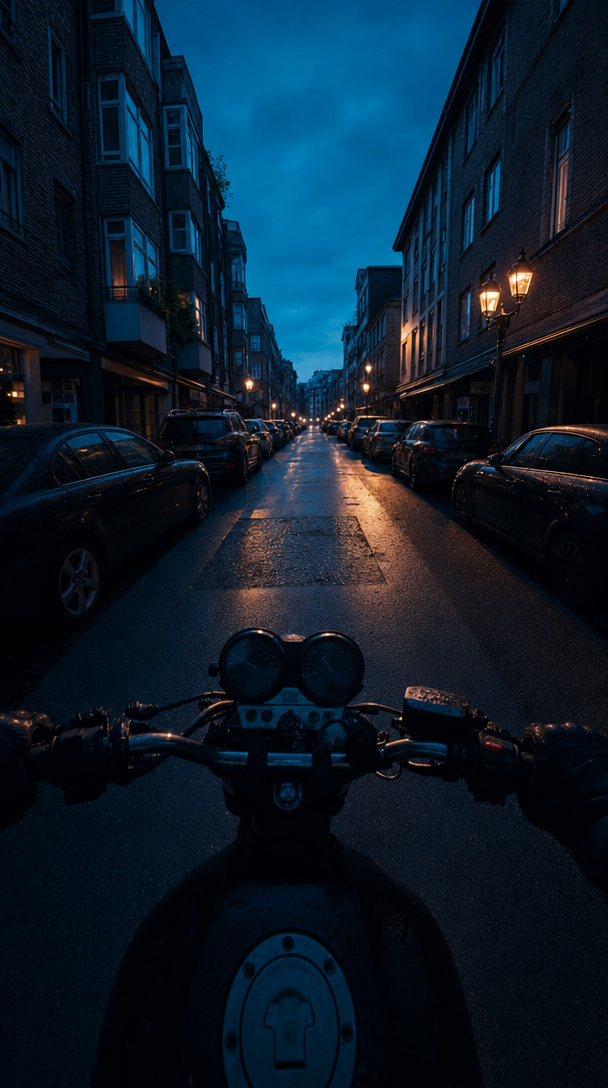
The immersive framing comes from “first-person view from a motorcycle” and “visible road perspective,” which place the viewer inside the forward motion rather than observing the street from outside. “Tall buildings that frame the road” and parked cars “lining both sides” create a tight corridor with strong directional depth, while “blue hour” teal-to-indigo light and “subtle warm streetlights” supply the cool-dark palette with restrained warm contrast. The moody action feel is specifically anchored by “strong directional backlighting,” “handheld action shot,” and “gentle motion blur”; “slightly softer highlights” keeps the photorealistic scene from looking harsh or overly polished.
FAQ
→How do I make the motorcycle and rider’s movement feel faster and more intense?
Replace “gentle motion blur” with “pronounced directional motion blur on the road edges and parked cars,” and change “handheld action shot” to “high-speed helmet-mounted action shot with visible vibration.” Keep “first-person view from a motorcycle” and “visible road perspective” so the increased speed remains grounded in the rider’s viewpoint.
→How do I make the streetlights and warm color more central?
Replace “subtle warm streetlights” with “bright amber streetlights dominating both sides of the street,” and change “cool teal-to-indigo ambient light” to “deep blue ambient shadows with strong amber pools of light.” Add “warm reflections streaking across wet asphalt” if you want the road to carry that color contrast, while retaining “strong directional backlighting” for luminous highlights.
→How do I turn this into a series set in different cities without losing the same visual identity?
Keep the fixed style and camera phrases, including “first-person handheld action shot,” “realistic perspective,” “gentle motion blur,” “cinematic moody atmosphere,” and “blue hour.” Swap only “European-style urban street,” “older brick facades,” and “parked cars lining both sides” for location-specific language such as “rainy Tokyo side street with compact storefronts,” “sun-bleached Lisbon lane with tiled facades,” or “misty New York avenue with cast-iron buildings.”
Learn the technique behind this
- Why can't AI spell, and how do I get readable text in an image? — Older diffusion models had no character-level representation of text, so they produced letterform-shaped texture instead of words.
- How should a prompt be structured, and does word order matter? — A prompt that behaves predictably names one subject first, then what it is doing, then where, then the light, then the lens or medium, then the style.
- Do negative prompts work, and what should go in one? — Negative prompts work on models that support a separate negative conditioning channel — mainly Stable Diffusion and FLUX-family models.
Related prompts
Shirtless Man, Vintage Car, Coastline Light
Golden-hour couple rides a classic bike
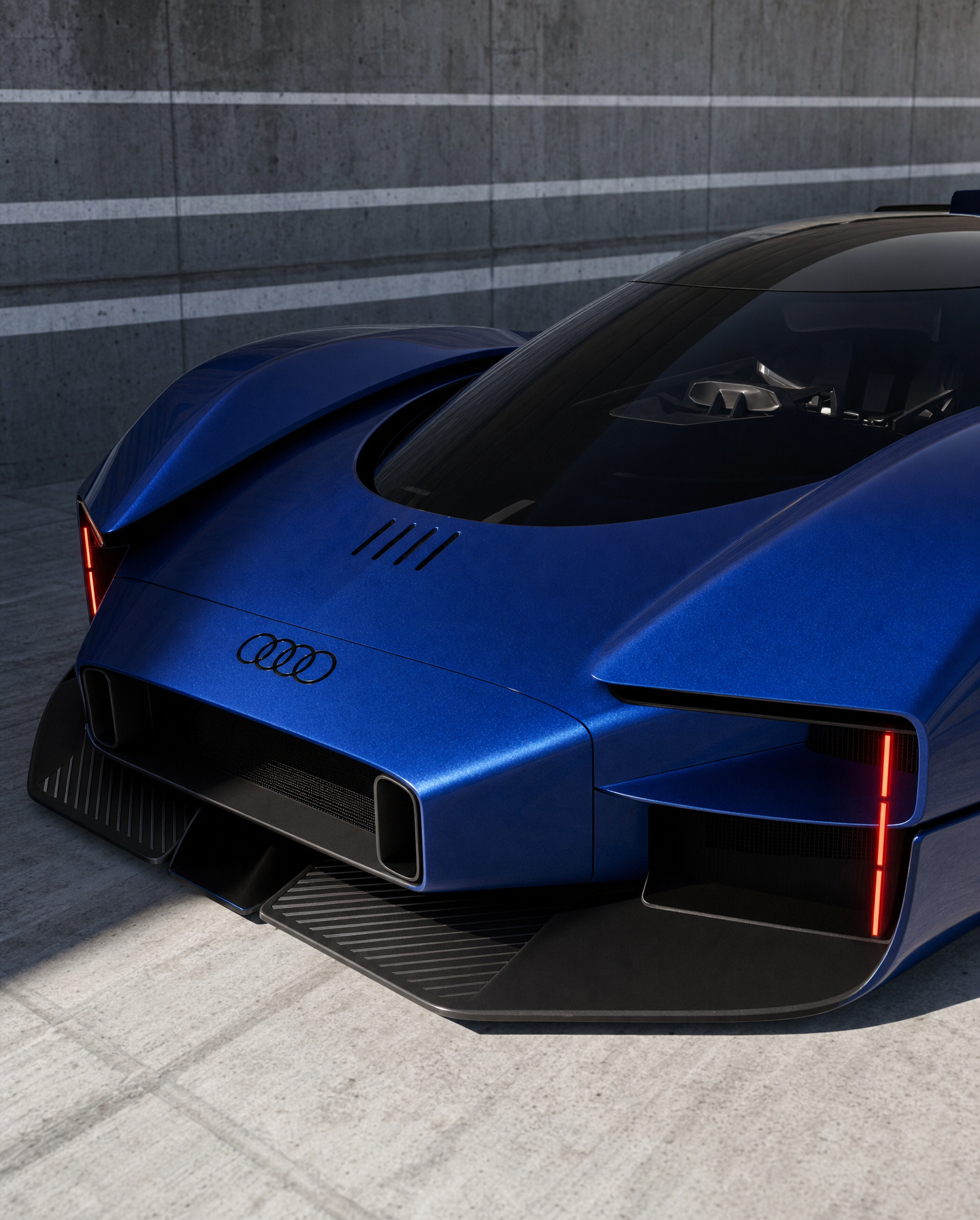
Deep-blue Audi concept in brutalist garage
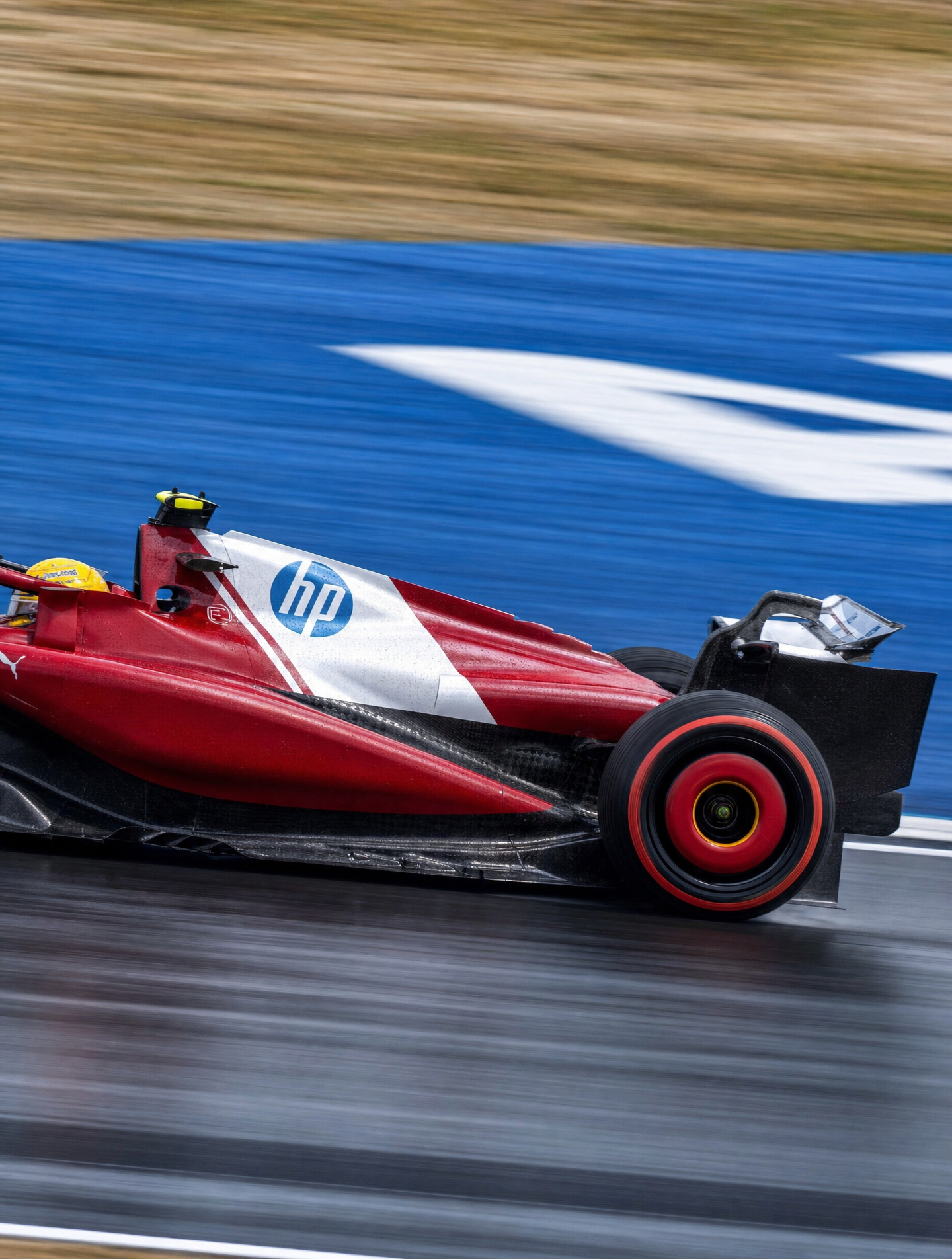
Red Ferrari F1 Panning Speed Shot