Why this works
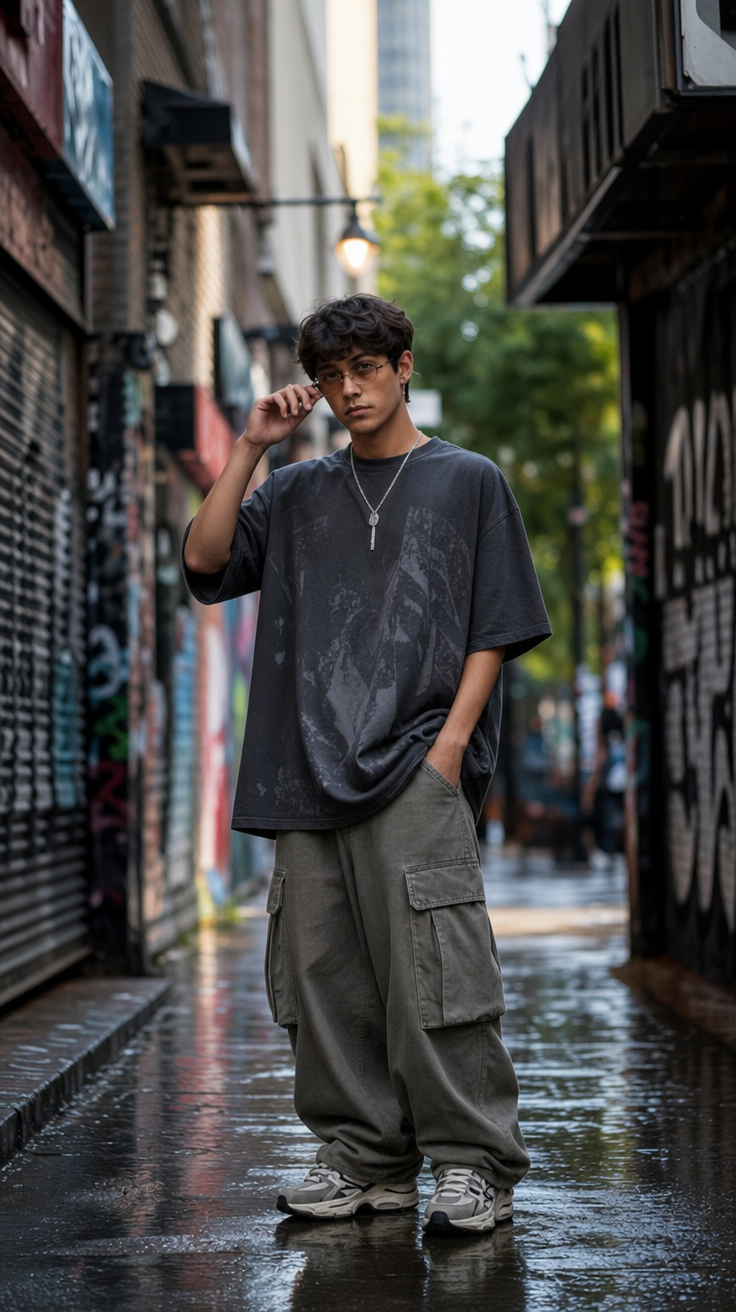
“Full-body fashion editorial streetwear portrait” establishes the vertical, figure-led framing, while “one hand is adjusting them” gives the pose a candid action instead of a static model stance. The mood comes from the specific combination of “moody and candid,” “overcast natural daylight,” and “wet pavement reflections,” with black, green, and brown in the generated image reinforcing the alley’s subdued urban palette. “Shallow depth of field” keeps the young man and his glasses readable against the graffiti-covered walls and small storefronts, while “realistic skin texture” anchors the photorealistic finish.
FAQ
→How do I make the glasses and hand gesture more central to the image?
Replace “one hand is adjusting them” with “close, deliberate hand adjusting the glasses at eye level, glasses and fingers sharply emphasized,” and change “full-body framing” to “three-quarter portrait framing.” Keep “shallow depth of field” so the gesture remains more prominent than the graffiti and storefronts.
→How do I make this streetwear portrait brighter and less somber?
Replace “moody and candid” and “overcast natural daylight” with “bright, energetic candid mood” and “clear late-afternoon sunlight with warm highlights.” Swap “wet pavement reflections” for “dry pavement with crisp sunlit textures” to reduce the dark, reflective black-and-brown atmosphere.
→How do I build a coordinated series with different outfits and locations?
Keep the fixed phrases “fashion editorial composition,” “realistic skin texture,” “full-body framing,” and “young man wearing glasses,” then replace “oversized graphic t-shirt,” “loose cargo pants,” and “chunky retro running sneakers” with one consistent outfit formula for each variation. Replace “narrow urban alley” with settings such as “concrete parking garage,” “subway entrance,” or “industrial loading dock,” while retaining “overcast natural daylight” and “shallow depth of field” for visual continuity.
Learn the technique behind this
- Why can't AI spell, and how do I get readable text in an image? — Older diffusion models had no character-level representation of text, so they produced letterform-shaped texture instead of words.
- Which aspect ratio should I use, and how does it change the image? — Aspect ratio determines what the model composes, not how it's cropped afterwards.
- Why does AI get hands and faces wrong, and how do I fix it? — Hands fail because they're small in frame, extremely variable in pose, and self-occluding — the model has less usable signal per pixel than for any other body part.
Related prompts
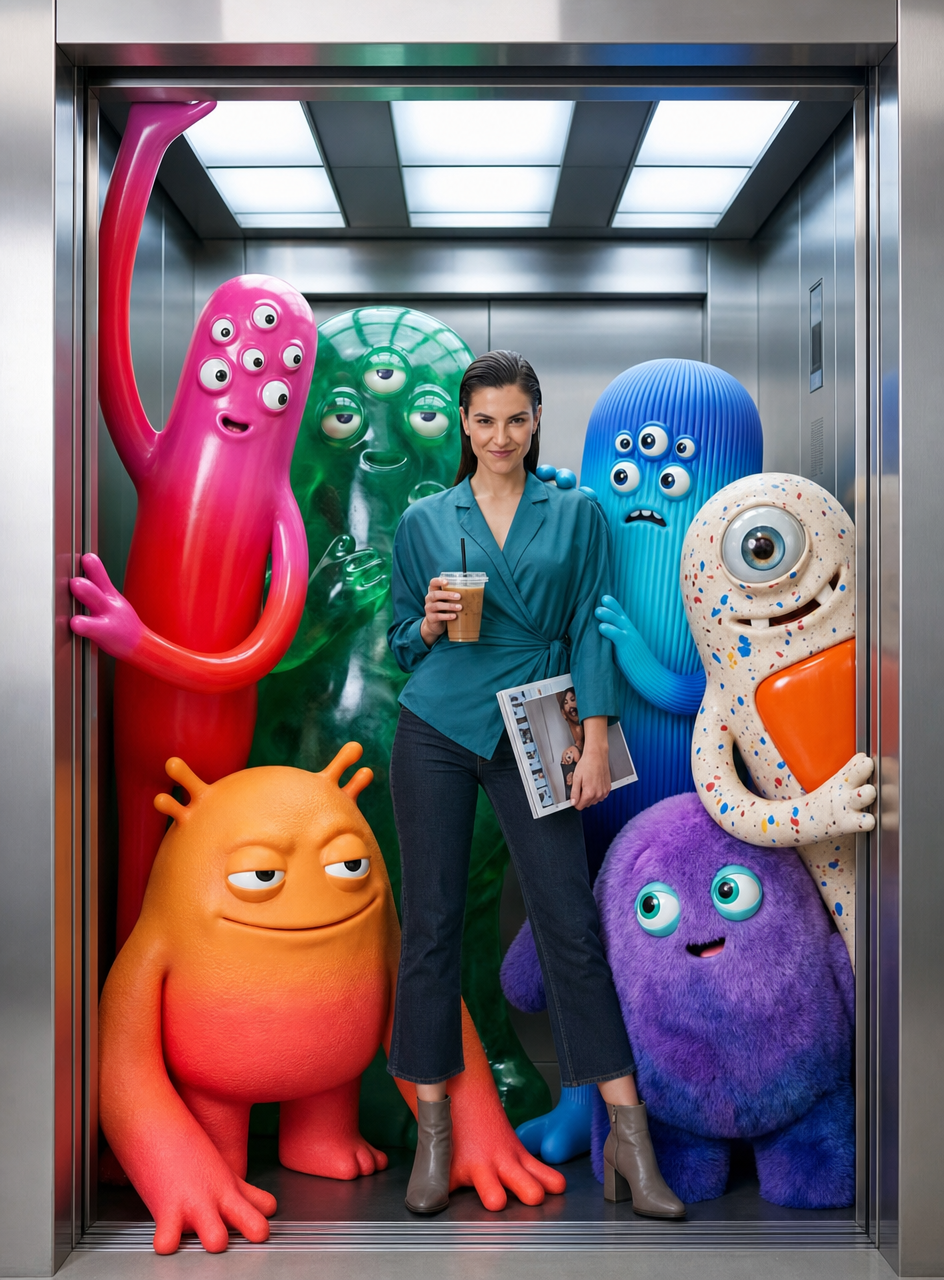
Teal fashion editorial in monster-filled lift
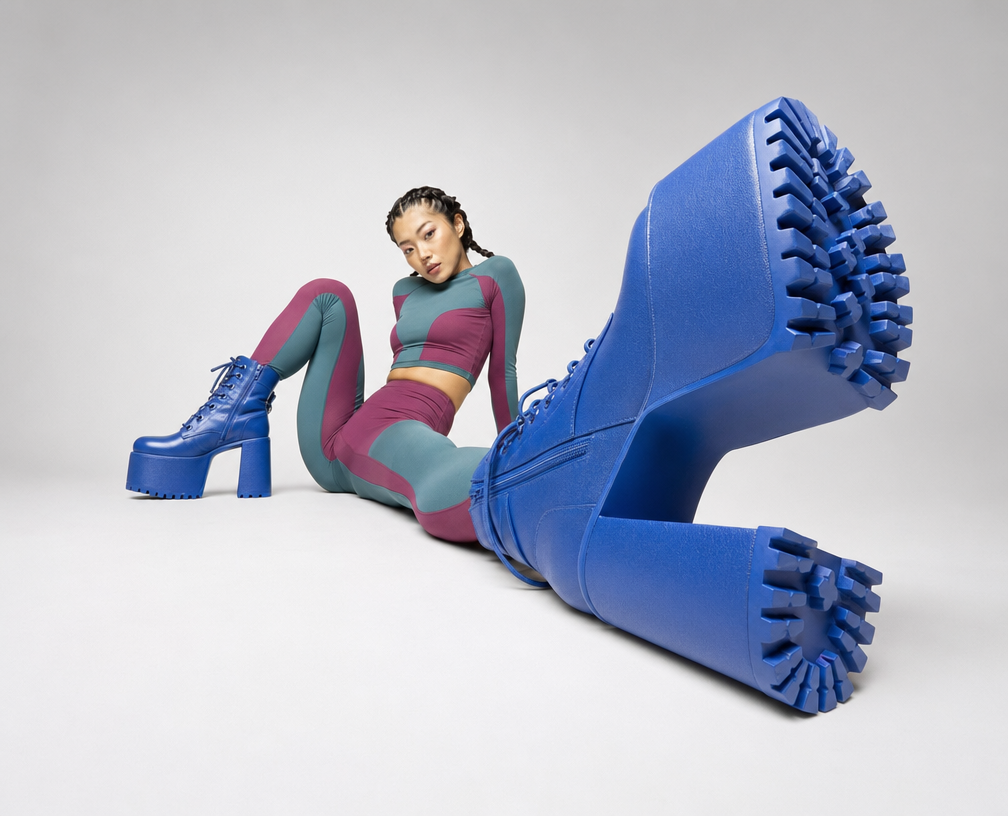
Cobalt Boots in Sleek Studio Edit
Silhouette Influencer by Sunlit Window
Sunlit editorial on striped beach towel