Why this works
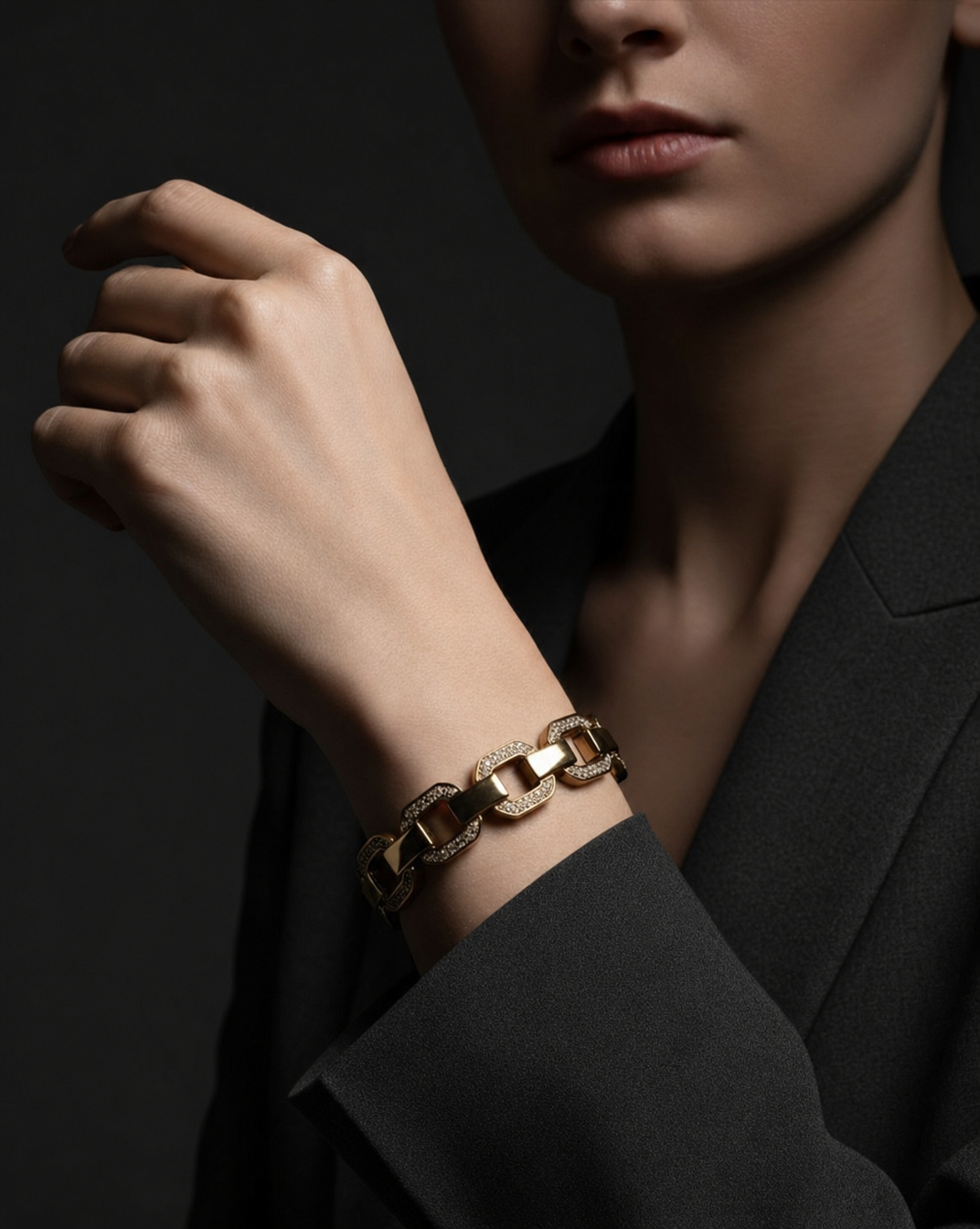
The phrase “only the lower half of her face visible” creates a tightly cropped, portrait-closeup composition that directs attention to the raised hand and bracelet rather than facial identity. “Gold geometric chain bracelet” against the “charcoal-grey tailored blazer” establishes a restrained brown-and-gray palette, while the “slightly warmer antique finish” adds muted warmth without breaking the moody harmony. “Soft directional studio lighting” paired with “high contrast yet smooth highlights” gives the jewelry controlled definition, and “shallow depth of field” keeps the dark minimal background unobtrusive.
FAQ
→How do I make the bracelet more prominent in the image?
Replace “hand raised near her chin” with “hand centered beside the cheek, bracelet fully facing the camera,” and change “jewelry-focused composition” to “bracelet-dominant composition with the chain filling the foreground.” Keep “shallow depth of field,” but add “sharp focus on every bracelet link” so the metal, rather than the skin, receives the crispest detail.
→How do I shift this from moody to brighter, softer luxury?
Replace “Dark minimal background” with “warm ivory studio background,” and change “high contrast yet smooth highlights” to “low-contrast luminous lighting with soft wraparound highlights.” Swap “charcoal-grey tailored blazer” for “cream tailored blazer” to move the image away from the dominant gray and brown palette while retaining the “luxury fashion editorial photography” style.
→How do I build a series of variations while keeping the same editorial identity?
Keep “luxury fashion editorial photography,” “only the lower half of her face visible,” and “jewelry-focused composition” unchanged, then vary one anchor at a time. Replace “gold geometric chain bracelet” with “sculptural silver cuff,” “pearl drop bracelet,” or “blackened metal link bracelet,” and pair each with a controlled wardrobe swap such as “charcoal-grey tailored blazer,” “deep espresso velvet jacket,” or “ivory silk blouse.”
Learn the technique behind this
- Why does AI get hands and faces wrong, and how do I fix it? — Hands fail because they're small in frame, extremely variable in pose, and self-occluding — the model has less usable signal per pixel than for any other body part.
- Why can't AI spell, and how do I get readable text in an image? — Older diffusion models had no character-level representation of text, so they produced letterform-shaped texture instead of words.
- How should a prompt be structured, and does word order matter? — A prompt that behaves predictably names one subject first, then what it is doing, then where, then the light, then the lens or medium, then the style.
Related prompts

Teal fashion editorial in monster-filled lift
Cobalt Boots in Sleek Studio Edit
Silhouette Influencer by Sunlit Window
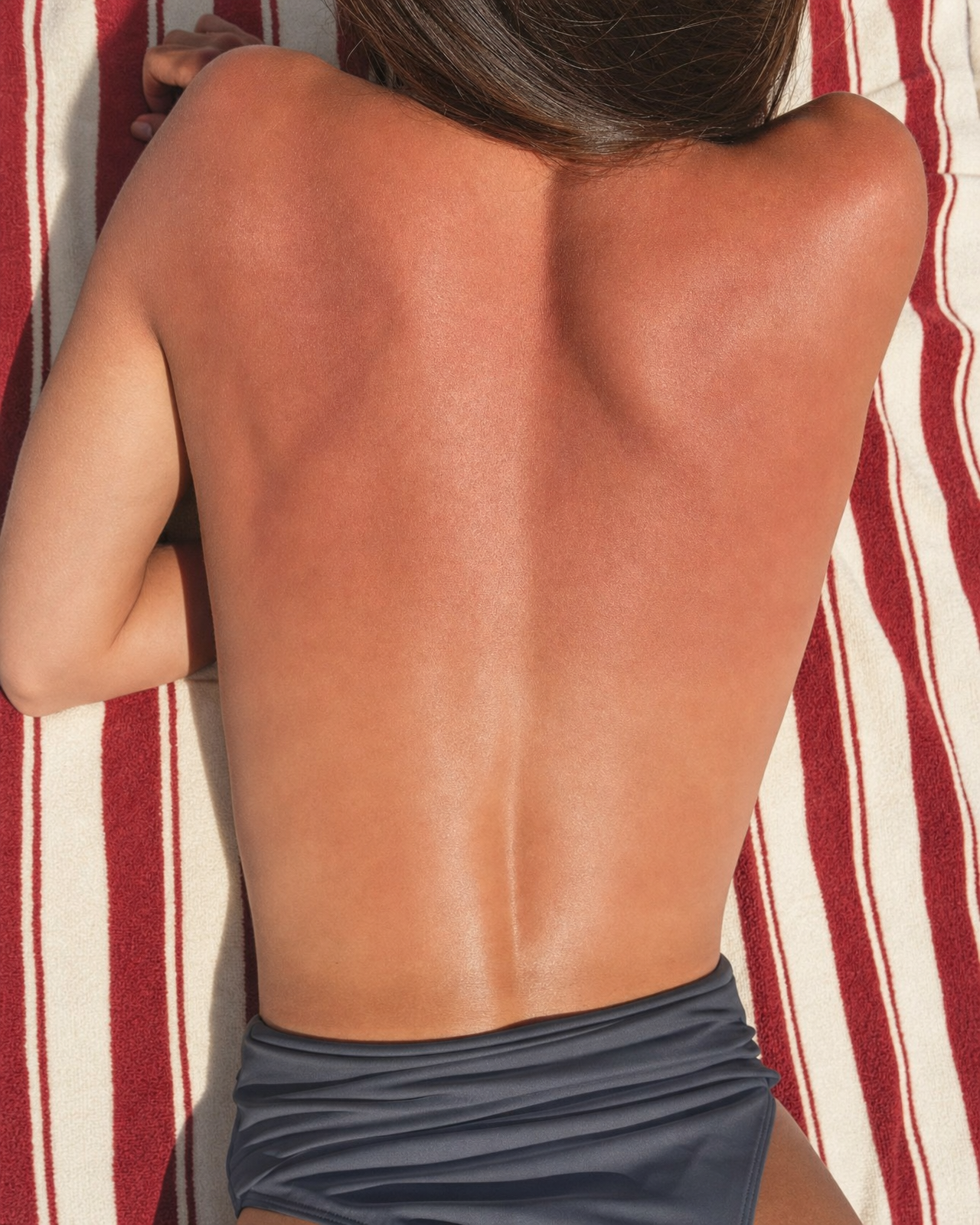
Sunlit editorial on striped beach towel