Why this works
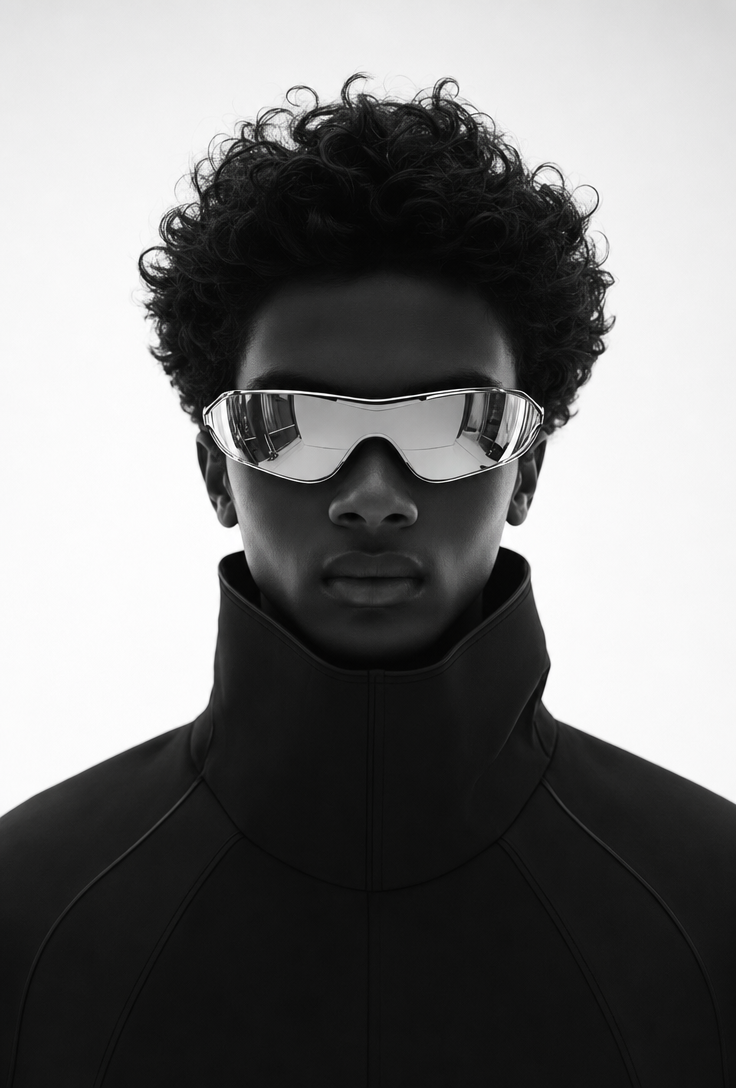
The “centered close-up” framing makes the wraparound sunglasses, voluminous curls, and high collar the immediate visual anchors, while “shallow depth of field” suppresses background detail against the pure white studio. “High-contrast studio lighting for sharp facial definition” supplies the dramatic structure, and “black-and-white,” “dramatic monochrome tones,” and “subtle vignette” compress the gray-and-white palette into a sleek, controlled futuristic mood. The phrases “dark, structured high-collar coat,” “sculptural seams,” and “aerodynamic silhouette” add geometric weight beneath the softer curls.
FAQ
→How do I make the sunglasses more central and visually dominant?
Replace “wearing sleek mirrored sport sunglasses with wraparound frames” with “oversized mirrored wraparound sunglasses dominating the frame, reflective lenses occupying the central focus.” Keep “centered close-up composition,” and reduce “shallow depth of field” only if you want the frames and hair equally crisp.
→How do I shift this from sleek futuristic drama to a softer, more approachable mood?
Replace “high-contrast studio lighting for sharp facial definition,” “subtle vignette,” and “dramatic monochrome tones” with “soft diffused window-like lighting, gentle facial shadows, low-contrast tonal range, and warm neutral gray tones.” Change “dark, structured high-collar coat” to “relaxed light wool jacket with a soft open collar” to remove the severe silhouette.
→How do I build a related series while changing the setting?
Keep “young person,” “voluminous tousled curls,” “mirrored wraparound sport sunglasses,” and “dark structured high-collar coat” as the series anchors, then replace “pure white studio background” with specific environments such as “brushed aluminum transit platform,” “foggy rooftop at dawn,” or “seamless black studio.” Preserve “black-and-white editorial fashion photography” for consistency, or replace it with “cool desaturated steel-blue editorial photography” for a controlled color variation.
Learn the technique behind this
- Why can't AI spell, and how do I get readable text in an image? — Older diffusion models had no character-level representation of text, so they produced letterform-shaped texture instead of words.
- How should a prompt be structured, and does word order matter? — A prompt that behaves predictably names one subject first, then what it is doing, then where, then the light, then the lens or medium, then the style.
- Which aspect ratio should I use, and how does it change the image? — Aspect ratio determines what the model composes, not how it's cropped afterwards.
Related prompts
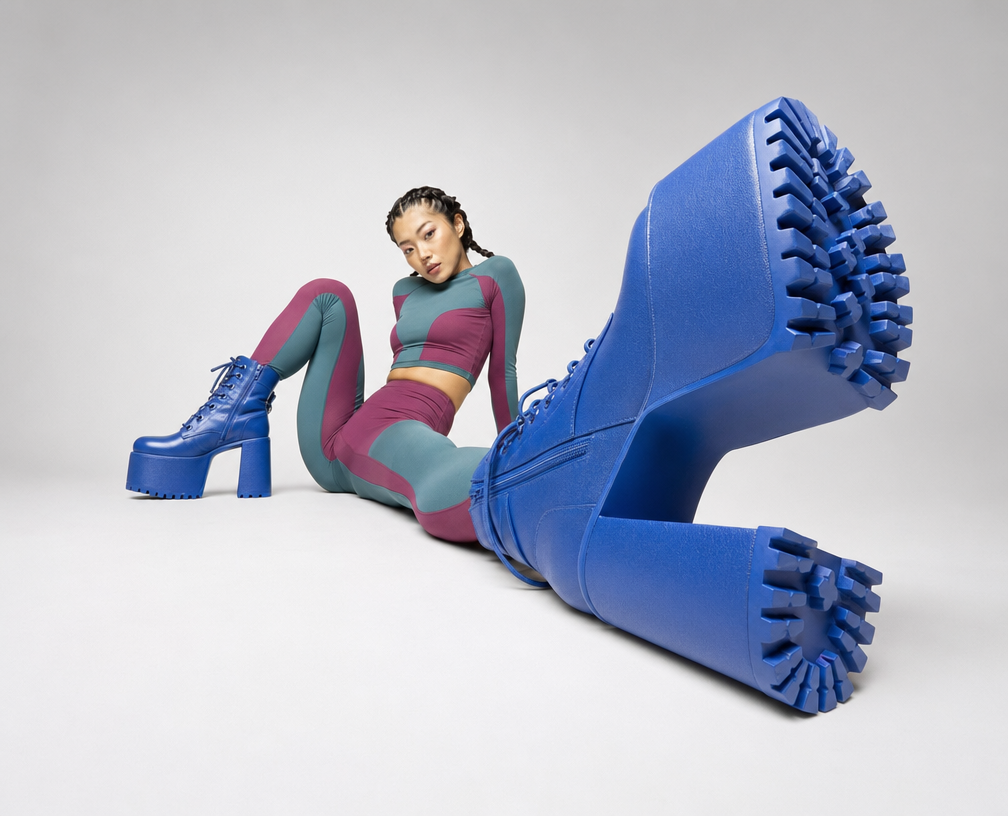
Cobalt Boots in Sleek Studio Edit
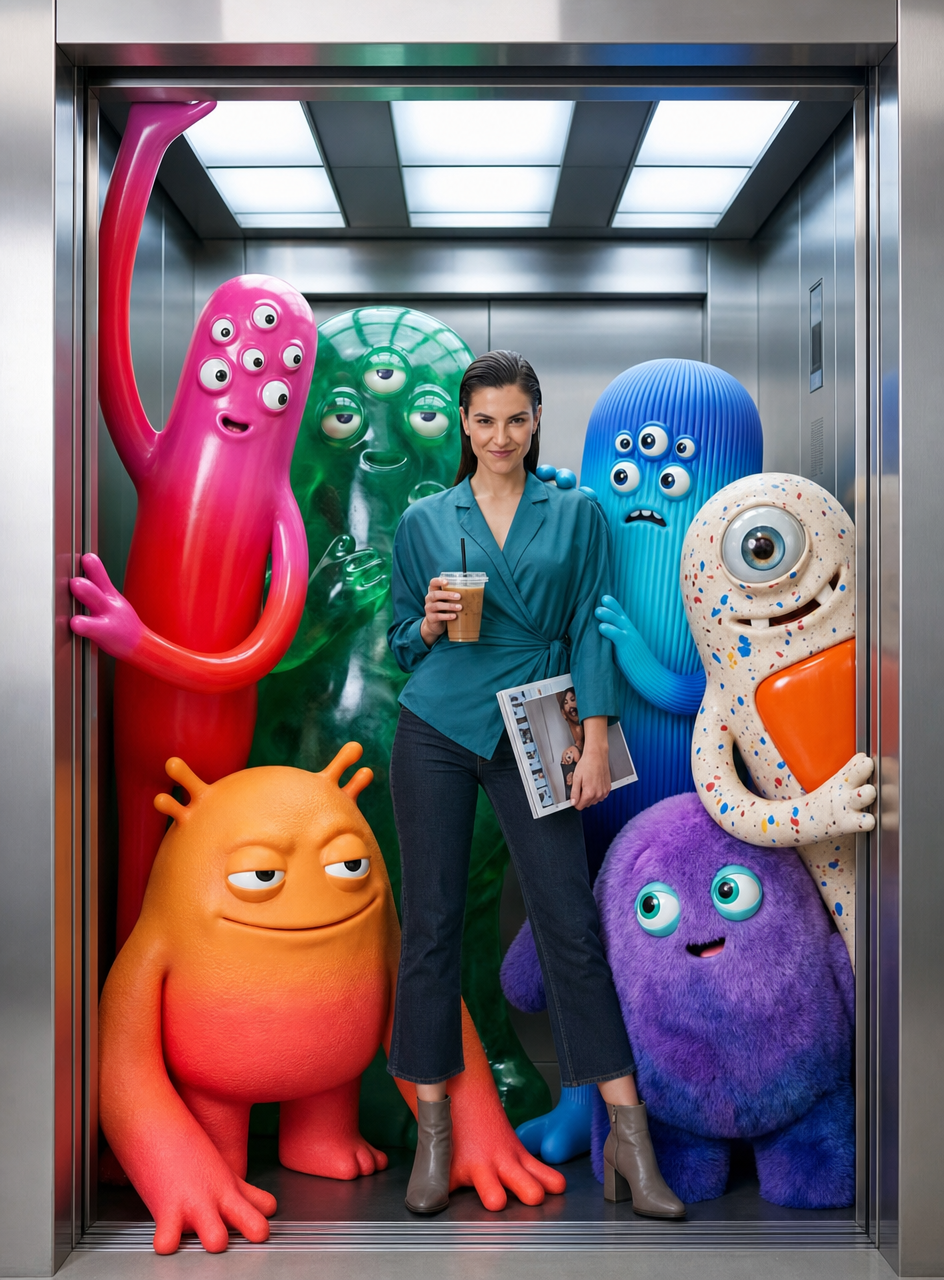
Teal fashion editorial in monster-filled lift
Sunlit editorial on striped beach towel
Silhouette Influencer by Sunlit Window