Why this works
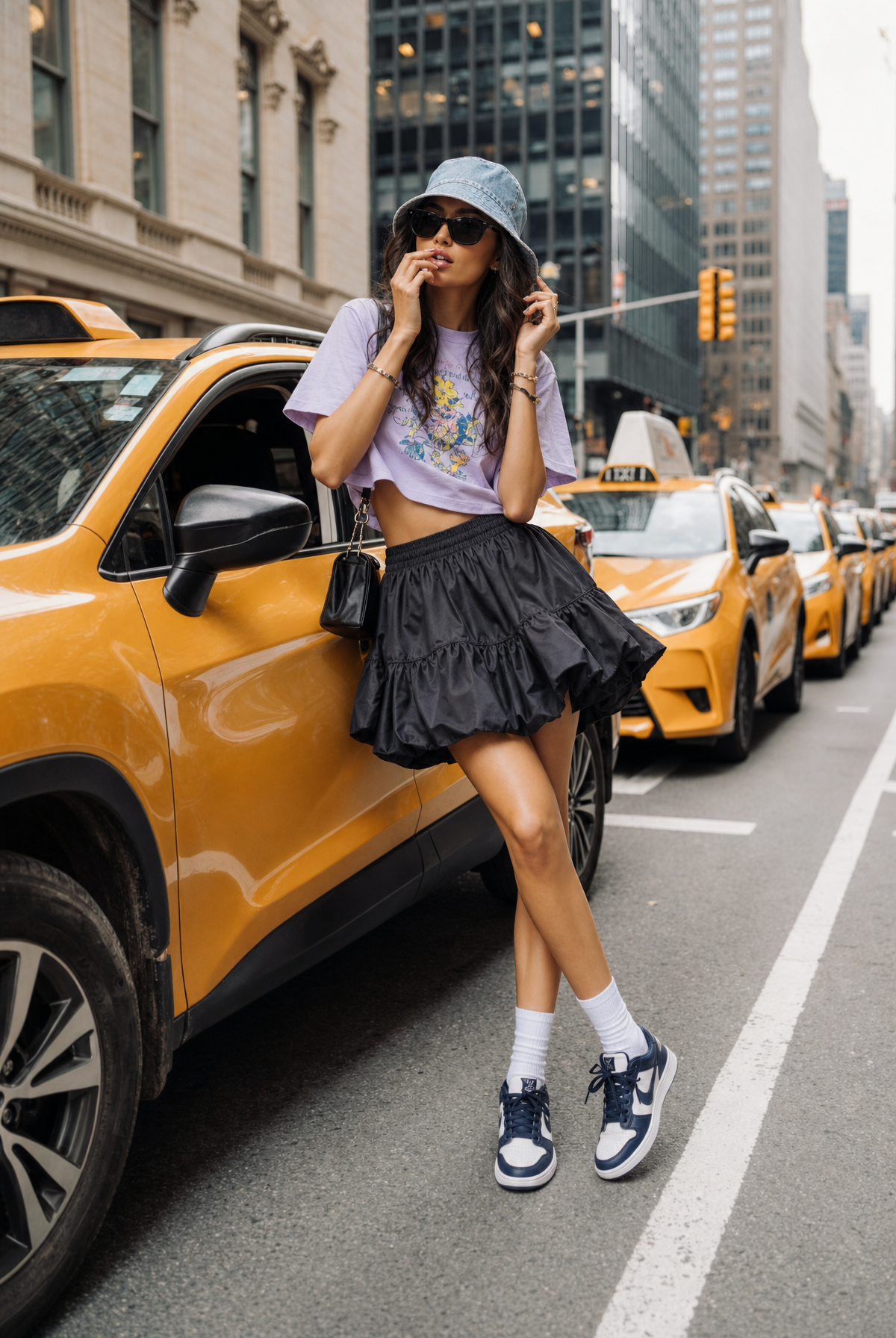
The full-body, eye-level framing keeps the model’s confident stance and complete outfit readable, while “leaning against a yellow taxi” gives the portrait a strong diagonal anchor. “Soft late-afternoon natural daylight with warm neutral tones” tempers the black, gray, blue, and white palette, and “multiple yellow taxis” adds controlled color repetition against the office-building background. “Shallow depth of field” isolates the subject while “realistic reflections on surfaces” preserves the crisp, photorealistic street texture.
FAQ
→How do I make the model more visually dominant than the taxis and office buildings?
Replace “Manhattan-style urban street background with multiple yellow taxis and tall office buildings” with “one softly blurred yellow taxi and minimal background architecture,” and change “eye-level full-body” to “slightly low-angle full-body editorial portrait.” Keep “shallow depth of field” so the urban context remains secondary.
→How do I shift this from a warm, confident editorial into a moodier night street scene?
Replace “soft late-afternoon natural daylight with warm neutral tones” with “cool blue-hour light with hard storefront highlights and deep shadows,” and replace “warm neutral city color palette” with “cool charcoal, cobalt, and sodium-orange palette.” Add “wet pavement with reflected neon” while retaining “realistic reflections on urban surfaces.”
→How do I create a series of variations without losing the same fashion identity?
Keep the fixed subject details, including “pastel-lilac graphic crop T-shirt,” “black satin mini skirt,” “light denim bucket hat,” and “white-and-navy sneakers,” then swap only the setting phrase for “SoHo side street,” “rooftop overlooking Midtown,” or “subway entrance at street level.” Vary “confident candid pose” into “walking mid-stride,” “turning over one shoulder,” or “seated on the taxi hood” while preserving “photorealistic street fashion editorial photography.”
Learn the technique behind this
- Why does AI get hands and faces wrong, and how do I fix it? — Hands fail because they're small in frame, extremely variable in pose, and self-occluding — the model has less usable signal per pixel than for any other body part.
- Why can't AI spell, and how do I get readable text in an image? — Older diffusion models had no character-level representation of text, so they produced letterform-shaped texture instead of words.
- How do I keep the same character across multiple images? — Text prompts alone won't hold a face across images — a description defines a type, not a person.
Related prompts
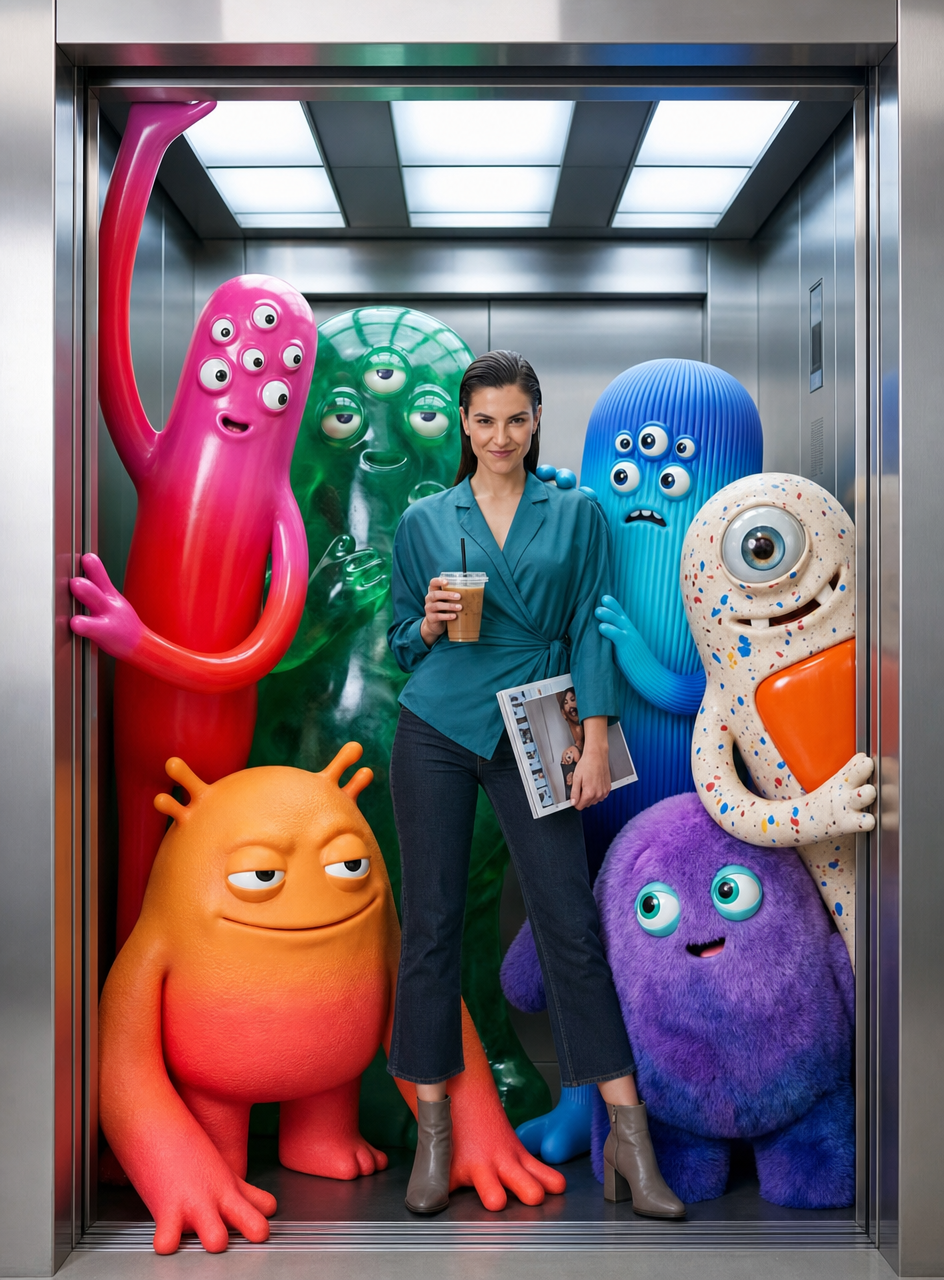
Teal fashion editorial in monster-filled lift
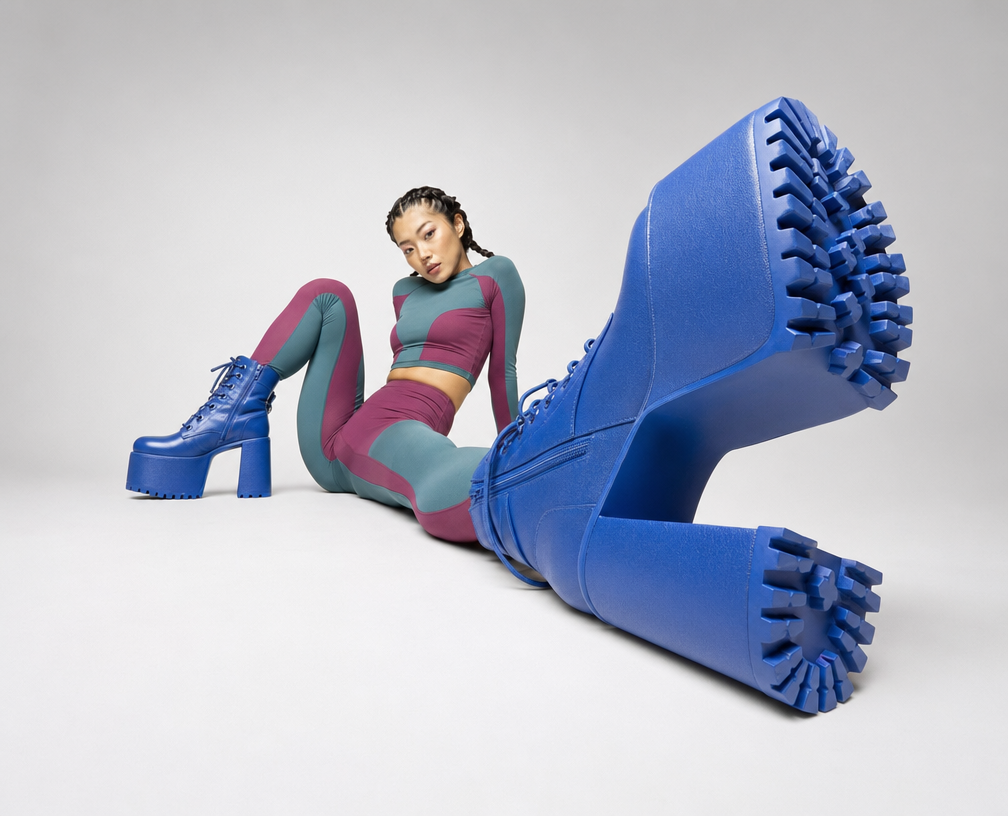
Cobalt Boots in Sleek Studio Edit
Silhouette Influencer by Sunlit Window
Sunlit editorial on striped beach towel