Why this works
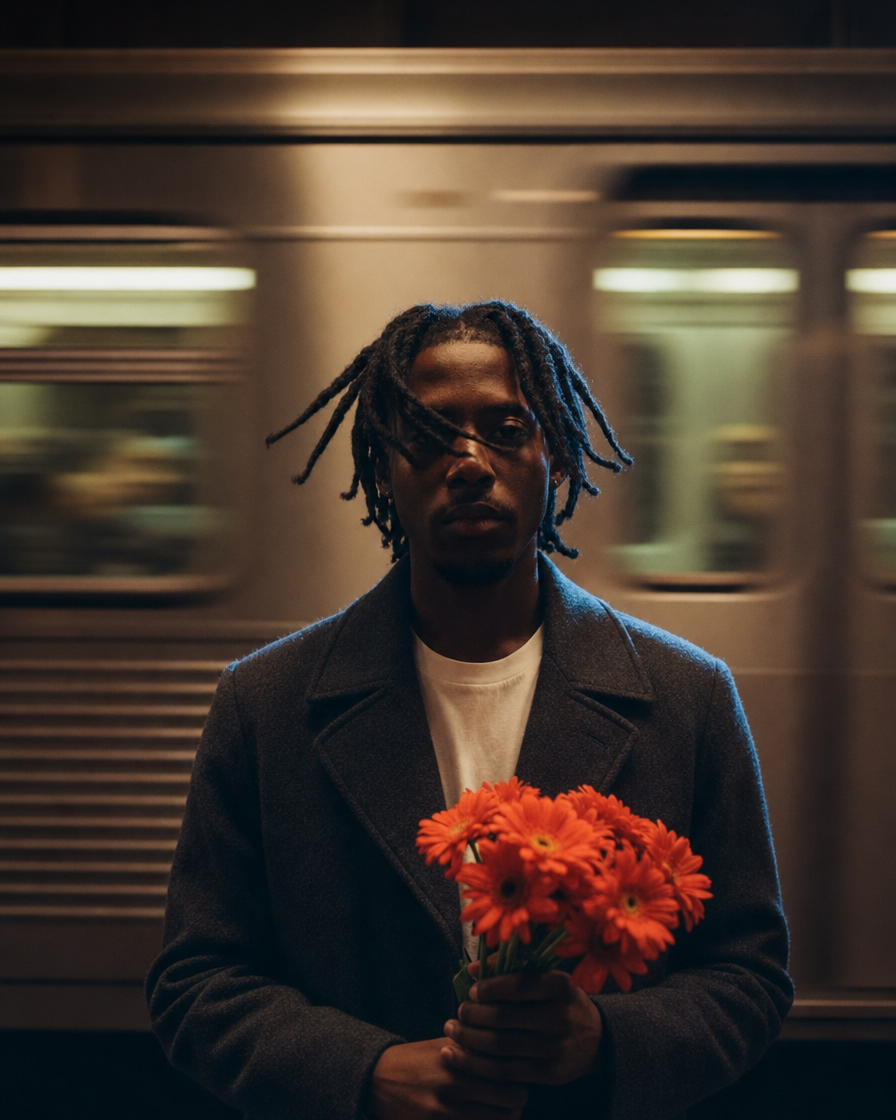
The phrase “man standing before a moving subway train at night” supplies the urban scale and kinetic backdrop, while “centered” and “portrait-full-body” keep the figure and bouquet legible as the visual anchor. “Warm cinematic lighting with a slightly cooler rim light” separates the subject from the train, and the dominant black-and-orange palette reinforces the nocturnal, industrial mood. “Pronounced motion blur from the passing train” adds movement without sacrificing the man’s presence, while “shallow depth of field” and “realistic skin texture” preserve a polished editorial focus on his face, clothing, and flowers.
FAQ
→How do I change this prompt for a softer, more romantic mood?
Replace “Moody dramatic urban editorial fashion photography” with “soft romantic editorial fashion photography,” and change “Warm cinematic lighting with a slightly cooler rim light” to “diffused golden-hour light with a gentle rose-toned rim light.” Replace “pronounced motion blur” with “subtle background blur” so the subway remains atmospheric rather than aggressive.
→How do I make the bouquet more central and prominent?
Replace “Centered, high-end editorial fashion look” with “medium full-body composition with the bouquet held at chest height as the primary focal point,” and add “large vivid red flowers in sharp focus.” Keep “shallow depth of field,” but change “realistic skin texture” to “realistic skin and petal texture” so both the man and bouquet retain detail.
→How do I build a series with different urban settings while keeping this look consistent?
Keep the subject, lighting, camera, “charcoal wool overcoat,” “vivid red flowers,” “shallow depth of field,” “realistic skin texture,” and “cinematic photorealistic look” unchanged. Replace “in front of a moving subway train at night” with variations such as “beneath a rain-soaked elevated railway,” “outside a neon-lit late-night diner,” or “on a crowded downtown crosswalk after dark,” while retaining “warm cinematic key light with a slightly cooler rim light” for visual continuity.
Learn the technique behind this
- Why can't AI spell, and how do I get readable text in an image? — Older diffusion models had no character-level representation of text, so they produced letterform-shaped texture instead of words.
- How should a prompt be structured, and does word order matter? — A prompt that behaves predictably names one subject first, then what it is doing, then where, then the light, then the lens or medium, then the style.
- Do negative prompts work, and what should go in one? — Negative prompts work on models that support a separate negative conditioning channel — mainly Stable Diffusion and FLUX-family models.
Related prompts
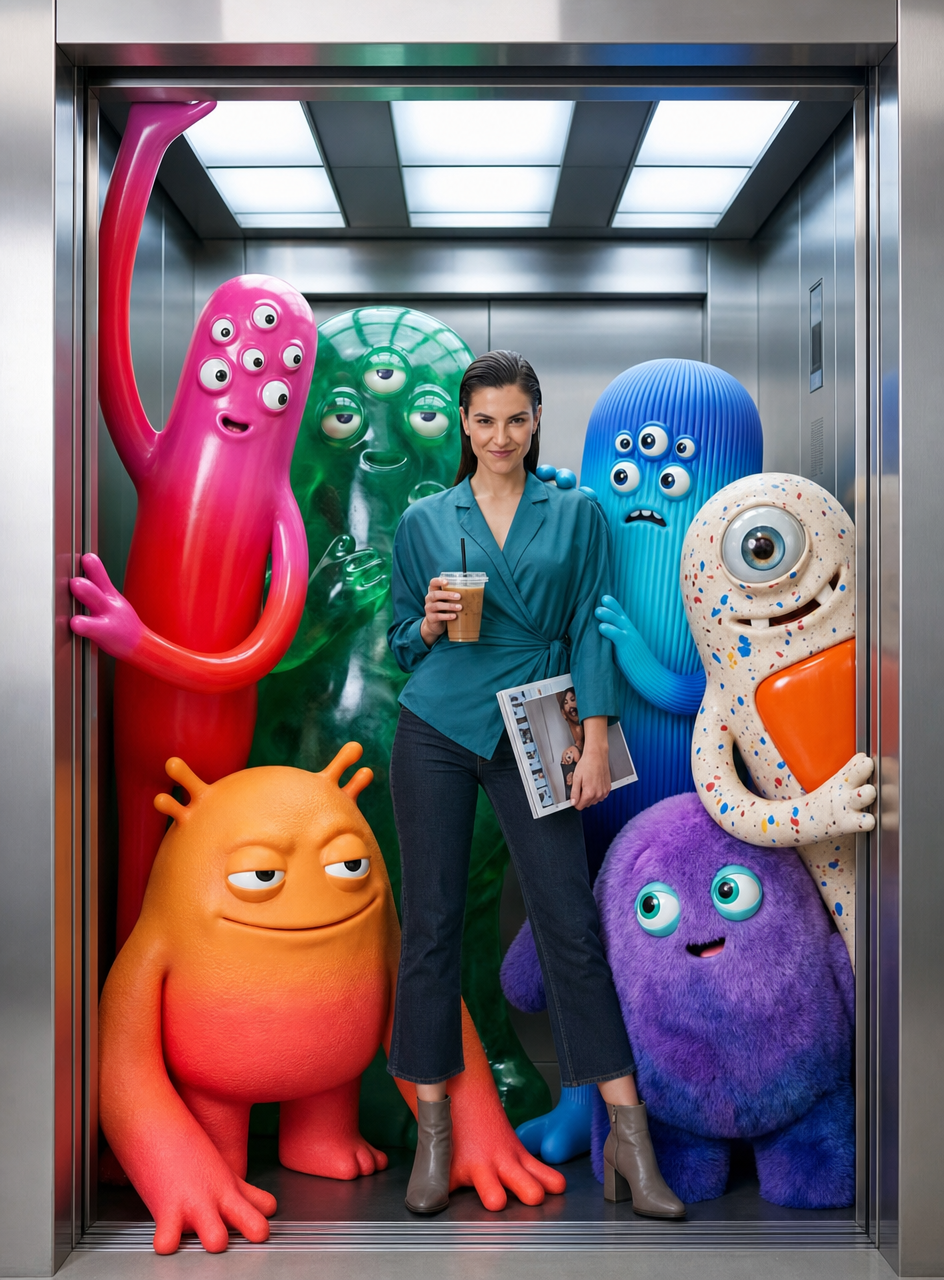
Teal fashion editorial in monster-filled lift
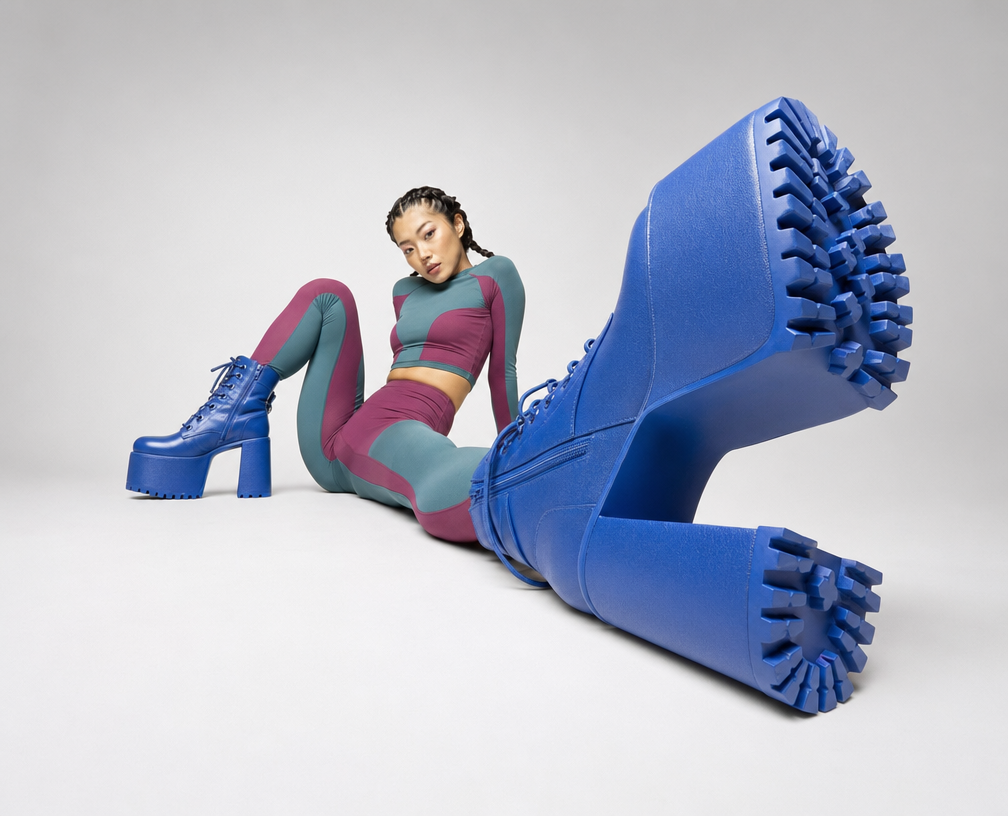
Cobalt Boots in Sleek Studio Edit
Silhouette Influencer by Sunlit Window
Sunlit editorial on striped beach towel