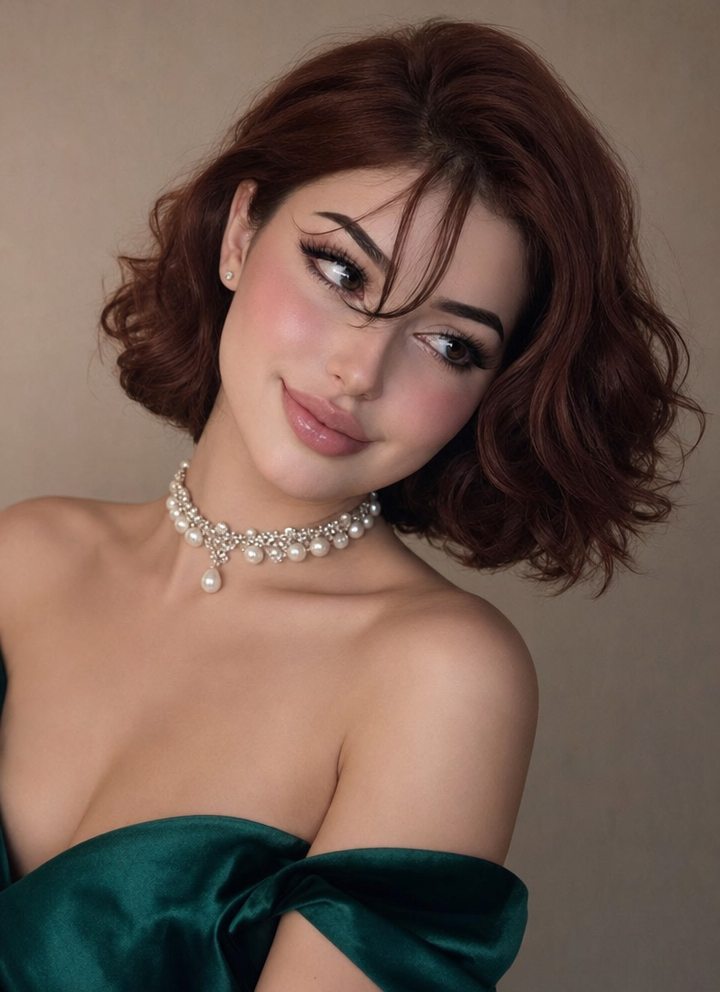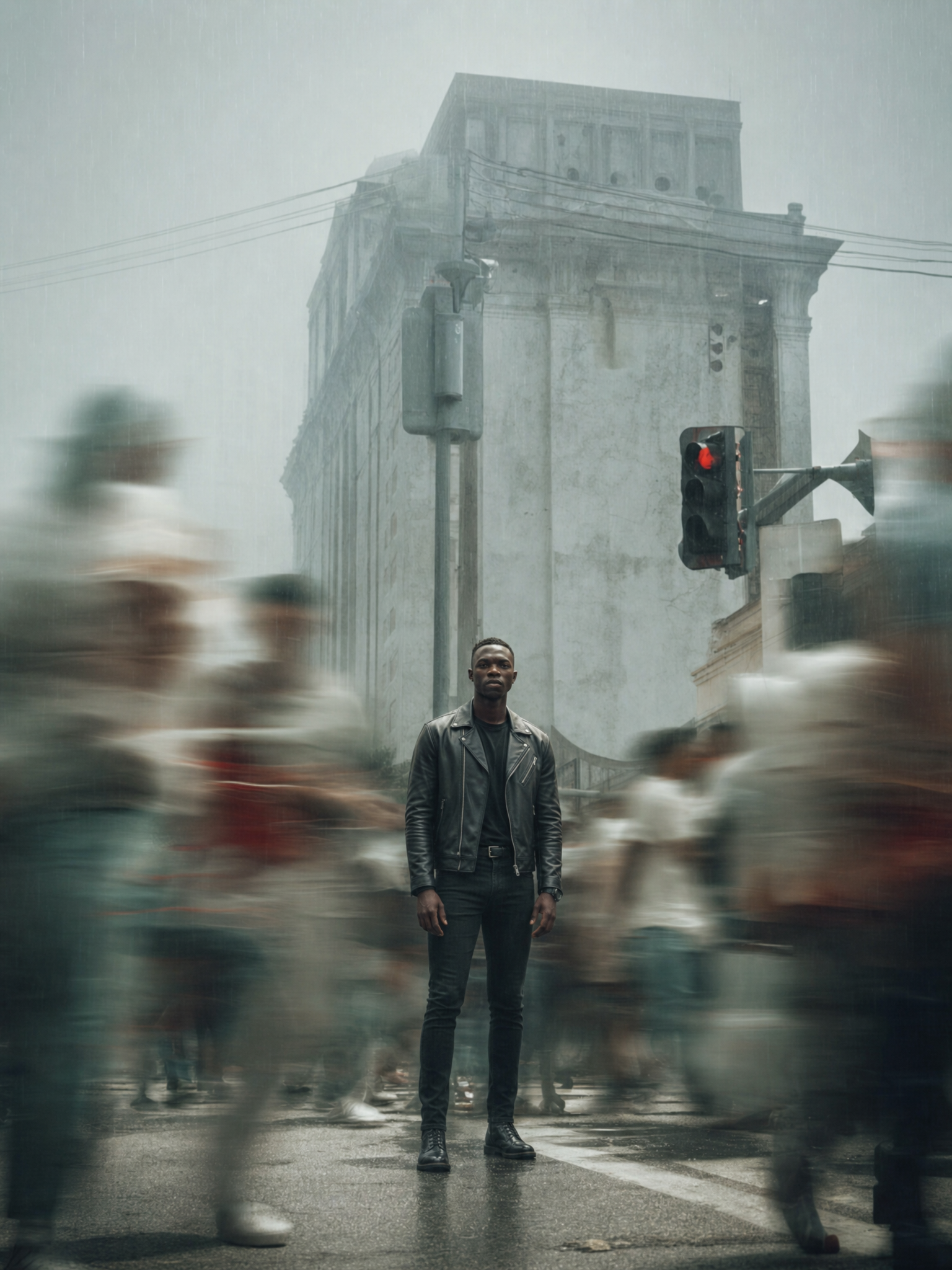
Same prompt, generated with each model separately — click one to see how it holds up.
Why this works
The phrase “man standing still at the center of a busy urban intersection” establishes a locked, portrait-oriented focal point, while “crowds rushing past in strong motion blur on both sides” creates directional movement that frames him without competing for detail. “Cooler muted color palette,” “light drizzle haze,” and “subtle foggy atmosphere” produce the blue-white atmospheric veil seen around the black clothing and architecture. “Shallow depth of field” isolates the subject, while “dramatic contrast” and “realistic street lighting” keep the leather jacket and full-body silhouette legible against the softened city.
FAQ
→How do I make the man feel more dominant and imposing in the frame?
Replace “full-body framing” with “low-angle full-body framing,” and change “man standing still at the center” to “man standing still in the exact center, occupying most of the vertical frame.” Keep “crowds rushing past in strong motion blur on both sides” so the surrounding movement still reinforces his scale and stillness.
→How do I shift this from moody blue street photography to a warmer, more hopeful editorial?
Replace “cooler muted color palette” with “warm amber and honey-gold color palette,” and change “light drizzle haze” and “subtle foggy atmosphere” to “clear air with soft late-afternoon sunlight.” Replace “moody surreal atmosphere” with “quietly optimistic cinematic atmosphere,” while retaining “dramatic contrast” for definition in the jacket and buildings.
→How do I create a consistent series using different cities without losing this visual structure?
Keep the fixed phrases “man standing still at the center,” “crowds rushing past in strong motion blur on both sides,” “full-body framing,” and “shallow depth of field.” Swap “busy urban intersection with towering old city buildings” for specific locations such as “rainy Tokyo crosswalk with dense illuminated signage,” “Paris boulevard with Haussmann buildings,” or “New York avenue with art deco towers,” while preserving “photorealistic fashion editorial” and “cinematic street photography look.”
Learn the technique behind this
- Why can't AI spell, and how do I get readable text in an image? — Older diffusion models had no character-level representation of text, so they produced letterform-shaped texture instead of words.
- How should a prompt be structured, and does word order matter? — A prompt that behaves predictably names one subject first, then what it is doing, then where, then the light, then the lens or medium, then the style.
- Which aspect ratio should I use, and how does it change the image? — Aspect ratio determines what the model composes, not how it's cropped afterwards.
Related prompts
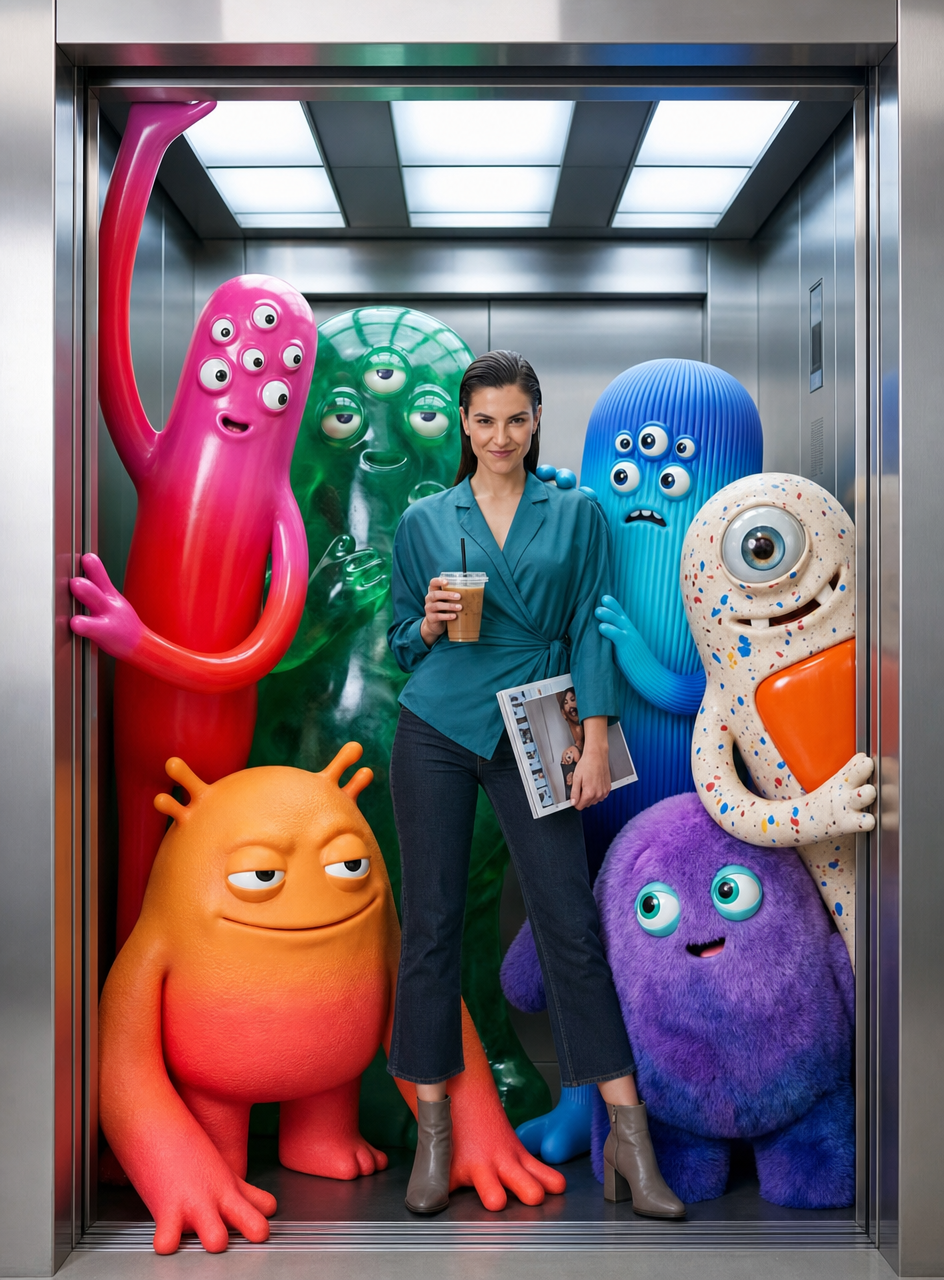
Teal fashion editorial in monster-filled lift
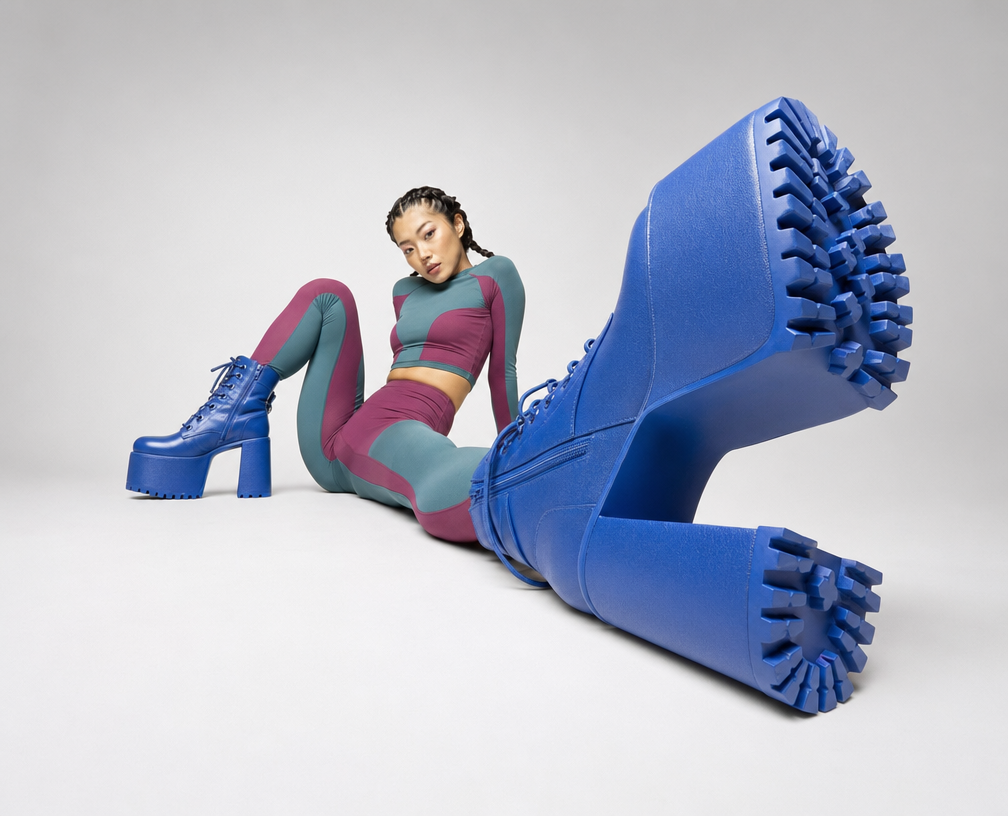
Cobalt Boots in Sleek Studio Edit
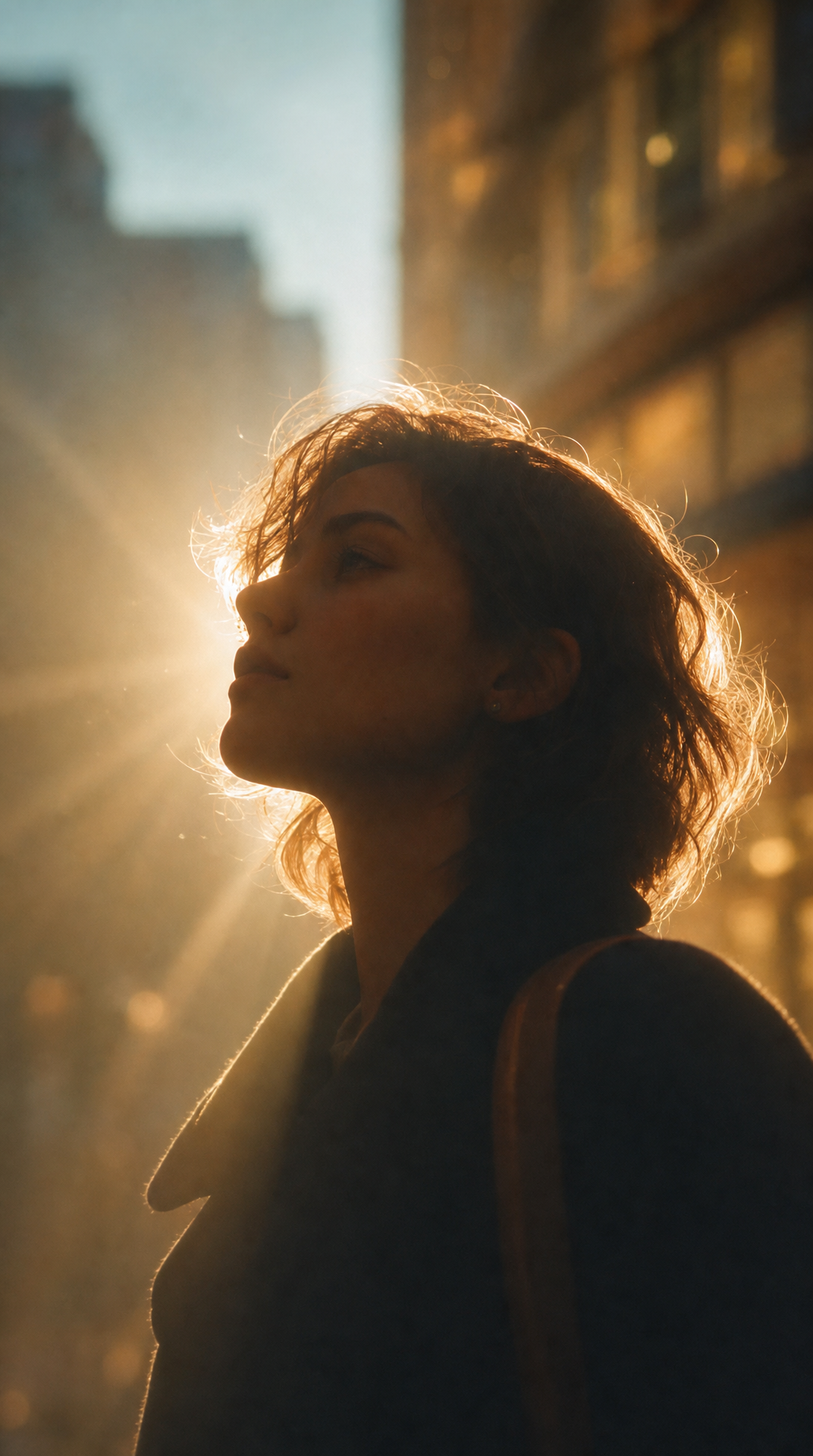
Silhouette Influencer by Sunlit Window
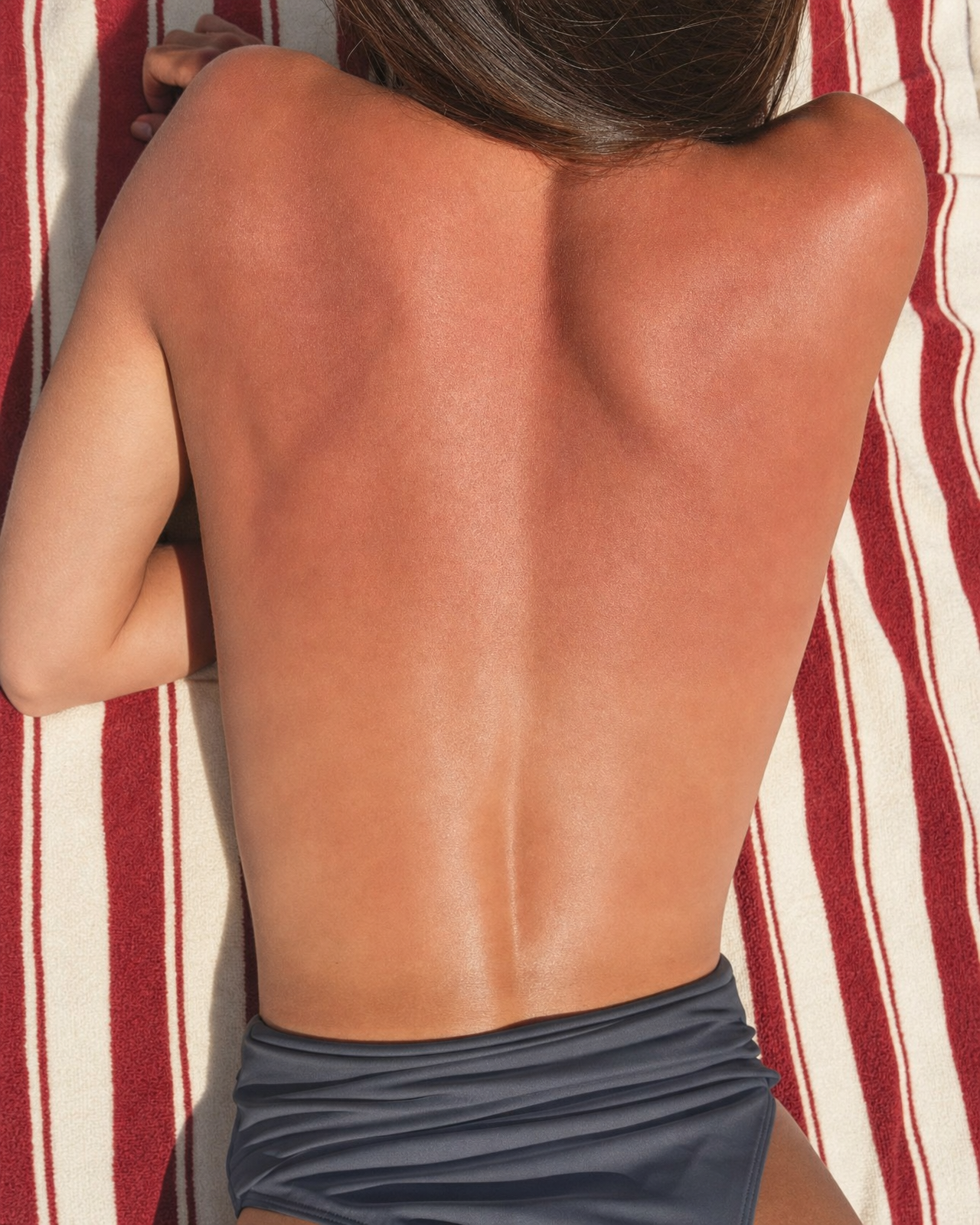
Sunlit editorial on striped beach towel