Why this works
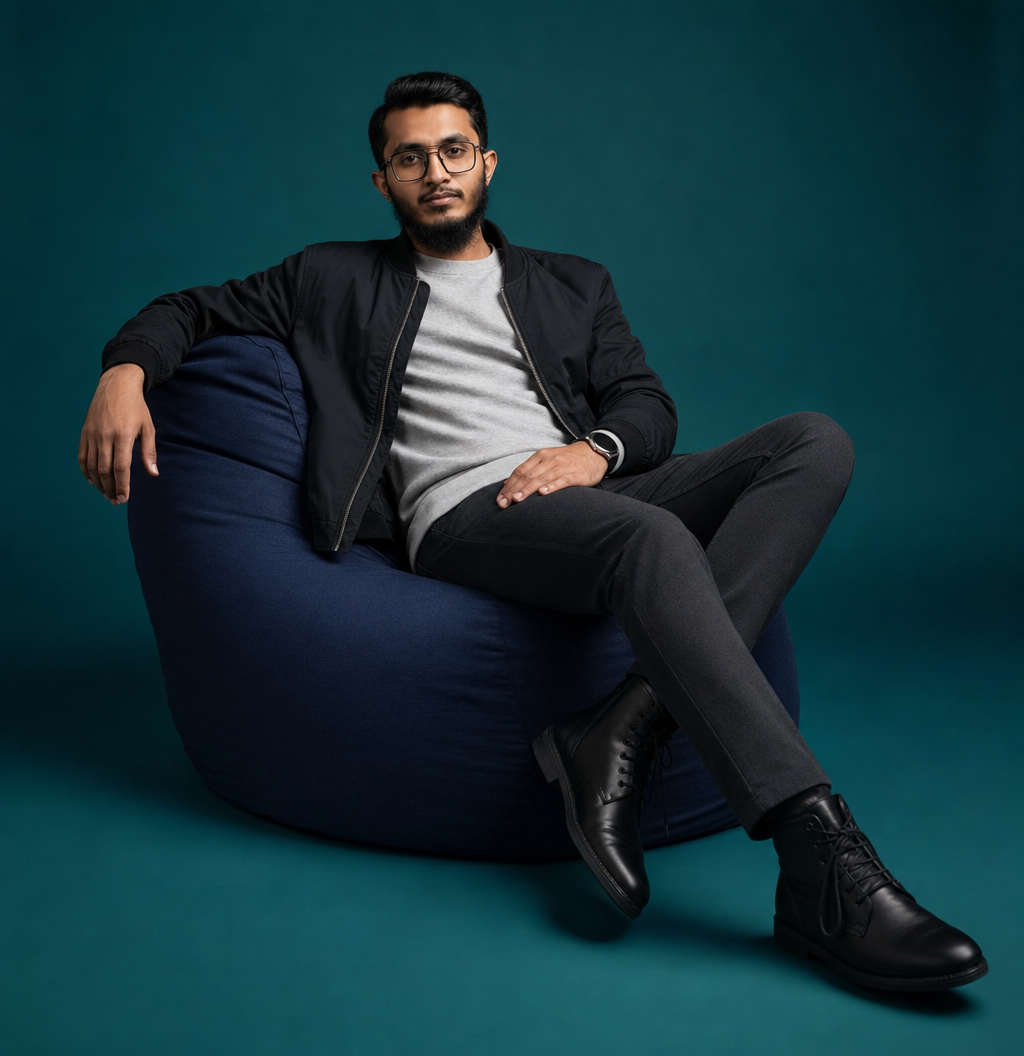
The phrase “full-body framing” keeps the seated pose, black lace-up boots, dark navy beanbag, and legs slightly apart visible as one clean portrait, while “solid deep teal background” separates the mostly navy, black, and gray wardrobe without adding visual clutter. “Soft directional lighting” supports the confident, polished mood by modeling the face, bomber jacket, and silver watch, and “crisp high-detail textures” makes the leather boots, jacket fabric, trousers, and beanbag surface read as tactile. “Modern editorial fashion photography” and “minimal polished mood” steer the image away from a casual snapshot toward a controlled studio campaign image.
FAQ
→How do I make the man and his outfit more visually prominent?
Replace “solid deep teal background” with “slightly darker, softly graded teal background with subtle separation behind the subject,” and replace “soft directional lighting” with “focused key light on the face and torso with gentle rim light along the black bomber jacket.” Keep “full-body framing,” but add “subject centered and occupying most of the vertical frame” so the clothing carries more visual weight.
→How do I shift this from polished editorial to a moodier, more dramatic portrait?
Change “soft directional lighting” to “low-key directional lighting with deep controlled shadows and a narrow cool rim light,” and replace “minimal polished mood” with “moody, nocturnal luxury editorial mood.” Swap “solid deep teal background” for “dark desaturated teal studio backdrop with a subtle vignette” to preserve the teal palette while increasing contrast around the black jacket and boots.
→How do I build a matching series with different poses or wardrobe variations?
Keep the fixed identity language, “same stylish man” and “preserving his exact face and hairstyle,” along with “clean studio setup,” “solid deep teal background,” and “modern editorial fashion photography.” Change only the pose phrase “one arm resting on the beanbag and legs slightly apart” to options such as “standing with one hand in a trouser pocket” or “leaning forward with elbows on knees,” and replace the outfit block with a controlled variant such as “black tailored overcoat, white mock-neck sweater, charcoal trousers, and black Chelsea boots.”
Learn the technique behind this
- Why can't AI spell, and how do I get readable text in an image? — Older diffusion models had no character-level representation of text, so they produced letterform-shaped texture instead of words.
- How should a prompt be structured, and does word order matter? — A prompt that behaves predictably names one subject first, then what it is doing, then where, then the light, then the lens or medium, then the style.
- How do I keep the same character across multiple images? — Text prompts alone won't hold a face across images — a description defines a type, not a person.
Related prompts
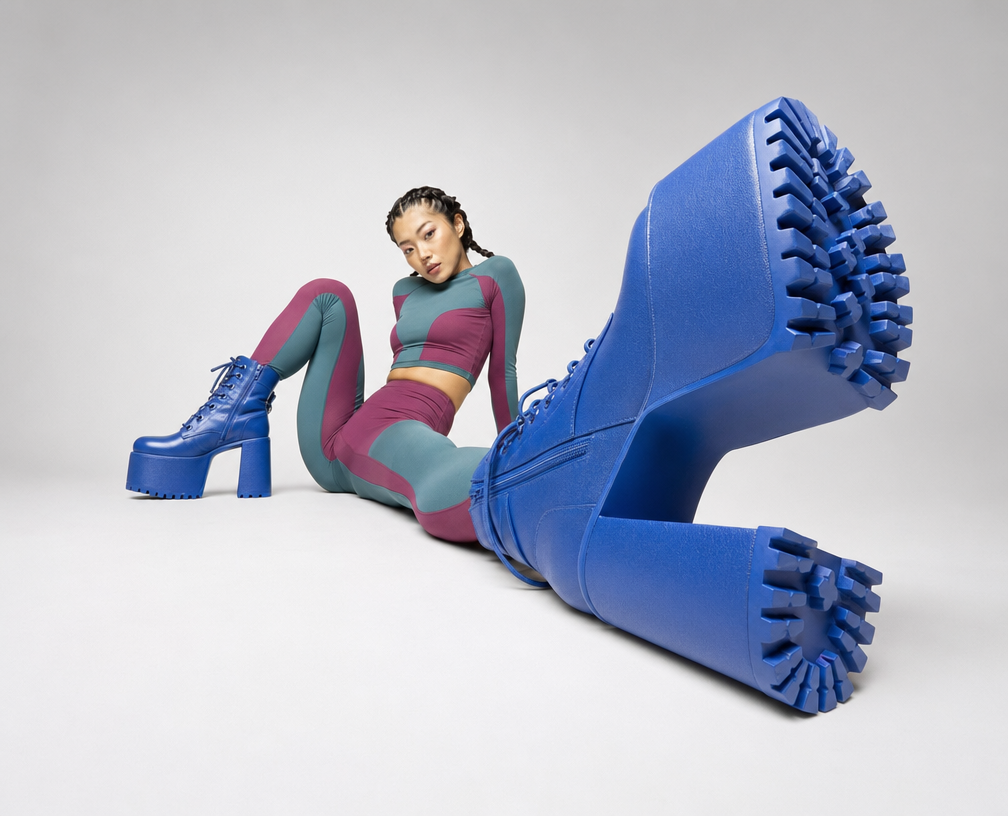
Cobalt Boots in Sleek Studio Edit
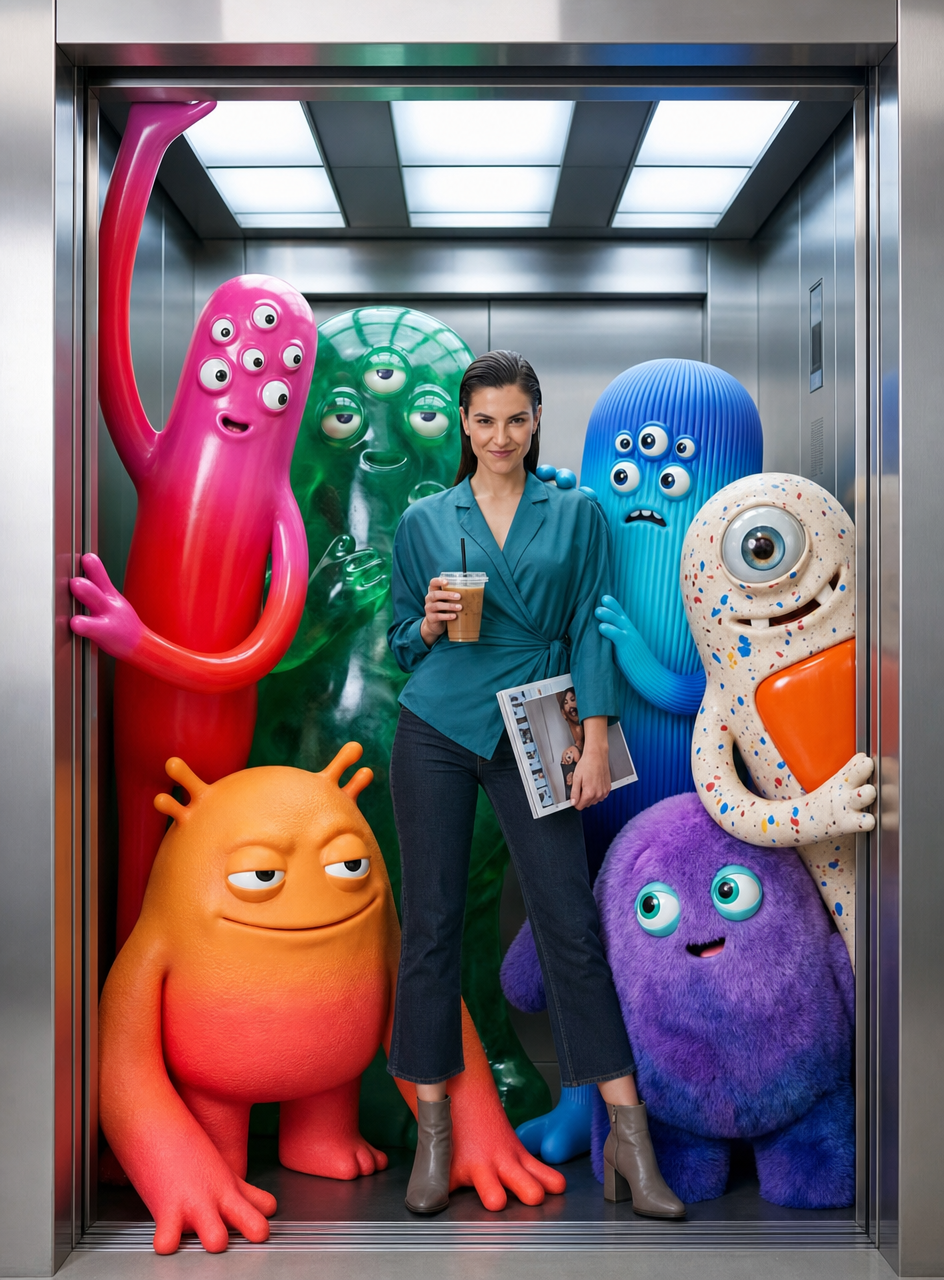
Teal fashion editorial in monster-filled lift
Sunlit editorial on striped beach towel
Silhouette Influencer by Sunlit Window