Why this works
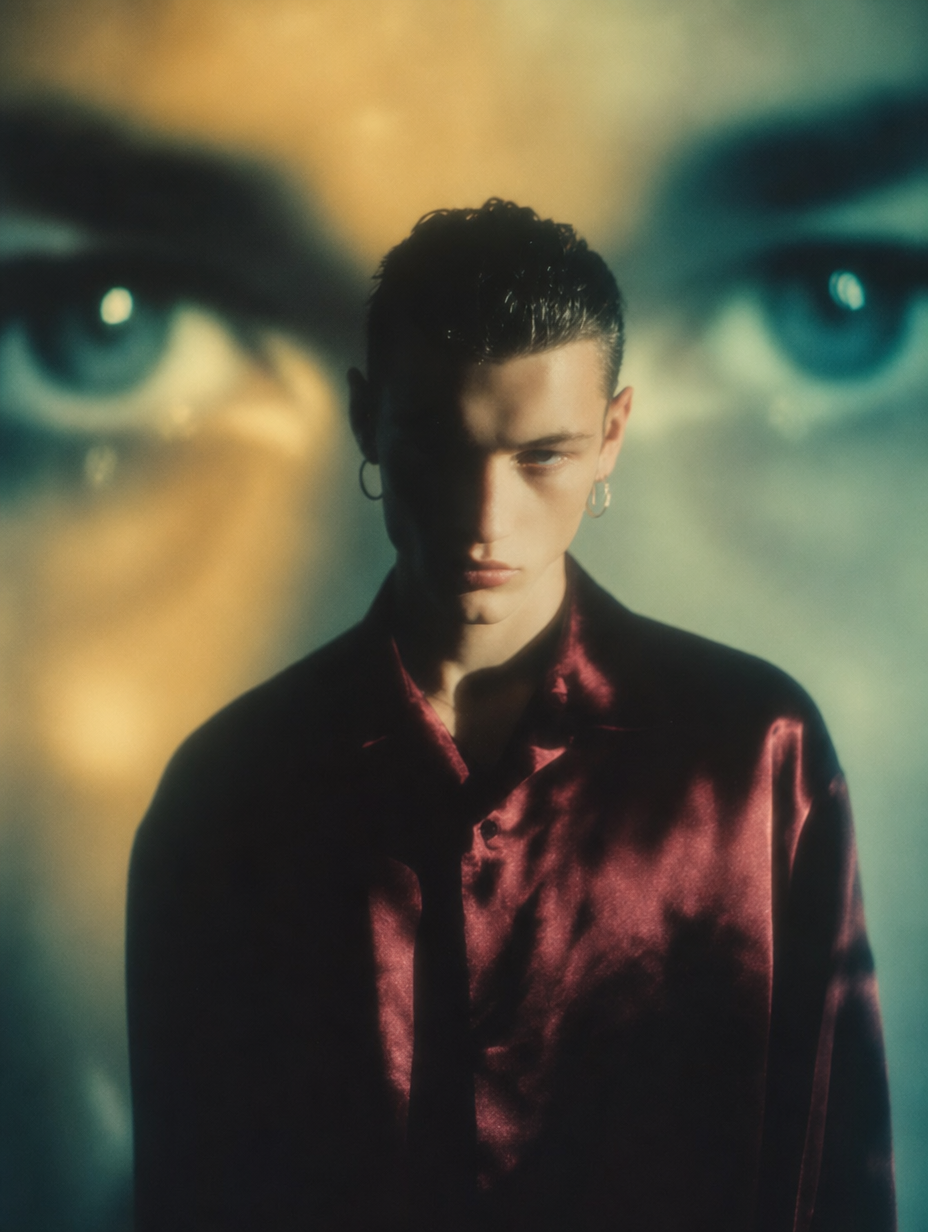
The portrait-closeup framing and “35mm film look, cinematic editorial framing” keep the man and the burgundy satin shirt dominant, while “large eyes appear as a projected element behind him” supplies the surreal secondary focal point. The mood comes from the specific combination of “dramatic side lighting with high contrast,” “rich blacks,” and the “dim amber-and-teal gradient background,” with gold and teal balancing the shirt’s deep burgundy. “Soft, slightly smeared focus,” “shallow depth-of-field,” and “gentle halation around the highlights” soften the otherwise hard contrast and make the projected cyan-and-pale-green eyes feel embedded in the image rather than sharply pasted on.
FAQ
→How do I make the projected eyes more central and visually dominant?
Replace “Behind him, large eyes appear as a projected element” with “a pair of enormous projected eyes centered directly behind and framing his head, occupying most of the background,” and replace “partially obscured by shallow depth-of-field” with “sharp and clearly legible.” Keep “portrait-closeup” to preserve the tight composition, or change it to “tight head-and-shoulders portrait” if the eyes need more visible area.
→How do I change the mood from moody surrealism to a colder, more clinical tone?
Replace “dim amber-and-teal gradient background” with “a stark desaturated blue-gray studio background,” and change “dramatic side lighting with high contrast” to “cold frontal fluorescent lighting with hard, clinical shadows.” Replace “gentle halation around the highlights” with “crisp highlights with no bloom,” while keeping the cyan-and-pale-green projection for a controlled artificial look.
→How do I build a matching series with different subjects while preserving this visual identity?
Keep the fixed style phrases “35mm film look with subtle grain, rich blacks, and gentle halation,” “dramatic side lighting with high contrast,” and “soft, slightly smeared focus.” Swap “a man wearing a deep burgundy satin shirt” for variants such as “a woman in a silver metallic suit,” “a dancer in a black tulle garment,” or “an androgynous figure in an ivory tailored coat,” and replace the projected eyes with a recurring motif such as “large projected moth wings” or “a translucent architectural blueprint.”
Learn the technique behind this
- Why can't AI spell, and how do I get readable text in an image? — Older diffusion models had no character-level representation of text, so they produced letterform-shaped texture instead of words.
- How should a prompt be structured, and does word order matter? — A prompt that behaves predictably names one subject first, then what it is doing, then where, then the light, then the lens or medium, then the style.
- Why does the model ignore parts of my prompt? — Ignored instructions are almost always conflicts, counts, or spatial relationships — three things current models handle badly — rather than the model failing to read you.
Related prompts
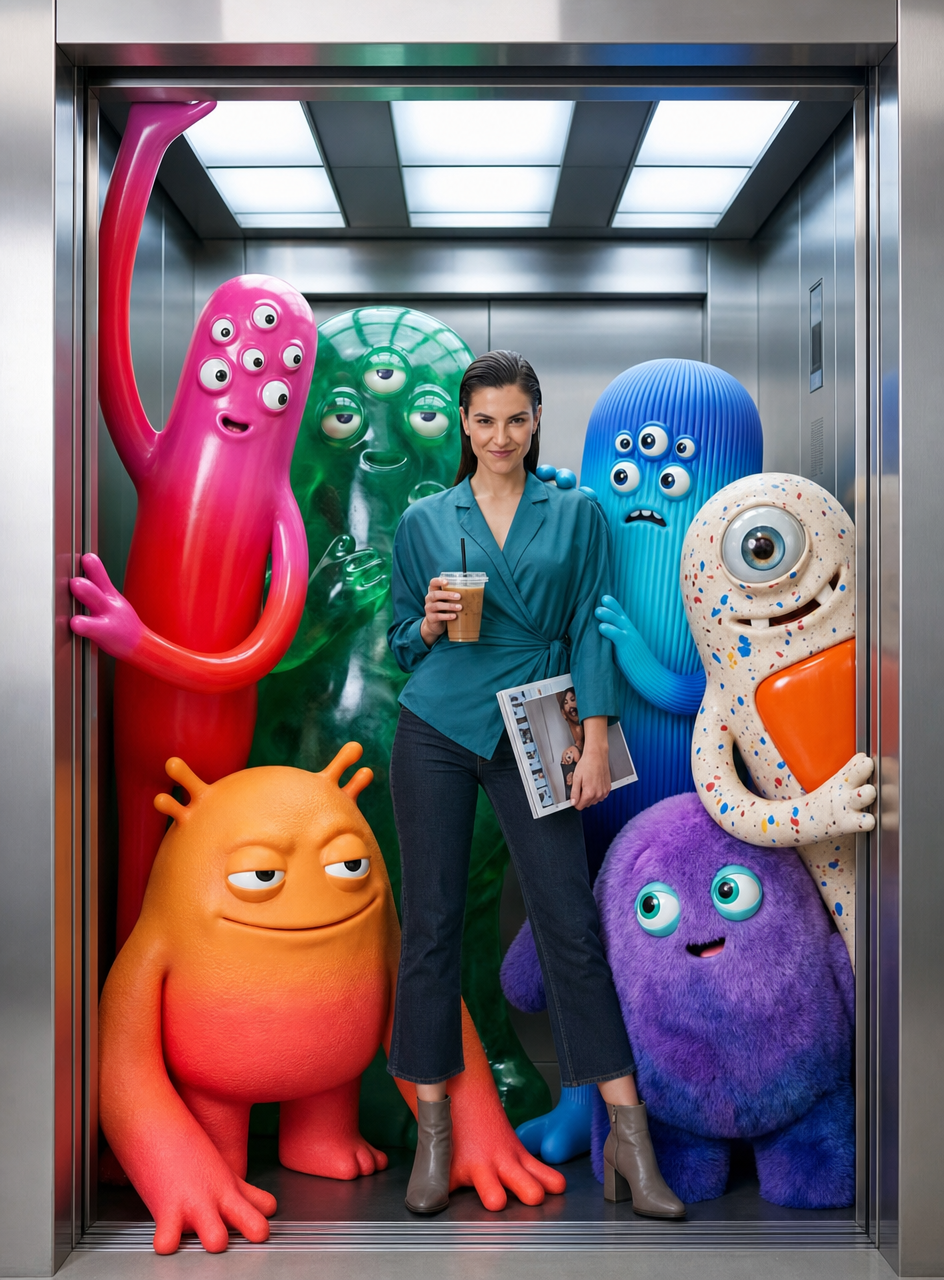
Teal fashion editorial in monster-filled lift
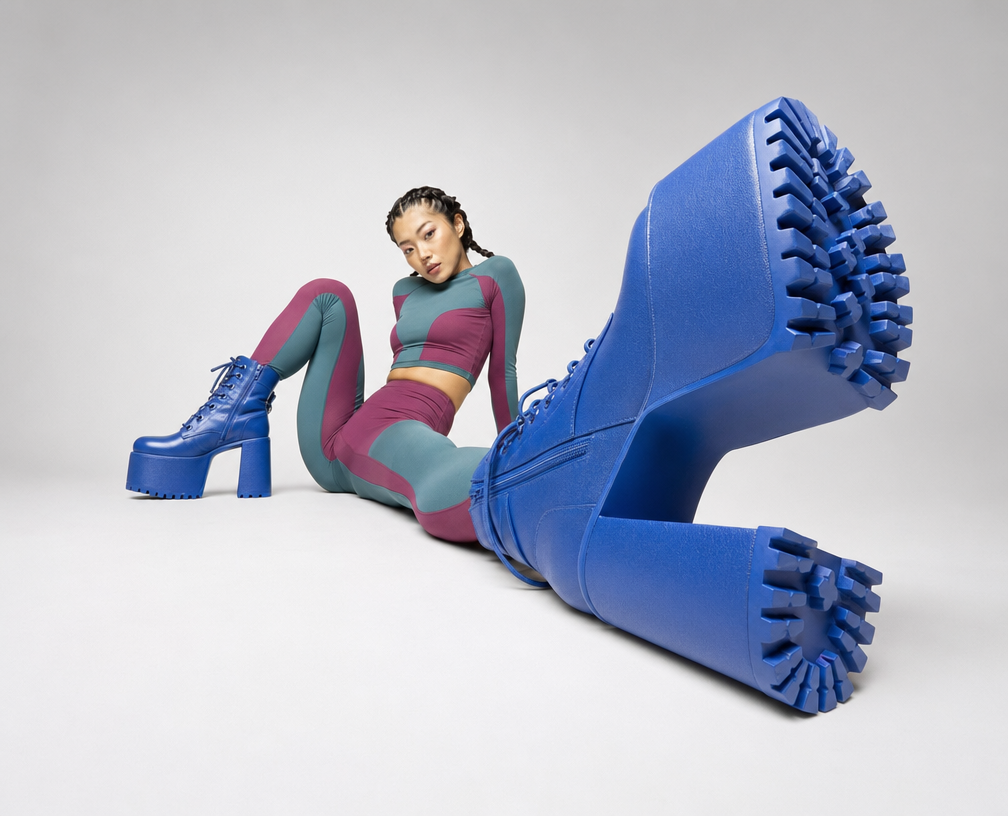
Cobalt Boots in Sleek Studio Edit
Silhouette Influencer by Sunlit Window

Sunlit editorial on striped beach towel