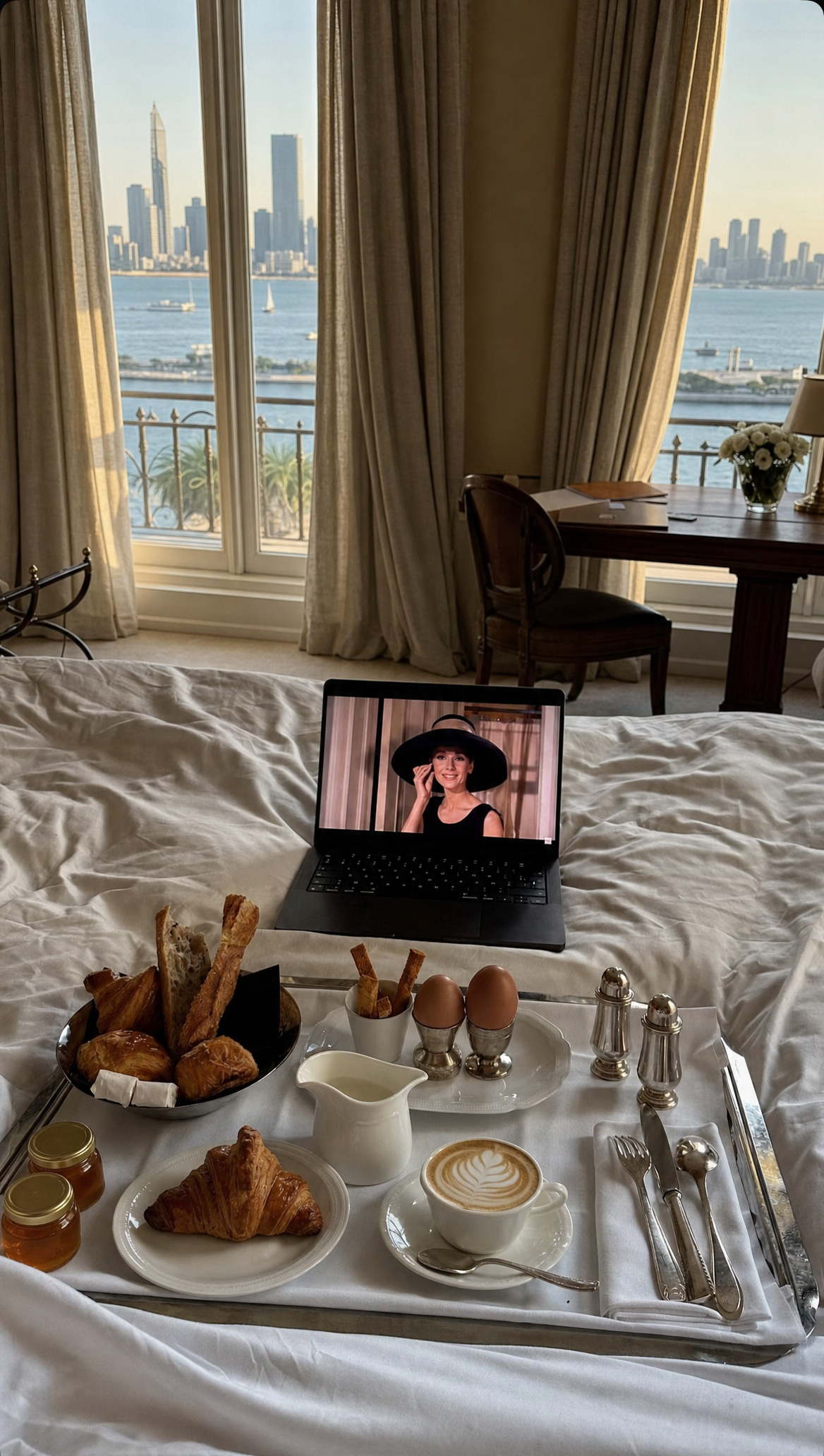
Why this works
The wide-shot editorial framing makes the unmade bed, breakfast tray, open laptop, and coastal skyline read as one lived-in luxury scene rather than isolated props. The phrase “soft morning natural light” supplies the intimate mood, while “pale stone textures,” “warm wood accents,” and “thicker linen curtains” build the brown, white, and gray palette visible across the room. “Realistic food textures and subtle reflections,” reinforced by “polished silver cutlery” and the latte service, keeps the photorealistic finish grounded in tactile breakfast details.
FAQ
→How do I make the breakfast tray more central and prominent?
Replace “wide-shot” with “medium close-up centered on the breakfast tray,” and add “tray fills the foreground, laptop and skyline softly receding in the background.” Keep “shallow depth of field” to preserve the editorial separation around the croissants, eggs, latte, and silverware.
→How do I shift the scene from cozy morning luxury to a brighter, more energetic mood?
Replace “soft natural morning daylight” with “bright late-morning sunlight with crisp directional highlights,” and change “cozy, elegant, intimate upscale morning atmosphere” to “fresh, lively upscale hotel atmosphere.” You can also replace “thicker linen curtains” with “sheer linen curtains partially open” to let more light reach the bed and tray.
→How do I create a series of variations while keeping the same hotel identity?
Keep “elegant boutique hotel interior with pale stone textures, warm wood accents” unchanged, then swap the breakfast contents and skyline: use “fresh fruit, yogurt, pastries, and orange juice” for one variation, or “tea service, pancakes, and berries” for another. Replace “coastal city skyline” with specific views such as “harbor with sailboats” or “sunlit beachfront towers,” while retaining “editorial lifestyle photography” and “photorealistic” for visual consistency.
Learn the technique behind this
- Why can't AI spell, and how do I get readable text in an image? — Older diffusion models had no character-level representation of text, so they produced letterform-shaped texture instead of words.
- How should a prompt be structured, and does word order matter? — A prompt that behaves predictably names one subject first, then what it is doing, then where, then the light, then the lens or medium, then the style.
- Do negative prompts work, and what should go in one? — Negative prompts work on models that support a separate negative conditioning channel — mainly Stable Diffusion and FLUX-family models.
Related prompts
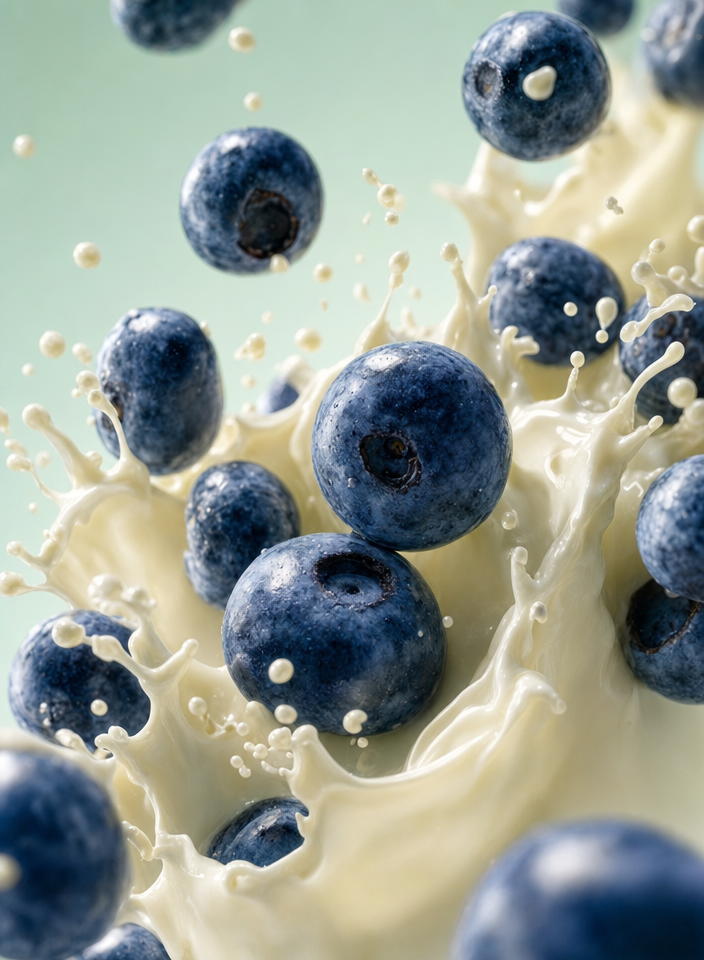
Blueberries Bursting Into Vanilla Cream
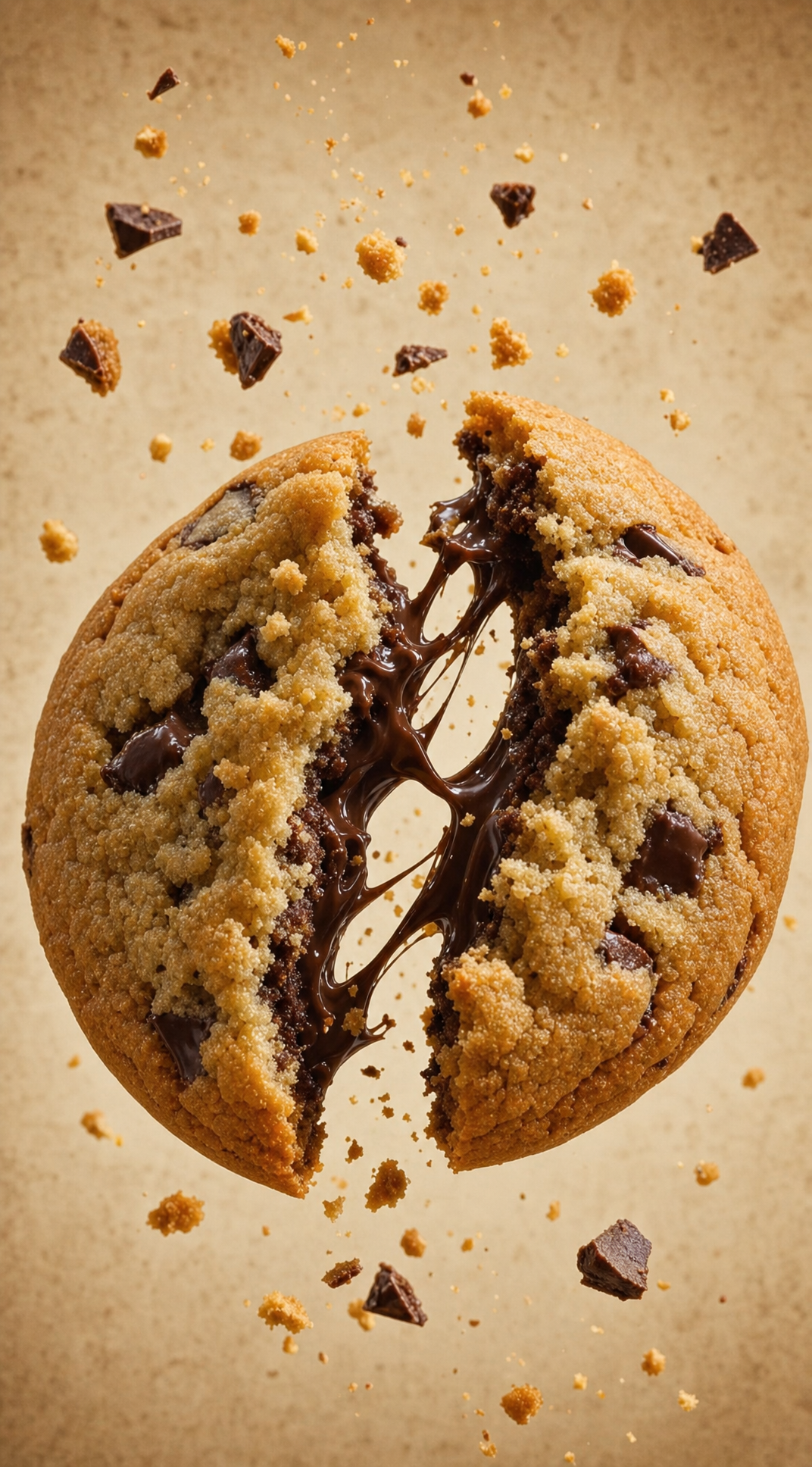
Chocolate Filled Cookie Splitting Midair With Dark Drip

Partially Peeled Banana on Blue
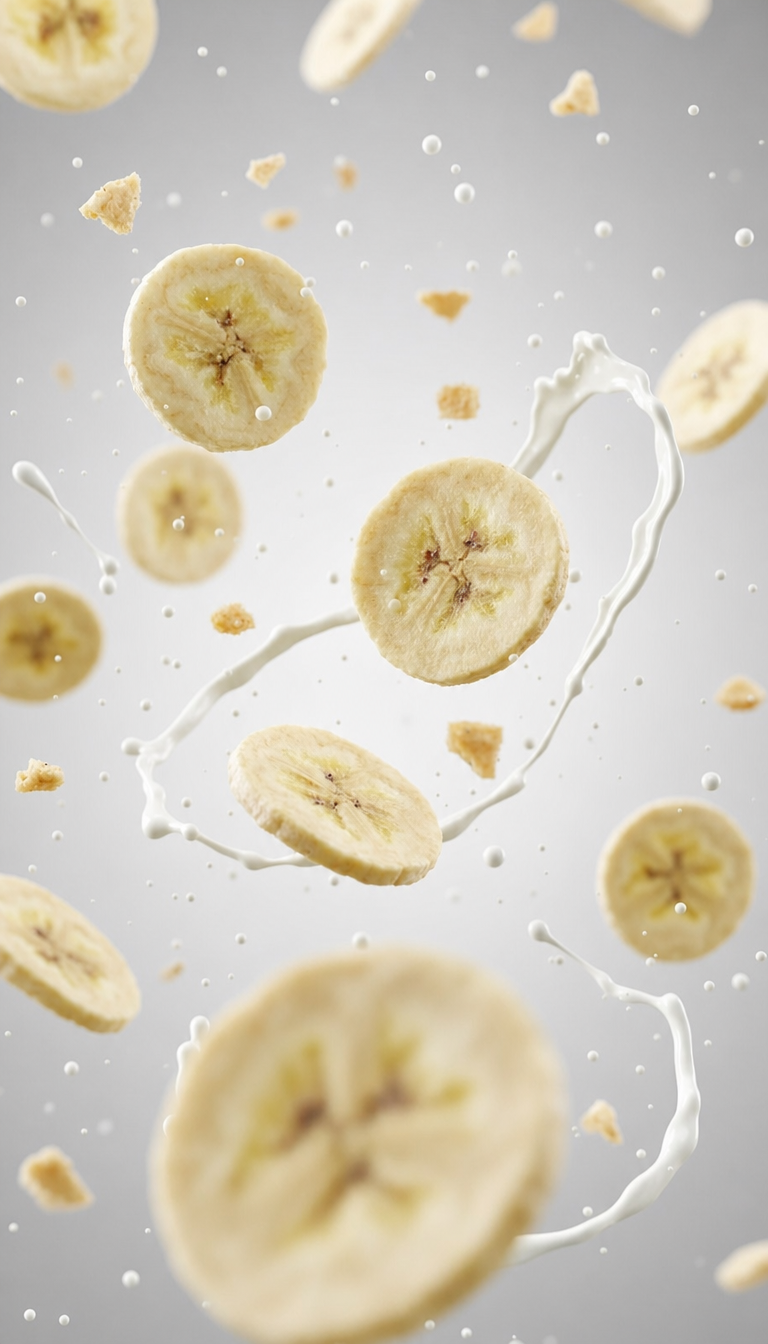
Banana slices in cool milk splash background