Why this works
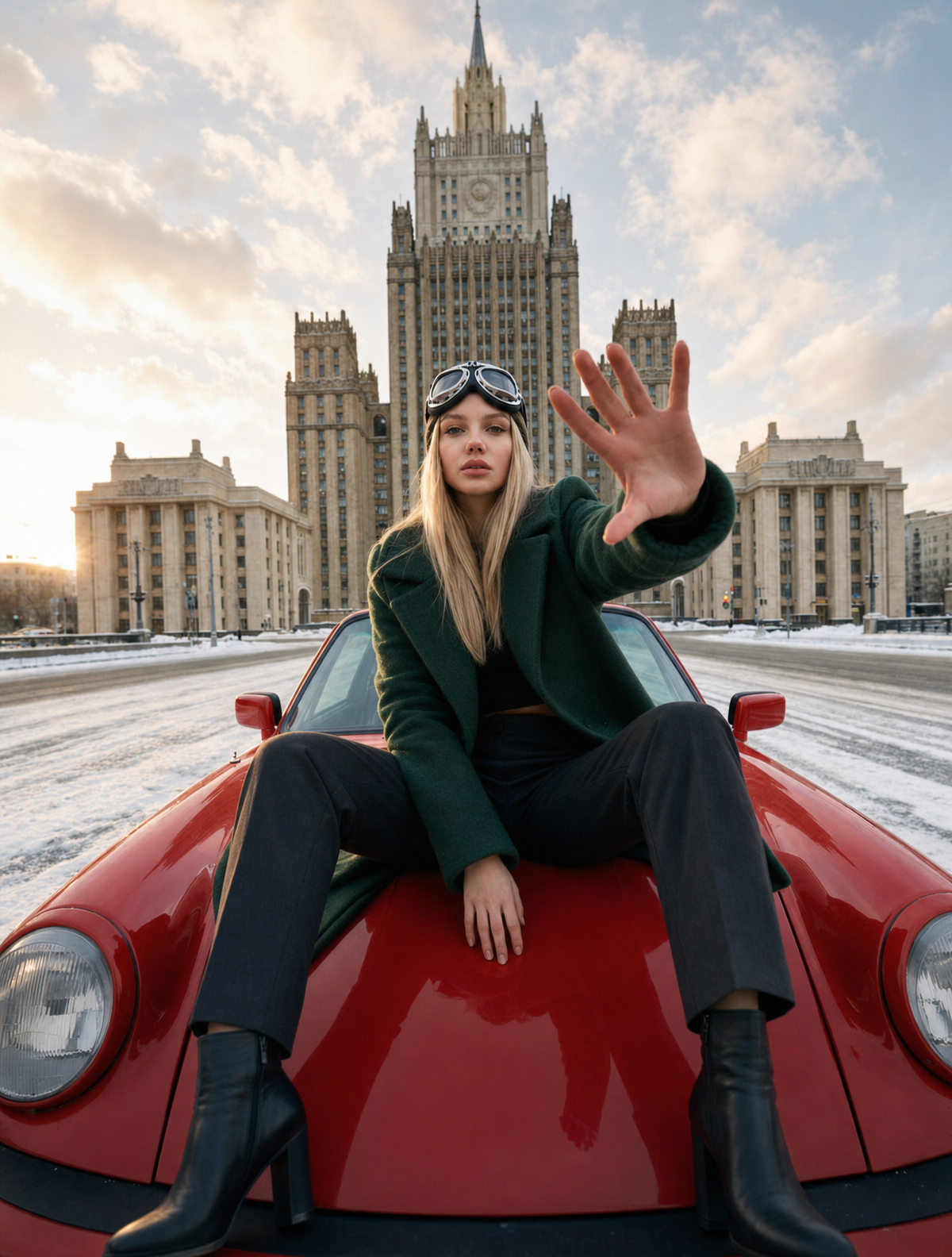
The low-angle perspective and “grand monumental skyscraper” give the model and red vintage sports car a commanding, larger-than-life scale, while “symmetrical composition” turns the snowy square into a controlled fashion set. “Late-afternoon golden winter light with soft long shadows” supplies the warm contrast to the dominant gray, beige, and black tones, and “one hand gesturing forward as she looks toward the camera” creates the candid-action energy. The deep green wool coat, fitted dark trousers, vintage goggles, and “modern luxury fashion aesthetic” hold the styling between practical winter wear and polished editorial glamour.
FAQ
→How do I make the model feel more powerful and central in the frame?
Keep “low-angle perspective,” but replace “sitting on the hood” with “standing on the hood in a strong, wide-legged pose,” and change “one hand gesturing forward” to “arm extended toward the lens.” Replace “grand monumental skyscraper in the background” with “skyscraper receding behind her, softly blurred” so the architecture supports rather than competes with her silhouette.
→How do I shift this from golden winter glamour to a colder, more dramatic mood?
Replace “late-afternoon golden winter light with soft long shadows” with “blue-hour winter light, hard directional shadows, and subtle icy rim light.” Change “bright red vintage sports car” to “deep burgundy vintage sports car” and “deep green wool coat” to “charcoal wool coat” to reduce the warm color contrast while preserving the luxury styling.
→How do I create a matching series with different fashion subjects and locations?
Keep the structural phrases “photorealistic editorial fashion photo,” “symmetrical composition,” “crisp high-detail realism,” “modern luxury fashion aesthetic,” and “low-angle perspective.” Swap “stylish blonde woman” for another model description, replace “bright red vintage sports car” with a recurring prop such as “cream motorcycle” or “black grand piano,” and change “snowy city square” plus “grand monumental skyscraper” to locations such as “rainy Art Deco boulevard with a theater marquee,” while retaining “late-afternoon golden winter light” for visual continuity.
Learn the technique behind this
- Why can't AI spell, and how do I get readable text in an image? — Older diffusion models had no character-level representation of text, so they produced letterform-shaped texture instead of words.
- Why does AI get hands and faces wrong, and how do I fix it? — Hands fail because they're small in frame, extremely variable in pose, and self-occluding — the model has less usable signal per pixel than for any other body part.
- How should a prompt be structured, and does word order matter? — A prompt that behaves predictably names one subject first, then what it is doing, then where, then the light, then the lens or medium, then the style.
Related prompts
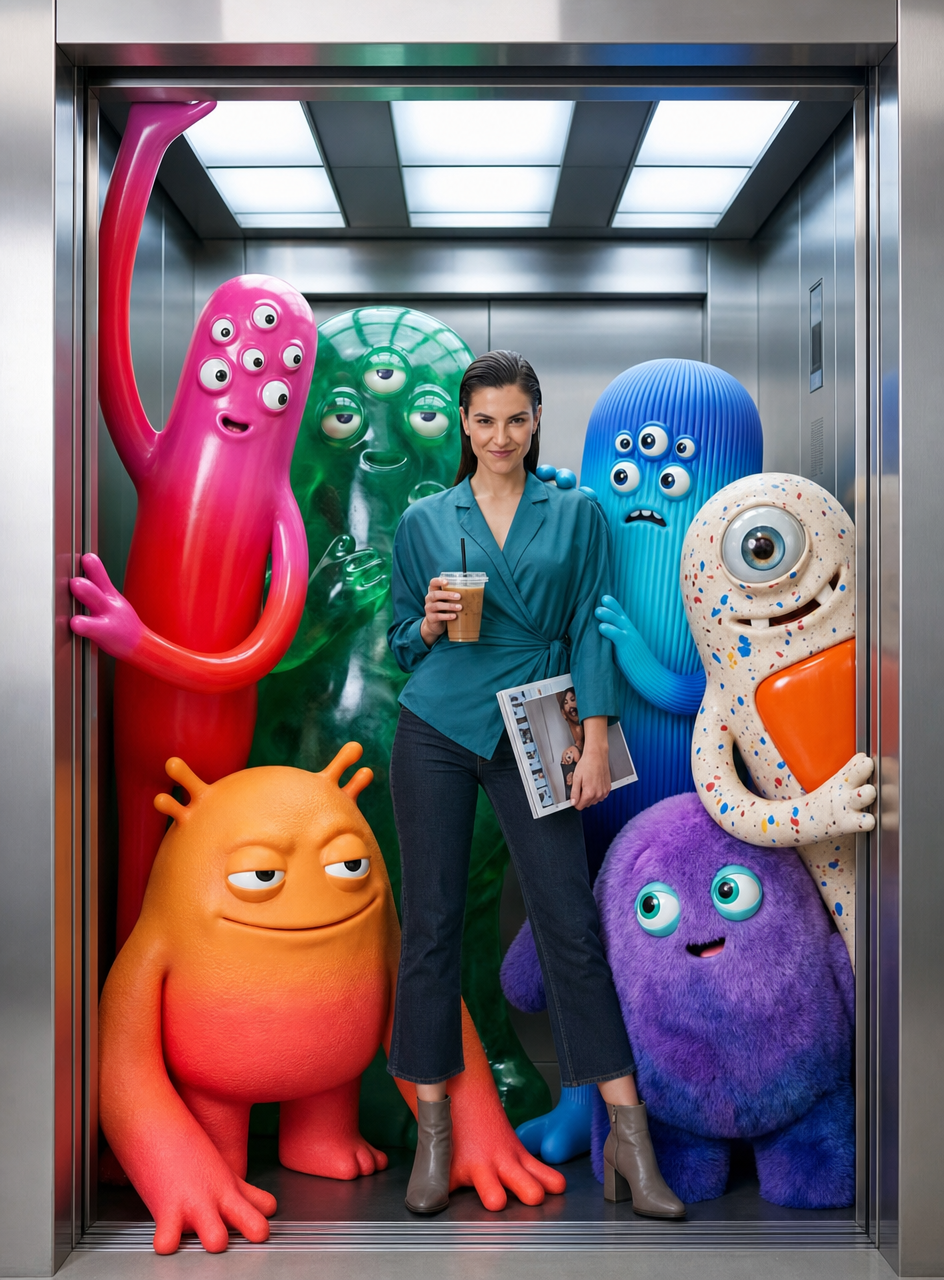
Teal fashion editorial in monster-filled lift
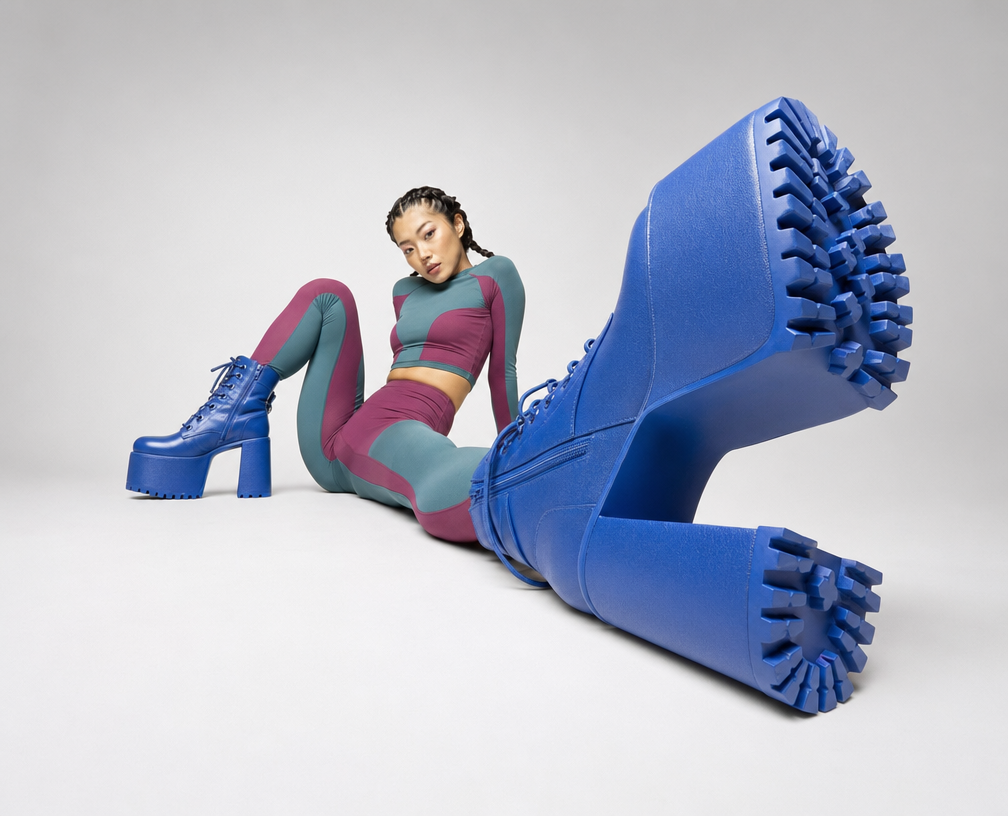
Cobalt Boots in Sleek Studio Edit
Silhouette Influencer by Sunlit Window
Sunlit editorial on striped beach towel