Why this works
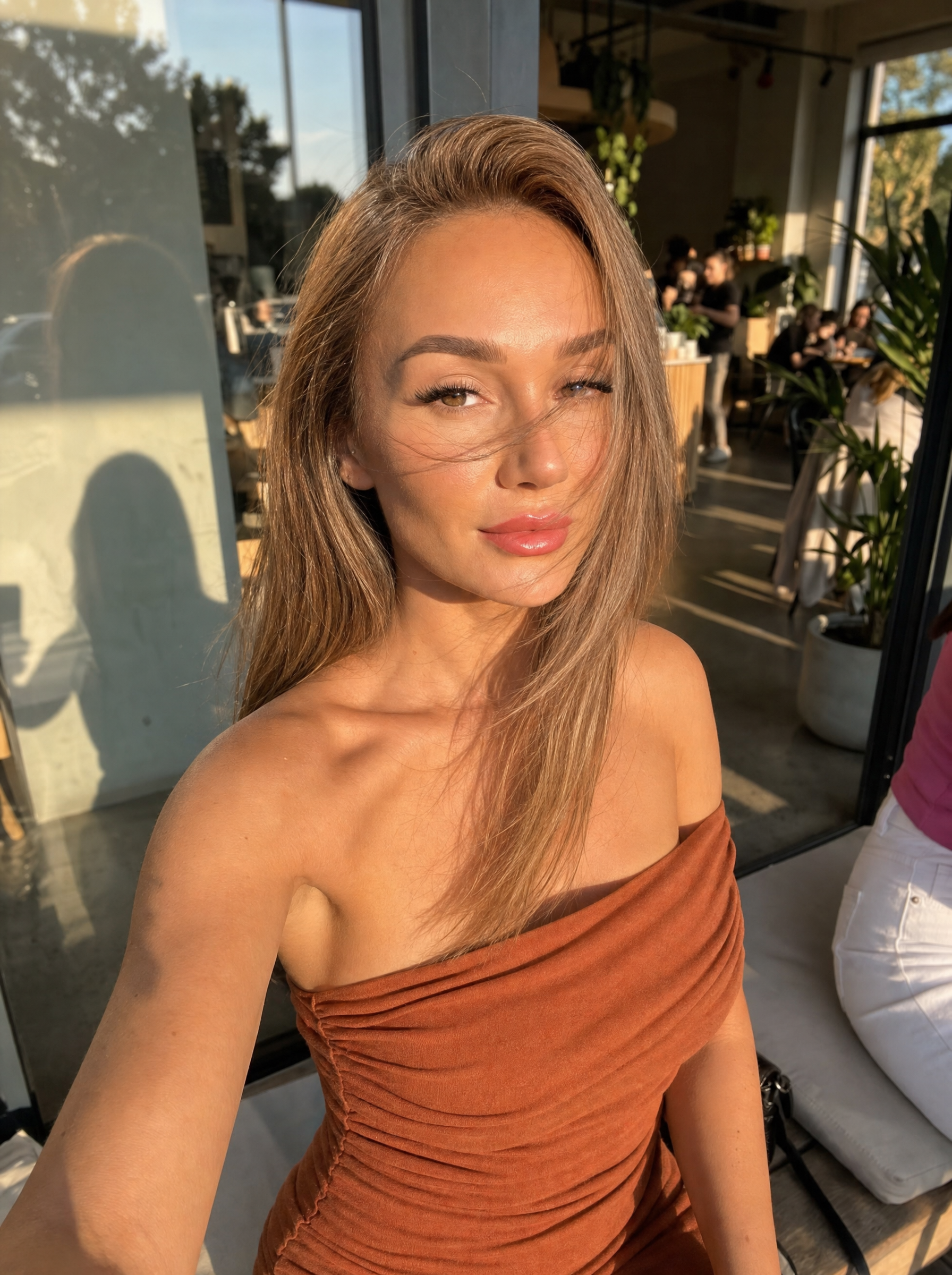
The intimate framing comes from “close-up selfie portrait,” while “shallow depth of field” keeps attention on the woman and lets the outdoor cafe recede. “Warm golden-hour sunlight,” “soft flattering shadows,” and the “warm sunlit color palette” establish the relaxed mood, with the rust-orange top adding a focused warm accent against the image’s brown, gray, white, and green cafe tones. “Long dark-blonde hair softly swept to one side across her face” supplies a candid, slightly unposed gesture, while “realistic skin texture” and “photorealistic lifestyle photography” anchor the image in natural portrait detail.
FAQ
→How do I make the woman’s face and expression more central and prominent?
Replace “close-up selfie portrait” with “tight head-and-shoulders portrait, face centered in the frame,” and replace “hair softly swept to one side across her face” with “hair tucked behind one ear, both eyes fully visible.” Keep “shallow depth of field” to preserve the cafe background blur.
→How do I change the warm, relaxed mood into a cooler editorial tone?
Replace “warm golden-hour sunlight” and “warm sunlit color palette” with “cool overcast daylight and muted blue-gray palette,” and change “soft flattering shadows” to “clean directional shadows.” Replace the rust-orange top with “a charcoal-gray structured blazer” for a more restrained color anchor.
→How do I create a coordinated series of variations from this portrait?
Keep “photorealistic close-up selfie portrait,” “realistic skin texture,” and “shallow depth of field” unchanged, then vary one controlled phrase per image: replace “outdoor cafe” with “flower market,” “bookstore window seat,” or “rooftop terrace,” and swap “rust-orange off-shoulder top” for “cream knit sweater,” “sage-green blouse,” or “deep burgundy dress.” Maintain “golden-hour sunlight” across the set so the locations and wardrobe change without losing visual continuity.
Learn the technique behind this
- Why can't AI spell, and how do I get readable text in an image? — Older diffusion models had no character-level representation of text, so they produced letterform-shaped texture instead of words.
- Why does AI get hands and faces wrong, and how do I fix it? — Hands fail because they're small in frame, extremely variable in pose, and self-occluding — the model has less usable signal per pixel than for any other body part.
- How do I keep the same character across multiple images? — Text prompts alone won't hold a face across images — a description defines a type, not a person.
Related prompts
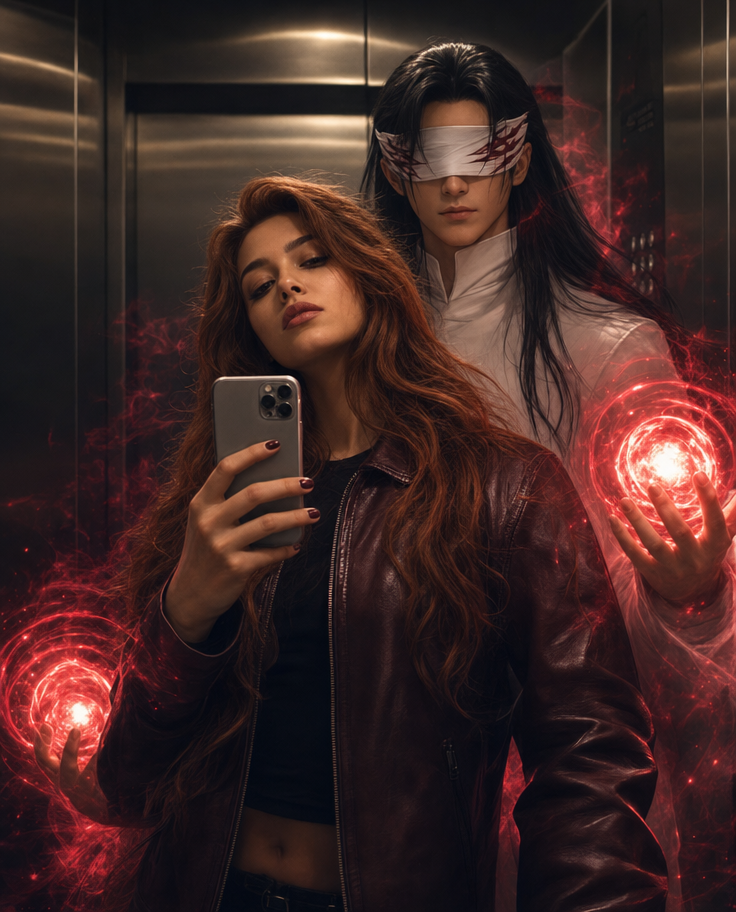
Woman's Selfie with Crimson-Powered Anime Guardian

Blue Tracksuits on Glass Bridge Selfie

Golden-hour café selfie with iced coffee
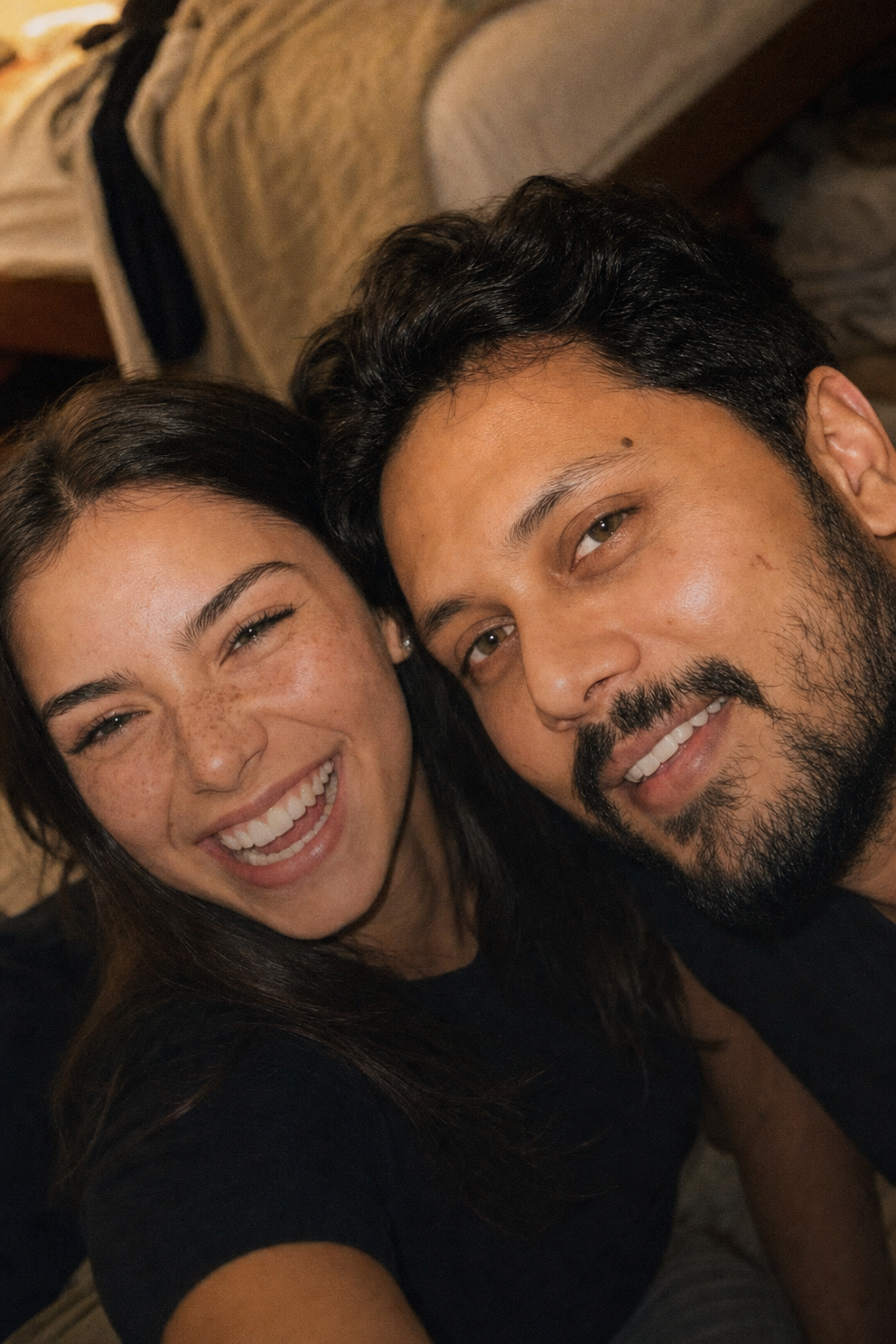
Warm indoor flashless couple selfie