Why this works
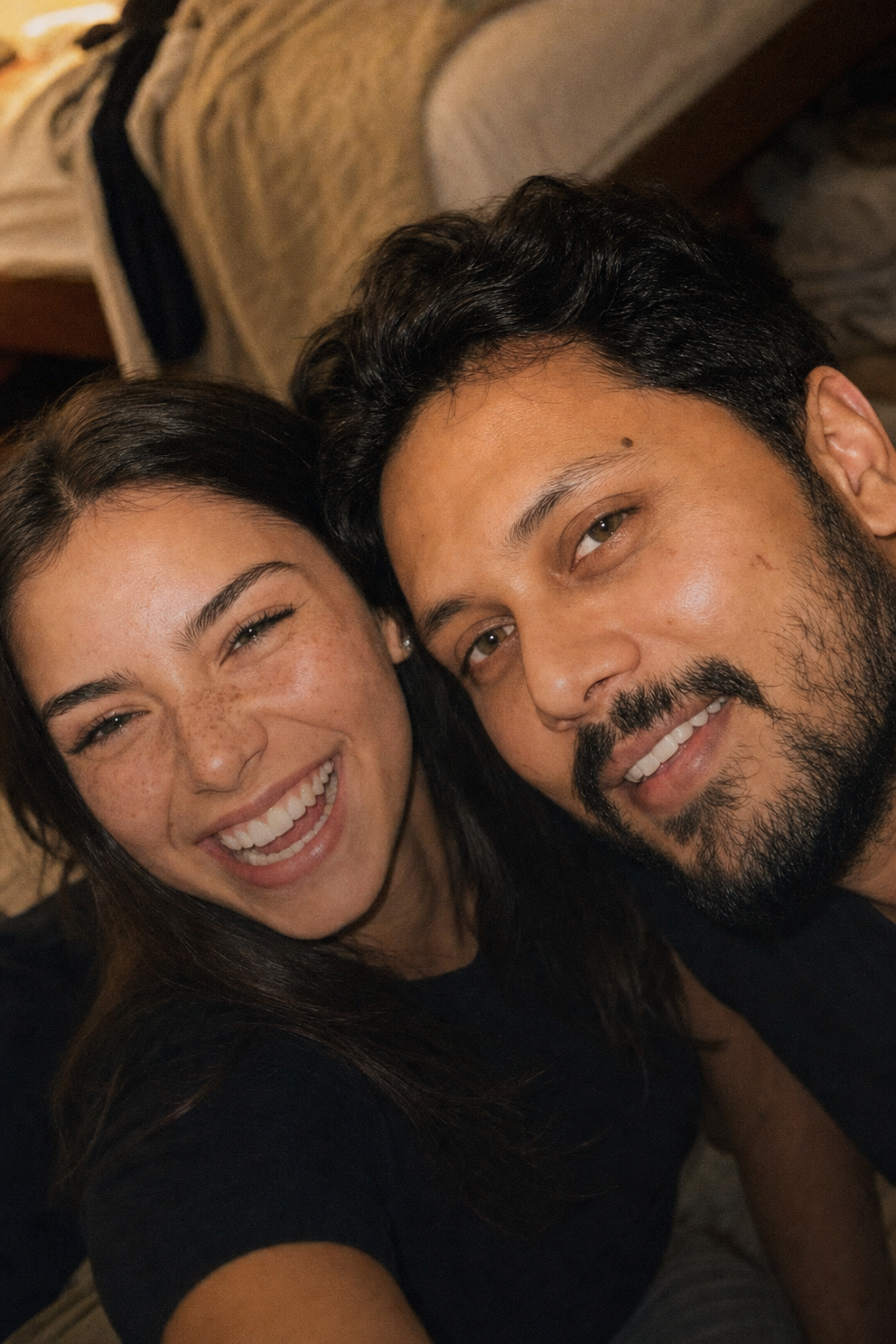
“Both faces filling most of the frame” makes the portrait-closeup composition feel intimate, while “candid close-up selfie” preserves the playful, spontaneous energy instead of turning it into a posed portrait. “Soft warm tungsten interior lighting” and “warmer skin tones” explain the tan and beige dominance, while “messy cluttered background rendered softly behind them” adds environmental realism without competing with their faces. “Subtle handheld motion blur” and “visible film grain” supply the early-2000s point-and-shoot texture, and “slightly steadier composition to reduce the crooked angle” keeps that snapshot character readable rather than chaotic.
FAQ
→How do I make one person more prominent than the other?
Replace “both faces filling most of the frame” with “the woman’s face fills two-thirds of the frame, with the man leaning in from the edge,” or reverse the subjects for the opposite emphasis. Keep “pressed together” to preserve the intimate selfie relationship, but add “shallow focus locked on the foreground face” if the secondary face should recede.
→How do I make the image feel moodier and less cheerful?
Replace “laughing young couple” with “quiet young couple sharing a restrained smile,” and change “soft warm tungsten interior lighting” to “dim amber tungsten lighting with deeper shadows.” Retain “warmer skin tones” for the beige and tan palette, but replace “intimate, spontaneous energy” with “quiet, nostalgic intimacy” to steer the expression and atmosphere.
→How do I create a series with different locations while keeping this exact snapshot style?
Keep “candid close-up selfie,” “early-2000s point-and-shoot aesthetic,” “subtle handheld motion blur,” “visible film grain,” and “realistic skin texture” unchanged. Swap “indoors with messy clutter in the background” for specific locations such as “crowded late-night diner with softly blurred booths,” “small apartment kitchen with dishes in the background,” or “rainy bus interior with fogged windows,” while retaining “soft warm tungsten interior lighting” when the location supports it.
Learn the technique behind this
- Why can't AI spell, and how do I get readable text in an image? — Older diffusion models had no character-level representation of text, so they produced letterform-shaped texture instead of words.
- Why does the model ignore parts of my prompt? — Ignored instructions are almost always conflicts, counts, or spatial relationships — three things current models handle badly — rather than the model failing to read you.
- Do negative prompts work, and what should go in one? — Negative prompts work on models that support a separate negative conditioning channel — mainly Stable Diffusion and FLUX-family models.
Related prompts
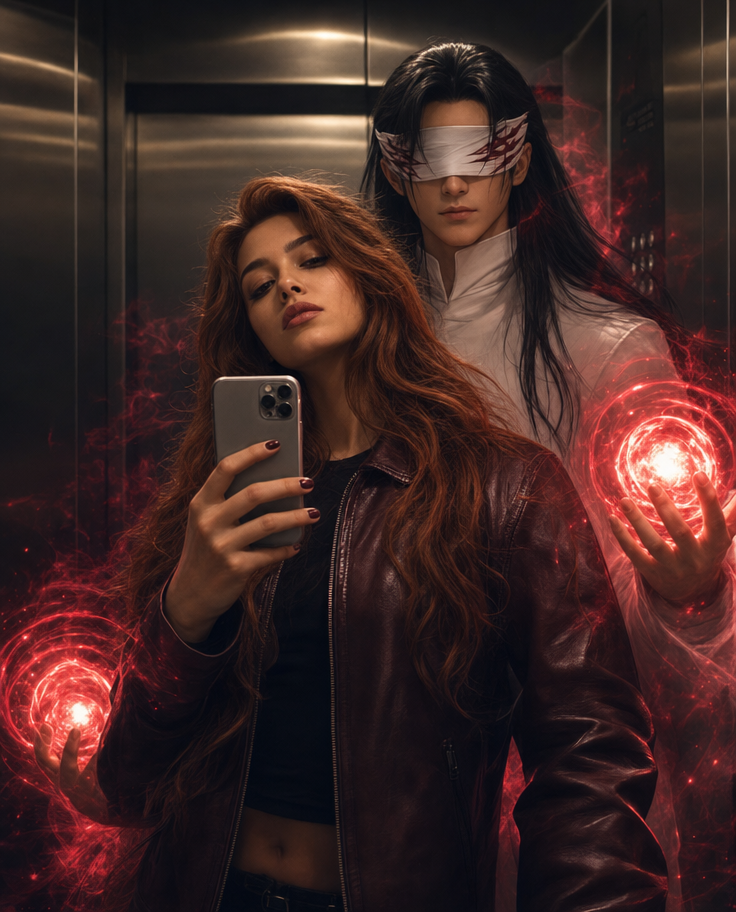
Woman's Selfie with Crimson-Powered Anime Guardian

Blue Tracksuits on Glass Bridge Selfie

Golden-hour café selfie with iced coffee
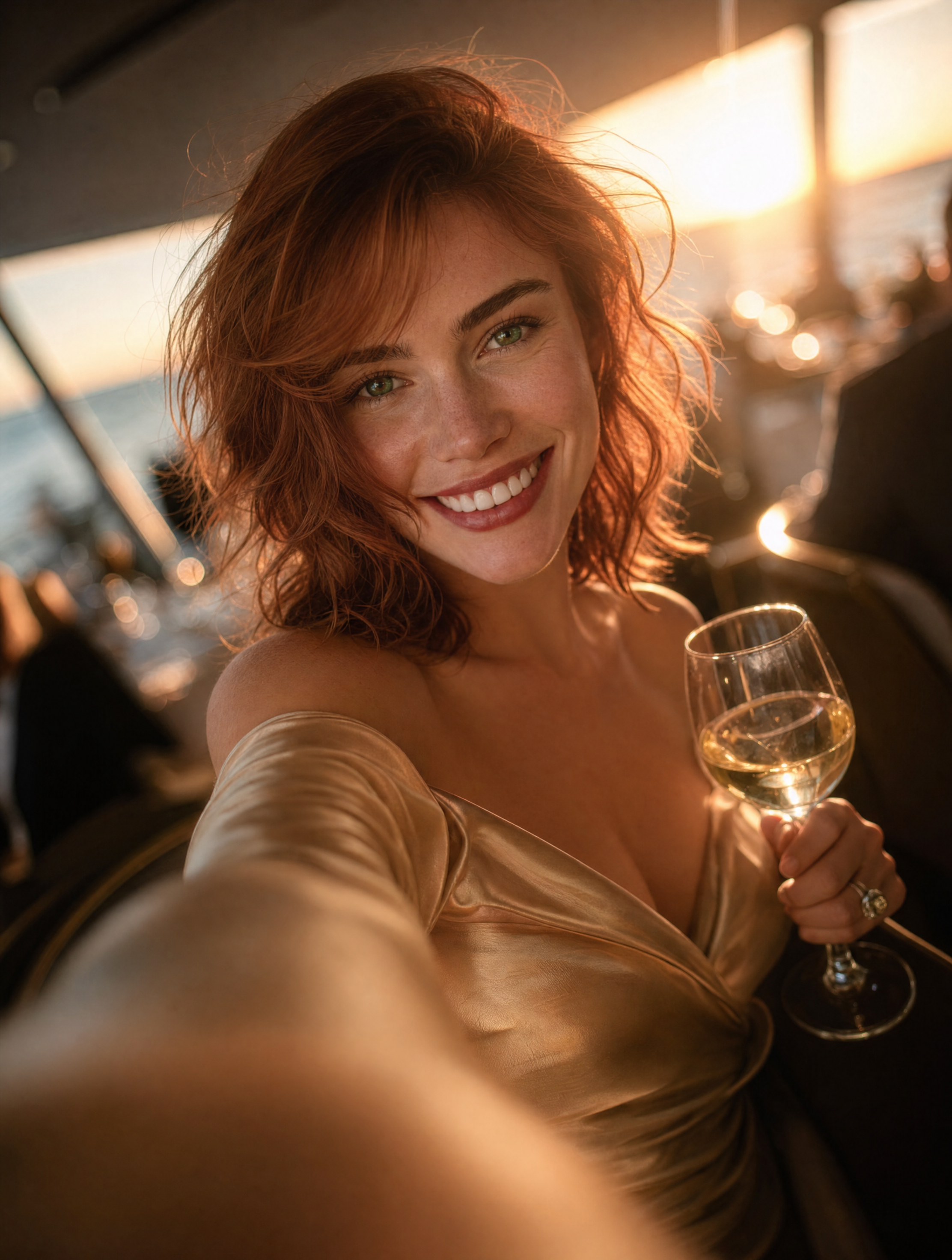
Smiling Woman in Gold Satin Glow