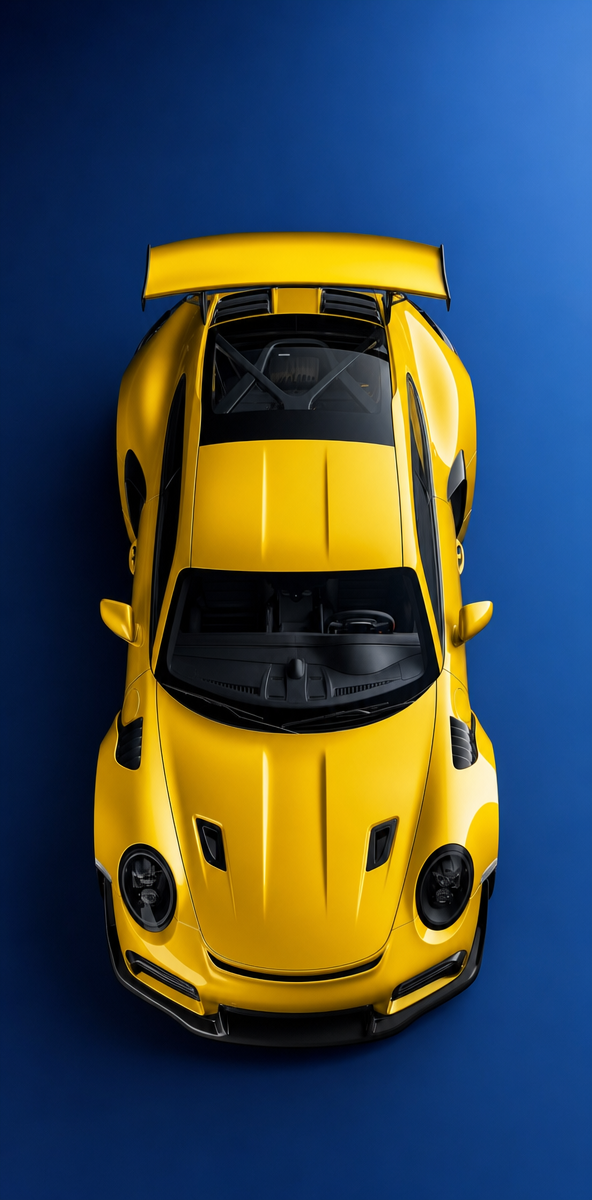
Same prompt, generated with each model separately — click one to see how it holds up.
Why this works
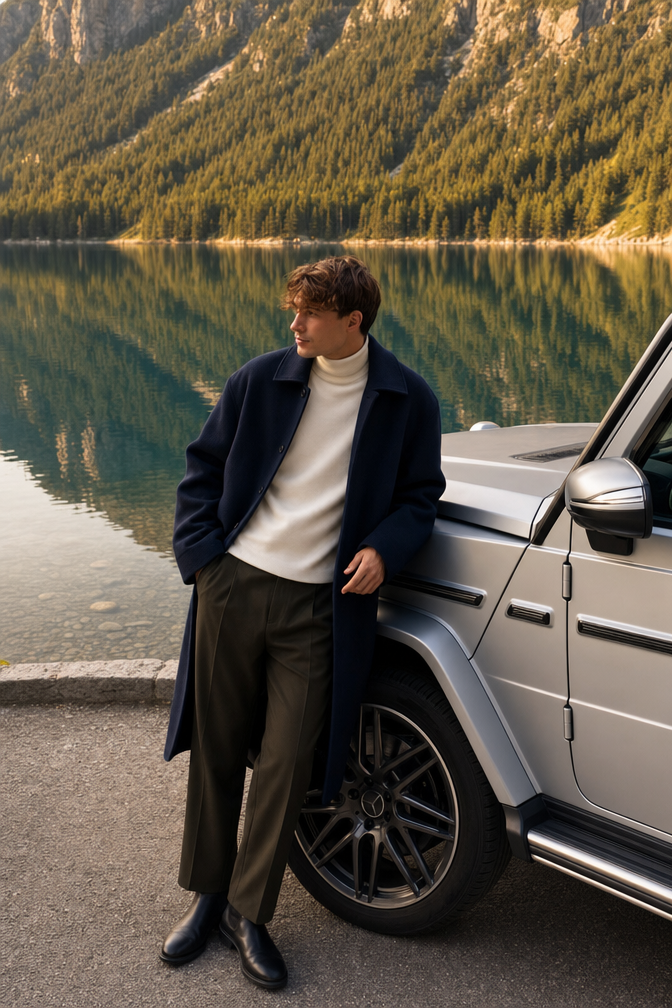
The calm, contemplative mood comes from the specific combination of “contemplative pose,” “relaxed with hands resting naturally,” and “bright golden-hour light,” while the “clearer, brighter atmosphere” keeps the scene polished rather than brooding. “Portrait-full-body” and “clean cinematic composition” give the man and the matte silver Mercedes-Benz G-Class a readable vertical pairing, with the teal lake and reflected forested mountains extending the frame behind them. The navy overcoat, dark olive chinos, black boots, gray vehicle, and blue-gray landscape create a restrained cool palette, while the “light cream turtleneck” and warm light provide controlled contrast. “Realistic fabric and vehicle textures” makes the editorial concept depend on tactile clothing and metal detail, not just the alpine setting.
FAQ
→How do I make the man more central and visually dominant?
Replace “leans casually against a matte silver Mercedes-Benz G-Class beside a clear teal alpine lake” with “stands in the center foreground, facing three-quarters toward camera, with the matte silver Mercedes-Benz G-Class and alpine lake receding behind him.” Keep “portrait-full-body,” but add “man occupies most of the vertical frame” and “sharp focus on face, coat, and boots.”
→How do I shift this from calm luxury to a darker, more dramatic editorial mood?
Replace “bright golden-hour light with a light breeze implied by subtle surface ripples and a slightly warmer, clearer atmosphere” with “low, directional blue-hour light, deep mountain shadows, and wind-driven ripples across the lake.” Change “contemplative pose” to “intense, guarded stance” and replace “slightly warmer, clearer atmosphere” with “cool, misty atmospheric haze.”
→How do I create a consistent series of variations from this image?
Keep the fixed anchors “photorealistic modern menswear editorial,” “navy overcoat over a light cream turtleneck,” “realistic fabric and vehicle textures,” and “clean cinematic composition.” Change only the location phrase, such as replacing “clear teal alpine lake” with “snow-covered Swiss mountain road,” “modernist lakeside villa,” or “rainy city boulevard,” then adjust “bright golden-hour light” to “overcast daylight,” “late afternoon sun,” or “neon night lighting” for controlled scene variations.
Learn the technique behind this
- Why can't AI spell, and how do I get readable text in an image? — Older diffusion models had no character-level representation of text, so they produced letterform-shaped texture instead of words.
- Why does AI get hands and faces wrong, and how do I fix it? — Hands fail because they're small in frame, extremely variable in pose, and self-occluding — the model has less usable signal per pixel than for any other body part.
- How should a prompt be structured, and does word order matter? — A prompt that behaves predictably names one subject first, then what it is doing, then where, then the light, then the lens or medium, then the style.
Related prompts
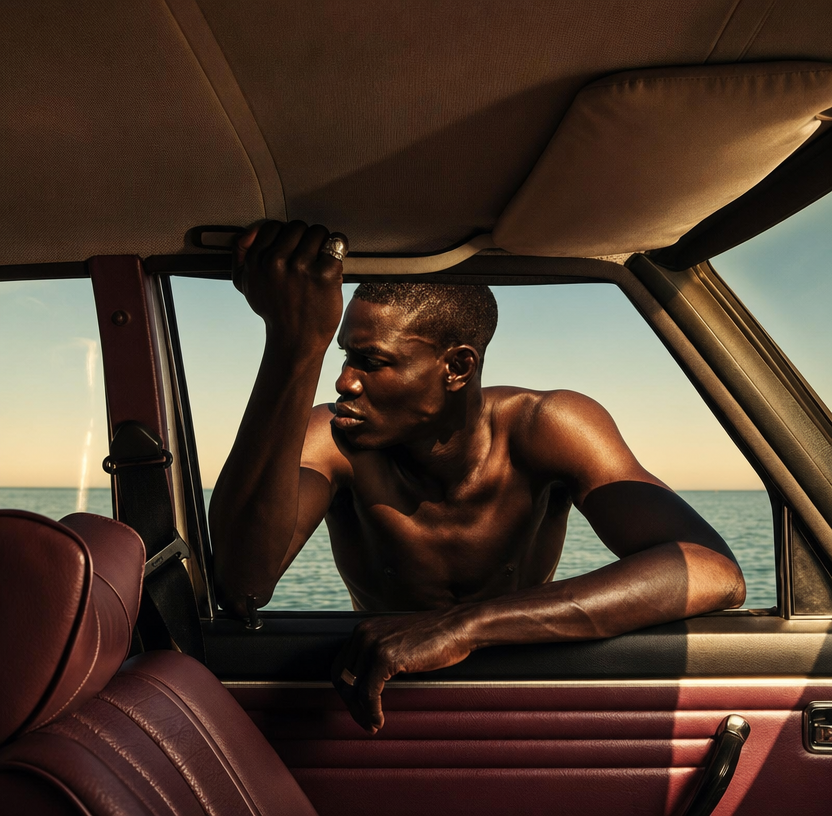
Shirtless Man, Vintage Car, Coastline Light
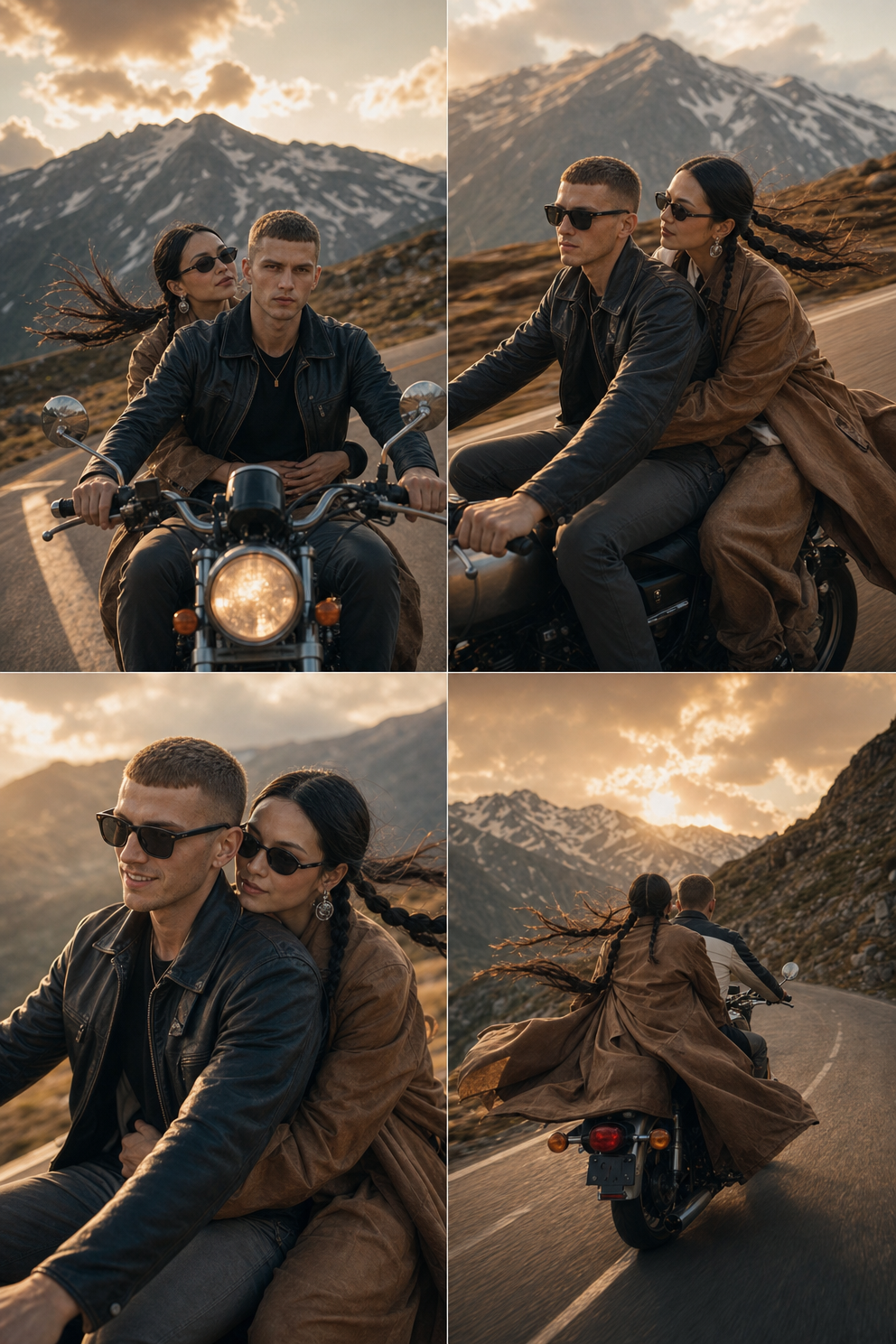
Golden-hour couple rides a classic bike
Deep-blue Audi concept in brutalist garage
Red Ferrari F1 Panning Speed Shot