Why this works
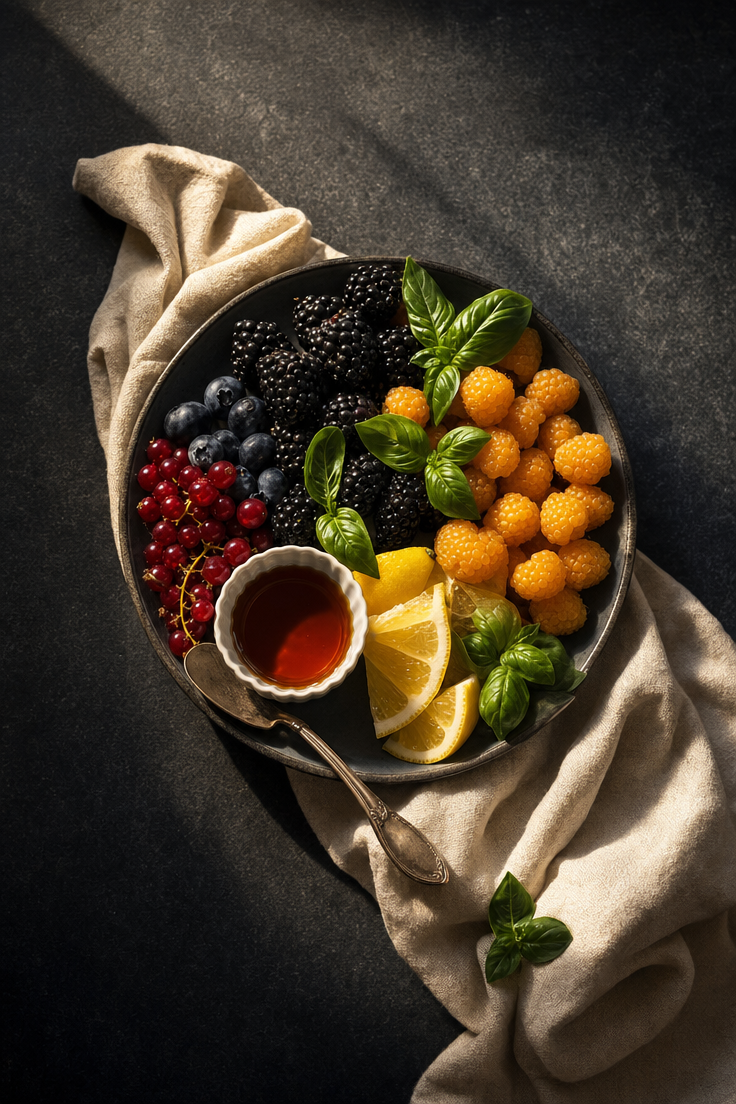
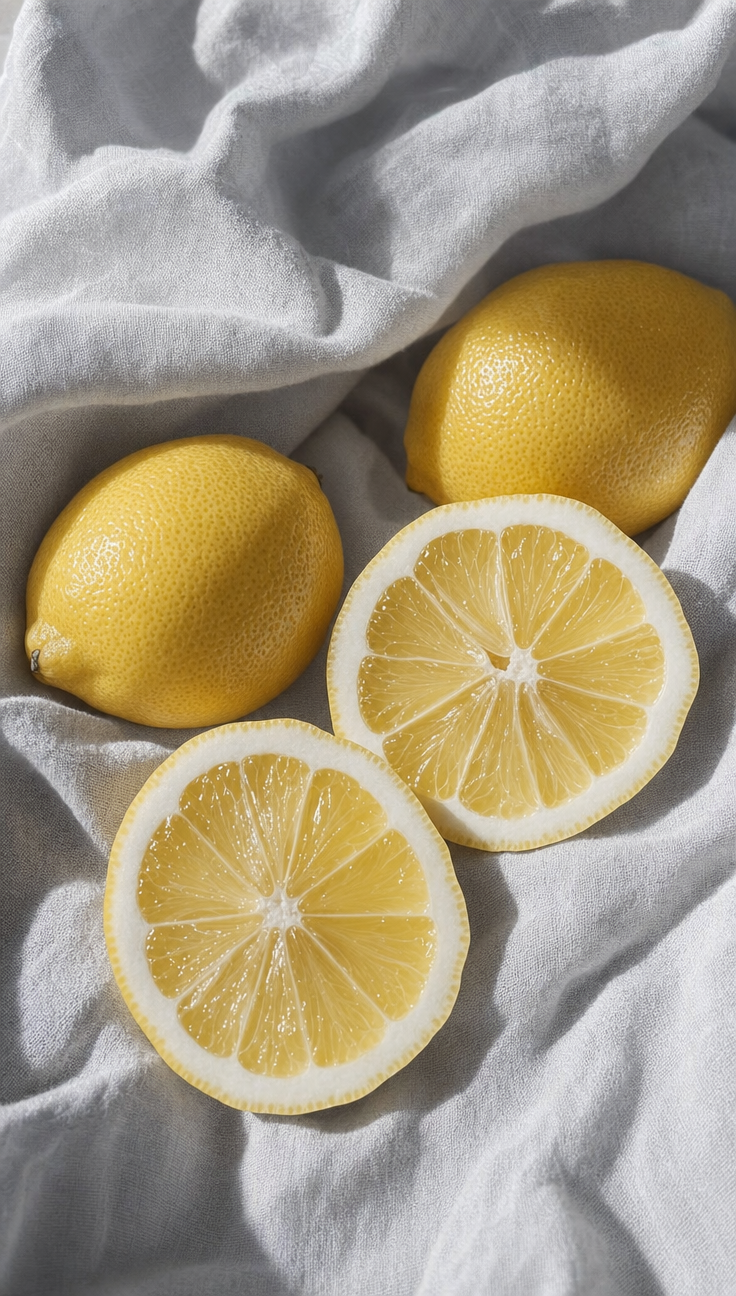
“Close-up framing” and “overhead-flatlay” keep the lemons and cut surfaces visually dominant, while “shallow depth of field” separates the crisp foreground citrus from the cool light-gray linen. The warm, natural mood comes specifically from “soft early-morning sunlight,” balanced by “gentle contrast” and “subtle shadows” rather than heavy dramatic lighting. “Crisp detailed citrus texture” makes the rind, pulp, and juice-bearing membranes the image’s key tactile focus, while the yellow fruit against “cool light-gray linen fabric” creates a restrained complementary color contrast.
FAQ
→How do I change this prompt for a darker, more dramatic food photograph?
Replace “soft early-morning sunlight with gentle contrast and subtle shadows” with “hard directional late-afternoon sunlight, deep contrast, and pronounced cast shadows.” Keep “crisp detailed citrus texture,” but add “rich golden highlights and dark falloff” to make the lemon surfaces feel more sculptural.
→How do I make the sliced lemon halves more prominent than the whole lemons?
Replace “fresh lemons and sliced lemon halves” with “a tight arrangement of sliced lemon halves in the foreground, with whole lemons receding into the background.” Change “overhead-flatlay” to “three-quarter close-up angle” and retain “shallow depth of field” so the cut faces remain sharp while the whole lemons soften behind them.
→How do I create a matching series with different citrus fruits?
Replace “fresh lemons and sliced lemon halves” with a repeatable subject slot such as “fresh blood oranges and sliced blood-orange halves,” then swap “yellow” visual emphasis for “deep crimson, orange, and warm cream.” Keep “cool light-gray linen fabric,” “soft early-morning sunlight,” and “elegant food photography aesthetic” unchanged so the fruit changes while the series retains the same setting, lighting, and composition.
Learn the technique behind this
- Why can't AI spell, and how do I get readable text in an image? — Older diffusion models had no character-level representation of text, so they produced letterform-shaped texture instead of words.
- How should a prompt be structured, and does word order matter? — A prompt that behaves predictably names one subject first, then what it is doing, then where, then the light, then the lens or medium, then the style.
- Do negative prompts work, and what should go in one? — Negative prompts work on models that support a separate negative conditioning channel — mainly Stable Diffusion and FLUX-family models.
Related prompts
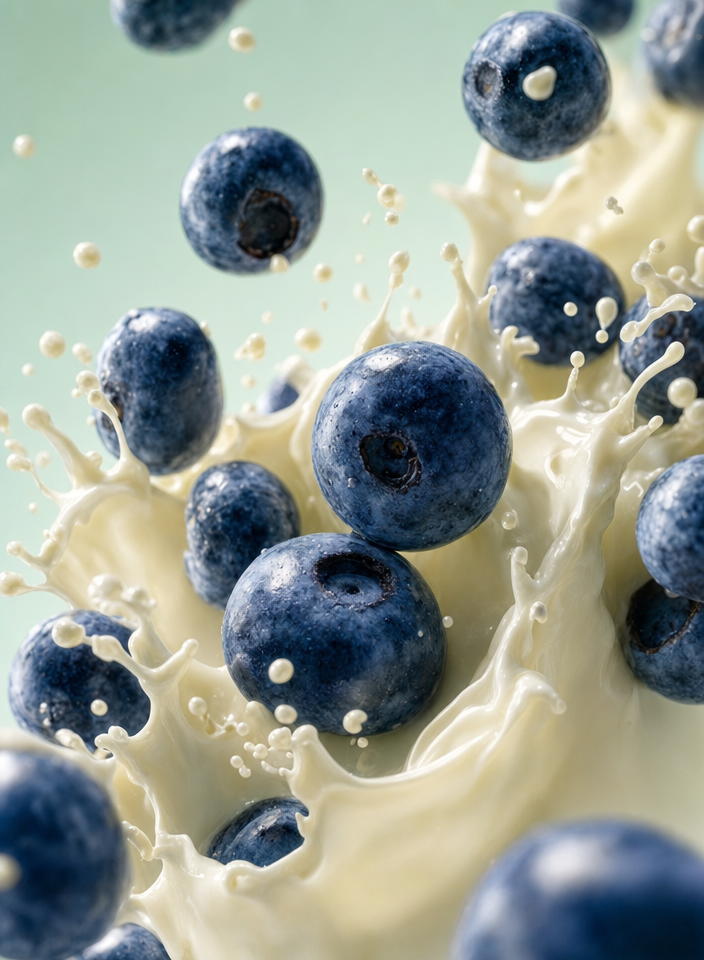
Blueberries Bursting Into Vanilla Cream
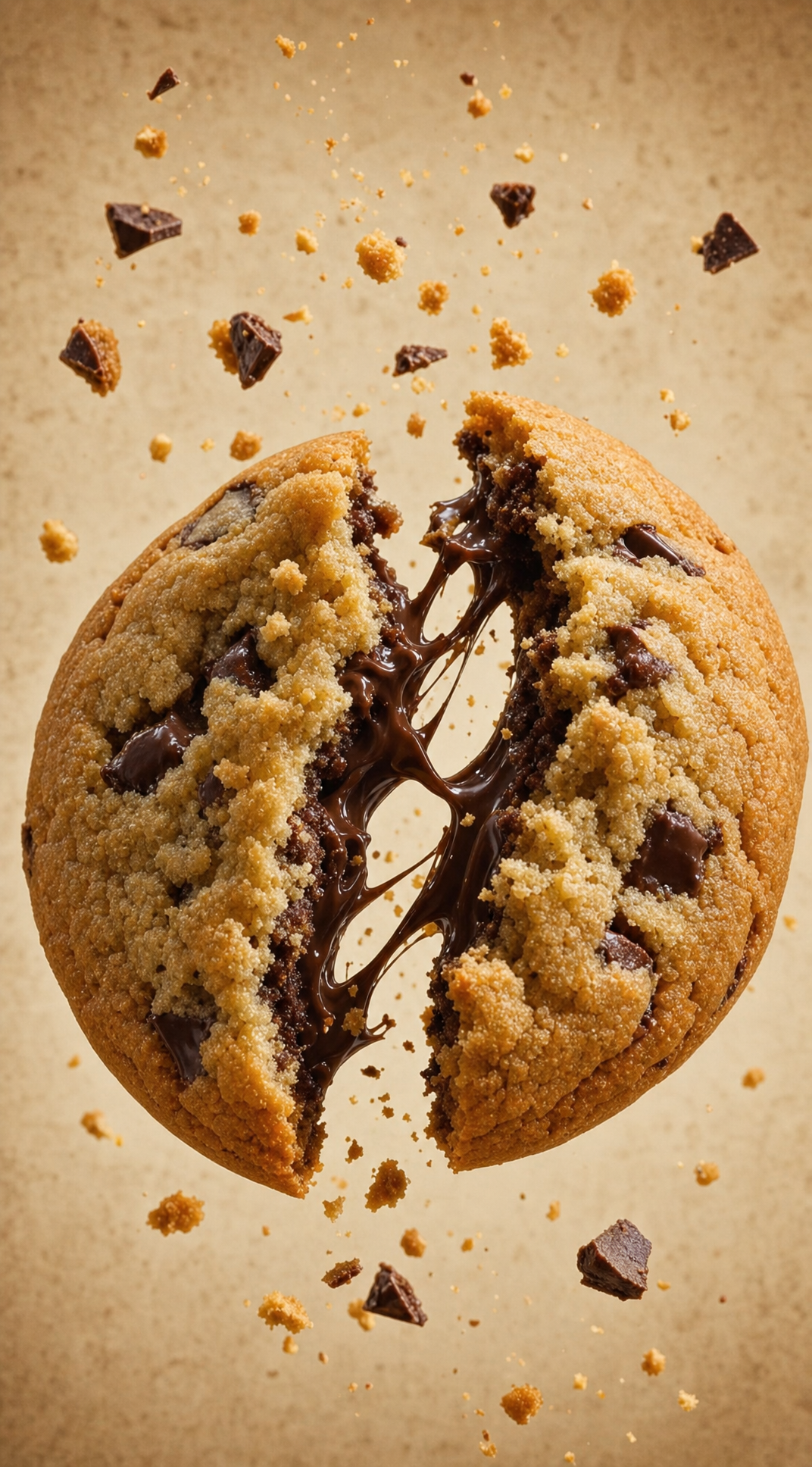
Chocolate Filled Cookie Splitting Midair With Dark Drip
Partially Peeled Banana on Blue
Banana slices in cool milk splash background