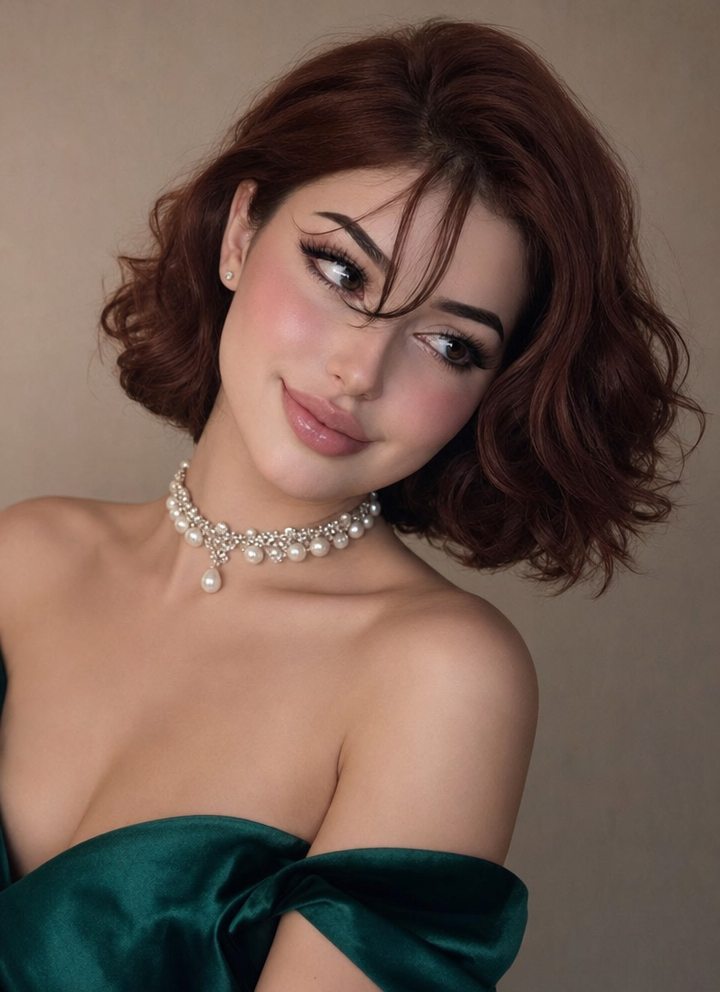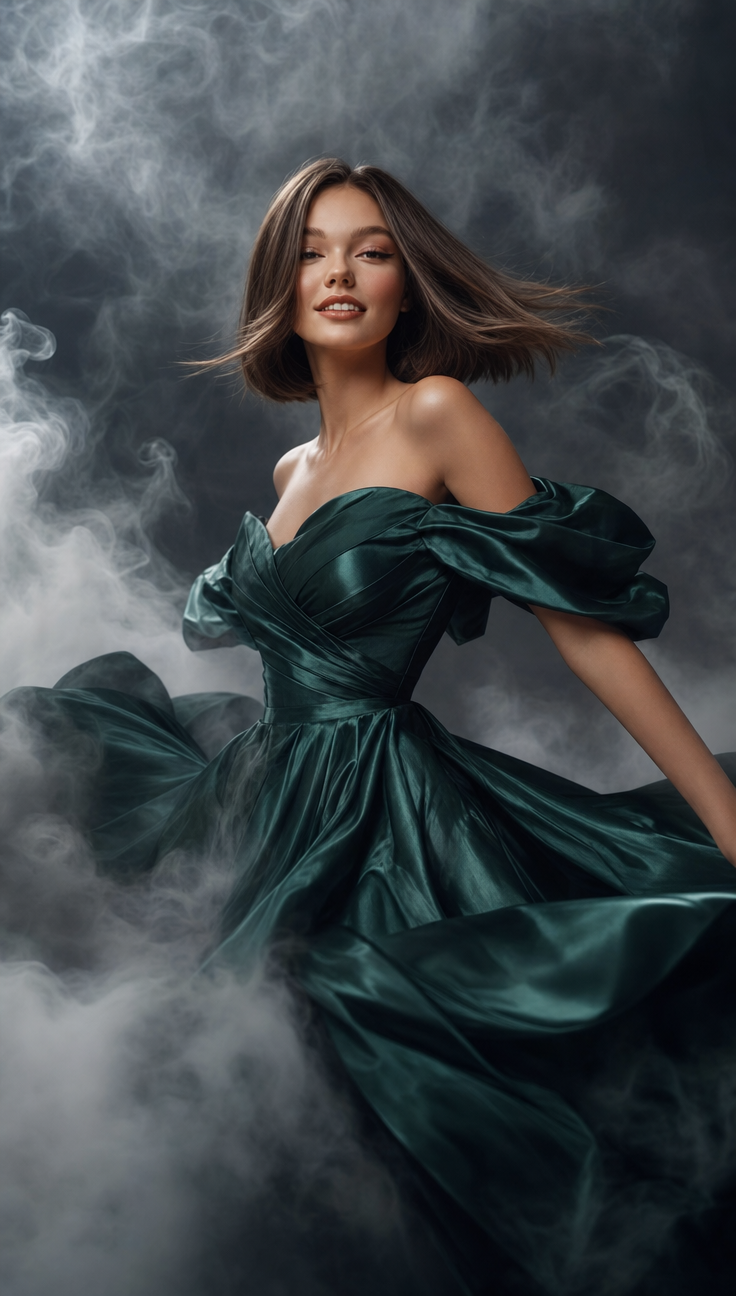
Same prompt, generated with each model separately — click one to see how it holds up.
Why this works
The phrase “deep emerald satin off-the-shoulder gown” supplies a concentrated jewel-tone focal point, while “dark charcoal neutral background” gives the green and skin tones clean separation. “High-gloss sleek bob,” “wind-tousled strands at the edges of the frame,” and “shallow depth of field” combine controlled polish with a soft, fashion-editorial sense of motion and focus. The dreamy atmosphere comes specifically from “soft swirling smoke and cool mist,” reinforced by “dramatic studio lighting with cool highlights and soft falloff,” while “elegant poised expression” anchors the glamour in the subject’s face.
FAQ
→How do I make the gown more visually dominant?
Replace “elegant poised expression” with “direct commanding gaze” and add “full-length centered composition, gown occupying most of the frame, emerald satin as the primary focal point.” Keep “dark charcoal neutral background,” because its low-detail value contrast helps the emerald fabric stand out.
→How do I change the dreamy mood into a warmer, more romantic portrait?
Replace “cool highlights and soft falloff” with “warm amber key light and rose-gold rim light,” and replace “cool mist” with “delicate warm haze.” Change “cinematic color grading” to “warm romantic color grading with muted gold and blush tones” while keeping the emerald gown for complementary color contrast.
→How do I build a coherent series of variations from this portrait?
Keep the fixed core phrases “photorealistic fashion editorial portrait,” “deep emerald satin off-the-shoulder gown,” “high-gloss sleek bob,” and “cinematic color grading.” Create controlled variants by swapping only “dark charcoal neutral background” for settings such as “marble backstage dressing room,” “rain-streaked glass studio,” or “midnight blue theatrical set,” and change “soft swirling smoke and cool mist” to a matching atmosphere such as “fine rain,” “floating dust motes,” or “silk fabric drifting in the air.”
Learn the technique behind this
- Why can't AI spell, and how do I get readable text in an image? — Older diffusion models had no character-level representation of text, so they produced letterform-shaped texture instead of words.
- How should a prompt be structured, and does word order matter? — A prompt that behaves predictably names one subject first, then what it is doing, then where, then the light, then the lens or medium, then the style.
- Why does AI get hands and faces wrong, and how do I fix it? — Hands fail because they're small in frame, extremely variable in pose, and self-occluding — the model has less usable signal per pixel than for any other body part.
Related prompts
Teal fashion editorial in monster-filled lift
Cobalt Boots in Sleek Studio Edit
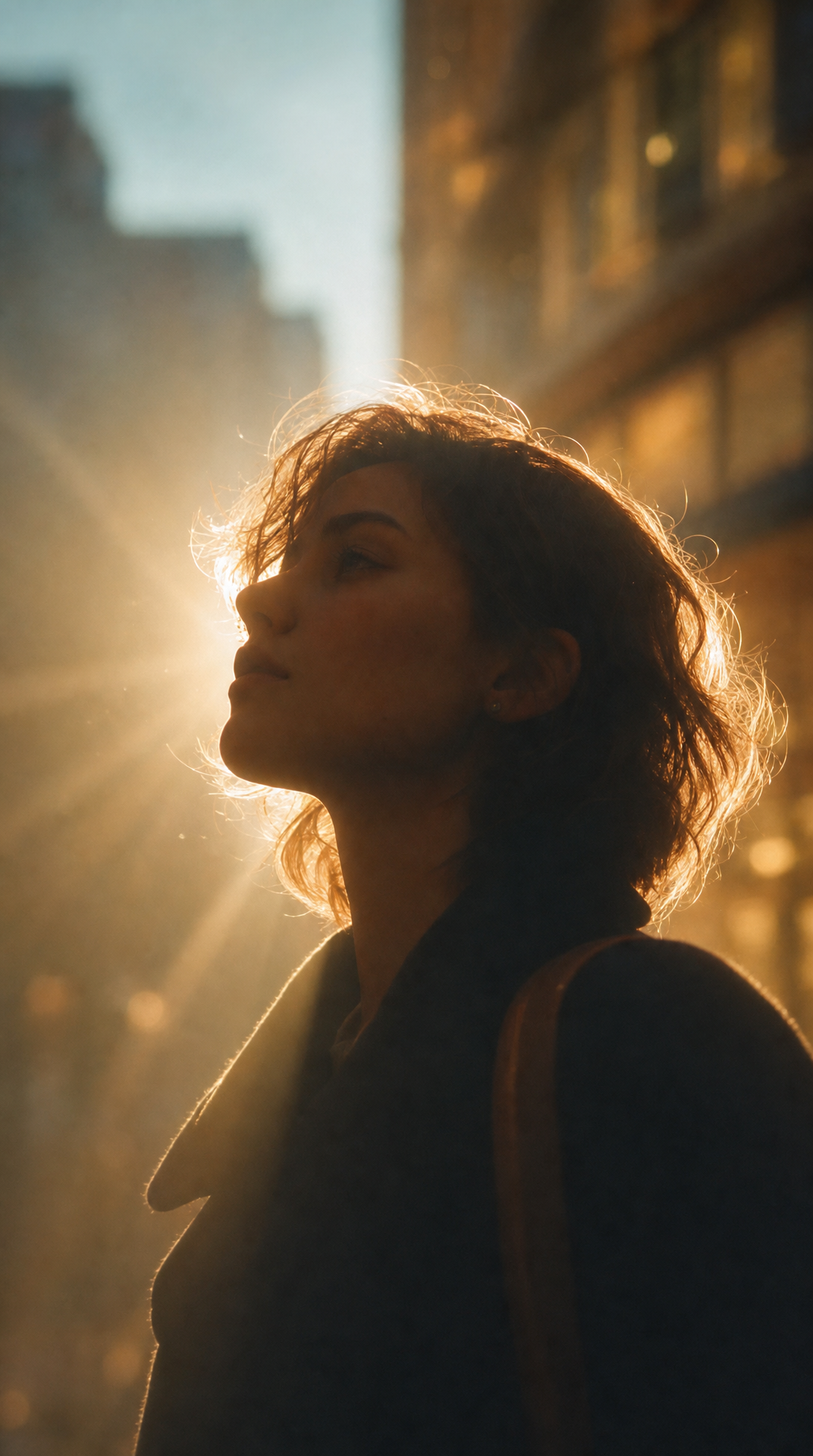
Silhouette Influencer by Sunlit Window
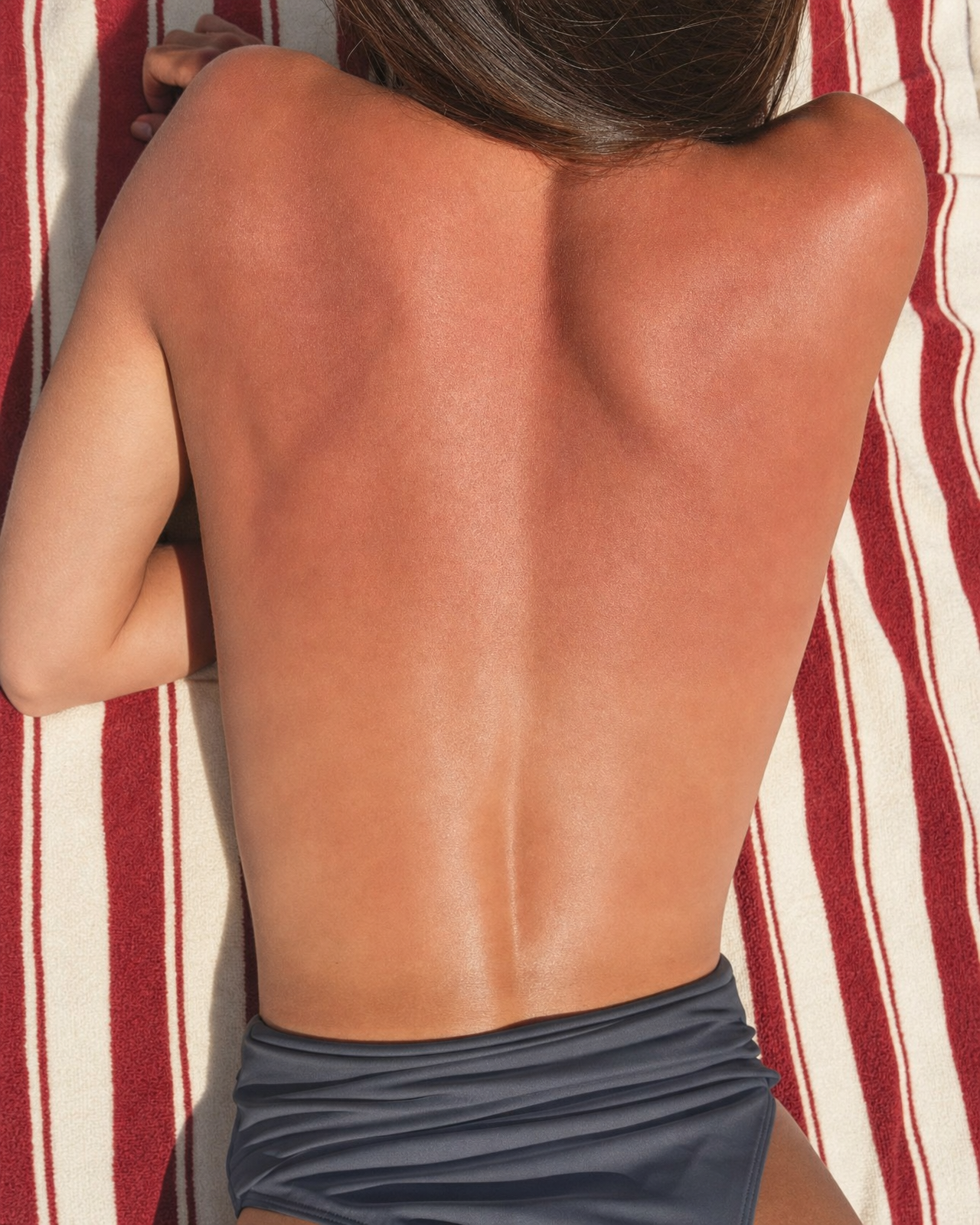
Sunlit editorial on striped beach towel