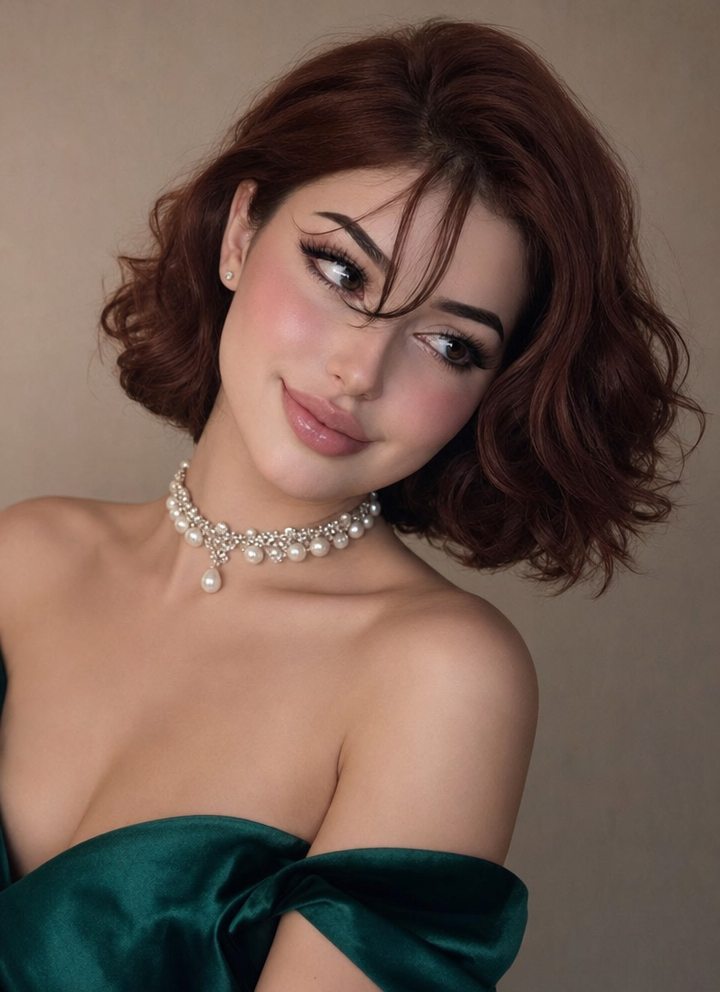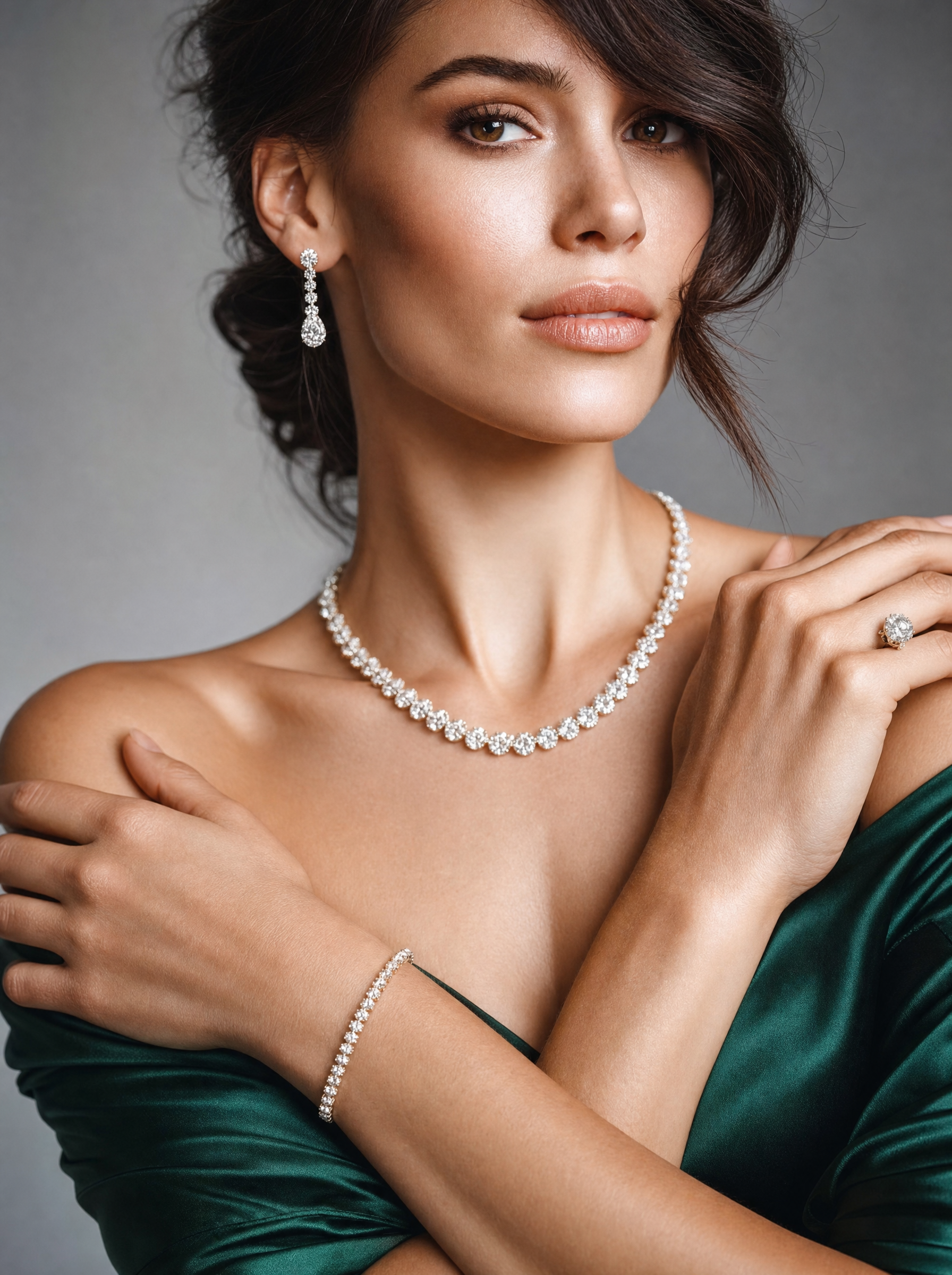
Same prompt, generated with each model separately — click one to see how it holds up.
Why this works
The close-up portrait framing makes the necklace, earrings, bracelet, and graceful hands carry the composition, while “shallow depth of field” separates them from the neutral warm-gray gradient background. “Deep emerald satin” supplies the dominant green anchor against the image’s gray and brown warmth, and “soft golden reflections” prevents the white diamonds from feeling cold. The polished mood comes from the combined load-bearing phrases “soft studio lighting,” “elegant, glamorous mood,” and “ultra high-detail micro-contrast on diamonds,” which preserve both flattering skin and crisp facet sparkle.
FAQ
→How do I make the necklace more central and visually dominant?
Replace “a close-up portrait” with “a tight chest-up jewelry hero portrait” and change “lightly displaying the jewelry” to “hands positioned below the collarbones to frame the necklace without covering it.” Add “necklace centered on the sternum, largest visual focal point, sharply focused diamond facets” after the jewelry description.
→How do I shift this from glamorous advertising to a darker, more dramatic luxury mood?
Replace “soft studio lighting with gentle highlights” with “directional low-key side lighting with controlled shadows and narrow specular highlights.” Change “neutral warm-gray gradient background” to “deep charcoal gradient background” and replace “elegant, glamorous mood” with “moody, refined, high-fashion luxury mood,” while keeping “natural, realistic skin texture” to avoid an overly artificial result.
→How do I create a coordinated series of variations from this prompt?
Keep the fixed structure, including “portrait close-up framing,” “shallow depth of field,” and “ultra high-detail micro-contrast on diamonds,” then swap one controlled variable per version. For wardrobe variations, replace “deep emerald satin top” with “midnight-blue velvet top,” “ivory silk blouse,” or “black satin off-shoulder top”; for jewelry variations, replace “diamond jewelry” and “soft golden reflections” with “white-gold sapphire jewelry” and “cool blue reflections,” or “rose-gold diamond jewelry” and “warm pink reflections.”
Learn the technique behind this
- Why does AI get hands and faces wrong, and how do I fix it? — Hands fail because they're small in frame, extremely variable in pose, and self-occluding — the model has less usable signal per pixel than for any other body part.
- Why can't AI spell, and how do I get readable text in an image? — Older diffusion models had no character-level representation of text, so they produced letterform-shaped texture instead of words.
- How should a prompt be structured, and does word order matter? — A prompt that behaves predictably names one subject first, then what it is doing, then where, then the light, then the lens or medium, then the style.
Related prompts

Teal fashion editorial in monster-filled lift
Cobalt Boots in Sleek Studio Edit

Silhouette Influencer by Sunlit Window
Sunlit editorial on striped beach towel