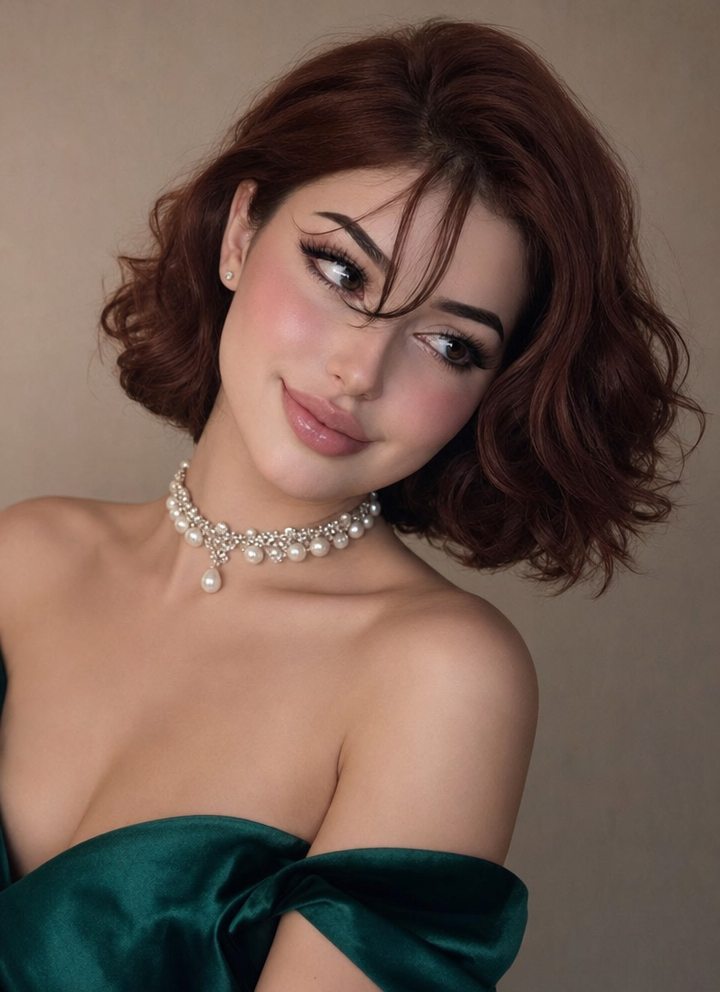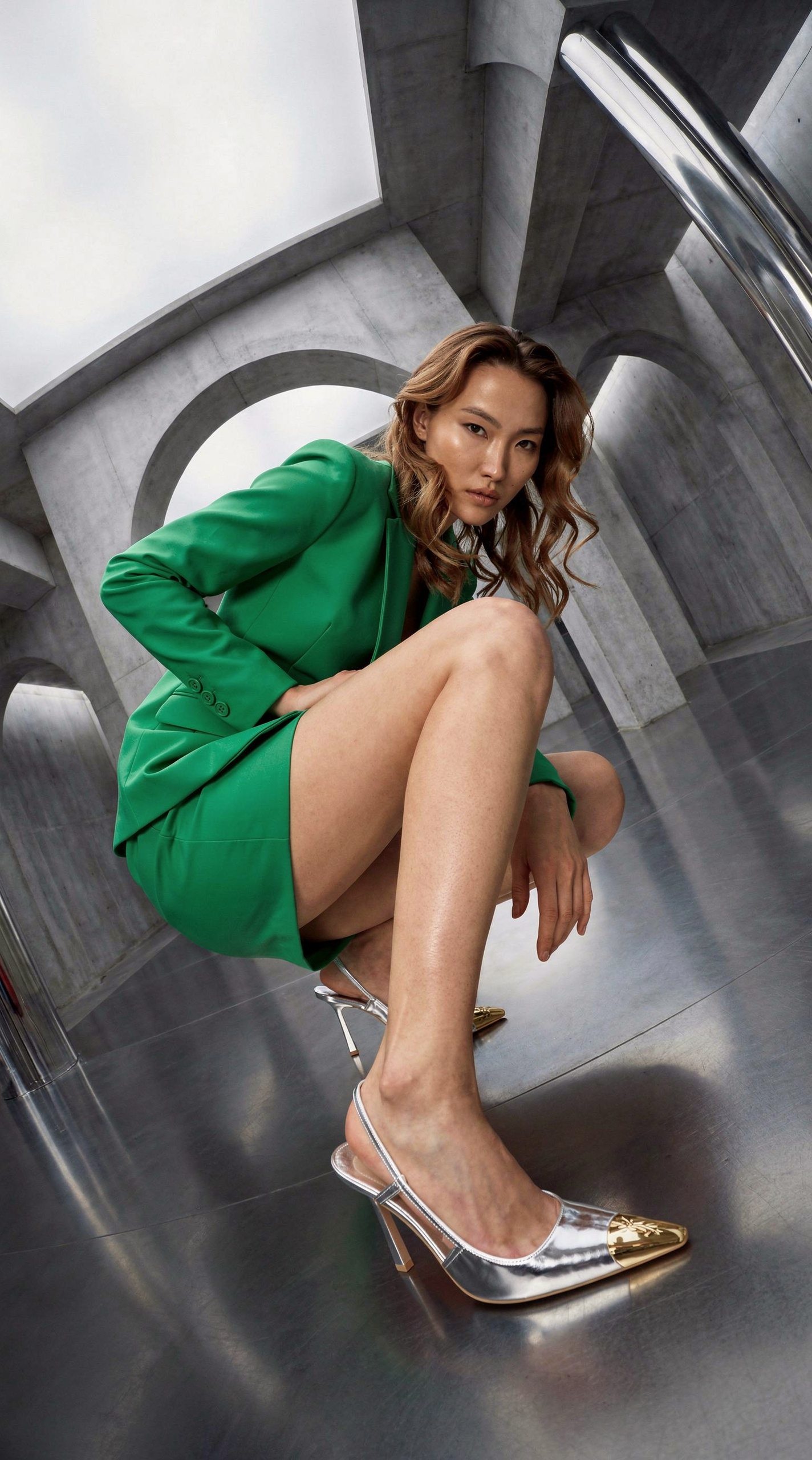
Same prompt, generated with each model separately — click one to see how it holds up.
Why this works
The bold, futuristic mood comes from the combination of “dramatic, confident pose,” “futuristic brutalist interior,” and “cinematic high-end advertising aesthetic,” while the matte emerald blazer gives the image its strongest color anchor against the dominant black, white, and gray architecture. “One knee raised” and the “portrait-full-body” composition make the crouching figure the clear focal point, while “wide-angle perspective” expands the concrete arches and chrome accents around her. “Sharp focus,” “high-detail skin texture,” and “reflective surfaces” balance tactile realism with the polished luxury-editorial finish.
FAQ
→How do I make the model’s face and upper body more central than the full crouching pose?
Replace “portrait-full-body” and “wide-angle perspective” with “three-quarter portrait composition, medium shot, eye-level perspective,” and change “one knee raised in a dramatic, confident pose” to “torso-forward pose with one hand near the face.” Keep “sharp focus” and “high-detail skin texture” to preserve facial detail.
→How do I turn the futuristic luxury mood into a darker, more dramatic editorial?
Replace “soft studio lighting” with “hard directional spotlight with deep architectural shadows,” and change “gray walls” to “near-black concrete walls.” You can also replace “subtle nude-toned lip color” with “deep oxblood lip color” while keeping the “matte emerald-green tailored blazer” as the main color accent.
→How do I create a series of variations without losing the identity of this image?
Keep the fixed anchors “elegant Asian fashion model,” “matte emerald-green tailored blazer,” “futuristic brutalist interior,” and “Vogue-style composition,” then vary one controlled element per prompt. Swap “concrete arches and gray walls” for “monolithic staircases,” “chrome elevator lobby,” or “reflective black stone corridor,” and alternate the pose between “standing with one shoulder against a column,” “seated on a brutalist step,” and “walking through the architectural space.”
Learn the technique behind this
- Why can't AI spell, and how do I get readable text in an image? — Older diffusion models had no character-level representation of text, so they produced letterform-shaped texture instead of words.
- How should a prompt be structured, and does word order matter? — A prompt that behaves predictably names one subject first, then what it is doing, then where, then the light, then the lens or medium, then the style.
- Which aspect ratio should I use, and how does it change the image? — Aspect ratio determines what the model composes, not how it's cropped afterwards.
Related prompts
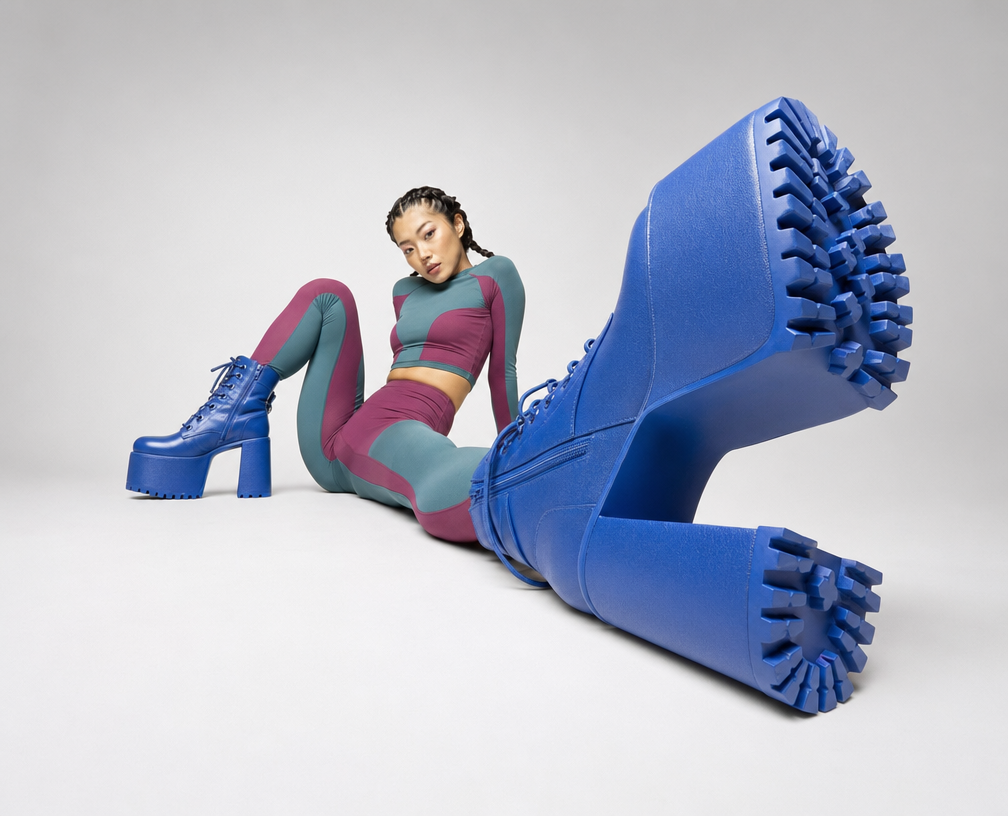
Cobalt Boots in Sleek Studio Edit
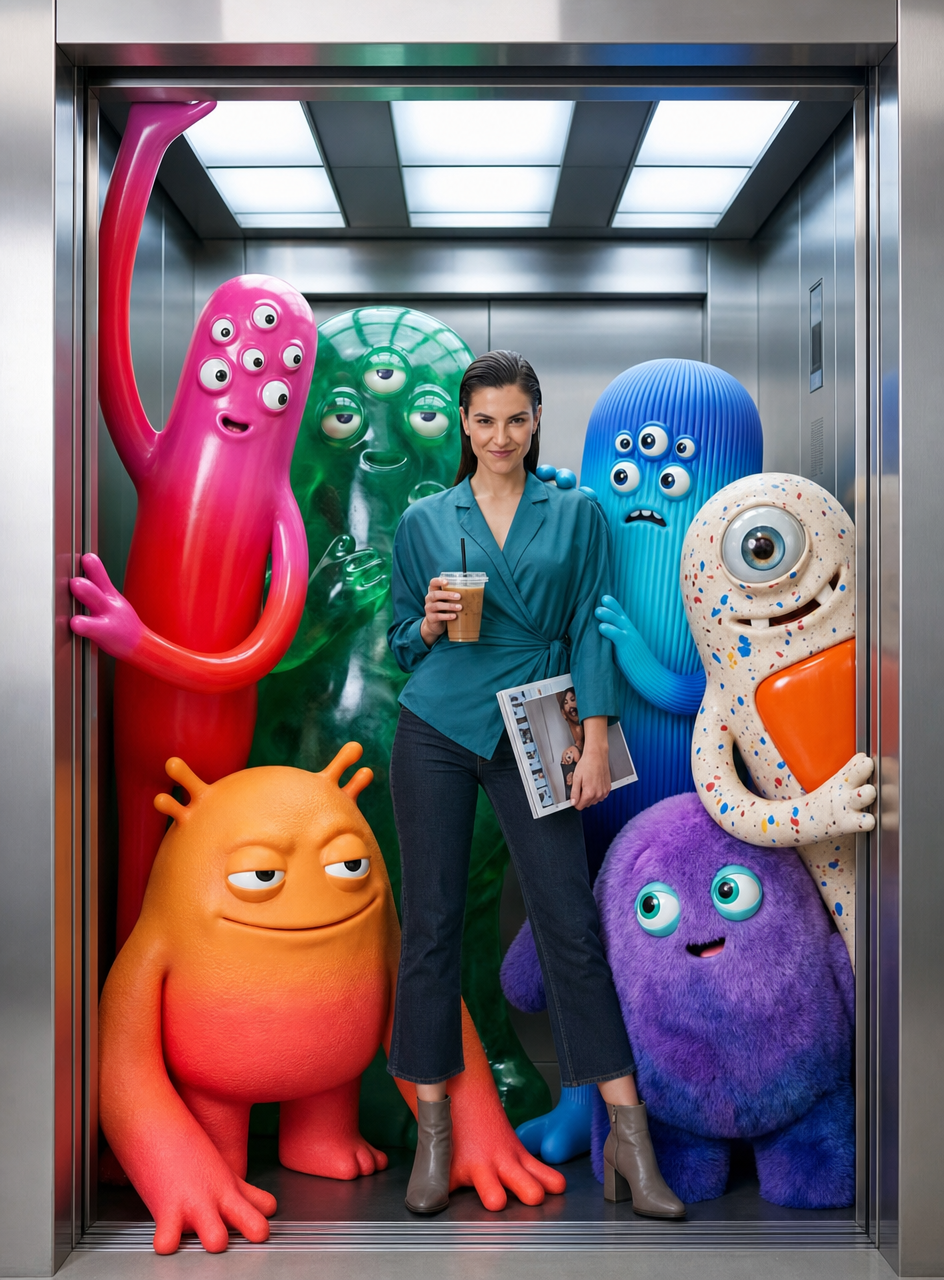
Teal fashion editorial in monster-filled lift
Sunlit editorial on striped beach towel
Silhouette Influencer by Sunlit Window