Why this works
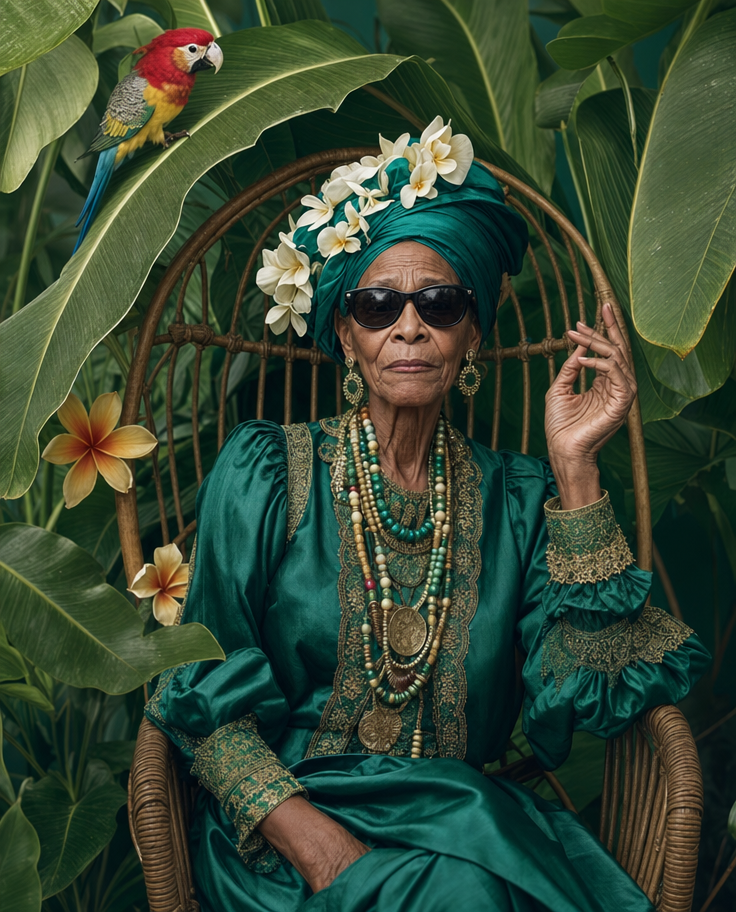
The phrase “editorial fashion portrait framing” gives the image its full-body, posed structure, while “shallow depth of field to emphasize the woman and the parrot” establishes the subject hierarchy against the dense foliage. “Deep emerald-green silk,” “teal headwrap,” and “colorful parrot” create a saturated jewel-tone palette, with the brown wicker chair and white floral accents supplying the dominant image’s earthy and bright counterpoints. “Dramatic natural light with warm highlights” sharpens the regal, exotic mood, and “highly detailed textures in the leaves, chair weave, and fabric folds” makes the surreal jungle setting feel tactile rather than purely fantastical.
FAQ
→How do I make the parrot more central and visually prominent?
Replace “a colorful parrot is perched among the leaves near her shoulder line” with “a vividly colored parrot perched prominently on the woman’s forearm, facing the camera,” and change “shallow depth of field to emphasize the woman and the parrot” to “tight shared focus on the woman and parrot, with the foliage softly blurred.”
→How do I shift this from regal and surreal to a darker, more mysterious mood?
Replace “dramatic natural light with warm highlights” with “low-key overcast jungle light with cool shadows and narrow rim light,” and replace “exotic surreal regal mood” with “mysterious nocturnal editorial mood.” Changing “large vibrant blossoms” to “dark orchids and muted jungle flowers” will also reduce the cheerful color impact.
→How do I build a consistent series while changing the setting?
Keep “photorealistic editorial fashion portrait,” “deep emerald-green silk dress,” “teal headwrap,” “layered beaded necklaces,” and “matte black sunglasses” unchanged, then replace “dense tropical jungle foliage with large vibrant flowers” with a fixed alternate location such as “weathered Mediterranean courtyard with terracotta walls and climbing bougainvillea.” Preserve “editorial fashion portrait framing” and the same lighting phrase so the new image reads as part of the same series.
Learn the technique behind this
- Why can't AI spell, and how do I get readable text in an image? — Older diffusion models had no character-level representation of text, so they produced letterform-shaped texture instead of words.
- How should a prompt be structured, and does word order matter? — A prompt that behaves predictably names one subject first, then what it is doing, then where, then the light, then the lens or medium, then the style.
- Why does AI get hands and faces wrong, and how do I fix it? — Hands fail because they're small in frame, extremely variable in pose, and self-occluding — the model has less usable signal per pixel than for any other body part.
Related prompts
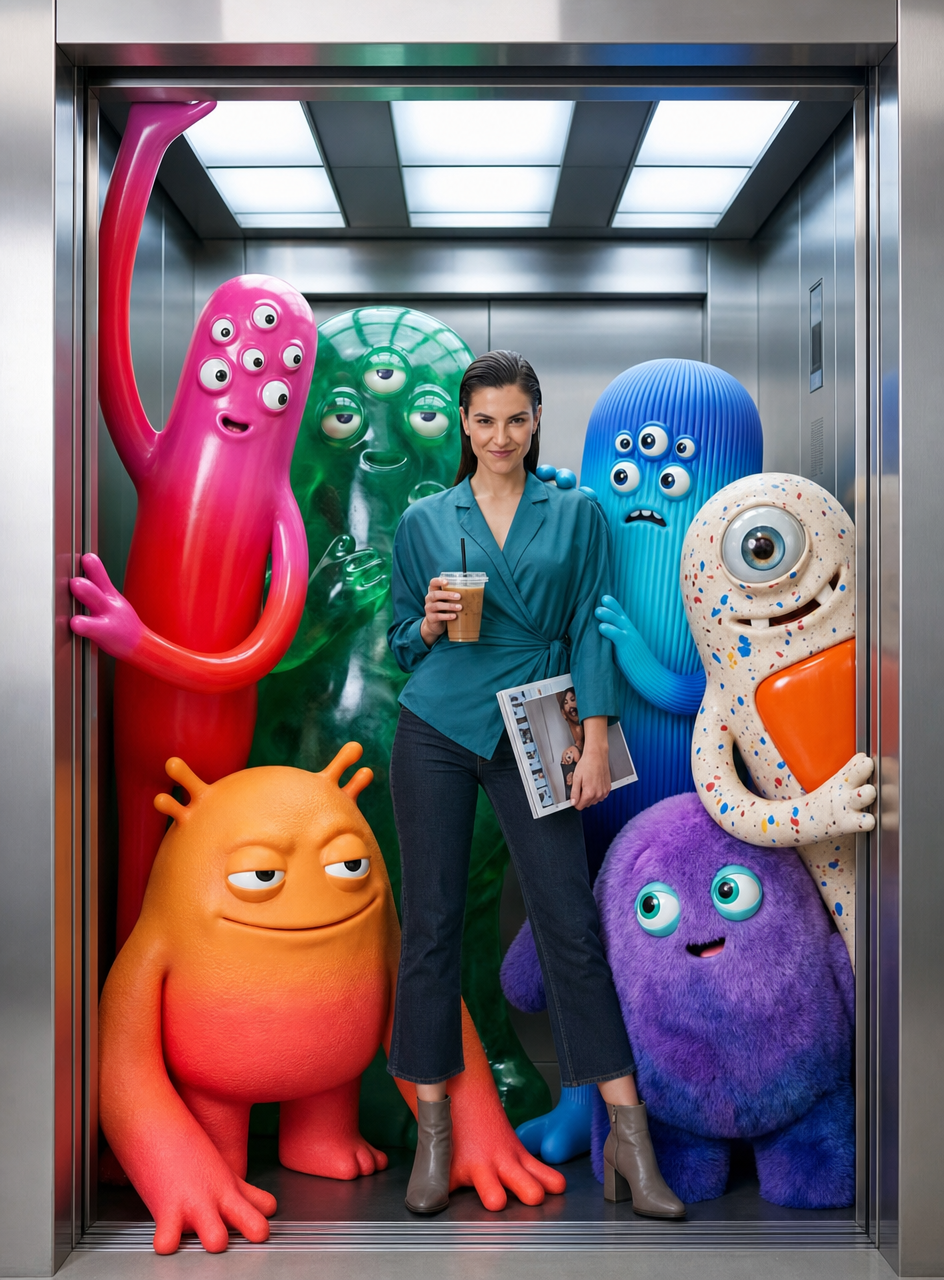
Teal fashion editorial in monster-filled lift
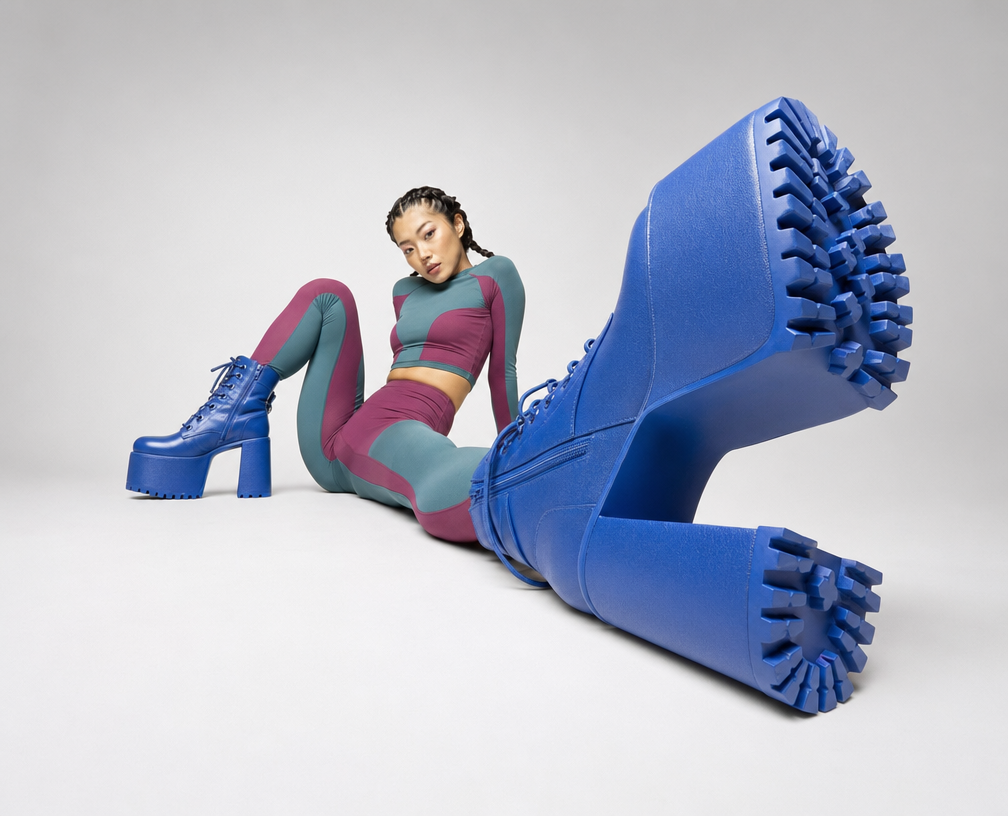
Cobalt Boots in Sleek Studio Edit
Silhouette Influencer by Sunlit Window
Sunlit editorial on striped beach towel