Why this works
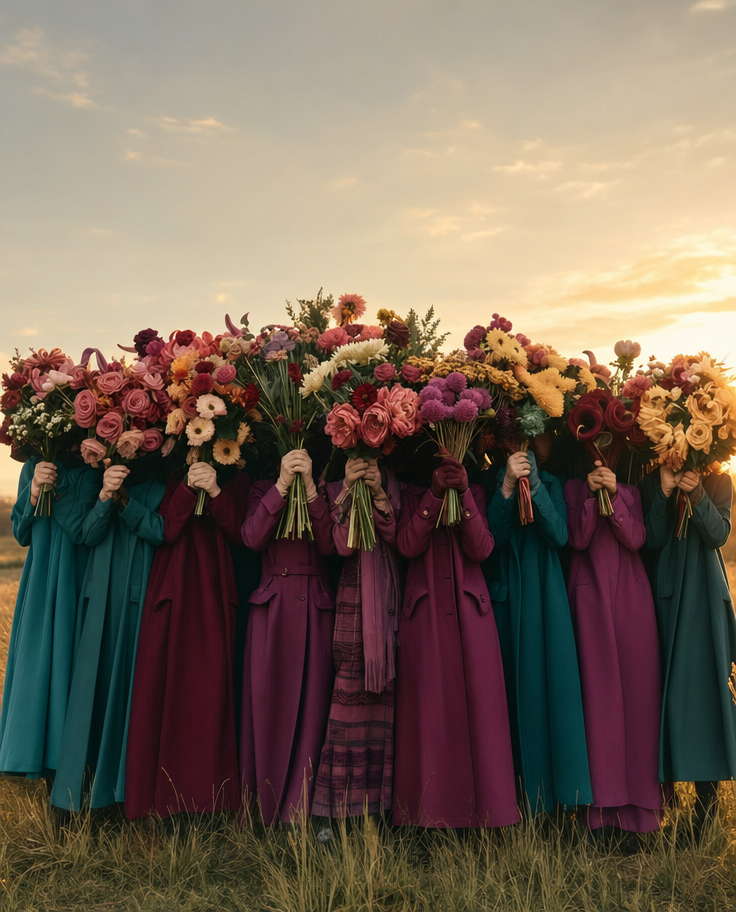
The phrase “straight lineup” gives the portrait its deliberate, graphic structure, while “full-body shot” keeps the coats, satin dresses, bouquets, and detailed grass visible at once. “Oversized bouquet of flowers up to their face” creates the central repetition and fully obscures identity, turning the group into a pattern of color and shape. Deep teal and plum clothing against the dominant purple, magenta, and pink flowers creates a cool jewel-tone harmony, while “soft late-afternoon golden hour,” “gentle rim glow,” and “warm haze” supply the dreamy softness without erasing the “highly detailed photorealism” and “realistic fabric textures.”
FAQ
→How do I make the bouquets more visually dominant than the clothing?
Replace “wearing darker jewel-toned vintage-style long coats and flowing satin dresses in deep teal and plum” with “wearing understated charcoal and muted brown garments,” and expand “oversized bouquet” to “enormous, highly varied bouquets occupying most of the upper frame, with layered petals and cascading stems.” Add “flowers as the strongest focal point” to reinforce the hierarchy.
→How do I shift this from a soft whimsical editorial to a darker, more mysterious portrait?
Replace “Soft late-afternoon golden hour with a gentle rim glow, slightly brighter skies with warm haze” with “overcast twilight, directional sidelight, deep shadows, and a restrained cool haze.” Change “whimsical, dreamy mood” to “quietly ominous, surreal mood,” and replace the “deep teal and plum” wardrobe with “black, oxblood, and midnight blue” while keeping the bouquets brightly colored for contrast.
→How do I create a series of related images without losing the lineup concept?
Keep “fashion editorial group portrait,” “straight lineup,” “full-body shot,” and “each person holding an oversized bouquet of flowers up to their face” unchanged. Vary one controlled phrase per image, such as replacing “grassy field” with “windswept coastal meadow,” “sunlit orchard,” or “misty woodland clearing,” and swap “deep teal and plum” for coordinated palettes like “rust and saffron” or “cobalt and emerald.”
Learn the technique behind this
- Why can't AI spell, and how do I get readable text in an image? — Older diffusion models had no character-level representation of text, so they produced letterform-shaped texture instead of words.
- Why does AI get hands and faces wrong, and how do I fix it? — Hands fail because they're small in frame, extremely variable in pose, and self-occluding — the model has less usable signal per pixel than for any other body part.
- Why does the model ignore parts of my prompt? — Ignored instructions are almost always conflicts, counts, or spatial relationships — three things current models handle badly — rather than the model failing to read you.
Related prompts
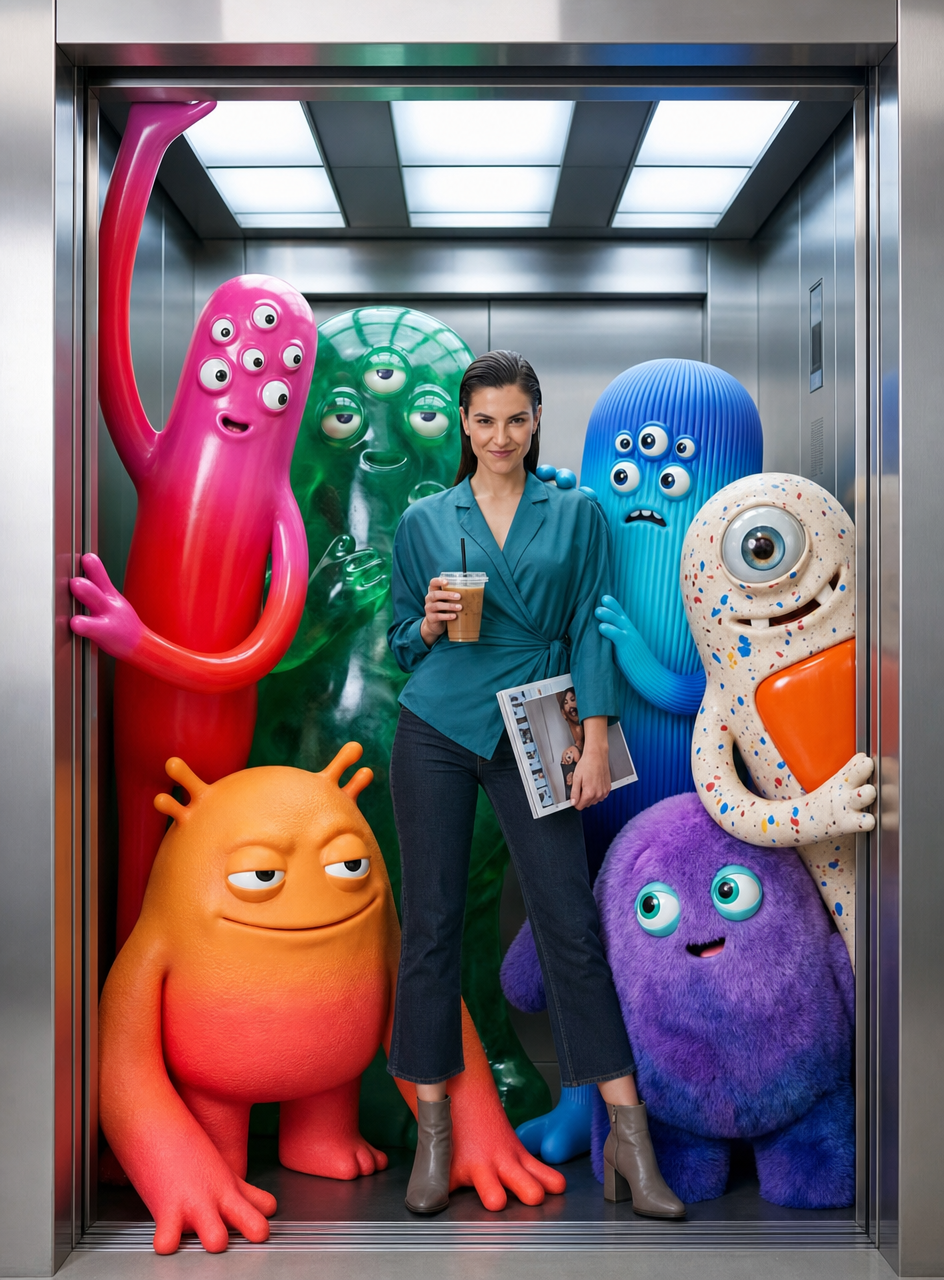
Teal fashion editorial in monster-filled lift
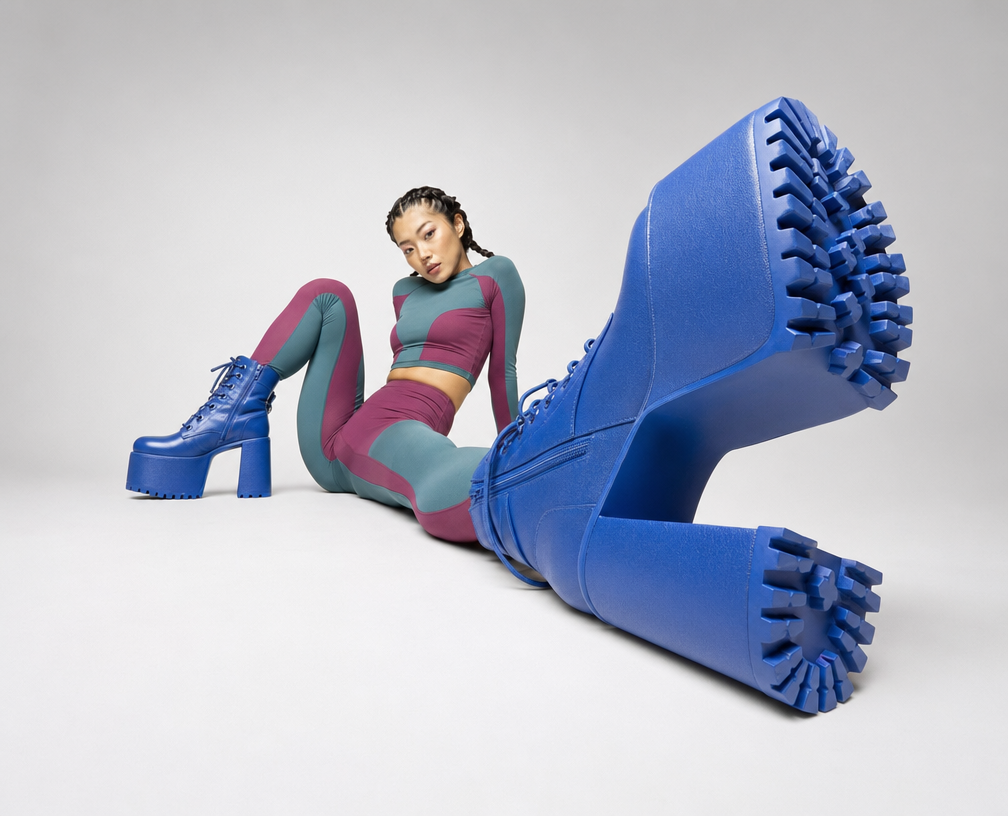
Cobalt Boots in Sleek Studio Edit
Silhouette Influencer by Sunlit Window
Sunlit editorial on striped beach towel