Same prompt, generated with each model separately — click one to see how it holds up.
Why this works
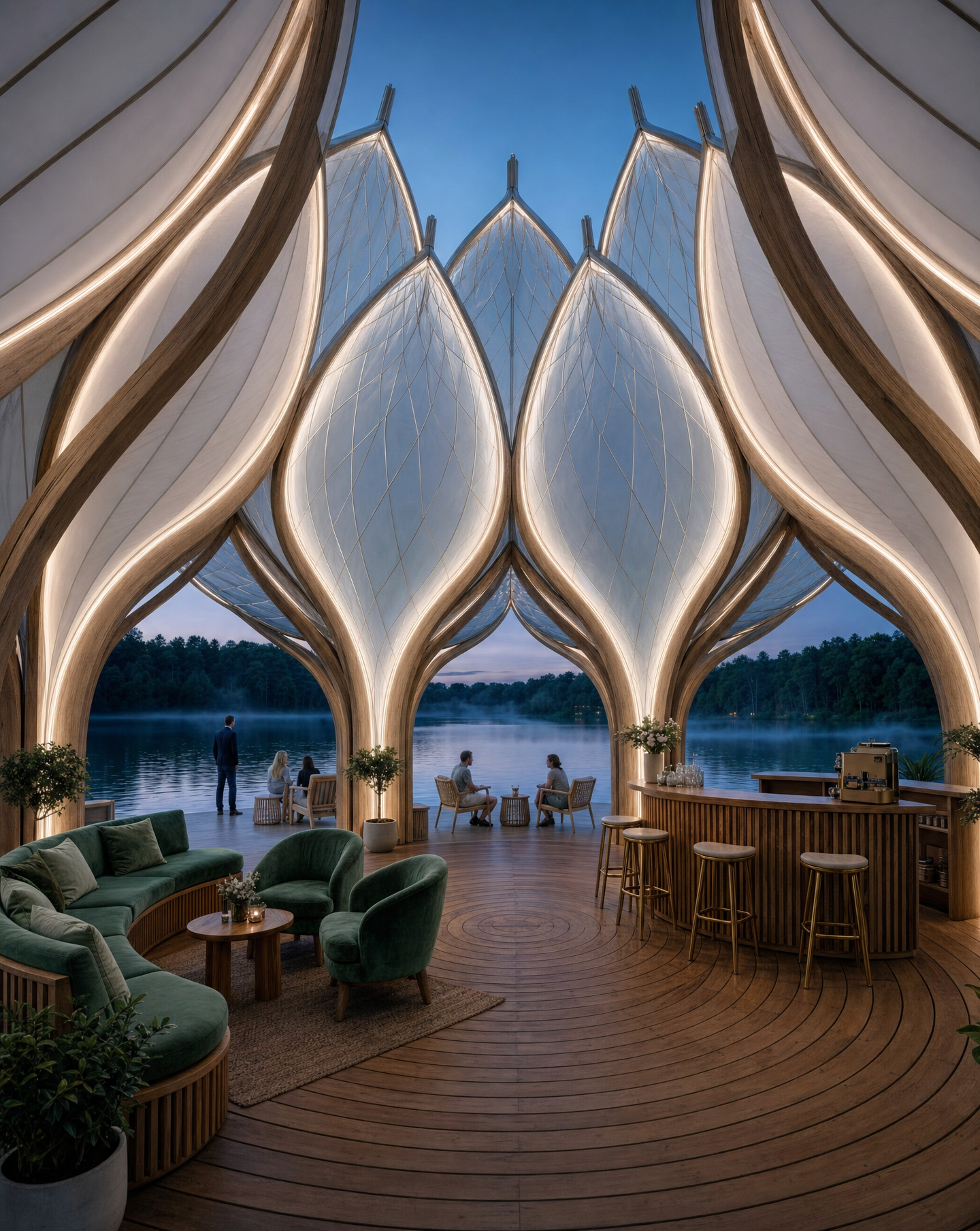
The “slightly off-center framing with gentle asymmetry” keeps the wide interior view from feeling static, while the open pavilion sides and distant tree-lined shore establish depth and scale. “Blue hour,” “serene blue sky,” and “faint mist over the water” supply the blue-gray atmospheric mood; deep green velvet and pale oak add controlled contrast rather than competing with it. The “sculptural lotus-petal canopy” with “softly illuminated cool-white edge lighting” provides the visual anchor, and “cinematic lighting with soft falloff and high dynamic range” preserves detail across the bright lake, reflective floor, glass, and darker lounge seating.
FAQ
→How do I make the lotus canopy the clear focal point?
Replace “slightly off-center framing with gentle asymmetry” with “centered symmetrical framing aimed directly at the lotus-petal canopy,” and change “softly illuminated cool-white edge lighting” to “brighter concentrated cool-white edge lighting with subtle uplight on each petal.” Reduce the bar’s competition by replacing “open bar counter with backlit shelves and brass-toned stools” with “minimal bar counter receding into the background.”
→How do I change the serene blue-hour mood into a warmer sunset atmosphere?
Replace “at blue hour” and “serene blue sky outside” with “late golden hour with amber sunset light,” and change “cool-white edge lighting” to “warm champagne edge lighting.” Keep “cinematic lighting with soft falloff,” but replace “deep green velvet” with “burnt orange or warm rust velvet” to harmonize the seating with the sunset colors.
→How do I build a coordinated series of variations from this pavilion prompt?
Keep the fixed visual language, including “photorealistic architectural visualization,” “realistic materials,” “slightly off-center framing,” and “high dynamic range cinematic lighting.” Create each variation by swapping only the setting phrase “calm lake with a faint mist over the water and a distant tree-lined shore” for options such as “snow-covered alpine lake beneath overcast morning light,” “tropical lagoon with palms at midday,” or “dark ocean cove under a moonlit sky,” then adjust “blue hour” to match each location.
Learn the technique behind this
- Why can't AI spell, and how do I get readable text in an image? — Older diffusion models had no character-level representation of text, so they produced letterform-shaped texture instead of words.
- How should a prompt be structured, and does word order matter? — A prompt that behaves predictably names one subject first, then what it is doing, then where, then the light, then the lens or medium, then the style.
- Do negative prompts work, and what should go in one? — Negative prompts work on models that support a separate negative conditioning channel — mainly Stable Diffusion and FLUX-family models.
Related prompts
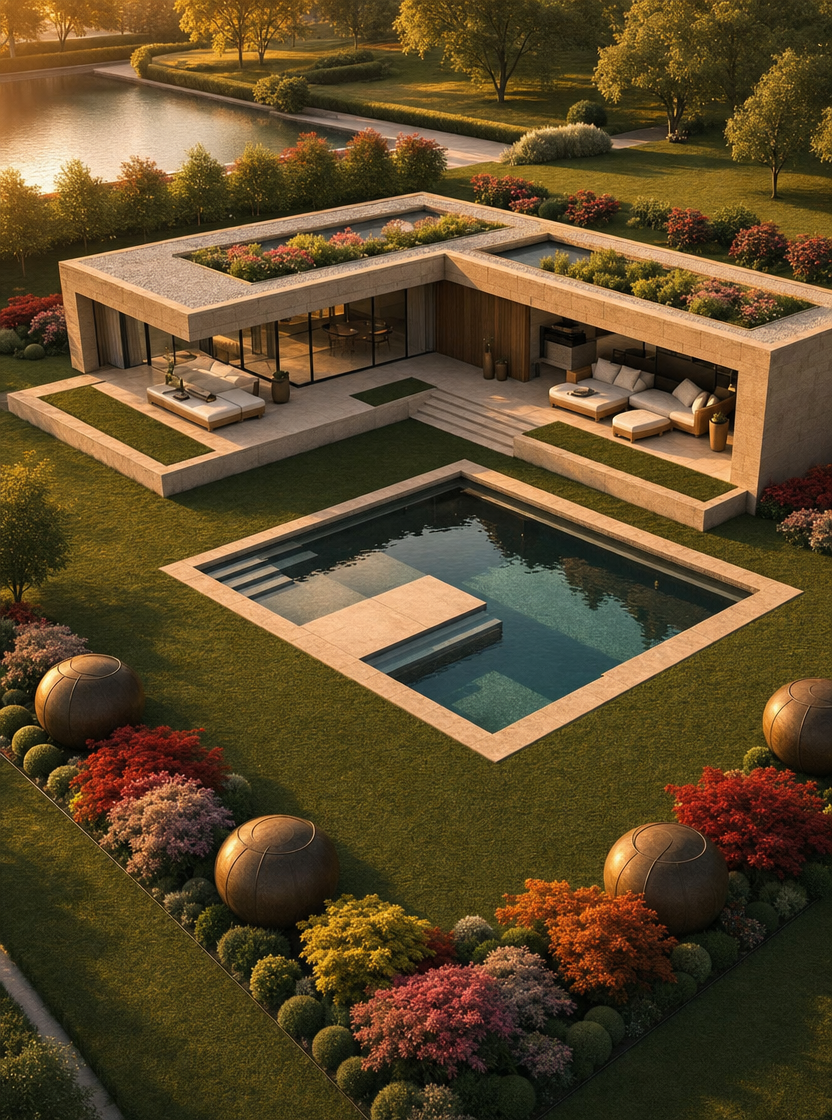
Beige Modern Villa with Rectangular Pool Garden
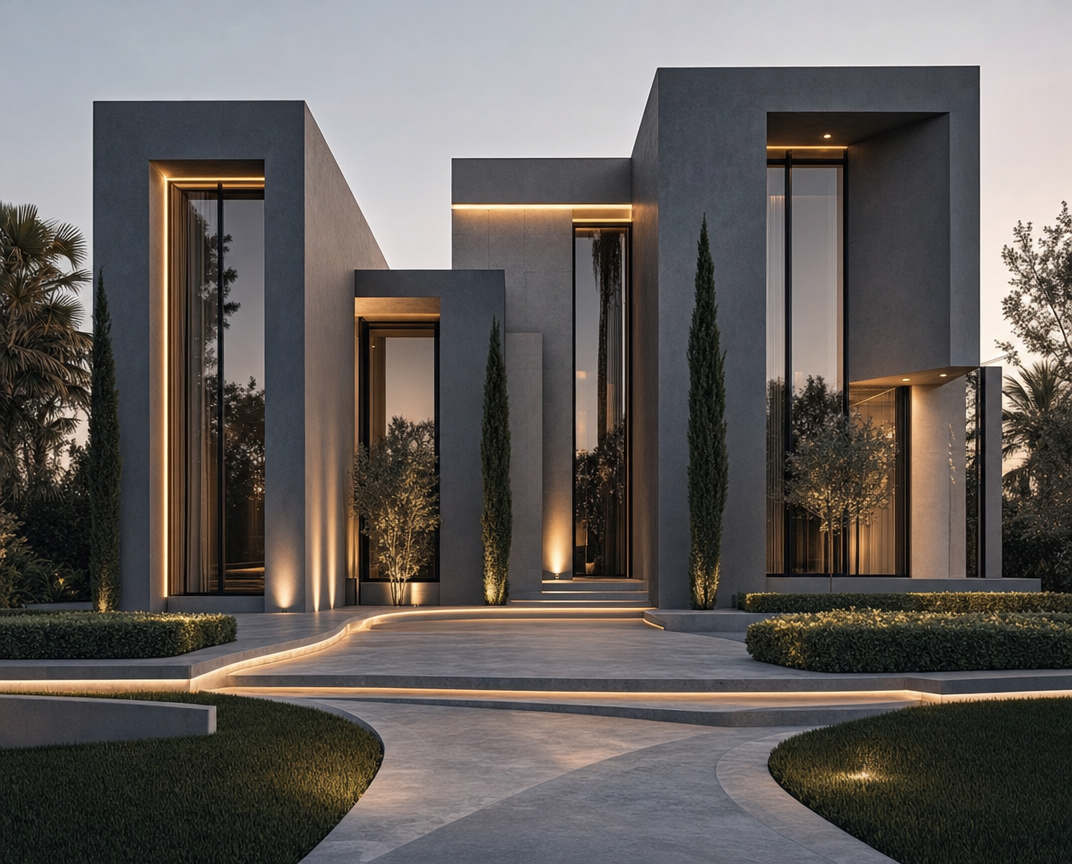
Luxury modern villa with dark concrete facade and vertical windows
Night City Skyline with Amber Windows and Sepia Water
Noir Stairwell Tension at Night