Why this works
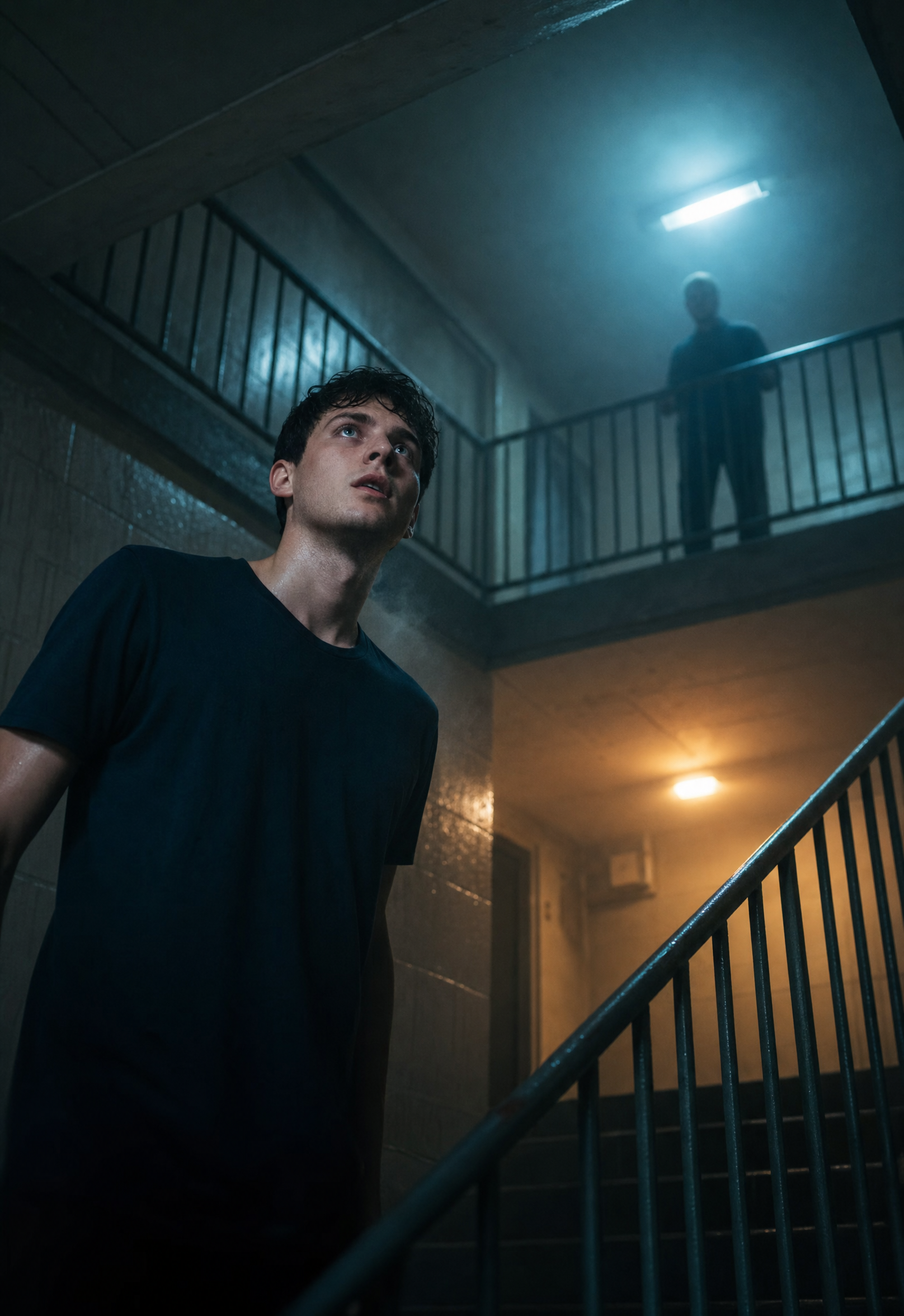
The low-angle view and “50mm lens look” give the standing man visual authority while the “blurred silhouetted figure on the upper landing” adds a specific threat above him, making the candid-action composition feel suspended mid-event. The tense noir mood comes from “dramatic long shadows,” “high contrast lighting,” and “light mist creating a hazy depth,” while “cool cyan overhead industrial lighting mixed with a soft amber practical lamp glow” produces the image’s gray-blue-orange color tension. “Shallow depth of field,” “subtle motion blur,” and “realistic skin texture” keep attention on the man without losing the damp, scuffed concrete environment.
FAQ
→How do I make the silhouetted figure feel like the main threat?
Replace “a blurred silhouetted figure on the upper landing” with “a sharply defined, imposing silhouette leaning over the upper landing, partially obscured by mist,” and replace “shallow depth of field” with “deep focus across both figures.” This preserves the stairwell while giving the background figure readable presence.
→How do I shift this from tense noir into a warmer, more intimate mood?
Replace “cool cyan overhead industrial lighting mixed with a soft amber practical lamp glow” with “soft amber practical lighting with muted teal fill,” and replace “dramatic long shadows” and “high contrast lighting” with “gentle falloff and soft, minimal shadows.” Keep “light mist” but change “tense noir mood” to “quiet, introspective mood.”
→How do I create a series of variations without losing the visual identity?
Keep the fixed anchors “brutalist concrete stairwell,” “50mm lens look,” “cool cyan” and “soft amber” lighting, plus “realistic skin texture,” then vary one controlled block at a time: replace “young man” with “woman in a raincoat” or “security guard,” change “upper landing” to “bottom stairwell” or “service corridor,” and swap “low-angle view” for “eye-level candid framing.”
Learn the technique behind this
- Why can't AI spell, and how do I get readable text in an image? — Older diffusion models had no character-level representation of text, so they produced letterform-shaped texture instead of words.
- How should a prompt be structured, and does word order matter? — A prompt that behaves predictably names one subject first, then what it is doing, then where, then the light, then the lens or medium, then the style.
- Why does AI get hands and faces wrong, and how do I fix it? — Hands fail because they're small in frame, extremely variable in pose, and self-occluding — the model has less usable signal per pixel than for any other body part.
Related prompts
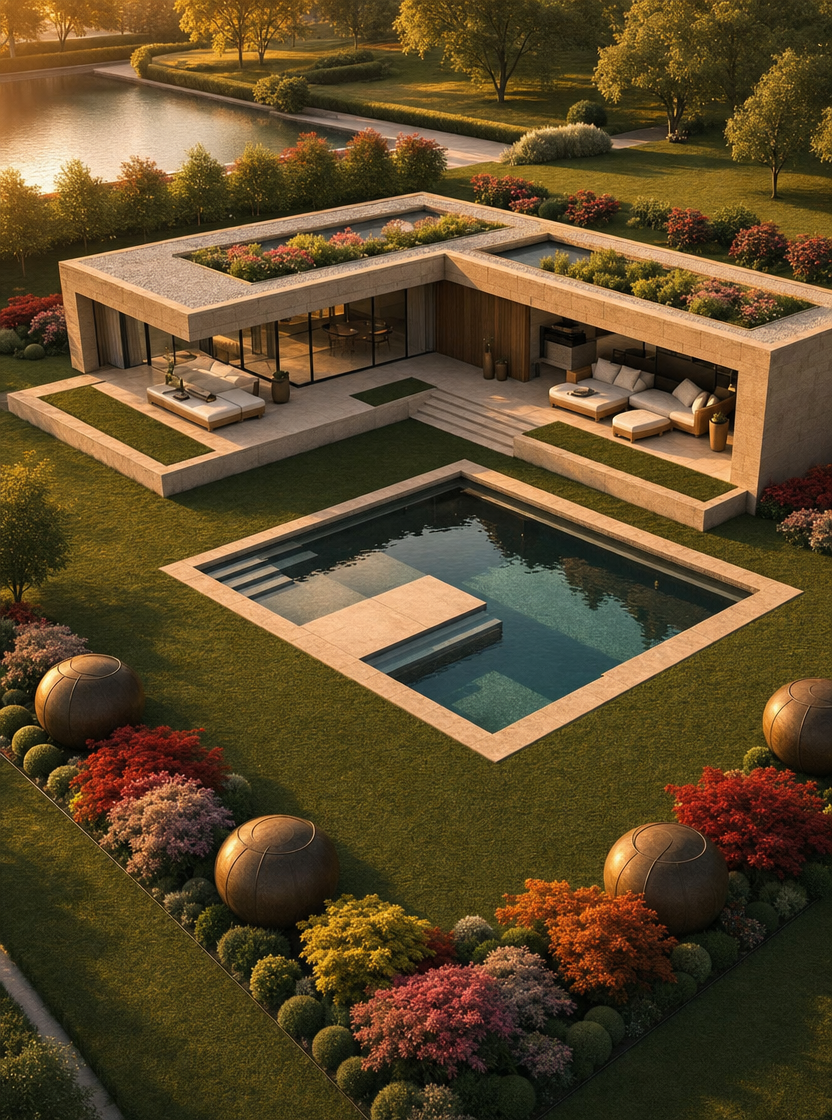
Beige Modern Villa with Rectangular Pool Garden
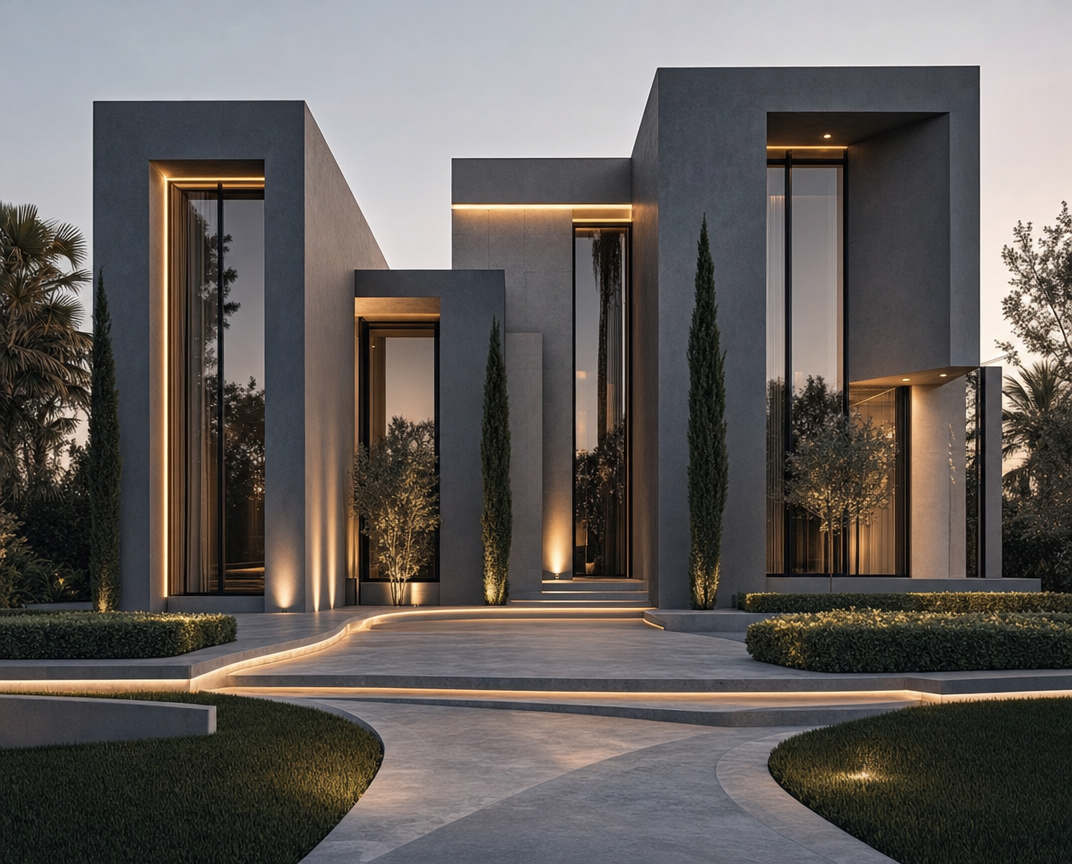
Luxury modern villa with dark concrete facade and vertical windows
Night City Skyline with Amber Windows and Sepia Water
Blue-Hour Wedding Tent Reception Scene