Why this works
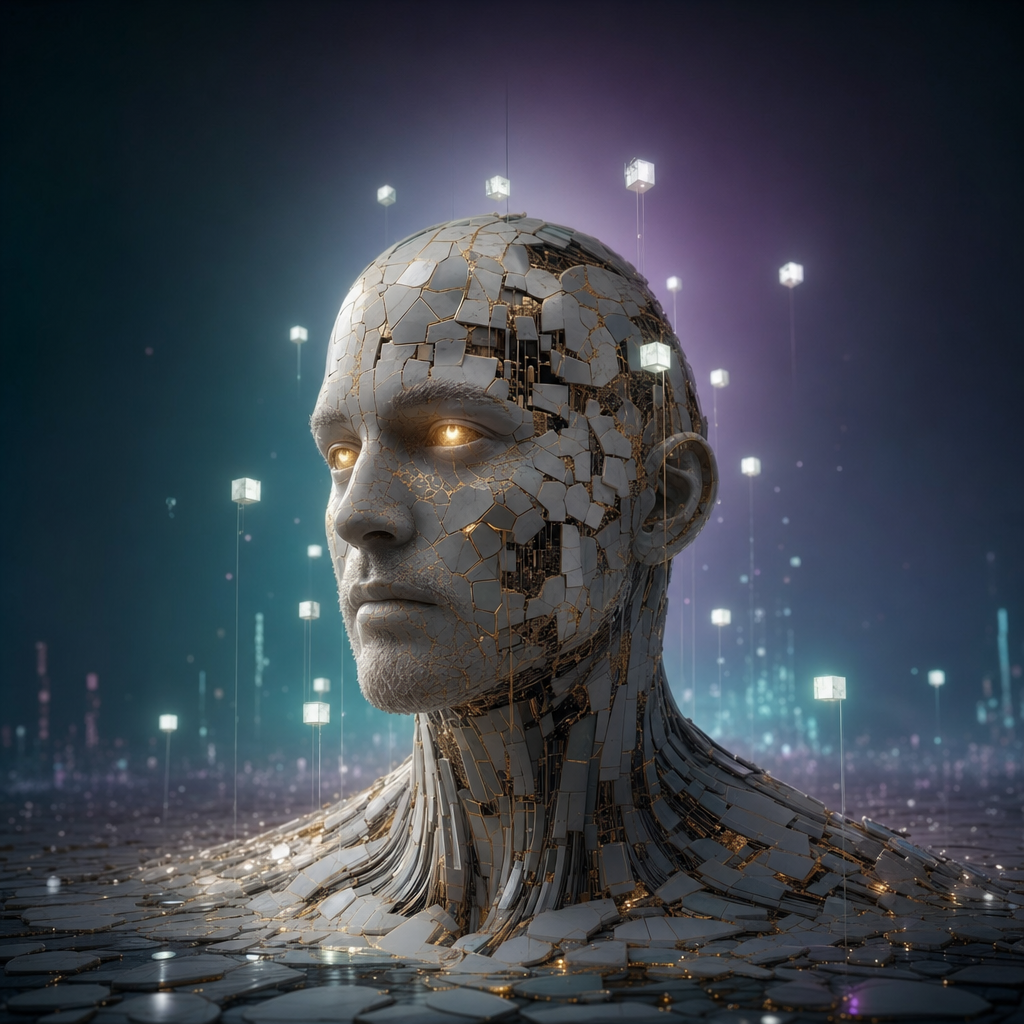
The portrait-closeup is anchored by “cinematic framing” and “cybernetic human bust,” keeping the face and upper form dominant while the black negative space gives the subject scale and separation. “Neon lighting shifted to teal and violet” supplies the image’s purple-teal color harmony, while “warm amber-gold eyes” and “subtle gold veins” create precise focal accents against those cooler colors. The ethereal mood comes from the specific combination of “gentle volumetric haze,” “fine vertical dust motes and short light streaks,” and the “rippling reflective glass-like surface,” which also adds a layered, suspended feeling beneath the photorealistic plating.
FAQ
→How do I make the eyes and face more central and prominent?
Keep “close bust framing,” but replace “a small cluster of floating dim-white light cubes held in midair” with “no floating objects, unobstructed face,” and add “sharp focus on the eyes and facial plating, centered head-and-shoulders portrait.” Change “warm amber-gold eyes” to “bright luminous amber eyes with crisp catchlights” for a stronger focal point.
→How do I shift this from an ethereal mood to a darker, more ominous tone?
Replace “gentle volumetric haze” with “dense shadow-filled smoke,” and change “neon lighting shifted to teal and violet” to “deep crimson and indigo neon with hard side-lighting.” Replace “floating dim-white light cubes” with “flickering red warning lights,” and add “severe underlighting, heavy facial shadows, threatening atmosphere.”
→How do I create a series of variations without losing the core design?
Keep “photorealistic futuristic cybernetic human bust,” “fragmented ceramic-and-metal plating with subtle gold veins,” and “close bust framing” unchanged, then swap only the setting and palette: use “emerging from black liquid in a flooded laboratory” with “cold blue and silver lighting,” or “rising from cracked volcanic glass” with “orange-red lighting and drifting ash.” Retain “warm amber-gold eyes” in every version as the recurring visual signature.
Learn the technique behind this
- Why can't AI spell, and how do I get readable text in an image? — Older diffusion models had no character-level representation of text, so they produced letterform-shaped texture instead of words.
- How should a prompt be structured, and does word order matter? — A prompt that behaves predictably names one subject first, then what it is doing, then where, then the light, then the lens or medium, then the style.
- Which aspect ratio should I use, and how does it change the image? — Aspect ratio determines what the model composes, not how it's cropped afterwards.
Related prompts
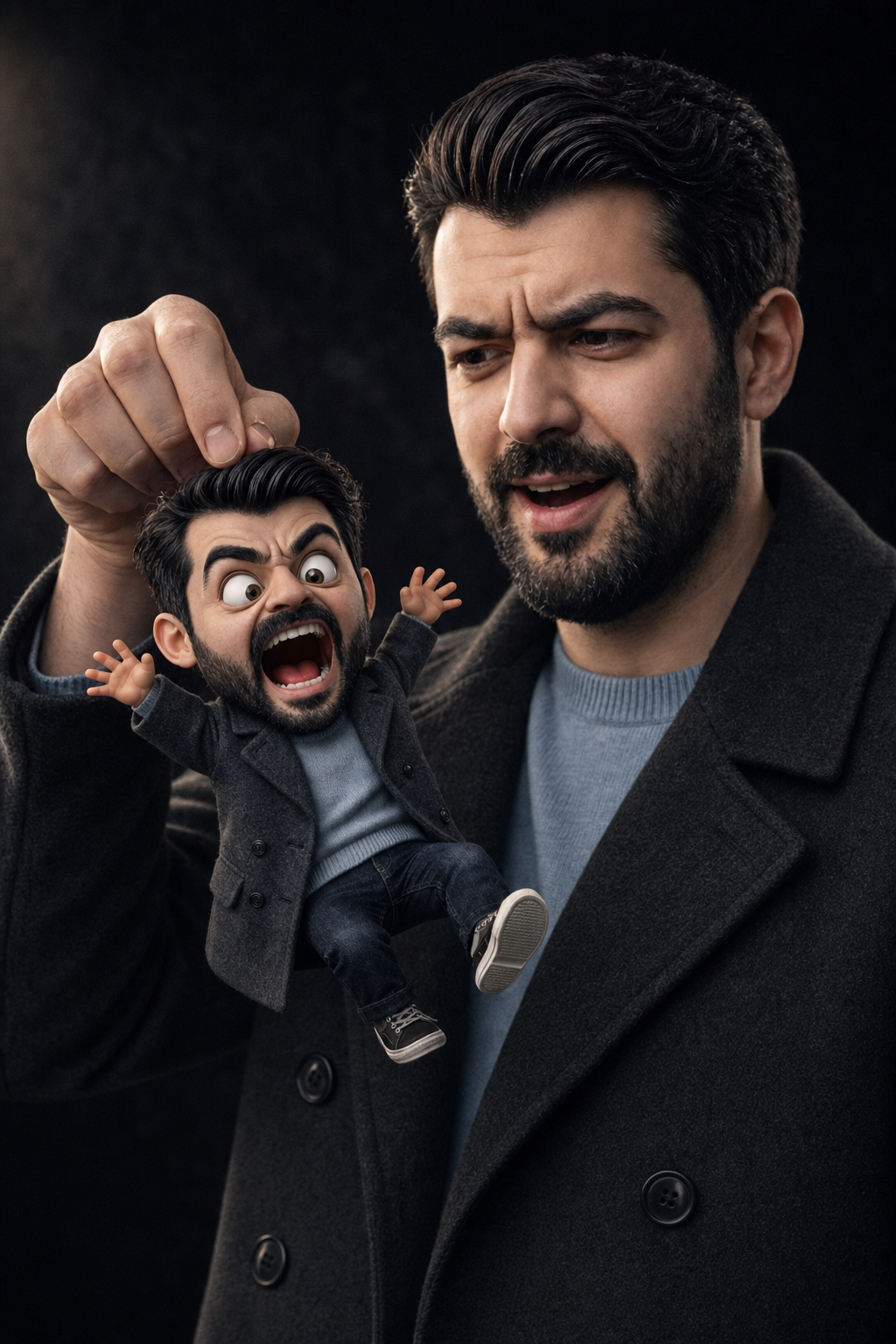
Surprised Man Holding Mini Cartoon Self
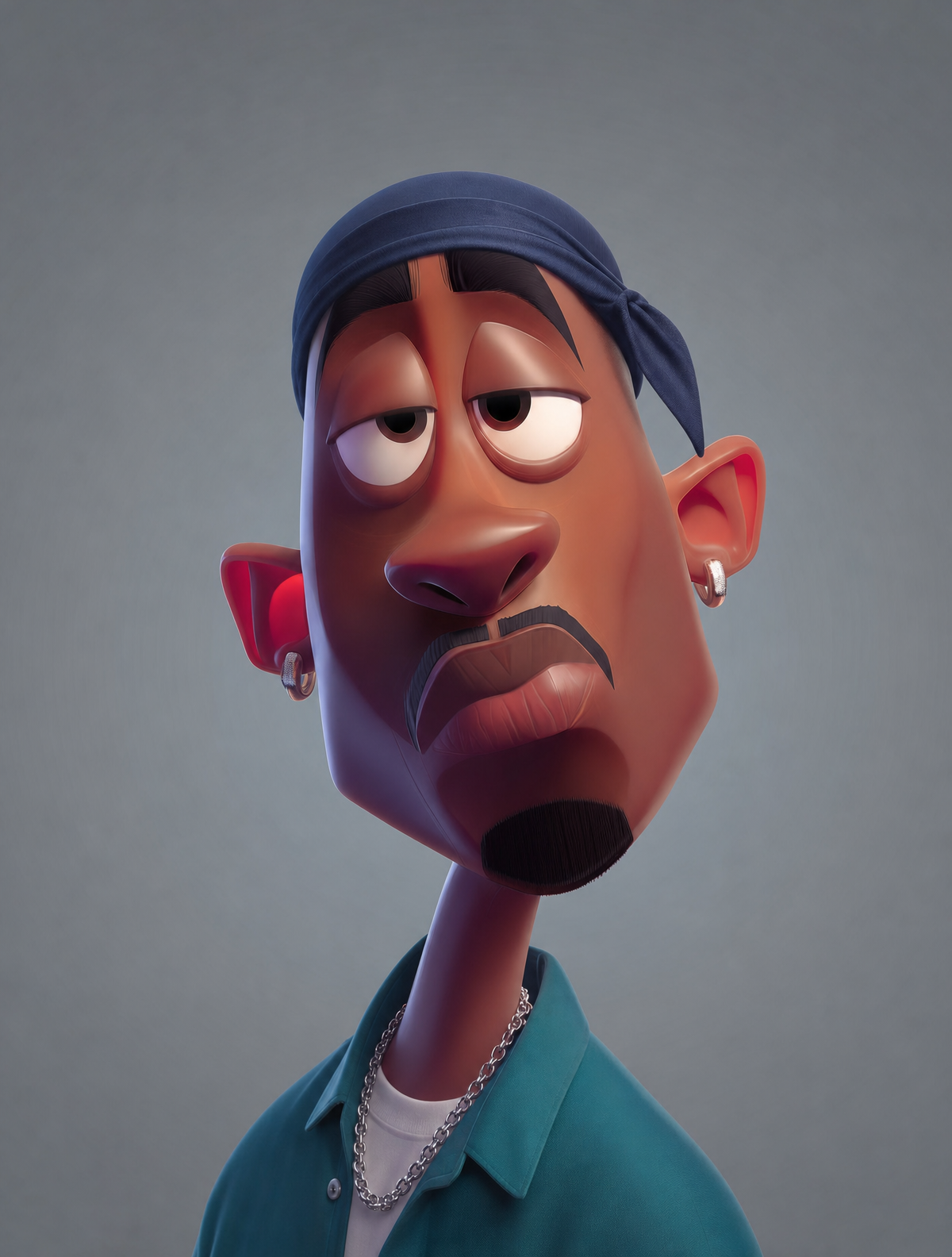
Laid-back 3D Caricature Portrait with Streetwear Style
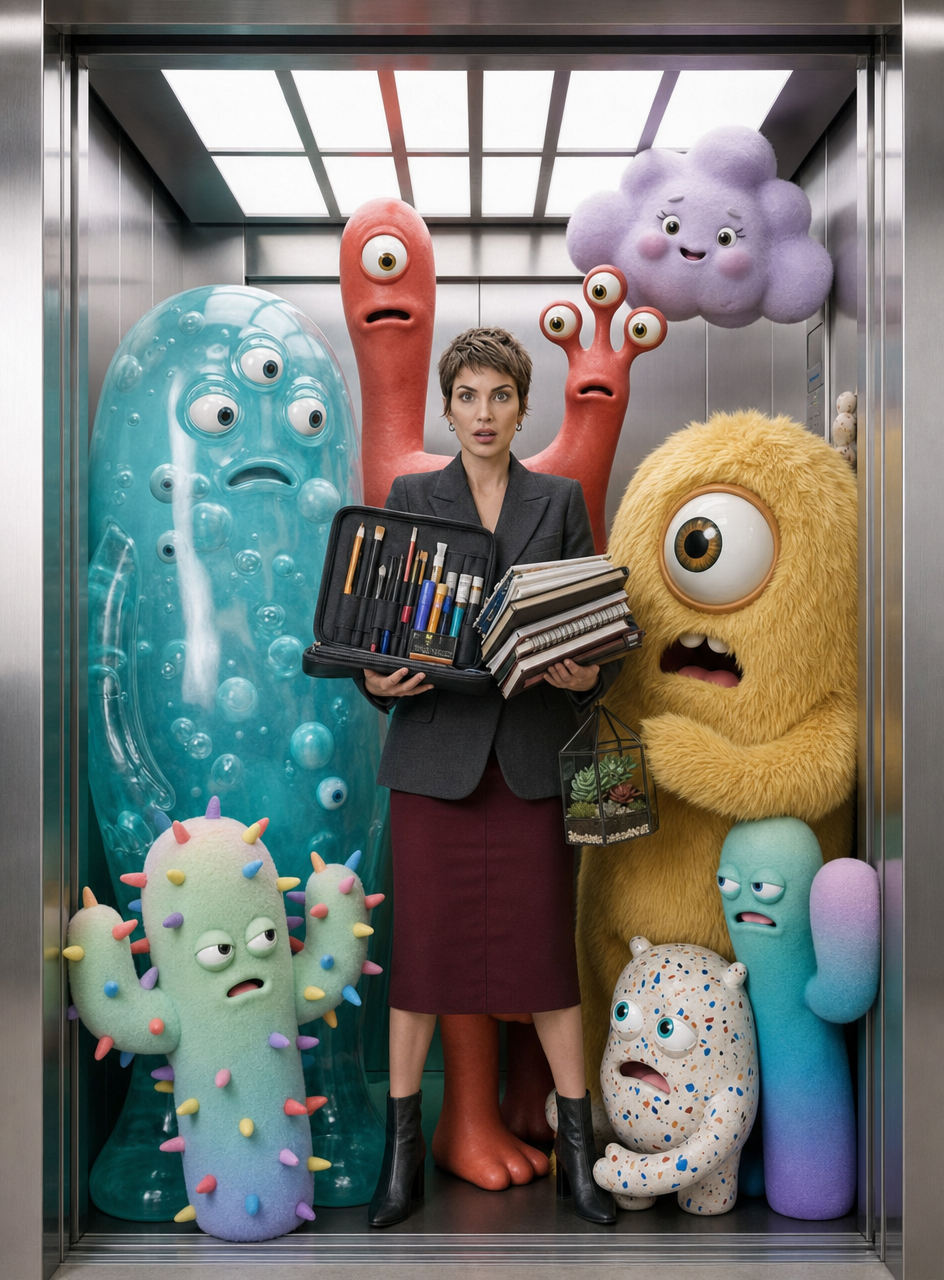
Charcoal-blazer woman with art monsters
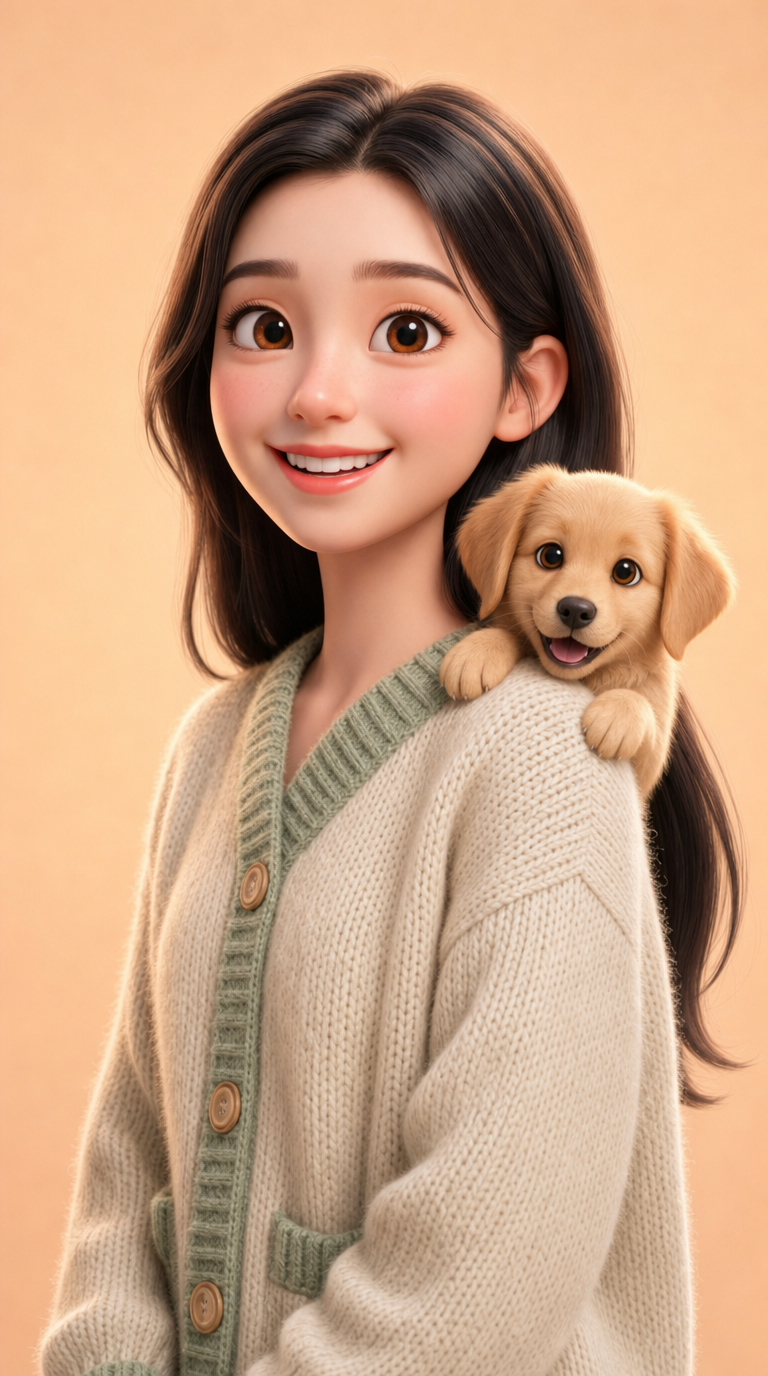
Cozy woman with golden puppy companion