Why this works
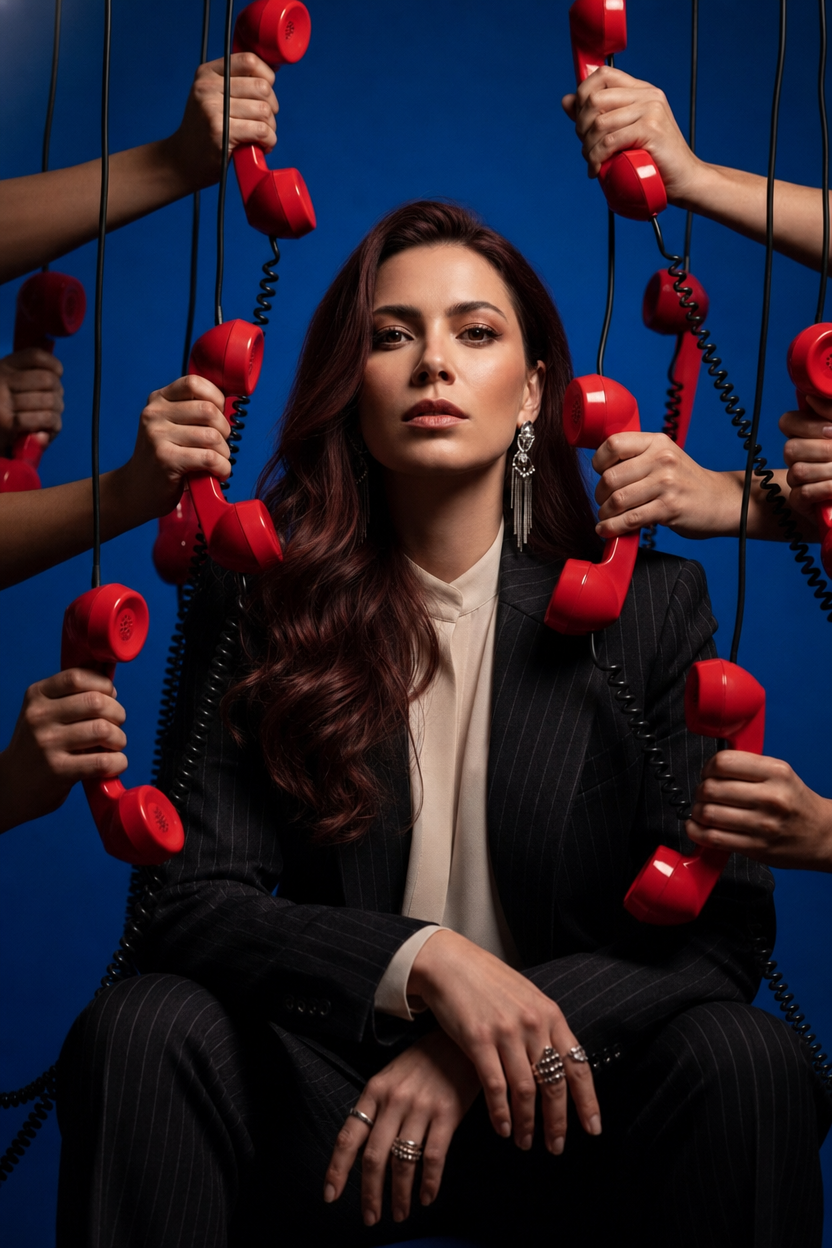
The centered, portrait-full-body framing makes the seated woman the visual anchor, while “multiple hands holding bright red telephone receivers” creates a repeated circular motif around her. “Vivid blue background” isolates the charcoal suit and light cream blouse, and the bright red receivers supply the strongest contrast against the cool field. The glamorous tension comes from the combination of “dramatic, bold, glamorous mood,” “high-contrast cinematic realism,” and “soft studio lighting,” which keeps the image polished rather than harsh.
FAQ
→How do I make the woman more visually prominent than the telephone receivers?
Replace “surrounded by multiple hands holding bright red telephone receivers” with “one red telephone receiver held in the lower foreground, leaving the woman unobstructed,” and add “face and suit fully unobstructed, strongest visual emphasis on the woman.” Keep “centered composition” and “portrait-full-body” to preserve her anchor position.
→How do I shift this from glamorous drama to a colder, more unsettling mood?
Replace “soft studio lighting” with “hard directional overhead lighting with deep shadows,” and change “dramatic, bold, glamorous mood” to “冷, surreal, psychologically unsettling mood” or “cold, surreal, unsettling mood.” Change “bright red telephone receivers” to “aged crimson telephone receivers with worn cords” to make the red accents feel ominous rather than luxurious.
→How do I create a series of variations without losing the core visual identity?
Keep “confident woman,” “charcoal pinstripe suit with a light cream blouse,” “vivid blue background,” “centered composition,” and “cinematic realism” fixed. Vary only the repeated motif, such as replacing “multiple hands holding bright red telephone receivers” with “multiple gloved hands holding silver scissors,” “white flowers,” or “black umbrellas,” while retaining “dramatic bold mood” and “high detail” for a consistent editorial series.
Learn the technique behind this
- Why does AI get hands and faces wrong, and how do I fix it? — Hands fail because they're small in frame, extremely variable in pose, and self-occluding — the model has less usable signal per pixel than for any other body part.
- Why can't AI spell, and how do I get readable text in an image? — Older diffusion models had no character-level representation of text, so they produced letterform-shaped texture instead of words.
- How should a prompt be structured, and does word order matter? — A prompt that behaves predictably names one subject first, then what it is doing, then where, then the light, then the lens or medium, then the style.
Related prompts
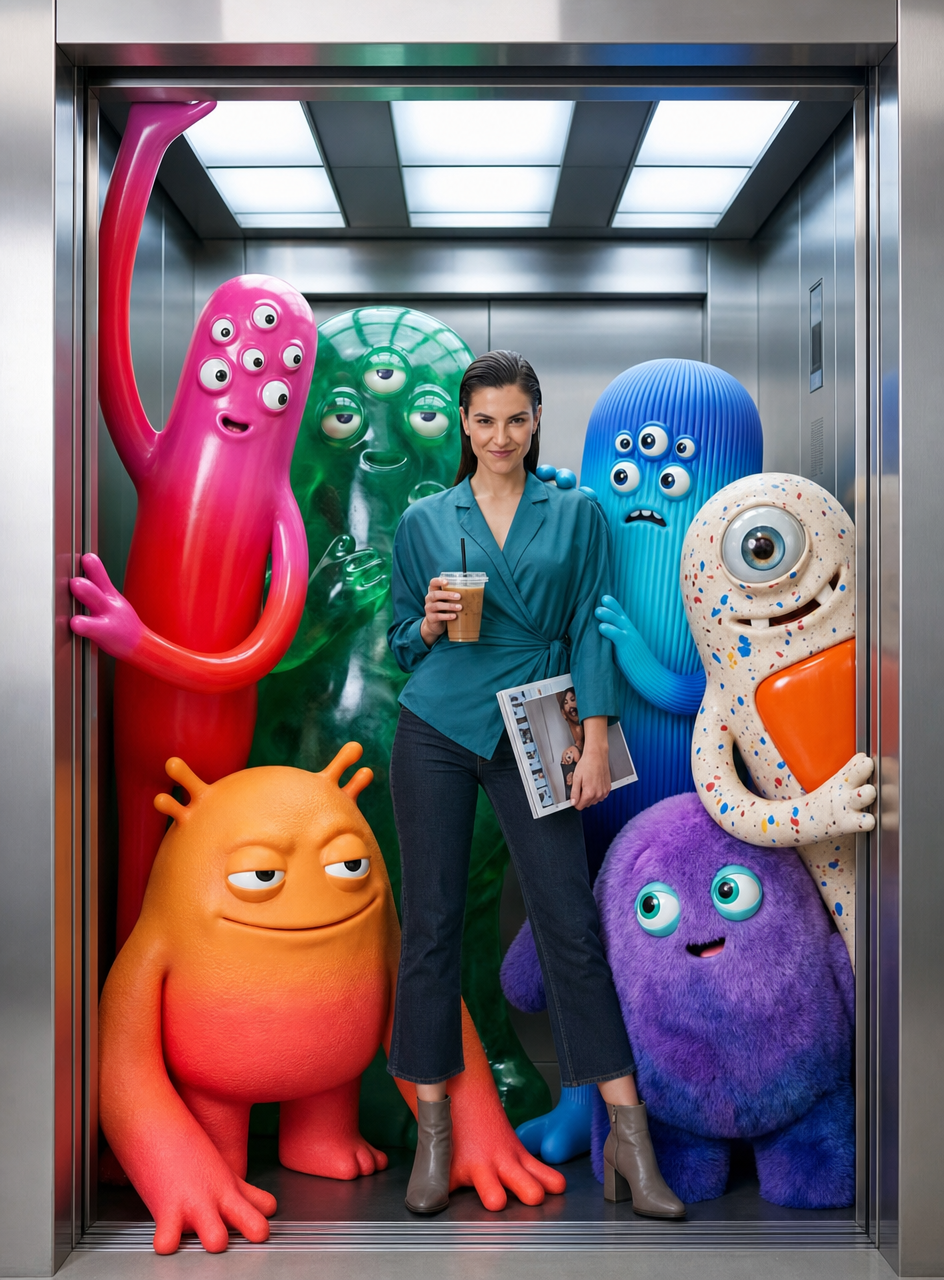
Teal fashion editorial in monster-filled lift
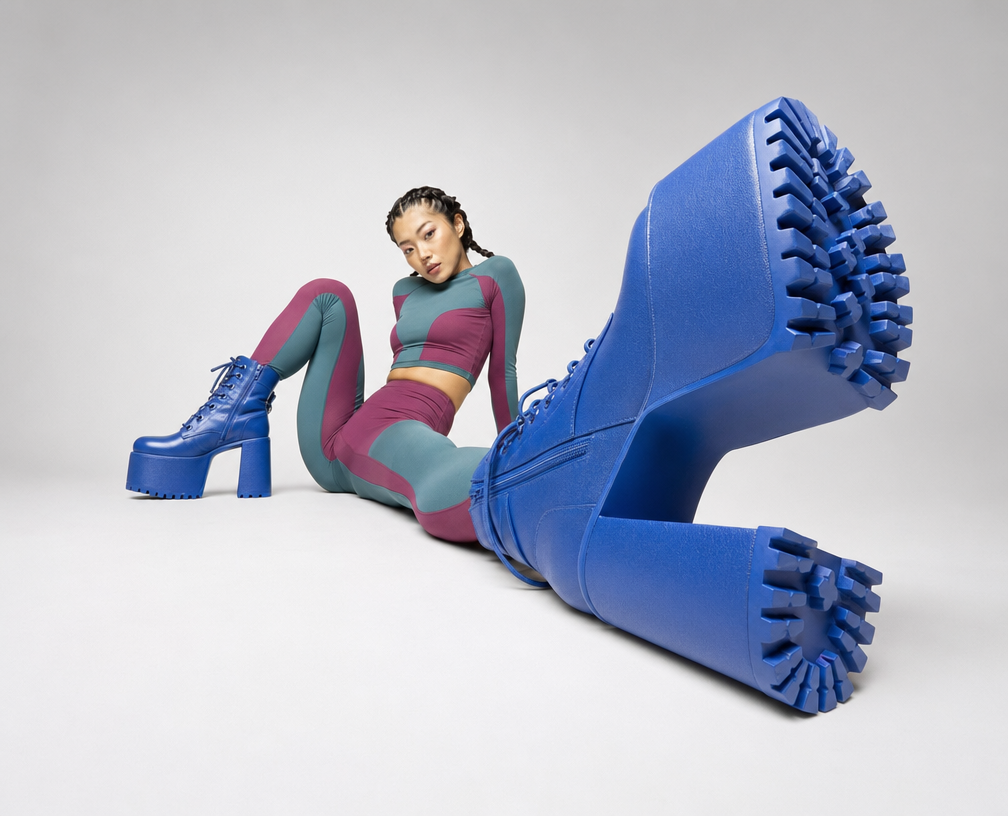
Cobalt Boots in Sleek Studio Edit
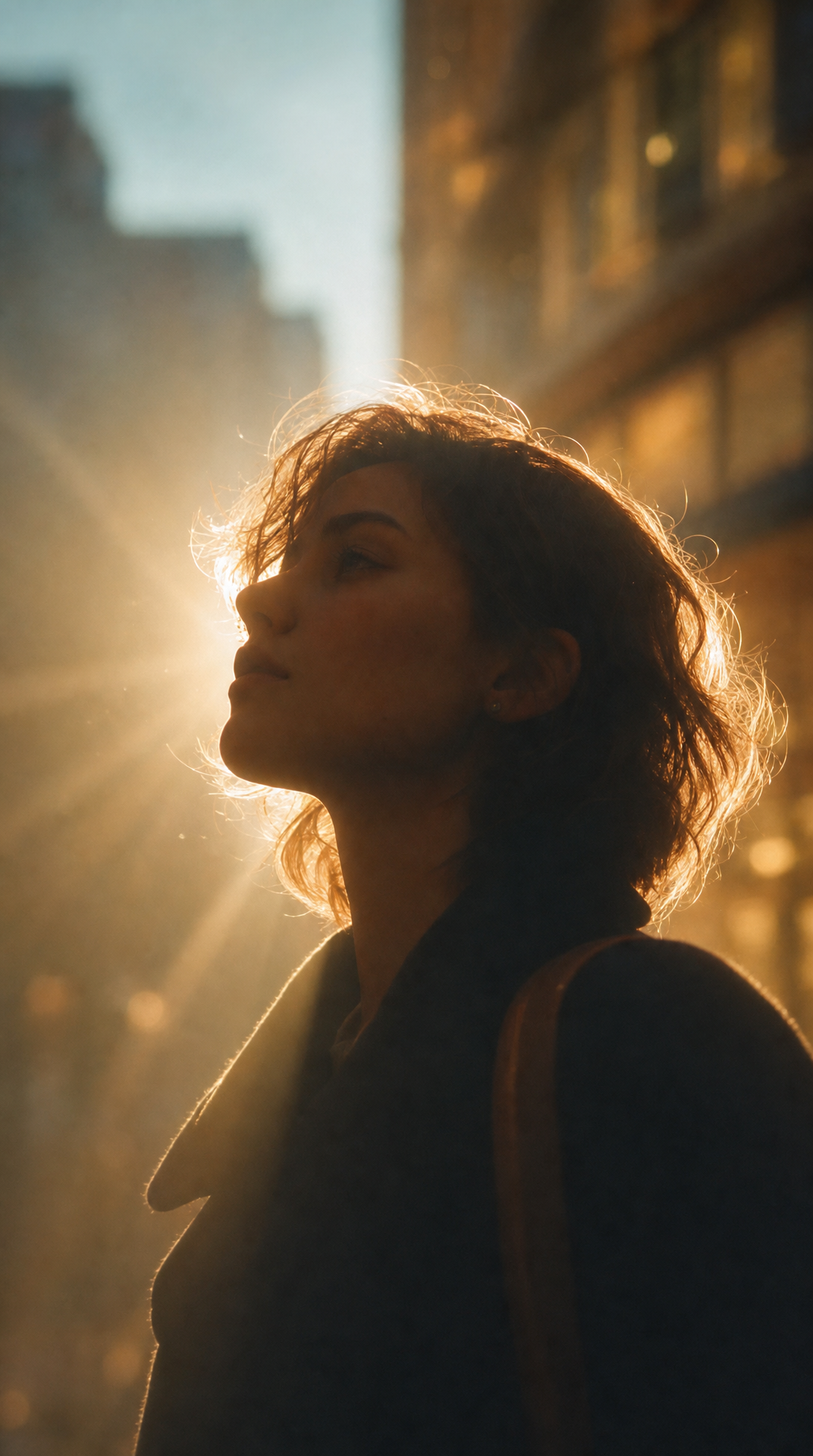
Silhouette Influencer by Sunlit Window
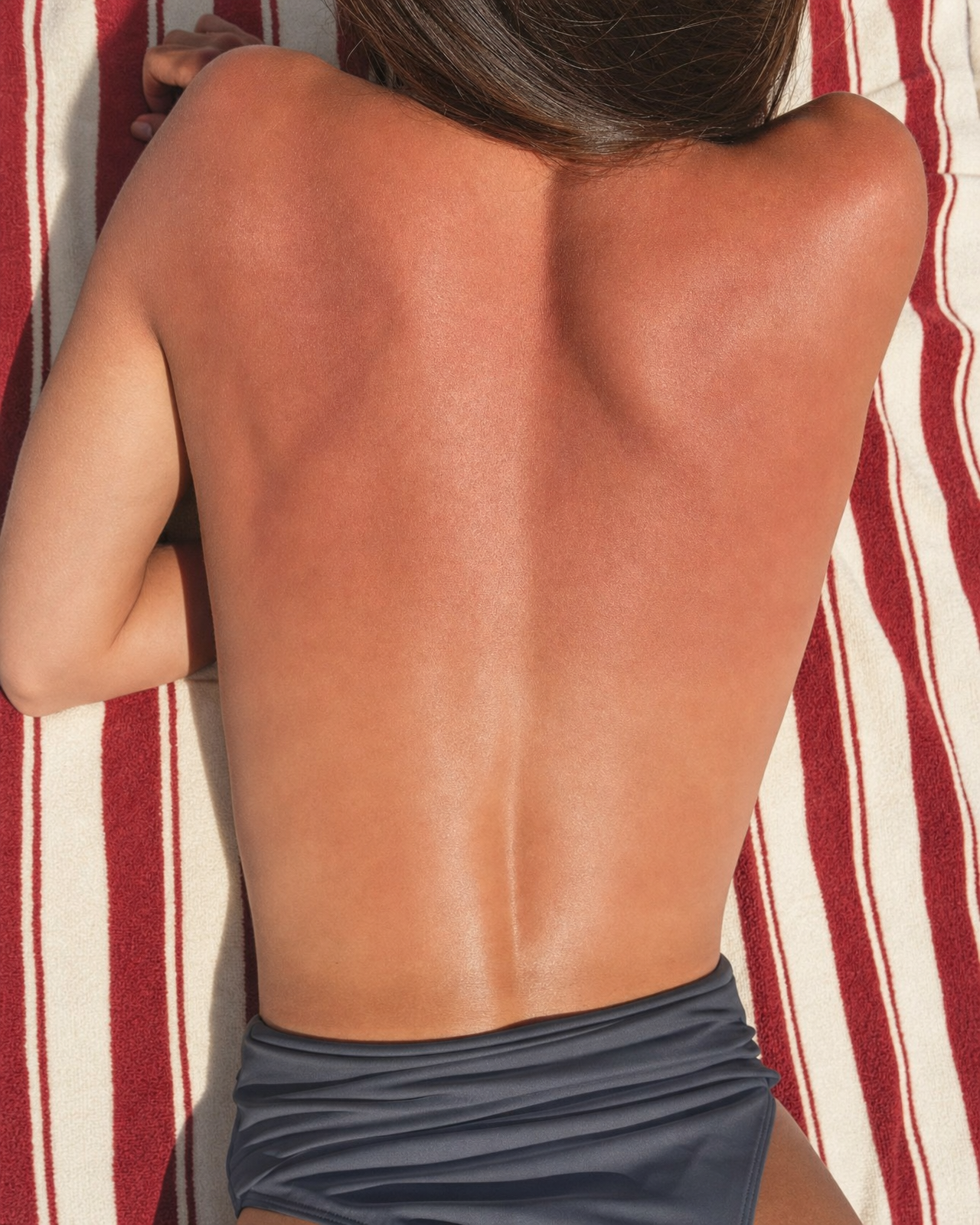
Sunlit editorial on striped beach towel