Why this works
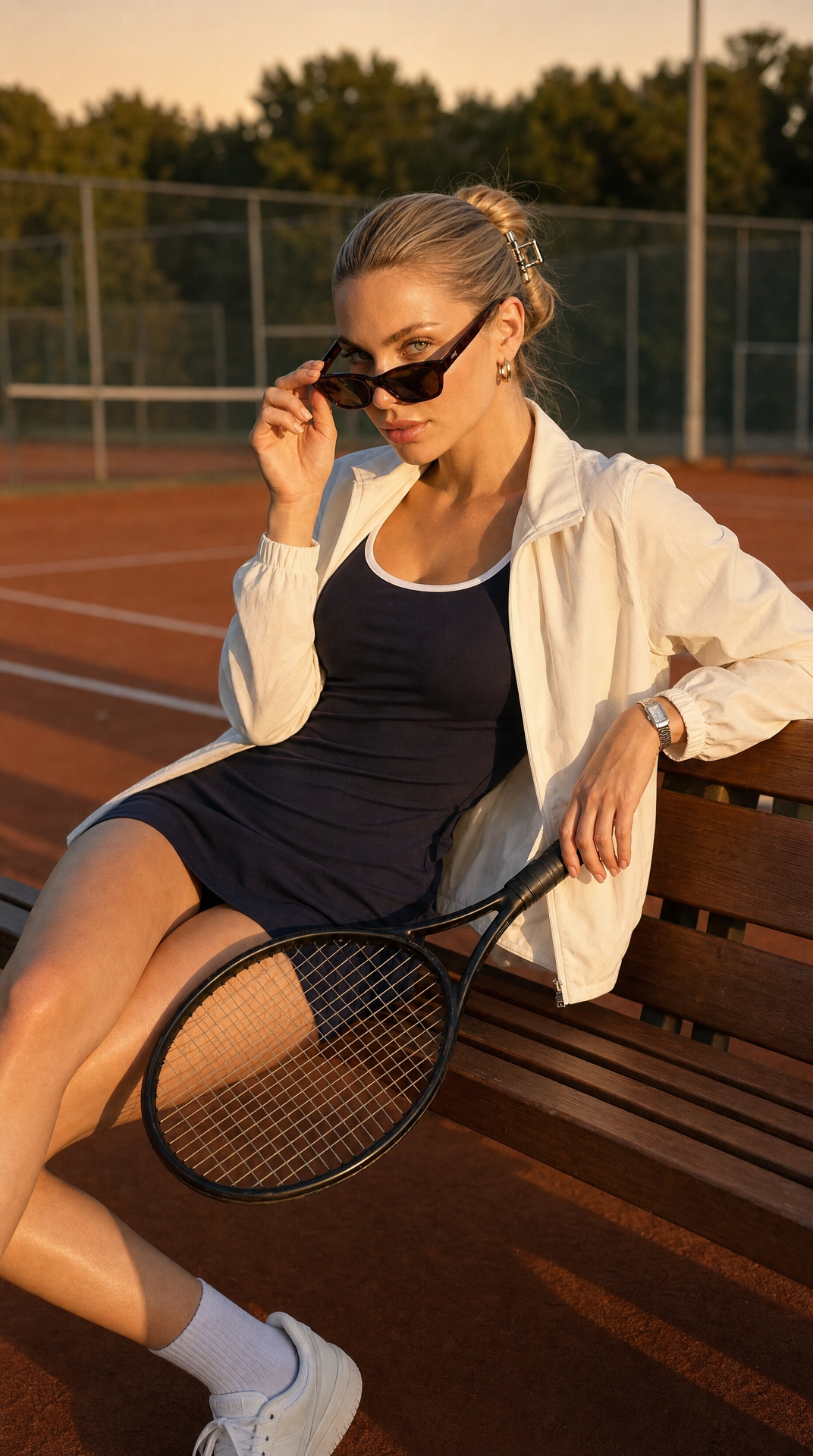
The terracotta clay and navy dress produce the dominant brown/navy contrast because the prompt names those exact materials rather than leaving color to chance, and 'white boundary marks' gives the eye a crisp graphic line to anchor the composition. 'Shot from courtside at a low angle' is what makes the figure feel monumental and confident instead of just posed, since a low angle on a reclining subject naturally elongates her and pushes the bench into foreground weight. The mood reads as cool and controlled specifically because of 'adjusting her visor with confident ease in a relaxed pose' paired with 'soft golden sunlight with gentle graduated shadows' - the relaxed body language plus warm directional light without harsh contrast is what keeps this from looking like a tense action shot. 'Shallow depth of field' and 'fine skin detail visible' are the two phrases doing the work of the editorial polish, blurring the clay court behind her while keeping the coral lip gloss and mascara sharp.
FAQ
→How do I make this feel more like an action shot instead of a relaxed portrait?
Swap 'reclining against a sleek courtside bench, one leg extended, cradling a tennis racket across her lap' for something like 'mid-swing follow-through, racket trailing behind her shoulder, clay dust kicked up around her feet.' You'll also want to change 'confident ease in a relaxed pose' to 'explosive motion' and consider dropping 'shallow depth of field' to a smaller aperture description since you'll want more of the moving body in focus.
→How do I shift the lighting mood to something moodier or more dramatic?
Replace 'soft golden sunlight with gentle graduated shadows and luminous contrast' with 'low late-dusk light with harsh long shadows and deep contrast' and change 'golden hour' in the opening line to 'blue hour' or 'dusk.' This will pull the dominant palette away from brown/navy warmth toward cooler blues and darker shadow blocks, so you may also want to swap the cream jacket for a darker tone to keep it from looking washed out.
→How do I build a series of variations from this same prompt?
Keep 'ultra-realistic editorial photography,' the camera setup ('waist-up medium shot from courtside at low angle'), and the clay court setting fixed as your anchors, then rotate only the subject's action and outfit color per shot - try 'lacing up her court shoes' in a white dress for one, 'toweling off her neck' in forest green for another. Changing just the pose phrase and the dress color while leaving 'terracotta clay court with sharp white boundary marks' and the lighting language untouched will give you a cohesive set that still reads as one photoshoot.
Learn the technique behind this
- Why can't AI spell, and how do I get readable text in an image? — Older diffusion models had no character-level representation of text, so they produced letterform-shaped texture instead of words.
- How should a prompt be structured, and does word order matter? — A prompt that behaves predictably names one subject first, then what it is doing, then where, then the light, then the lens or medium, then the style.
- Why does AI get hands and faces wrong, and how do I fix it? — Hands fail because they're small in frame, extremely variable in pose, and self-occluding — the model has less usable signal per pixel than for any other body part.
Related prompts
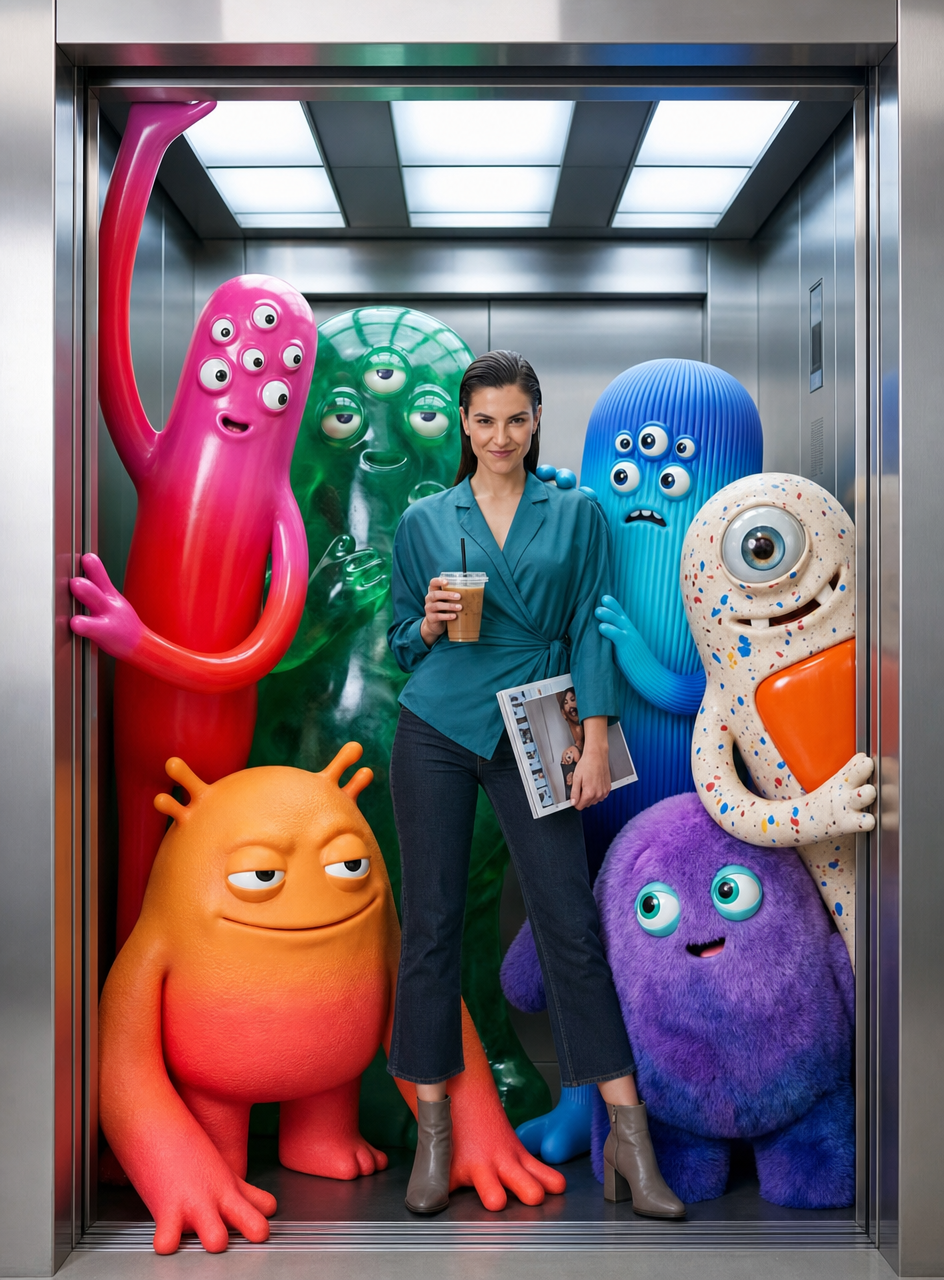
Teal fashion editorial in monster-filled lift
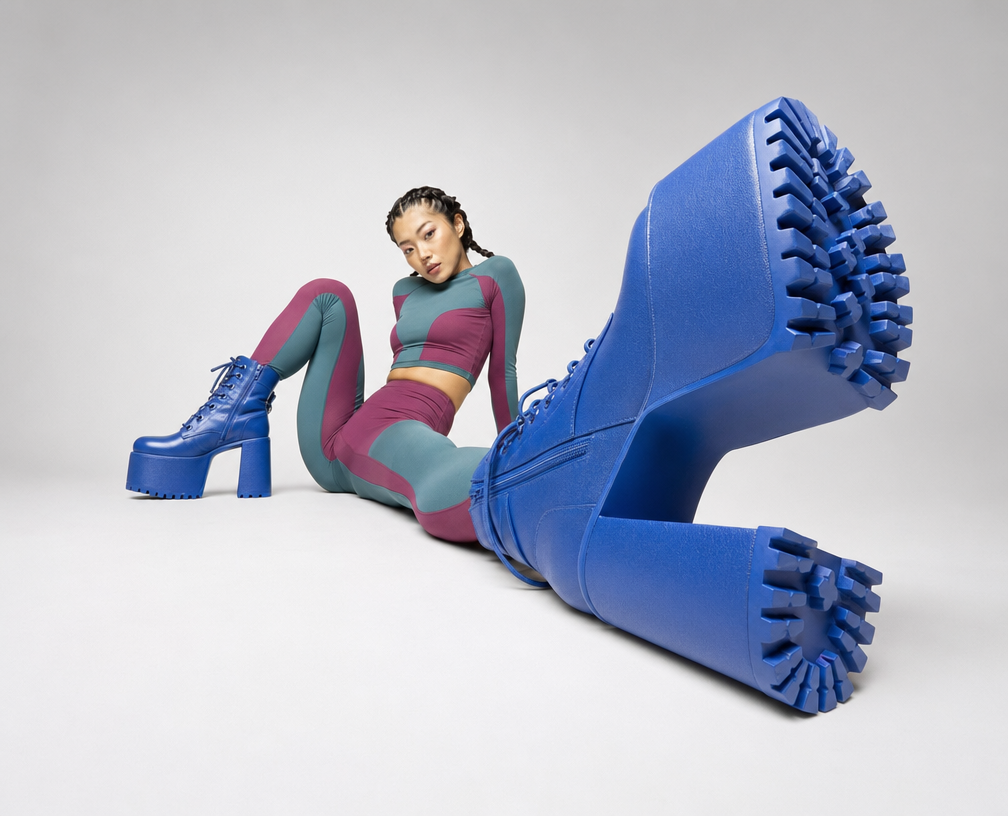
Cobalt Boots in Sleek Studio Edit
Silhouette Influencer by Sunlit Window
Sunlit editorial on striped beach towel