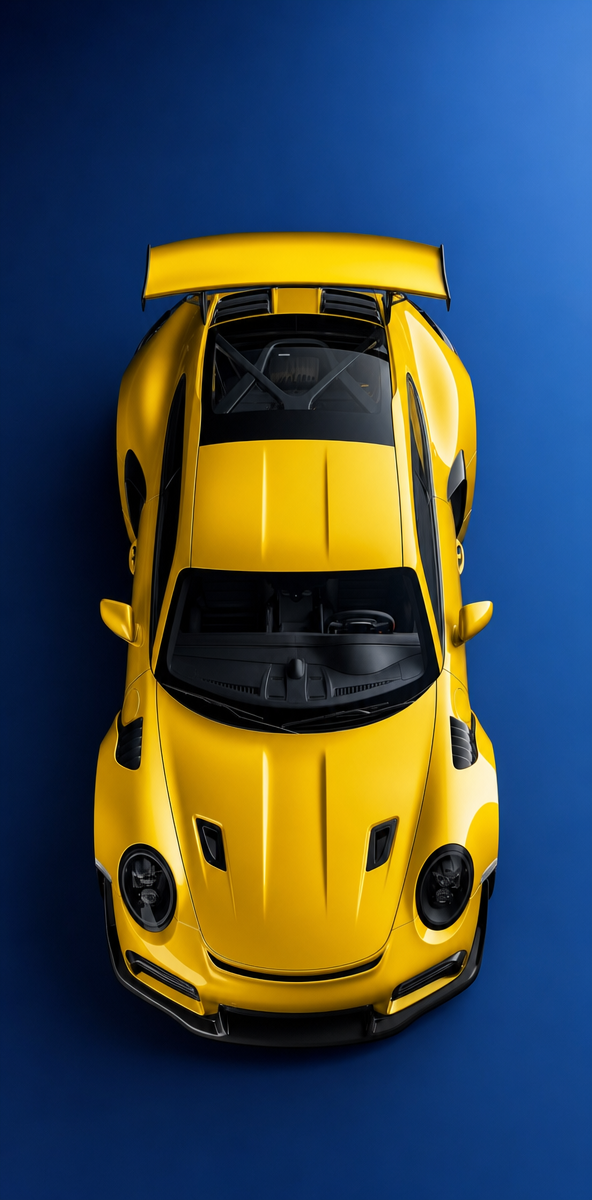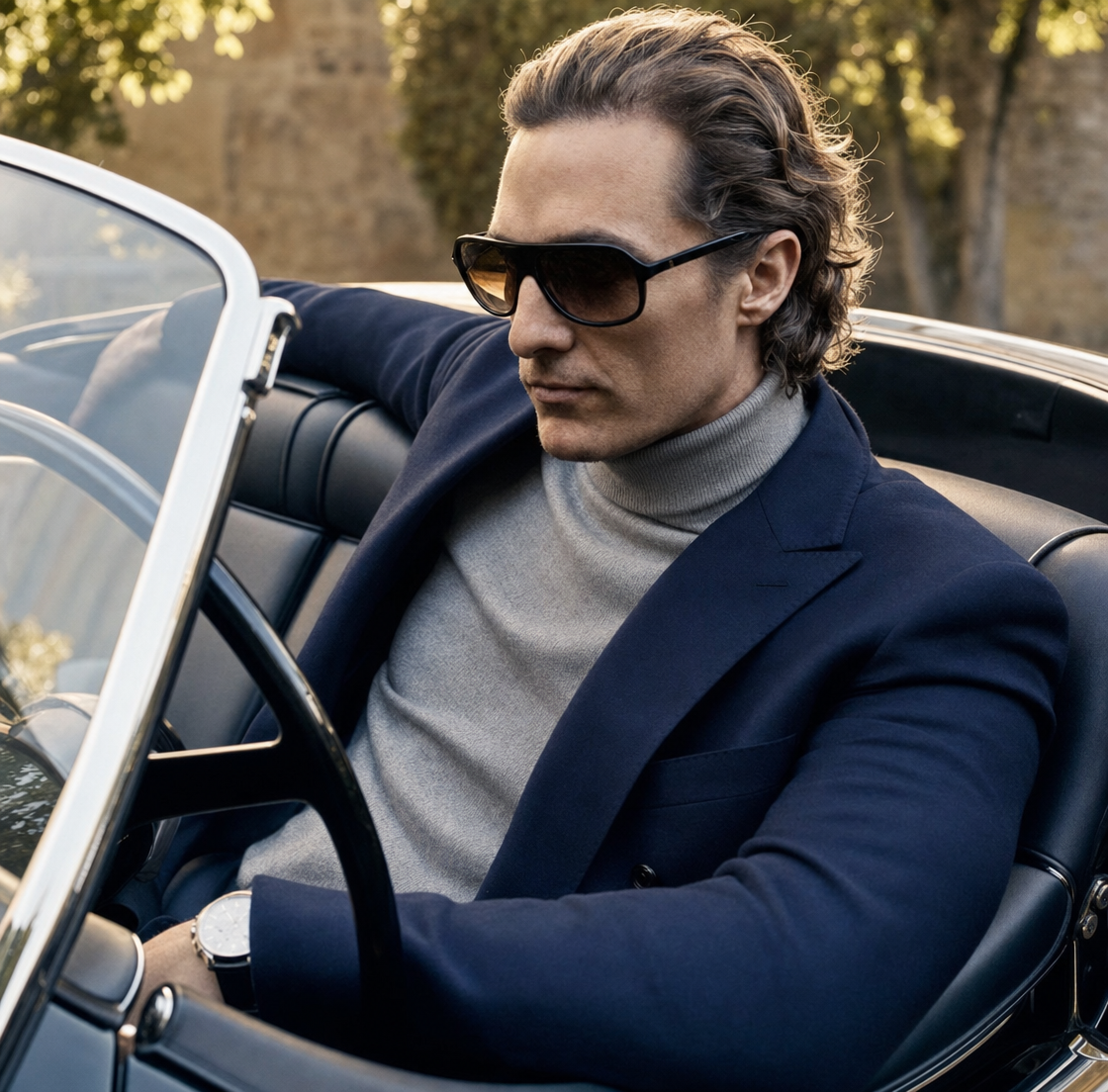
Same prompt, generated with each model separately — click one to see how it holds up.
Why this works
The portrait-closeup framing and “confident man seated in a luxury convertible” keep the face, sunglasses, and relaxed pose dominant, while “shallow depth of field” separates him from the courtyard greenery and stone wall. “Light gray turtleneck,” “deep navy tailored blazer,” and “black leather dashboard and trim with subtle silver accents” create a restrained gray-black palette with navy contrast, matching the image’s cool, polished editorial feel. “Golden-hour sunlight with warm highlights and gentle shadows” adds beige warmth to the otherwise dark interior, and “sharp skin detail” plus “realistic texture” anchors the cinematic styling in photorealism.
FAQ
→How do I make the car interior more prominent than the man’s face?
Replace “portrait-closeup” with “medium environmental portrait” and change “shallow depth of field” to “moderate depth of field, interior details clearly visible.” Add “wide view of the black leather dashboard, silver trim, steering wheel, and door panel” after the interior description so those elements receive explicit visual priority.
→How do I shift this from cool confidence to a warmer, more relaxed mood?
Replace “deep navy tailored blazer” with “warm beige linen blazer” and change “golden-hour sunlight with warm highlights and gentle shadows” to “late-afternoon amber sunlight with soft diffused shadows.” You can also replace “cinematic editorial color grading” with “warm natural color grading with muted contrast” to reduce the fashion-editorial severity.
→How do I build a consistent series with different subjects while keeping this visual identity?
Keep the fixed style phrases “photorealistic cinematic editorial portrait,” “golden-hour sunlight with warm highlights and gentle shadows,” “shallow depth of field,” “sharp skin detail,” and “high-end editorial color grading.” Swap only “confident man” and “light gray turtleneck under a deep navy tailored blazer” for controlled variants such as “confident woman in a cream silk blouse and charcoal blazer” or “older man in a black cashmere sweater and gray overcoat,” while retaining “black leather dashboard and trim with subtle silver accents.”
Learn the technique behind this
- Why can't AI spell, and how do I get readable text in an image? — Older diffusion models had no character-level representation of text, so they produced letterform-shaped texture instead of words.
- How should a prompt be structured, and does word order matter? — A prompt that behaves predictably names one subject first, then what it is doing, then where, then the light, then the lens or medium, then the style.
- Why does the model ignore parts of my prompt? — Ignored instructions are almost always conflicts, counts, or spatial relationships — three things current models handle badly — rather than the model failing to read you.
Related prompts
Shirtless Man, Vintage Car, Coastline Light
Golden-hour couple rides a classic bike
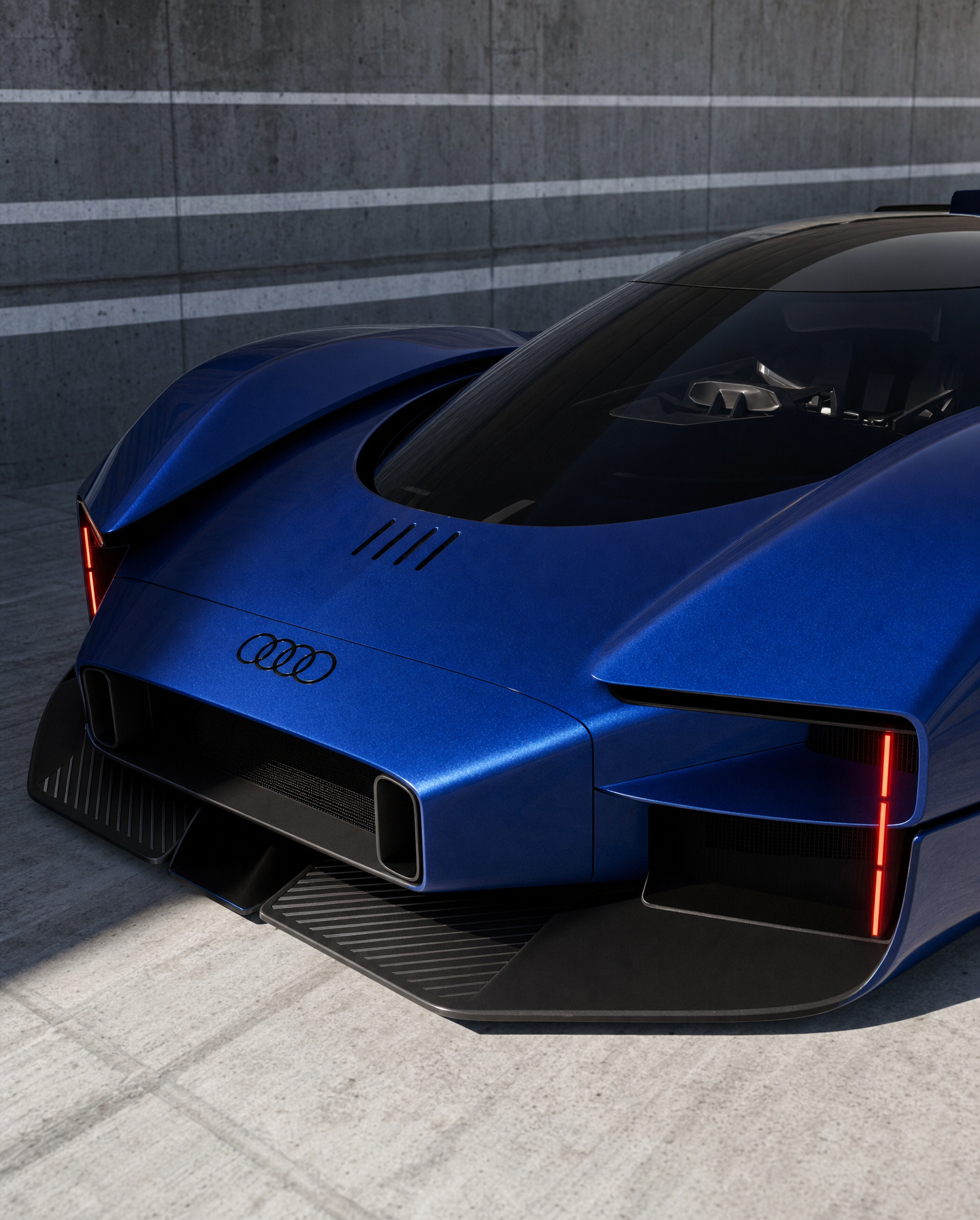
Deep-blue Audi concept in brutalist garage
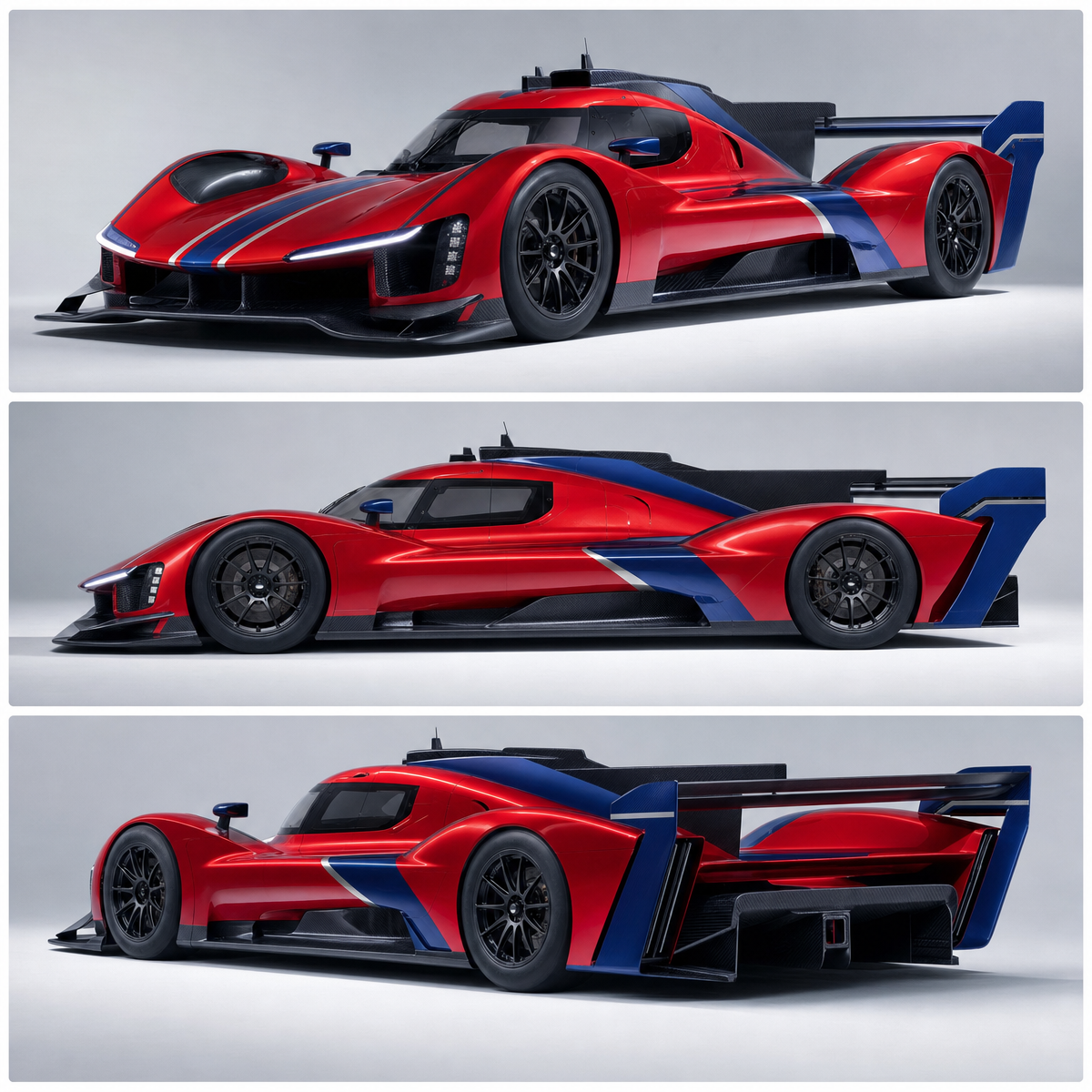
Red endurance race car with blue silver accents