Why this works
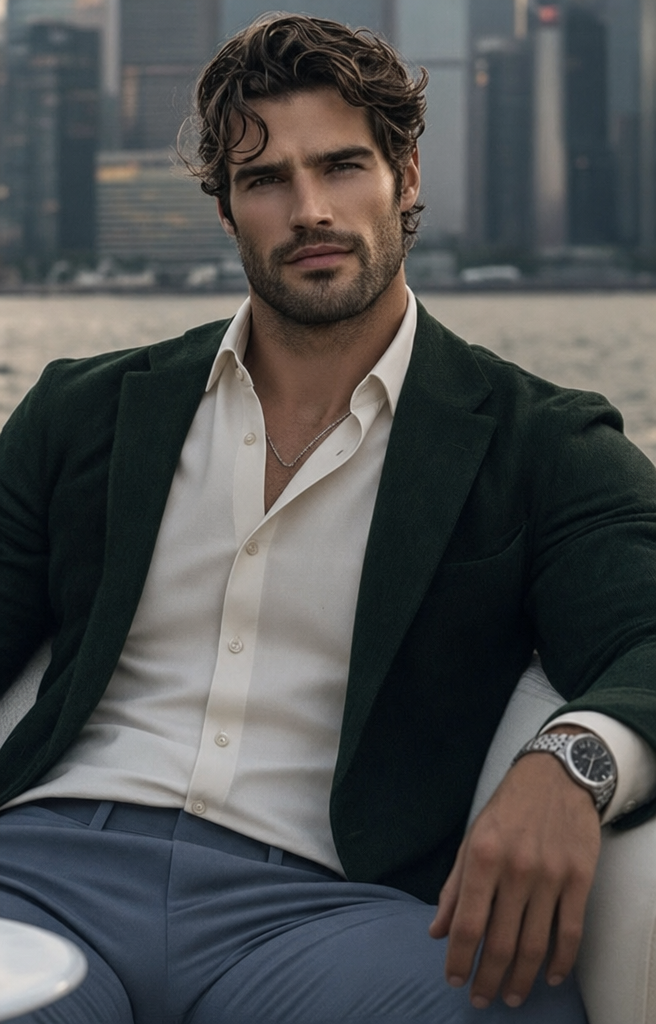
The phrase “confident stylish man seated outdoors on a coastal promenade” gives the full-body portrait a composed editorial stance, while “cinematic composition” organizes him against the receding harbor and skyline. “Natural late-afternoon light with warm highlights” adds polish to the deep green blazer, cream shirt, and silver accessories, while the dominant black, white, and blue range keeps the image restrained against the slate-blue trousers and cool waterfront background. “Shallow depth of field” and “softly blurred behind him” make the man and the “realistic skin texture and refined fabric detail” the visual priority rather than the distant harbor.
FAQ
→How do I make the portrait feel moodier and more dramatic?
Replace “Natural late-afternoon light with warm highlights” with “low, directional sunset light with deep shadows and strong rim light,” and change “softly blurred skyline” to “darkened harbor skyline under gathering storm clouds.” Keep “photorealistic editorial fashion photography” to preserve the polished finish.
→How do I make the harbor and skyline more prominent?
Replace “shallow depth of field” and “softly blurred behind him” with “moderate depth of field, harbor cranes and skyline clearly recognizable,” then change “portrait-full-body” to “wide full-body environmental portrait.” This shifts attention from the fabric and skin detail toward the coastal setting while keeping the man central.
→How can I build a coordinated series from this prompt?
Keep “confident stylish man” and the “deep green blazer over a closed cream dress shirt” fixed, then vary only the setting and light: use “marina at blue hour with cool reflected light,” “historic waterfront at overcast noon,” or “rooftop terrace at golden hour.” Replace “slate-blue tailored trousers” with one consistent alternate color, such as “charcoal tailored trousers,” so the locations change without losing the editorial wardrobe identity.
Learn the technique behind this
- Why can't AI spell, and how do I get readable text in an image? — Older diffusion models had no character-level representation of text, so they produced letterform-shaped texture instead of words.
- How should a prompt be structured, and does word order matter? — A prompt that behaves predictably names one subject first, then what it is doing, then where, then the light, then the lens or medium, then the style.
- Which aspect ratio should I use, and how does it change the image? — Aspect ratio determines what the model composes, not how it's cropped afterwards.
Related prompts
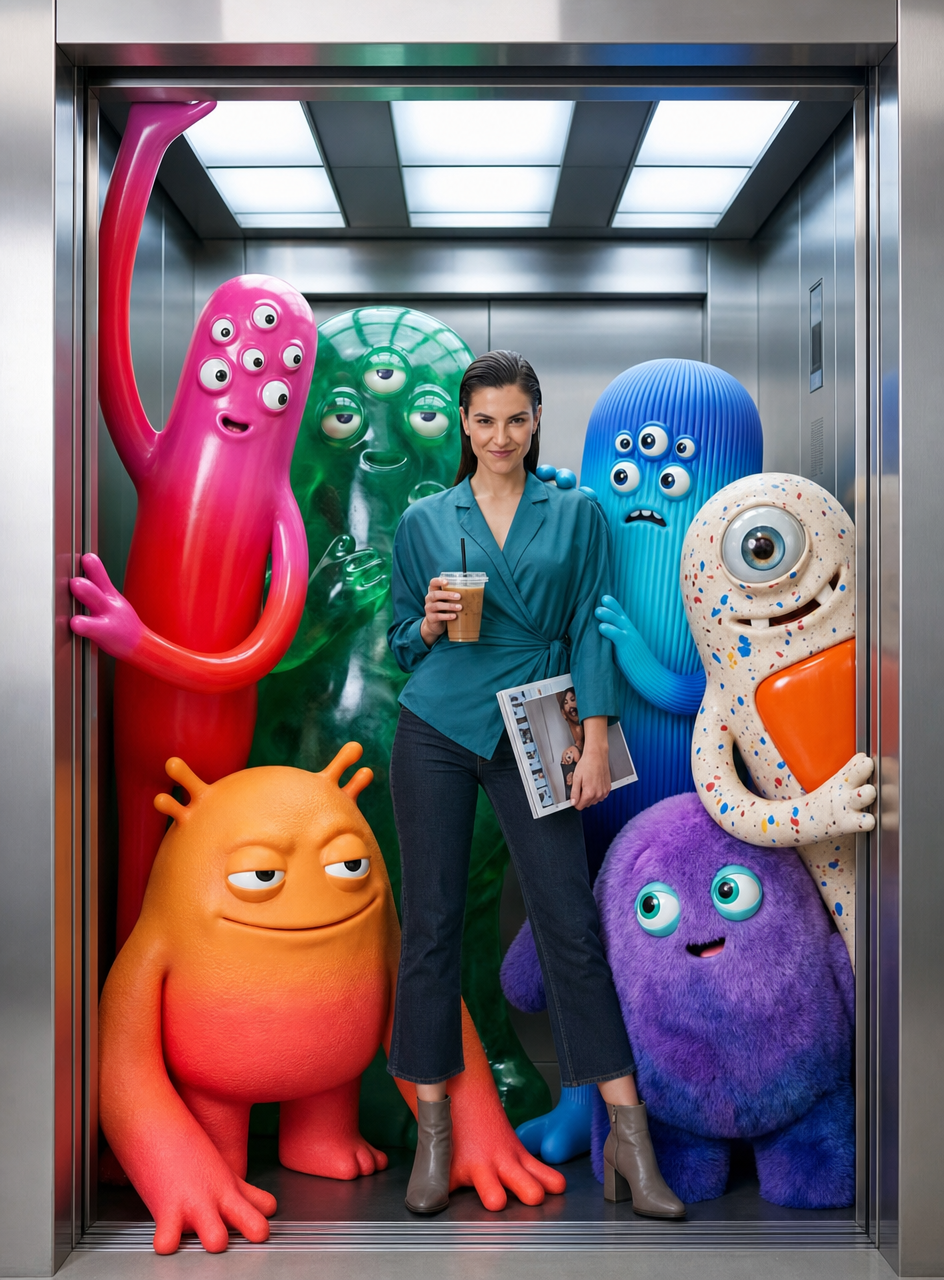
Teal fashion editorial in monster-filled lift
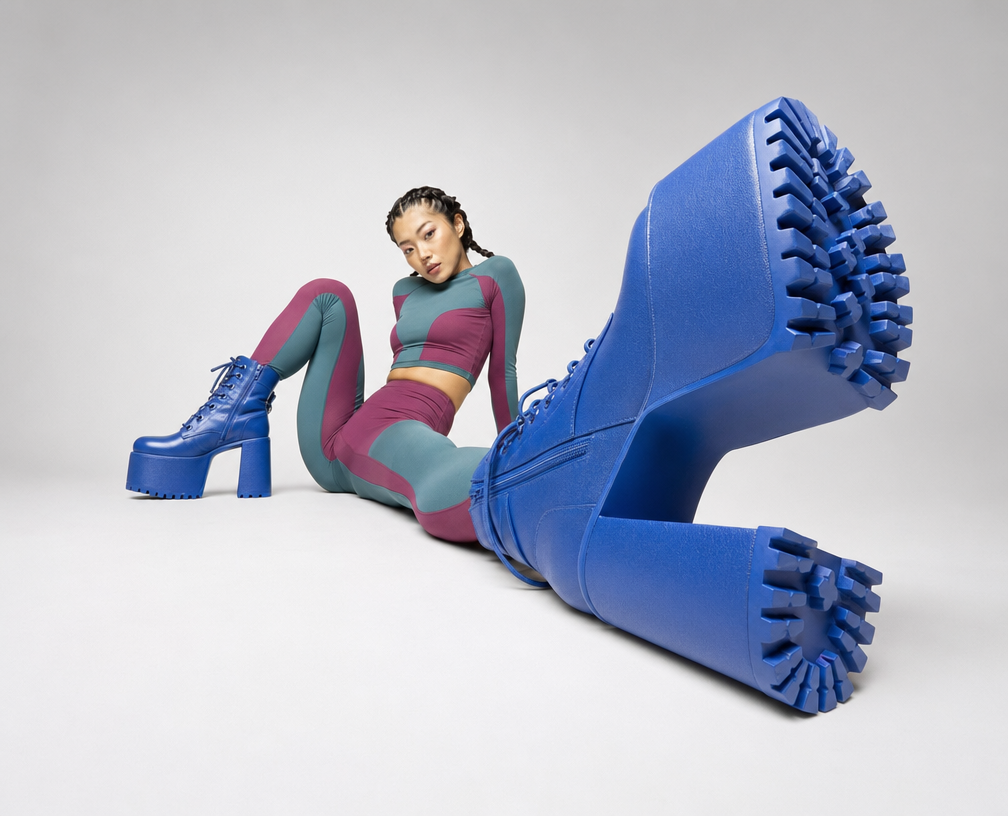
Cobalt Boots in Sleek Studio Edit
Silhouette Influencer by Sunlit Window
Sunlit editorial on striped beach towel