Why this works
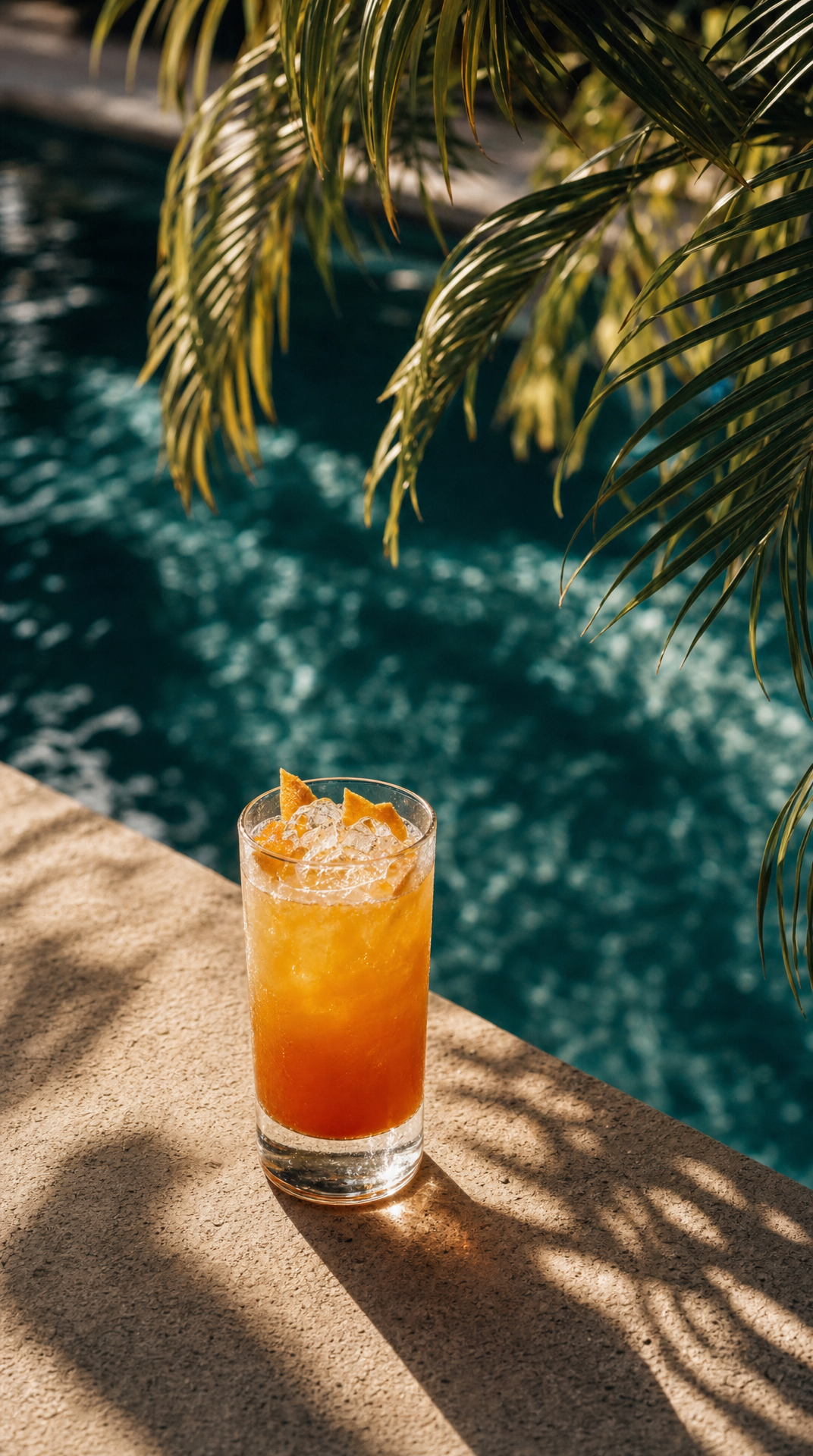
The relaxed resort mood is anchored by “warm late-afternoon sunlight,” “upscale resort atmosphere,” and “chilled orange cocktail,” while “crisp dappled shadows” adds a sharper tropical texture. “Shallow depth of field” keeps the highball glass readable against the pool, and the “palm fronds in the foreground” create layered framing around the subject. The contrast between the cocktail’s orange-gold tones, the “deep teal swimming pool,” and the “light beige stone deck” gives the rule-of-thirds composition clear color separation, with “vivid pool highlights” supplying the brightest accents.
FAQ
→How do I make the cocktail more central and prominent in the image?
Replace “next to a deep teal swimming pool” with “the cocktail centered as the dominant foreground subject, occupying the lower-center third,” and change “shallow depth of field” to “extremely shallow depth of field with sharp focus on the glass, condensation, and orange garnish.” Keep “palm fronds in the foreground” but revise it to “soft, out-of-focus palm fronds framing the outer edges” so they support rather than compete with the drink.
→How do I shift this from relaxed resort luxury to a moodier sunset scene?
Replace “warm late-afternoon sunlight” with “low amber sunset light with long dramatic shadows,” and change “vivid pool highlights” to “muted teal reflections and subdued pool highlights.” Swap “relaxed, tropical, sunny” for “quiet, cinematic, late-sunset atmosphere,” while keeping the “deep teal swimming pool” to preserve the cool-warm contrast.
→How do I build a matching variation with a different drink while preserving this composition?
Replace “chilled orange cocktail in a clear highball glass” with a specific alternative such as “ruby-red hibiscus iced tea in a condensation-covered coupe glass,” and change “orange cocktail” references to “ruby-red drink with a lime wheel garnish.” Retain “light beige stone deck,” “deep teal swimming pool,” “palm fronds in the foreground,” “rule-of-thirds,” and “photorealistic lifestyle photography” so the setting, framing, and visual series remain consistent.
Learn the technique behind this
- Why can't AI spell, and how do I get readable text in an image? — Older diffusion models had no character-level representation of text, so they produced letterform-shaped texture instead of words.
- How should a prompt be structured, and does word order matter? — A prompt that behaves predictably names one subject first, then what it is doing, then where, then the light, then the lens or medium, then the style.
- Do negative prompts work, and what should go in one? — Negative prompts work on models that support a separate negative conditioning channel — mainly Stable Diffusion and FLUX-family models.
Related prompts
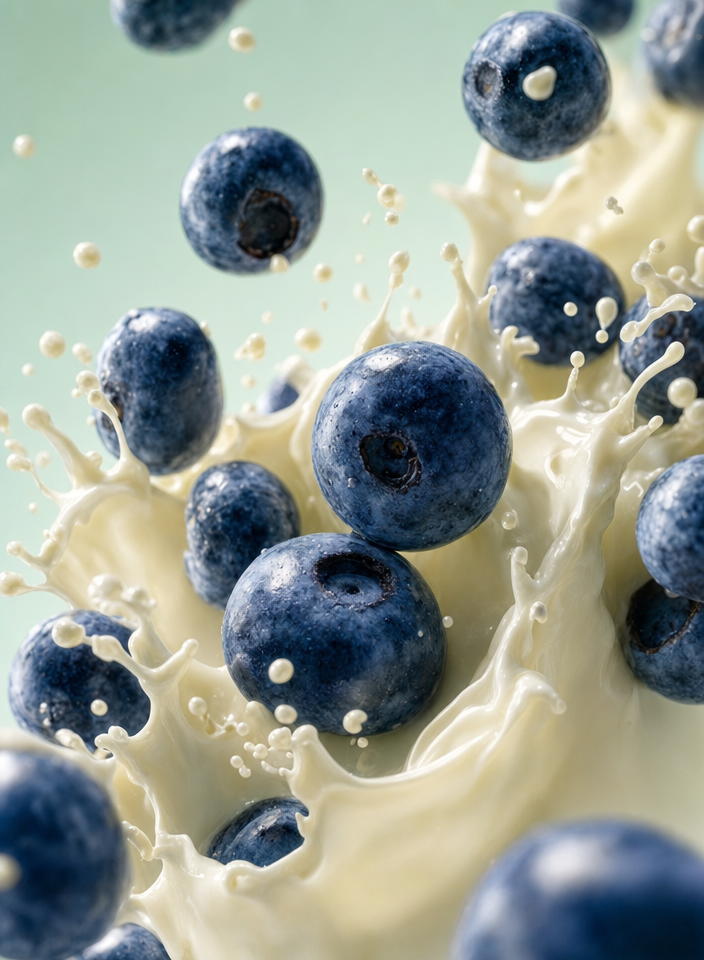
Blueberries Bursting Into Vanilla Cream
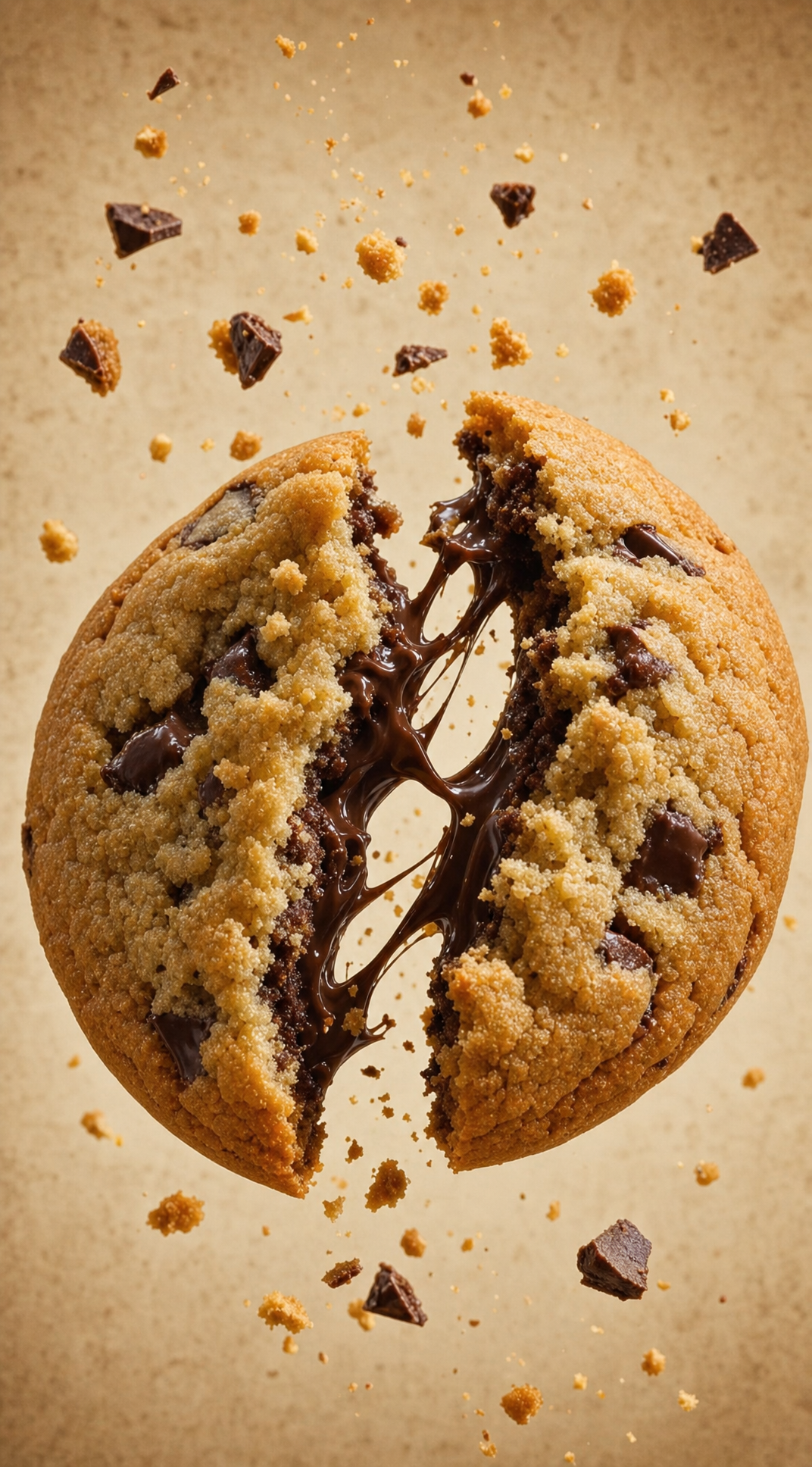
Chocolate Filled Cookie Splitting Midair With Dark Drip
Partially Peeled Banana on Blue
Banana slices in cool milk splash background