Why this works
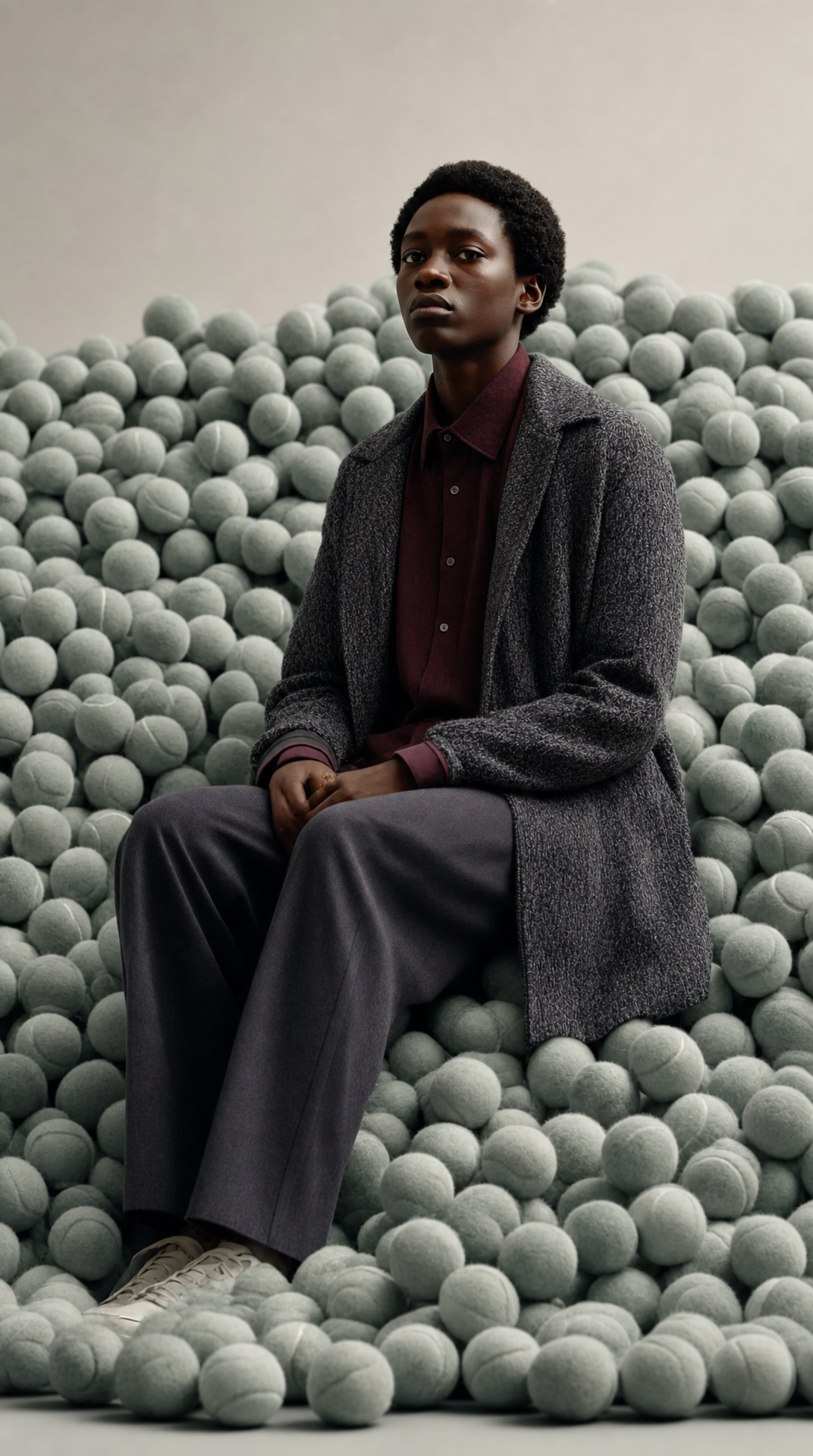
The surreal premise comes from “a young fashion model seated on a mound of tennis balls,” while “surreal poised luxury mood” keeps the absurd arrangement controlled rather than playful. “Centered composition” and “fashion-portrait framing” make the full-body figure and ball mound read as a deliberate editorial tableau, and “soft off-white gradient” gives the black-dominant image clean negative space. The restrained wardrobe language, especially “charcoal-gray textured coat,” “burgundy shirt,” and “dark slate trousers,” supplies near-monochrome tonal structure, while “soft even studio lighting” and “realistic skin texture” preserve a polished photographic finish.
FAQ
→How do I make the tennis-ball mound more visually dominant?
Replace “a young fashion model seated on a mound of tennis balls” with “a young fashion model perched high on an enormous mound of hundreds of tennis balls, the mound filling the lower two-thirds of the frame.” Keep “centered composition,” but change “fashion-portrait framing” to “wide full-body editorial framing” so the scale remains visible.
→How do I shift the image from poised luxury toward a darker, more dramatic mood?
Replace “soft even studio lighting” with “directional hard side-lighting with deep sculptural shadows,” and replace “soft off-white gradient” with “charcoal-black seamless studio backdrop.” Change “surreal poised luxurious mood” to “ominous surreal couture mood,” while retaining “realistic skin texture” to prevent the result from becoming overly graphic.
→How can I create a coordinated variation series without losing this editorial identity?
Keep “photorealistic editorial fashion photography,” “centered composition,” “contemporary luxury magazine aesthetic,” and “subdued near-monochrome color palette with cool accents” unchanged. Swap the subject phrase for variations such as “seated on a mound of matte black balloons,” “seated on stacked translucent acrylic spheres,” or “seated on a low pile of silver chess pieces,” then replace the wardrobe colors with matching restrained sets such as “graphite coat, ice-blue shirt, and dark slate trousers.”
Learn the technique behind this
- Why can't AI spell, and how do I get readable text in an image? — Older diffusion models had no character-level representation of text, so they produced letterform-shaped texture instead of words.
- How do I keep one consistent style across a whole set of images? — Style consistency is more achievable than character consistency because style lives in describable attributes.
- How should a prompt be structured, and does word order matter? — A prompt that behaves predictably names one subject first, then what it is doing, then where, then the light, then the lens or medium, then the style.
Related prompts
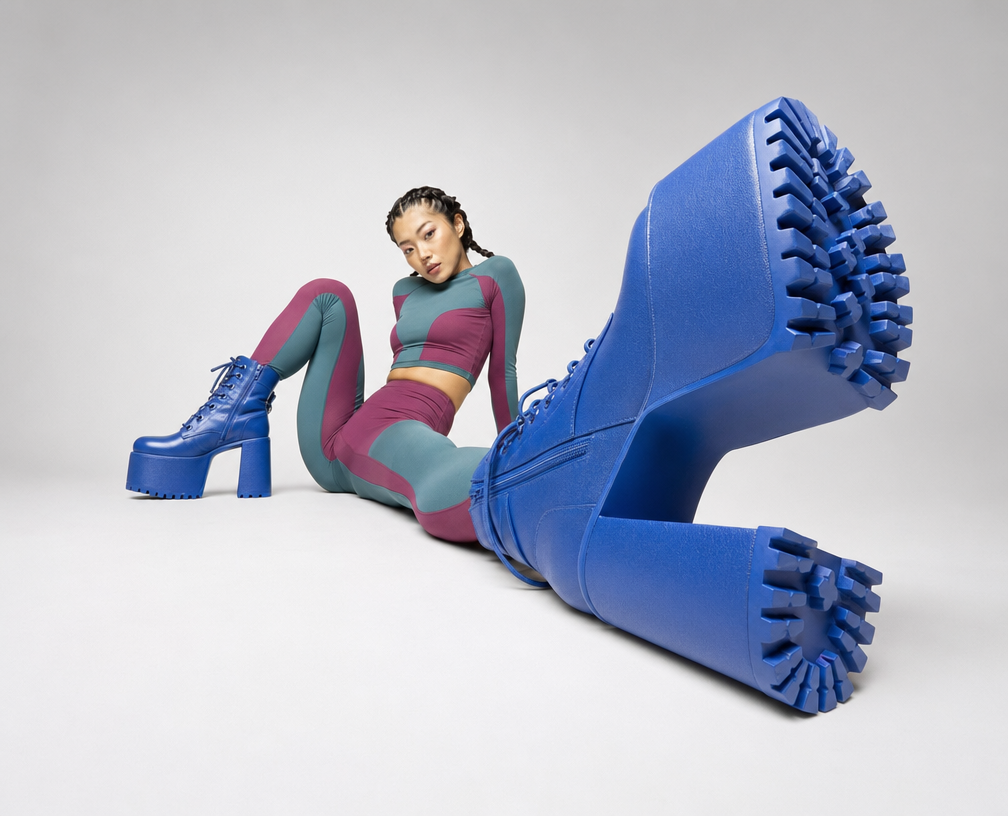
Cobalt Boots in Sleek Studio Edit
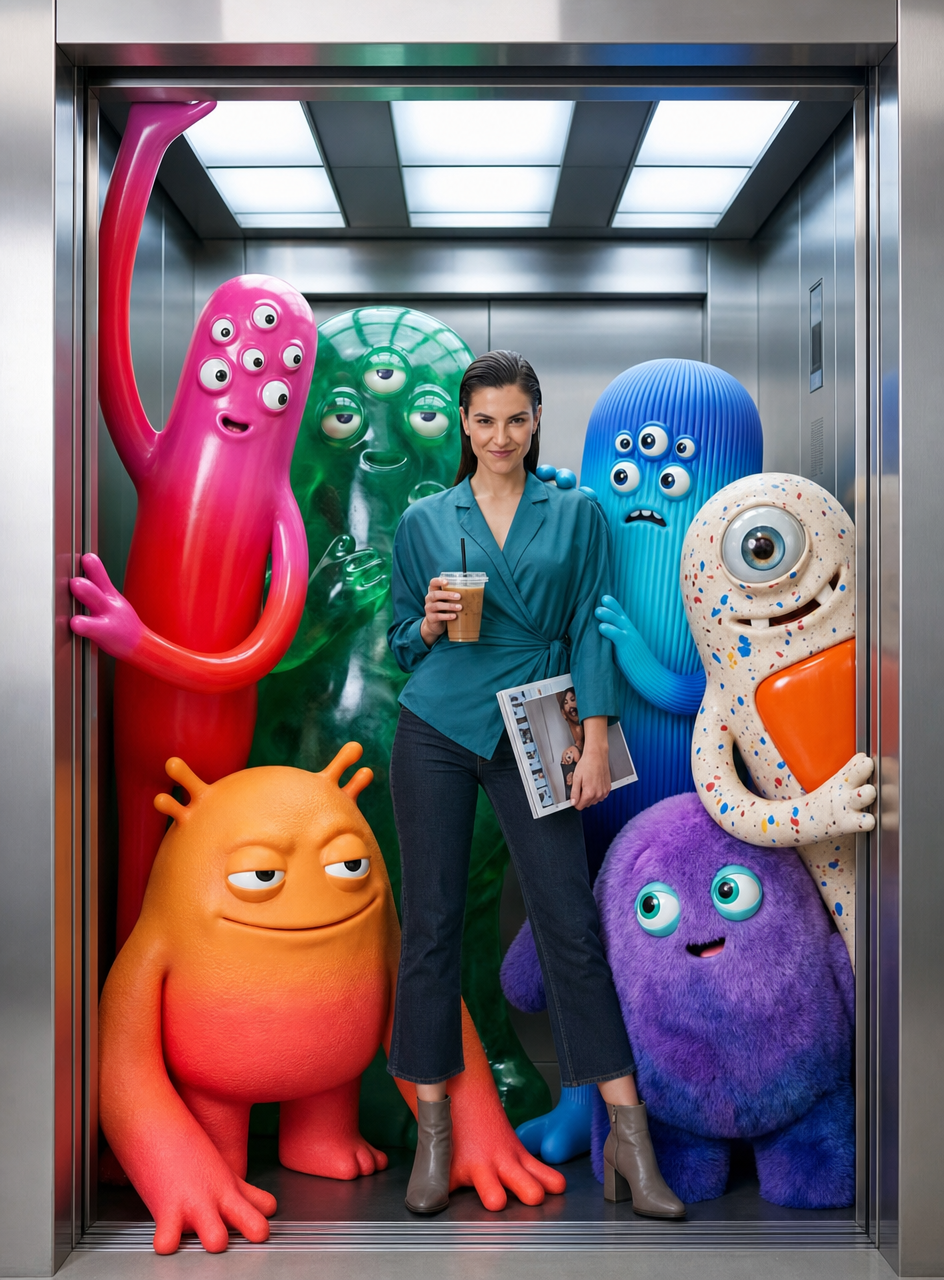
Teal fashion editorial in monster-filled lift
Sunlit editorial on striped beach towel
Silhouette Influencer by Sunlit Window