Why this works
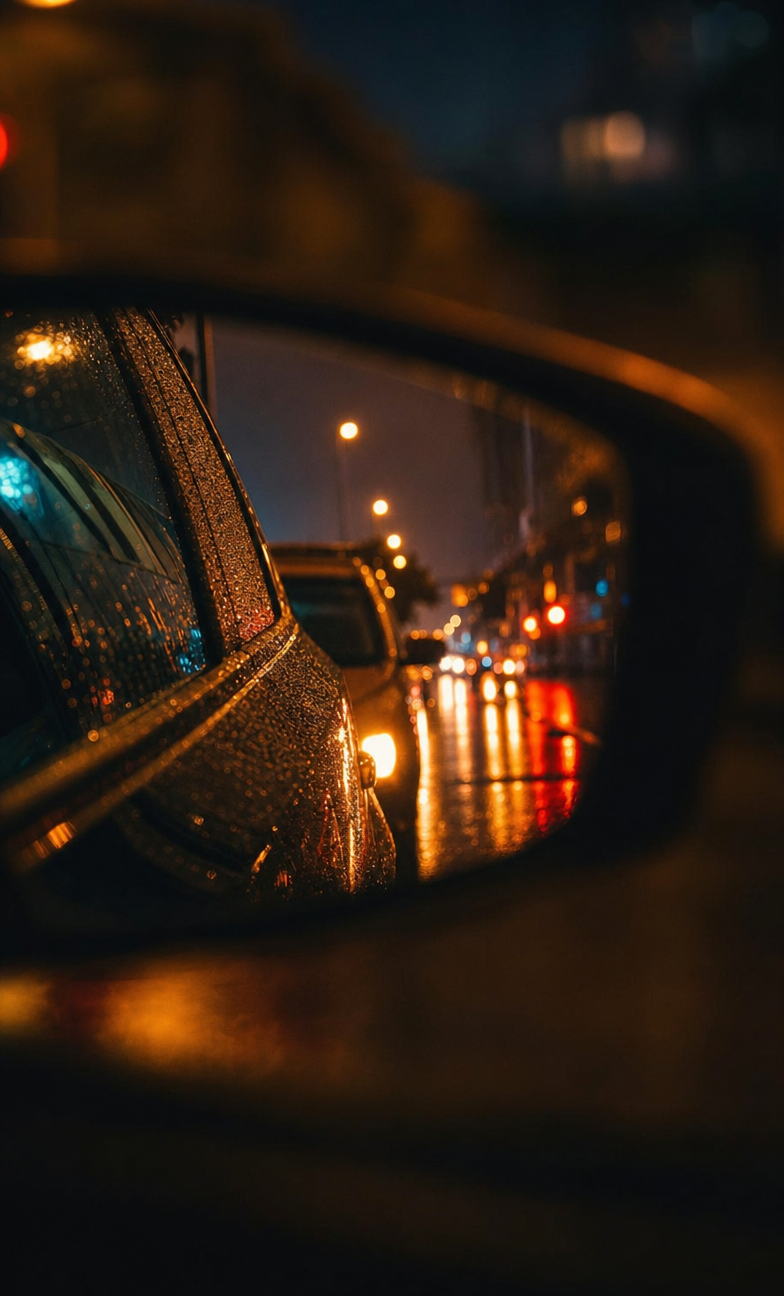
The phrase “close-up view looking through a car side mirror” makes the mirror and its reflection the compositional anchor, while “blurred city traffic” and “gentle soft bokeh” push the background into a candid, in-motion frame. “Warmer streetlights and neon-like reflections” accounts for the dominant orange, yellow, and red accents against the dark wet vehicle body. The moody atmosphere comes specifically from “rainy night,” “soft streaks,” and “high-contrast moody lighting with overcast sky characteristics,” while “realistic mirror curvature reflections” keeps the distorted traffic believable.
FAQ
→How do I make the reflected traffic more prominent than the car body?
Replace “dark wet vehicle body beaded with raindrops” with “minimal visible vehicle body, mirror dominating the frame,” and change “blurred city traffic” to “large, clearly readable reflected traffic lanes with glowing headlights and taillights.” Keep “close-up view looking through a car side mirror” to preserve the perspective.
→How do I shift this from moody and dark to a warmer, more cinematic night scene?
Replace “high-contrast moody lighting with overcast sky characteristics” with “warm cinematic street lighting with amber pools of light,” and change “rainy night” to “late-evening golden rain after sunset.” Strengthen the existing palette by replacing “neon-like reflections” with “rich amber, copper, and crimson neon reflections across the wet mirror and road.”
→How do I create a series of variations using a different urban setting?
Keep “photorealistic close-up view looking through a car side mirror,” “shallow depth of field,” and “realistic mirror curvature reflections,” then replace “urban street” and “blurred city traffic” with a specific location such as “rainy elevated expressway with red taillight trails,” “downtown intersection with reflected storefront signs,” or “airport pickup lane with glowing terminal lights.”
Learn the technique behind this
- Why can't AI spell, and how do I get readable text in an image? — Older diffusion models had no character-level representation of text, so they produced letterform-shaped texture instead of words.
- How should a prompt be structured, and does word order matter? — A prompt that behaves predictably names one subject first, then what it is doing, then where, then the light, then the lens or medium, then the style.
- Do negative prompts work, and what should go in one? — Negative prompts work on models that support a separate negative conditioning channel — mainly Stable Diffusion and FLUX-family models.
Related prompts
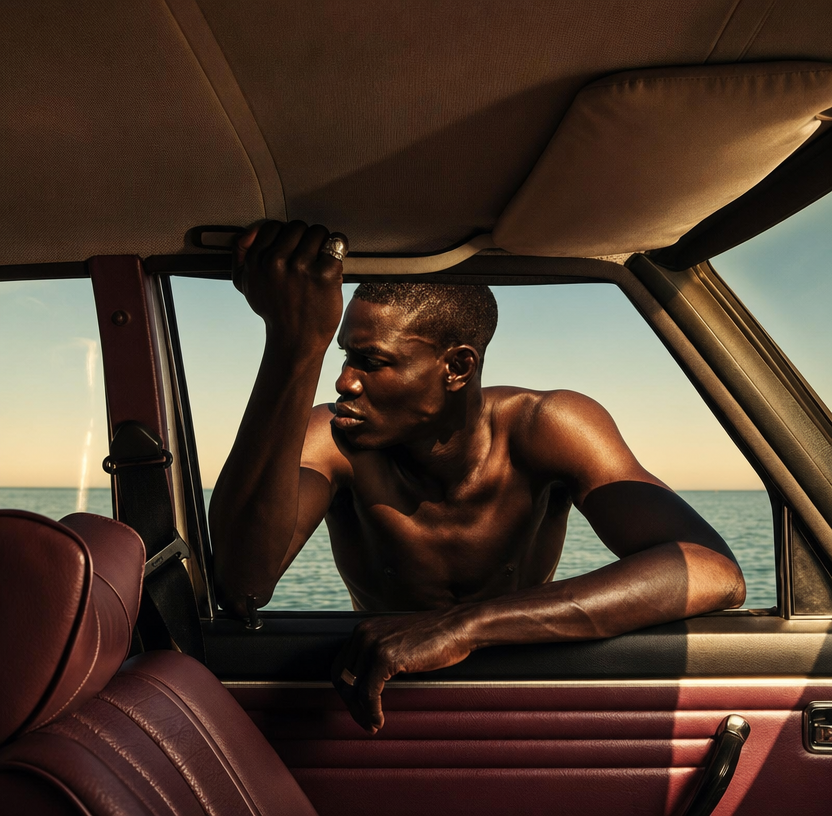
Shirtless Man, Vintage Car, Coastline Light
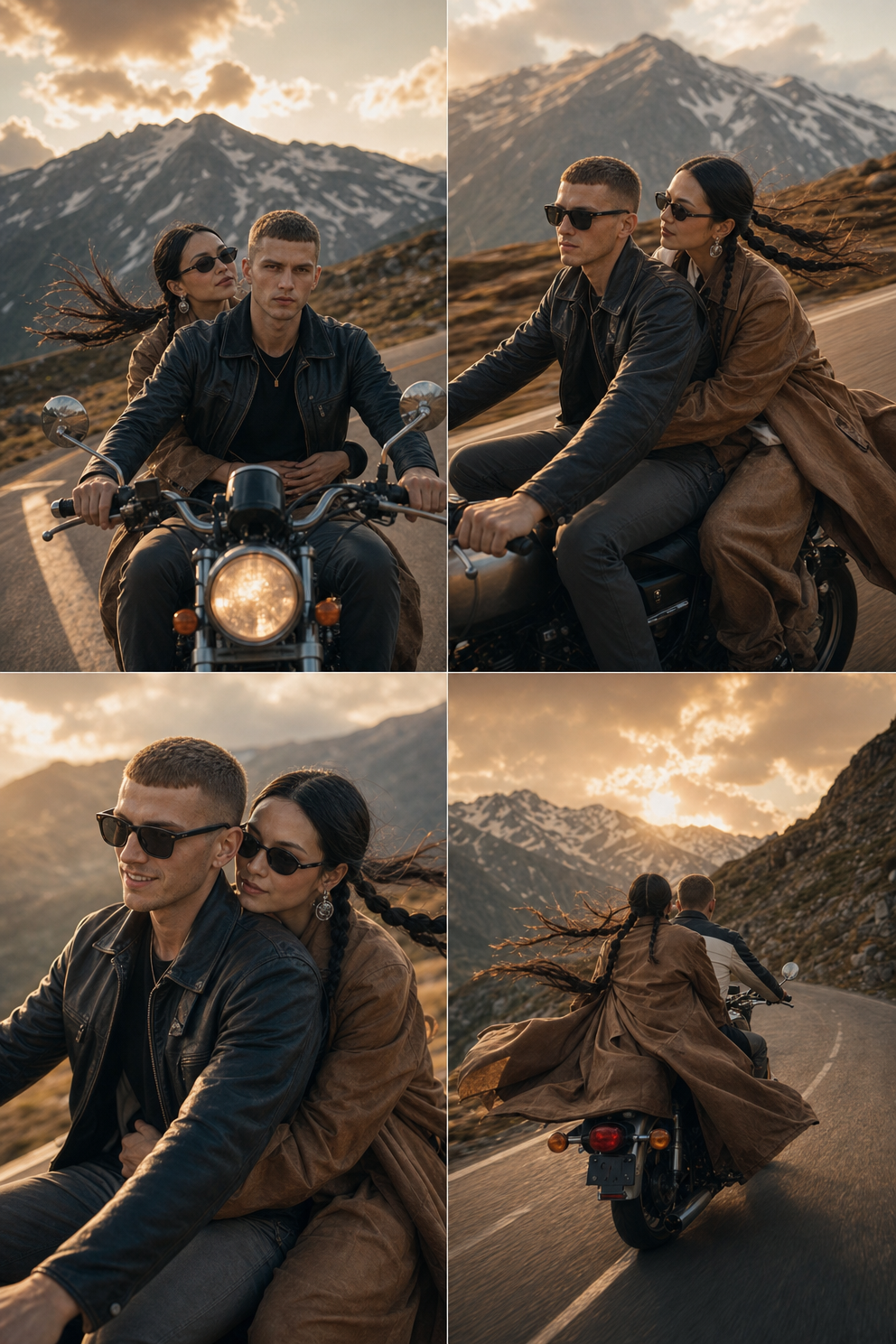
Golden-hour couple rides a classic bike
Deep-blue Audi concept in brutalist garage
Red Ferrari F1 Panning Speed Shot