
Why this works
The centered businessman, sleek modern desk, and “cinematic framing” establish a controlled, symmetrical corporate composition, while “shallow depth of field” keeps attention on his face, glasses, and laptop rather than the office. “Cool blue ambient lighting with subtle warm highlights,” reinforced by the “warmer screen glow” reflected in his glasses, creates the blue-gray palette with a precise point of warmth. The “floor-to-ceiling windows” and “blurred city skyline at night with bright building lights” add depth and scale without competing with the focused subject, while “ultra-realistic textures and reflections” makes the glass, desk, documents, and tumbler feel tactile.
FAQ
→How do I make the businessman feel more isolated and intense?
Replace “small stack of documents and a crystal tumbler of water rest on the desktop” with “a nearly empty desk with only the laptop and one illuminated document,” and change “high-end professional mood” to “tense, solitary late-night mood.” Keep “shallow depth of field,” but add “deep shadow around the edges of the frame” to concentrate attention on his face and screen.
→How do I make the city skyline more prominent without losing the office setting?
Change “blurred city skyline at night with bright building lights” to “a sharply visible, expansive city skyline with dense illuminated towers,” and replace “shallow depth of field” with “moderate depth of field keeping both the businessman and skyline recognizable.” Move the subject from “centered” to “right third of the frame” so the windows occupy more visual space.
→How do I create a series of variations from this corporate night scene?
Keep “photorealistic corporate photography,” “floor-to-ceiling windows,” and “cinematic framing” fixed, then vary the subject action and accent color: replace “working on a laptop” with “reviewing printed contracts,” “speaking into a phone,” or “standing beside the desk,” and replace “warmer laptop glow” with “muted amber desk lamp,” “green monitor glow,” or “red neon reflections.” Preserve “cool blue ambient lighting” to maintain a consistent visual identity across the series.
Learn the technique behind this
- Why can't AI spell, and how do I get readable text in an image? — Older diffusion models had no character-level representation of text, so they produced letterform-shaped texture instead of words.
- How should a prompt be structured, and does word order matter? — A prompt that behaves predictably names one subject first, then what it is doing, then where, then the light, then the lens or medium, then the style.
- Why does the model ignore parts of my prompt? — Ignored instructions are almost always conflicts, counts, or spatial relationships — three things current models handle badly — rather than the model failing to read you.
Related prompts
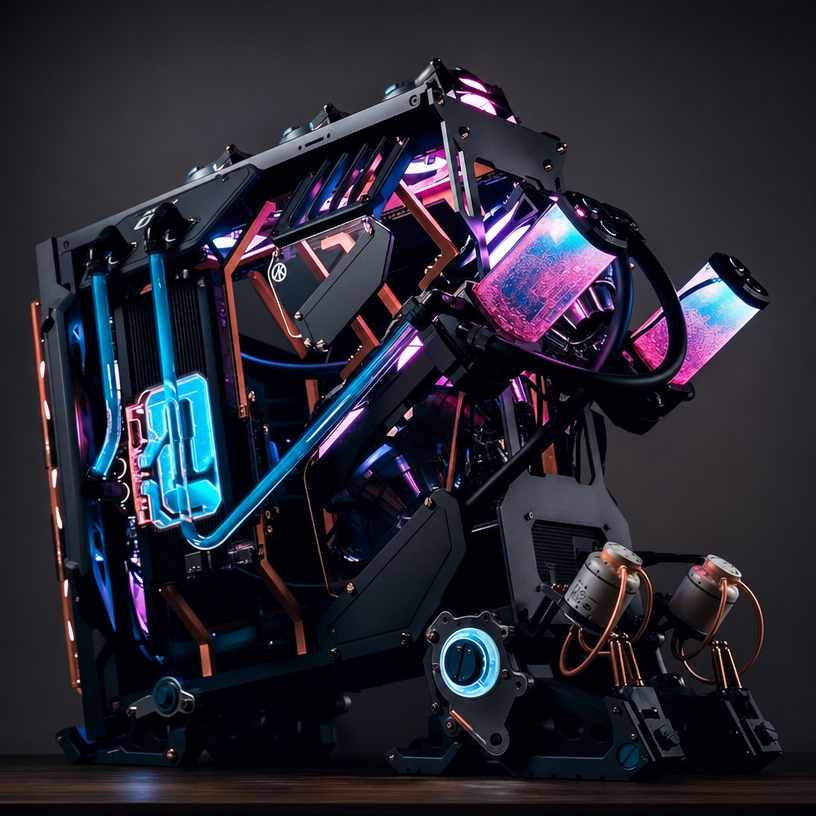
Open-Frame Futuristic PC With Blue LEDs
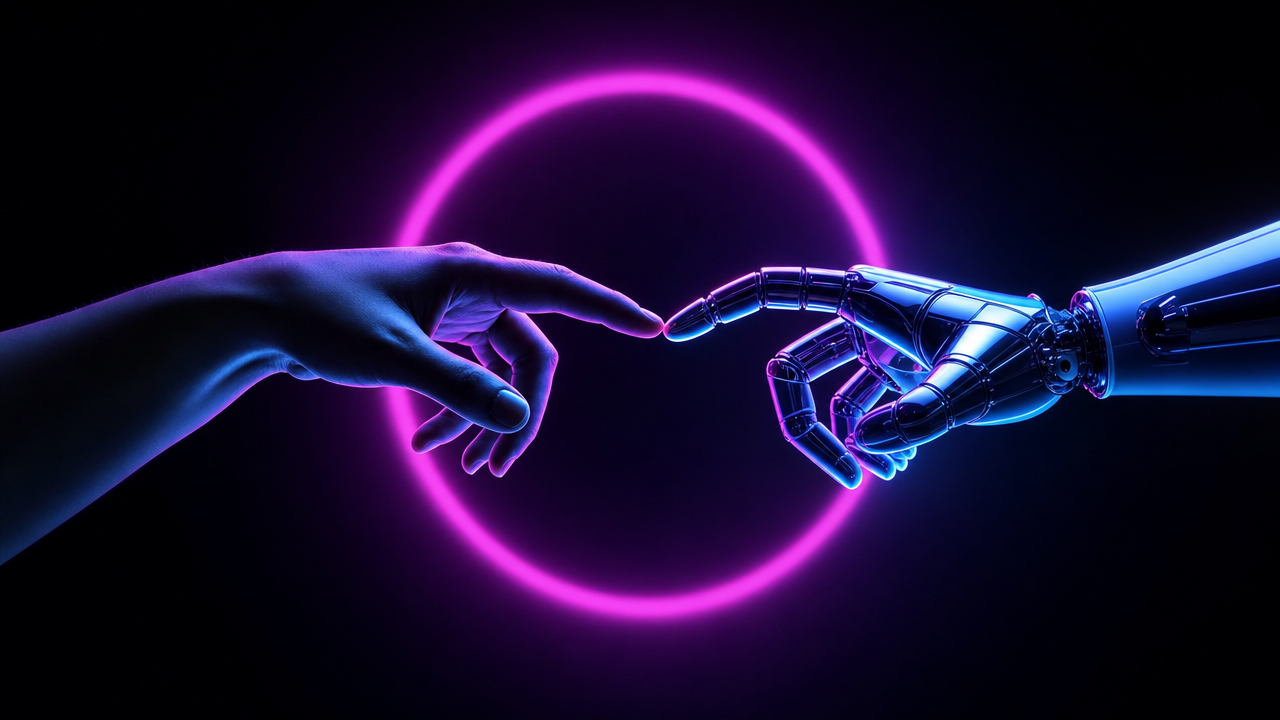
Magenta-Cyan Hands Nearly Touch

Magenta-Cyan Holographic Control Room

Blue holographic cube on server room pedestal