Same prompt, generated with each model separately — click one to see how it holds up.
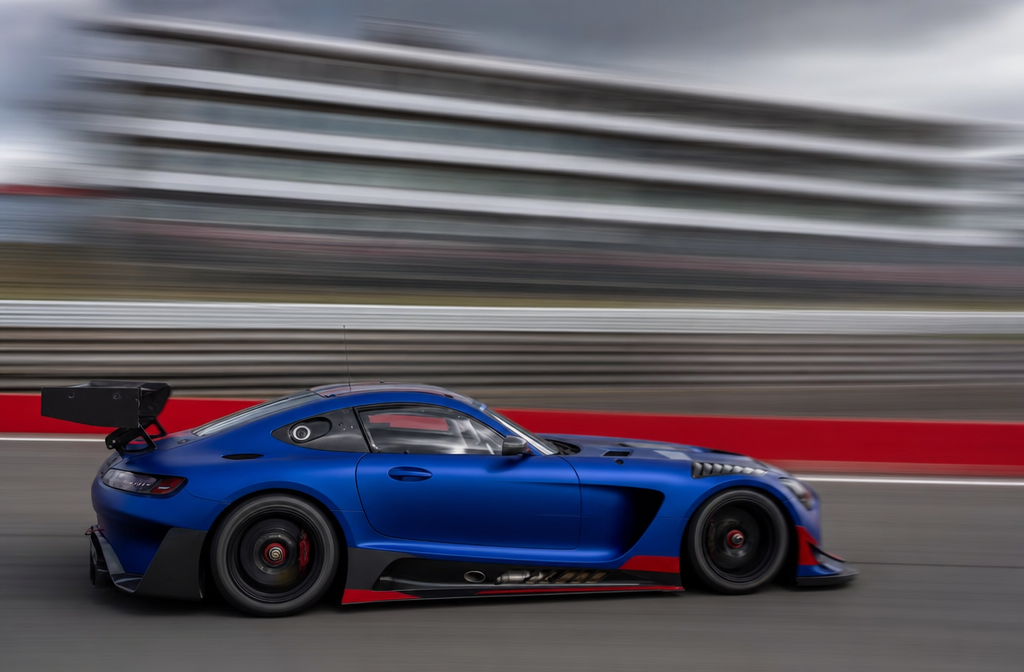
Why this works
“Low-angle side view” gives the blue Mercedes-AMG GT3 EVO visual authority, while “crisp focus on the car” separates its sharp bodywork from the “motion blur trailing behind.” The phrase “blurred grandstands and trackside barriers” establishes lateral movement and keeps the composition candid-action rather than staged. “Overcast daylight” produces the restrained gray-and-black field seen around the car, with the motorsport livery supplying the strongest red accent and reinforcing the energetic racing mood.
FAQ
→How do I make the Mercedes-AMG GT3 EVO feel larger and more dominant in the frame?
Replace “low-angle side view” with “extreme low-angle three-quarter front view” and add “car fills most of the frame, front splitter close to the bottom edge.” Keep “crisp focus on the car” so the enlarged vehicle remains the visual anchor.
→How do I create a warmer, more dramatic sunset version of this racing scene?
Replace “overcast daylight” with “low golden-hour sunlight with long shadows and warm orange highlights,” and change “gray, black, red” emphasis by adding “warm amber reflections across the blue bodywork.” Retain “motion blur trailing behind” to preserve the high-speed directionality.
→How do I turn this prompt into a series of varied race images while keeping the same car?
Keep “blue Mercedes-AMG GT3 EVO race car” unchanged, then rotate the camera phrase among “front three-quarter panning shot,” “rear three-quarter chase view,” and “high-angle cornering view.” Swap “blurred grandstands and trackside barriers” for settings such as “wet pit lane,” “night circuit under floodlights,” or “tight hairpin with tire barriers,” while retaining “photorealistic motorsport photography” for visual consistency.
Learn the technique behind this
- Why can't AI spell, and how do I get readable text in an image? — Older diffusion models had no character-level representation of text, so they produced letterform-shaped texture instead of words.
- How should a prompt be structured, and does word order matter? — A prompt that behaves predictably names one subject first, then what it is doing, then where, then the light, then the lens or medium, then the style.
- Do negative prompts work, and what should go in one? — Negative prompts work on models that support a separate negative conditioning channel — mainly Stable Diffusion and FLUX-family models.
Related prompts
Shirtless Man, Vintage Car, Coastline Light
Golden-hour couple rides a classic bike
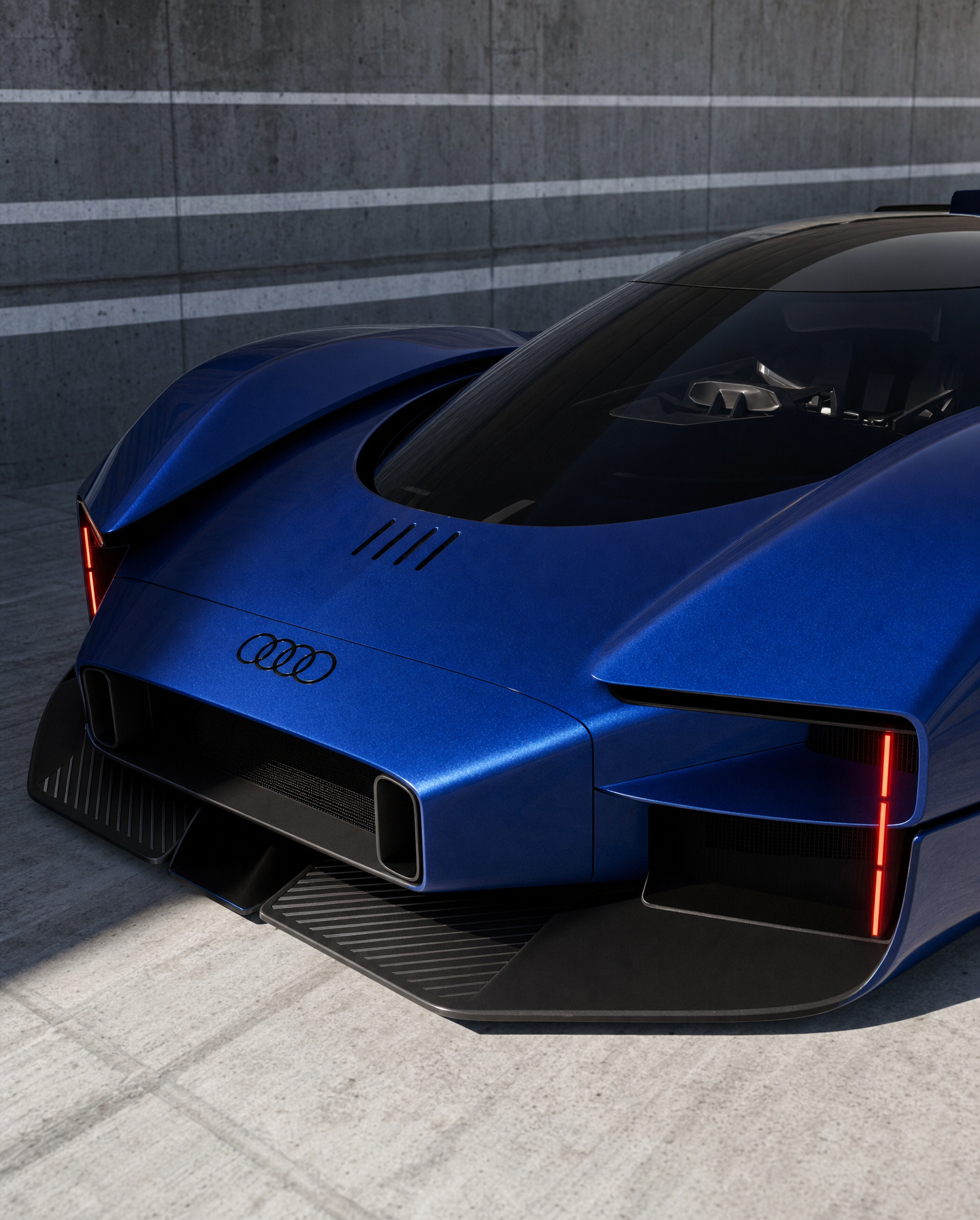
Deep-blue Audi concept in brutalist garage
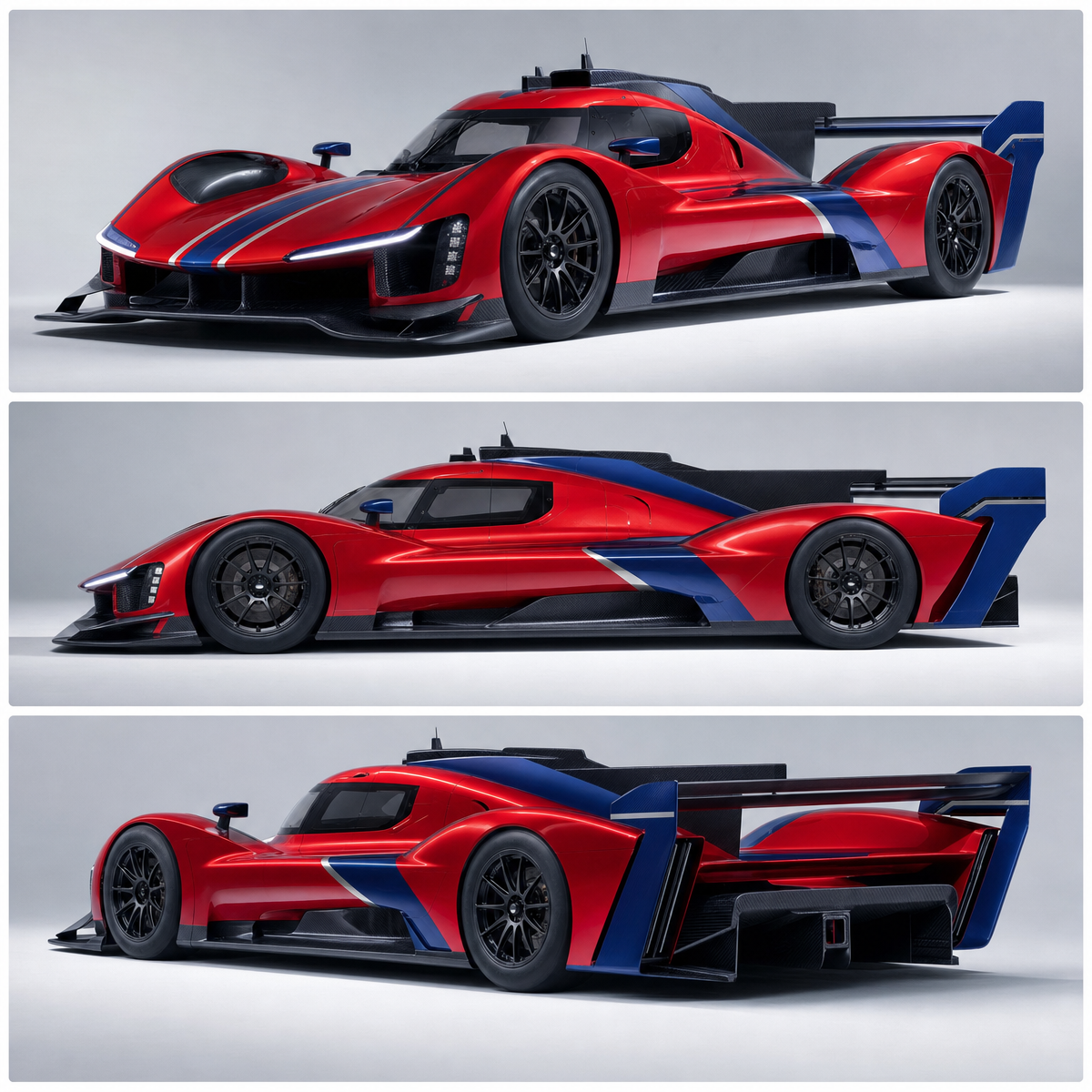
Red endurance race car with blue silver accents