Same prompt, generated with each model separately — click one to see how it holds up.
Why this works
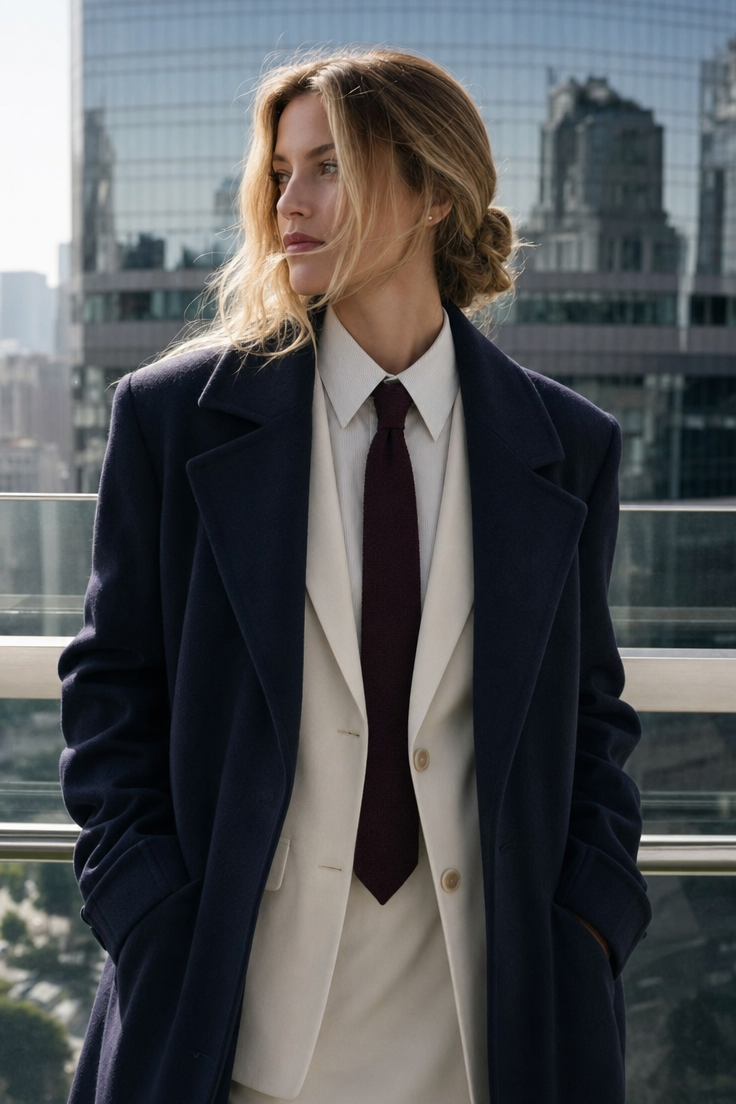
The restrained urban composition comes from “city balcony with tall glass skyscrapers,” “urban minimalist mood,” and “mid-torso upward framing,” which leave the model dominant while the shallow depth of field reduces the gray skyline to a clean backdrop. The cool, controlled mood is anchored by “cinematic cool natural light” and the model’s “sideways confident gaze,” while “deep navy,” “light cream,” and “dark burgundy tie” create a muted beige-gray harmony with a precise crimson accent. “Ultra-detailed fabric textures,” “photorealistic high-fashion editorial,” and “polished luxury campaign aesthetic” direct attention to the overcoat, suit jacket, pinstriped shirt, and tie rather than treating the clothing as generic styling.
FAQ
→How do I make the model’s face and expression more central?
Replace “camera framing from mid-torso upward” with “tight head-and-shoulders portrait” and change “sideways confident gaze” to “direct, unwavering gaze into the camera.” Keep “shallow depth of field,” but add “sharp focus on the eyes” so the face takes priority over the skyline and clothing.
→How do I shift this from a cool minimalist campaign to a warmer, more dramatic mood?
Replace “cinematic cool natural light” with “warm late-afternoon golden light with deep directional shadows,” and change “urban minimalist mood” to “intense, cinematic evening mood.” Swap “deep navy overcoat” for “burnt umber leather trench coat” and “dark burgundy tie” for “rich crimson silk tie” to reinforce the warmer palette.
→How do I create a series of variations while keeping the same luxury editorial identity?
Keep “photorealistic high-fashion editorial,” “polished luxury fashion campaign,” “ultra-detailed fabric textures,” and “high-end styling” unchanged. Replace only “city balcony with tall glass skyscrapers” with settings such as “rainy rooftop overlooking neon towers,” “marble hotel terrace,” or “brutalist concrete plaza,” and vary “deep navy overcoat” with “charcoal wool cape,” “ivory trench coat,” or “emerald velvet blazer” while preserving “sleek low bun” and “hands remain in pockets” as recurring series cues.
Learn the technique behind this
- Why can't AI spell, and how do I get readable text in an image? — Older diffusion models had no character-level representation of text, so they produced letterform-shaped texture instead of words.
- How should a prompt be structured, and does word order matter? — A prompt that behaves predictably names one subject first, then what it is doing, then where, then the light, then the lens or medium, then the style.
- Why does AI get hands and faces wrong, and how do I fix it? — Hands fail because they're small in frame, extremely variable in pose, and self-occluding — the model has less usable signal per pixel than for any other body part.
Related prompts
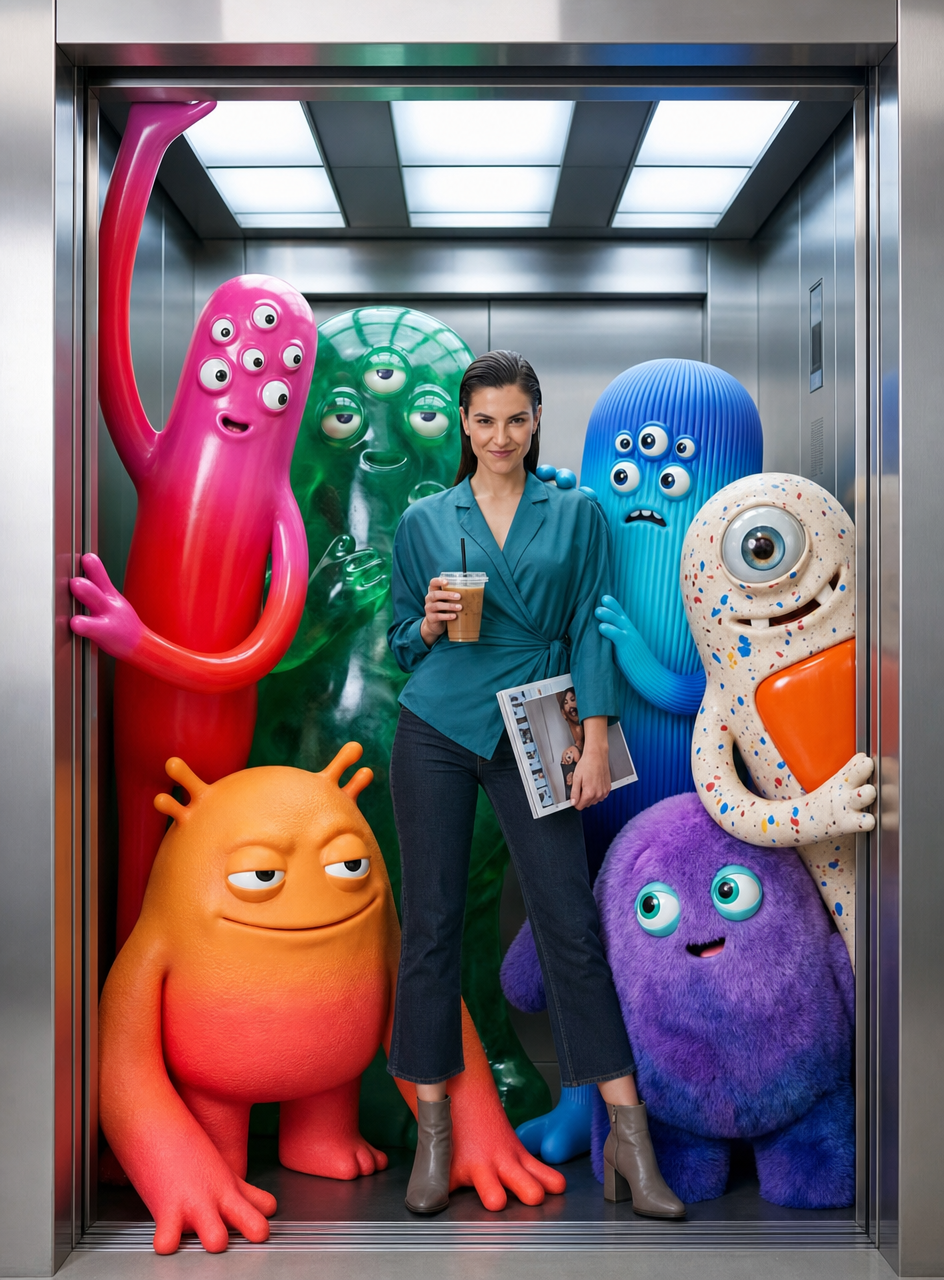
Teal fashion editorial in monster-filled lift
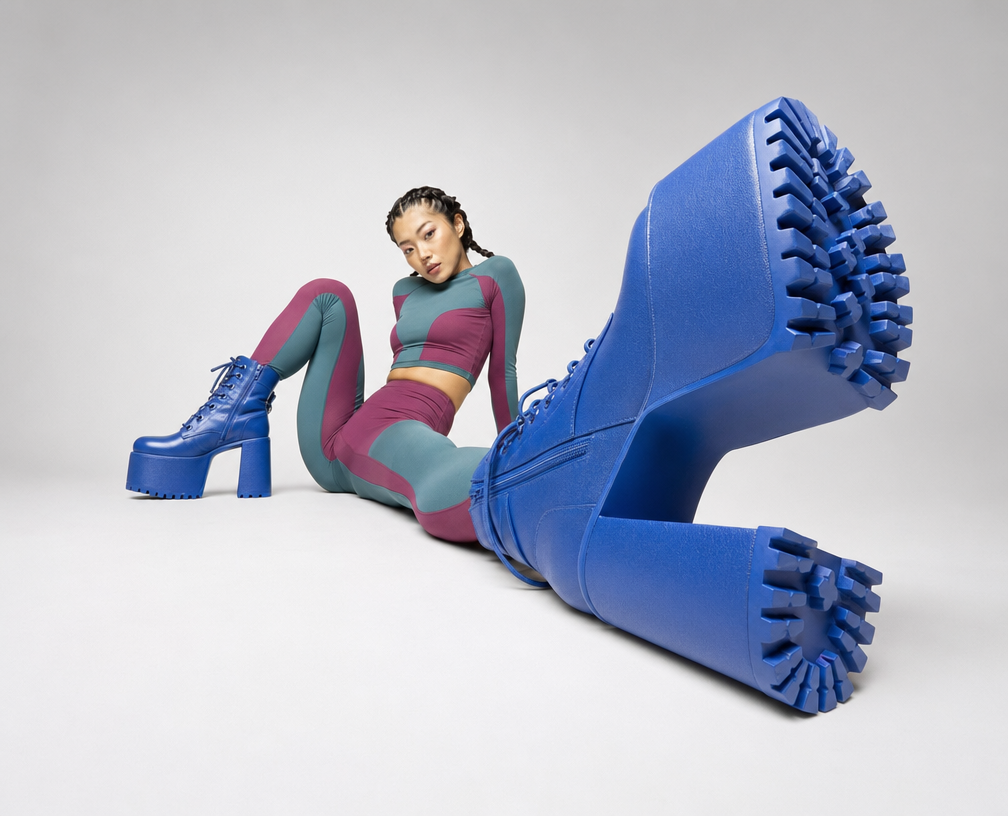
Cobalt Boots in Sleek Studio Edit
Silhouette Influencer by Sunlit Window
Sunlit editorial on striped beach towel