Why this works
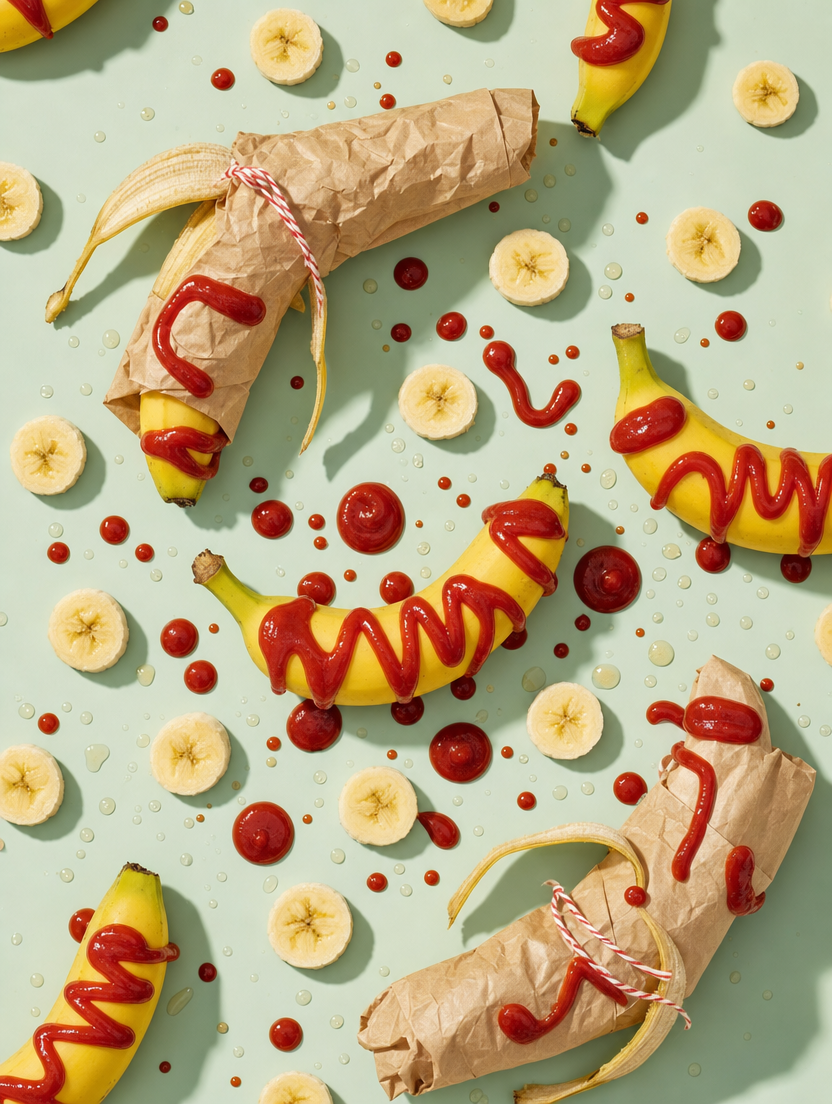
“Top-down flat-lay” makes the joke instantly legible as a graphic overhead arrangement, while “bananas arranged like hot dogs” gives the central rolls their clear visual hierarchy. “Crinkled brown kraft paper,” “red-and-white twine,” and “ketchup-like drizzle” add tactile contrast and the dominant yellow-and-red palette keeps the image cheerful; “bright studio lighting” with “crisp shadows” separates each object against the soft mint-green background. “Banana slices and dollops of sauce… sprinkled around the main hot-dog banana rolls” supplies deliberate repetition and balance without competing with the central subject.
FAQ
→How do I make the banana hot dogs more central and prominent?
Replace “Banana slices and dollops of sauce are sprinkled around the main hot-dog banana rolls” with “a tight, centered cluster of three oversized banana hot-dog rolls, with only a few garnish pieces near the edges.” Keep “Top-down flat-lay” and add “the central rolls fill most of the frame” to strengthen scale and hierarchy.
→How do I shift this from cheerful commercial styling to a darker, more dramatic mood?
Replace “soft mint-green background” with “deep charcoal-green background,” and replace “bright studio lighting, crisp shadows” with “single hard side light, long dramatic shadows, and selective highlights.” Change “whimsical, fun, cheerful mood” to “surreal, mischievous, late-night food editorial mood” while retaining the yellow bananas and red sauce for controlled color contrast.
→How do I turn this into a series of similar food-play images with different subjects?
Keep the structural phrases “Top-down flat-lay,” “wrapped in crinkled brown kraft paper and red-and-white twine,” “bright studio lighting,” and “editorial commercial food photography.” Replace “bananas arranged like hot dogs” with a new food-object pairing such as “carrot sticks arranged like French fries” or “cucumber halves styled like sushi rolls,” then replace “ketchup-like drizzle” with a sauce appropriate to the new subject.
Learn the technique behind this
- Why can't AI spell, and how do I get readable text in an image? — Older diffusion models had no character-level representation of text, so they produced letterform-shaped texture instead of words.
- How should a prompt be structured, and does word order matter? — A prompt that behaves predictably names one subject first, then what it is doing, then where, then the light, then the lens or medium, then the style.
- Why does the model ignore parts of my prompt? — Ignored instructions are almost always conflicts, counts, or spatial relationships — three things current models handle badly — rather than the model failing to read you.
Related prompts
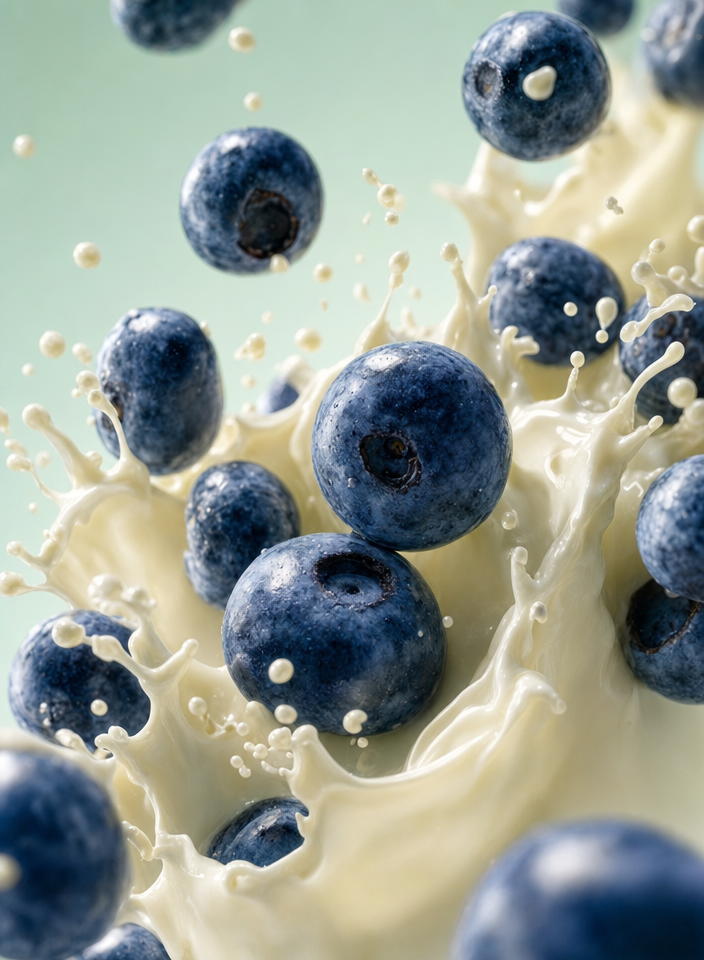
Blueberries Bursting Into Vanilla Cream
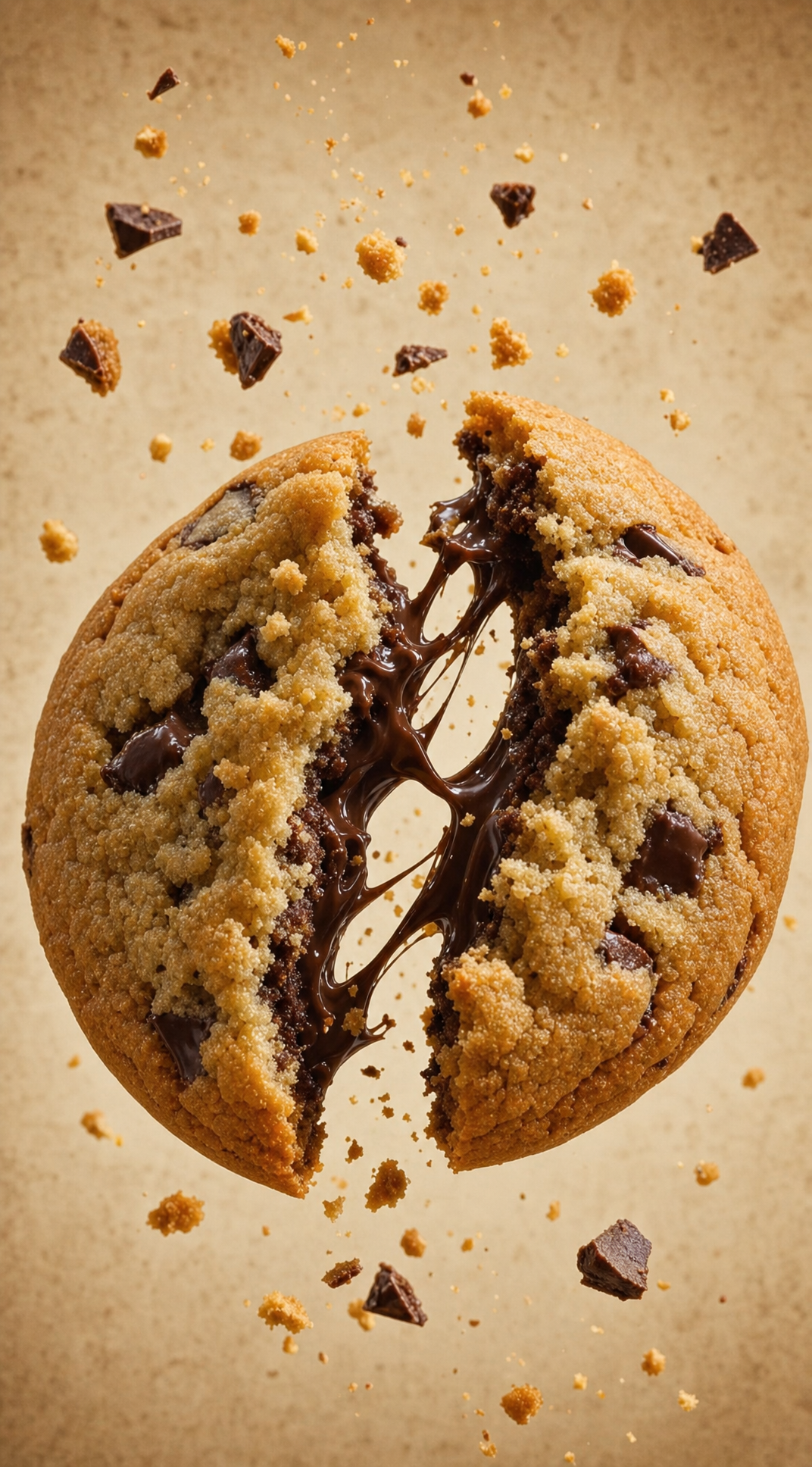
Chocolate Filled Cookie Splitting Midair With Dark Drip
Partially Peeled Banana on Blue
Banana slices in cool milk splash background