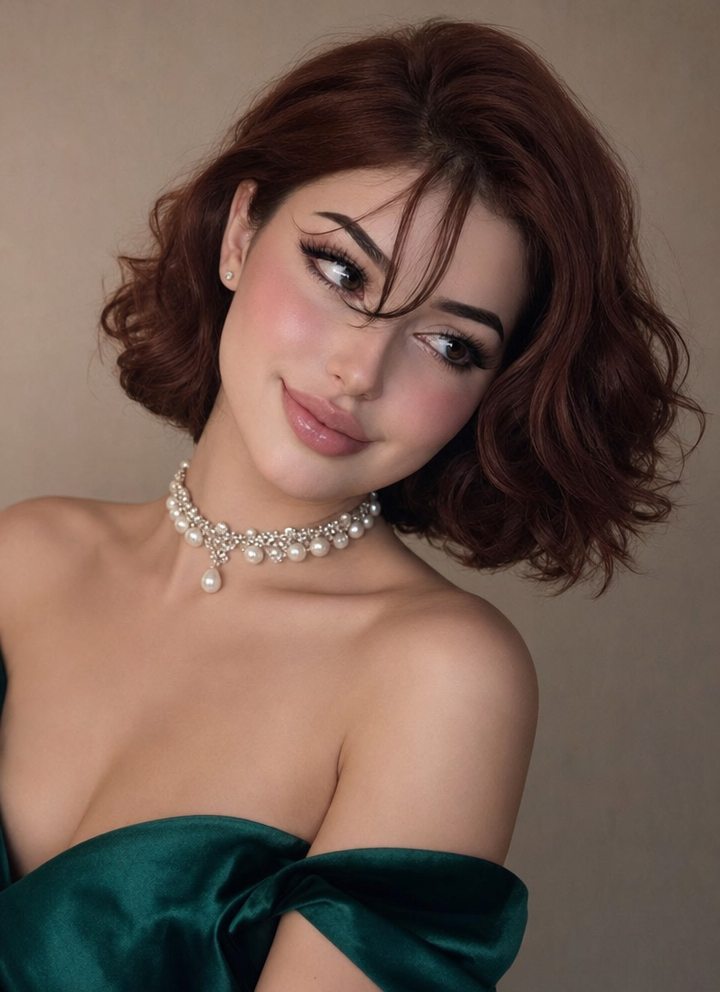
Why this works
The full-body editorial framing keeps the ballerina’s en pointe posture and raised arm legible, while “hanging flower garlands” and “loose petals floating downward” create a layered vertical composition around her. The dreamy romantic mood is anchored by “soft, diffused lighting with a slightly cooler, moonlit tint,” “gentle haze,” and “delicate bokeh,” not by the pale palette alone. “Shimmering white tutu with pale blush petal layers” and the cream-and-soft-pink setting produce a restrained beige-white harmony, while “shallow depth of field” separates the realistic skin and fabric textures from the softened floral background.
FAQ
→How do I make the ballerina feel more dramatic and less dreamy?
Replace “soft, diffused lighting with a slightly cooler, moonlit tint” with “hard directional spotlight from camera left with crisp shadows,” and replace “dreamy romantic atmosphere” and “gentle haze” with “dramatic theatrical tension, high contrast, and clean air.” Keep “highly detailed realistic skin and fabric textures” to preserve the editorial realism.
→How do I make the floral environment more prominent than the dancer?
Change “Editorial fashion framing with shallow depth of field” to “wide full-body environmental composition with deep depth of field,” and replace “delicate bokeh” with “sharp, richly detailed hanging garlands extending across the studio.” Add “oversized cream and blush flowers framing the ballerina on both sides,” while retaining “ballerina standing en pointe” so the pose remains readable.
→How do I build a series of variations from this ballerina prompt?
Keep the fixed core phrases “ballerina standing en pointe,” “shimmering white tutu,” and “highly detailed realistic skin and fabric textures,” then swap the setting and lighting as controlled variables. For example, replace “pink-and-cream floral studio dreamscape” with “misty winter conservatory with frosted branches” and “moonlit tint” with “cool blue dawn light,” or use “sunlit Mediterranean courtyard” with “warm golden-hour side-lighting”; preserve “editorial fashion photograph” and the full-body framing across every version.
Learn the technique behind this
- Why can't AI spell, and how do I get readable text in an image? — Older diffusion models had no character-level representation of text, so they produced letterform-shaped texture instead of words.
- How should a prompt be structured, and does word order matter? — A prompt that behaves predictably names one subject first, then what it is doing, then where, then the light, then the lens or medium, then the style.
- Do negative prompts work, and what should go in one? — Negative prompts work on models that support a separate negative conditioning channel — mainly Stable Diffusion and FLUX-family models.
Related prompts
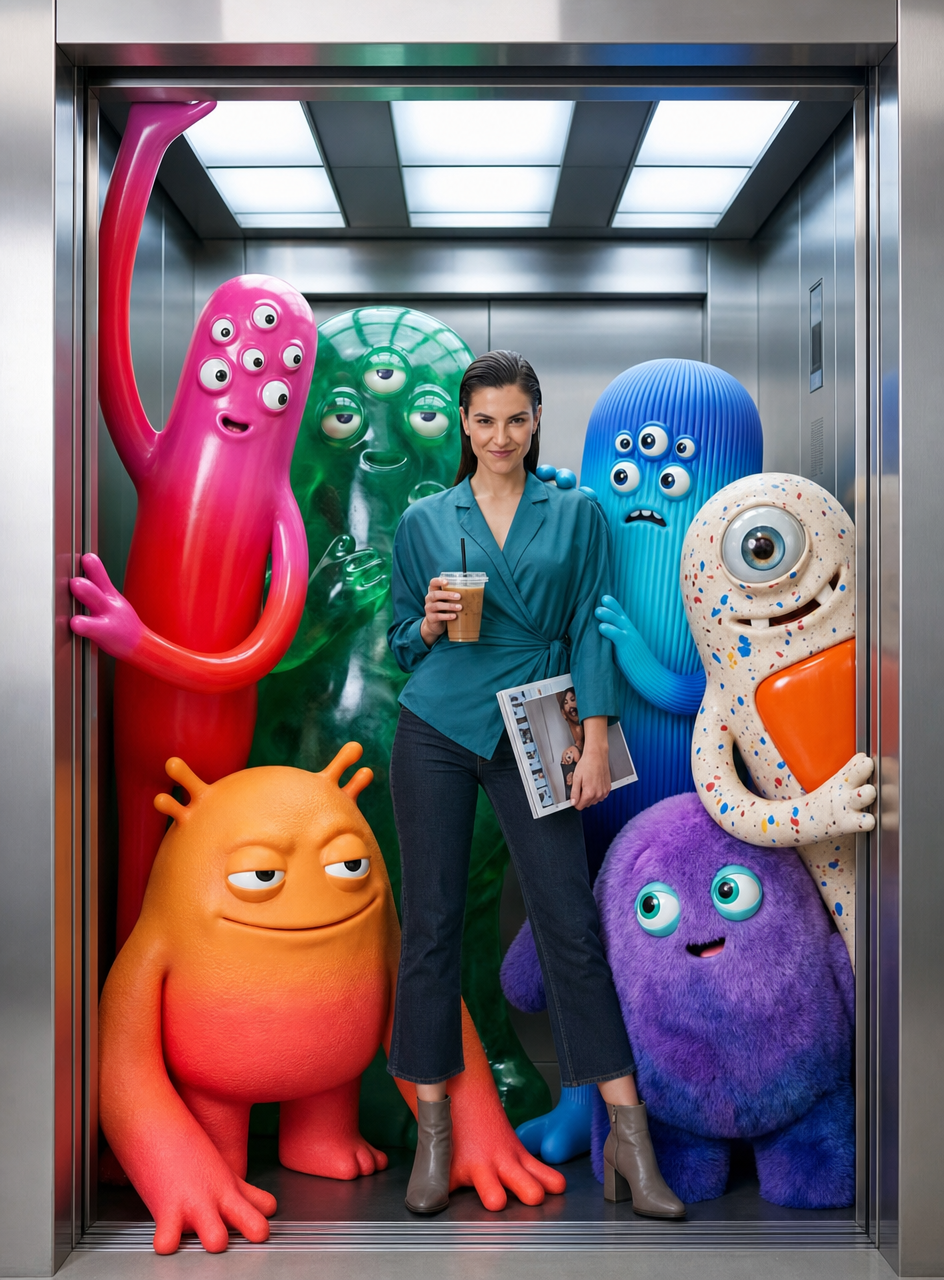
Teal fashion editorial in monster-filled lift
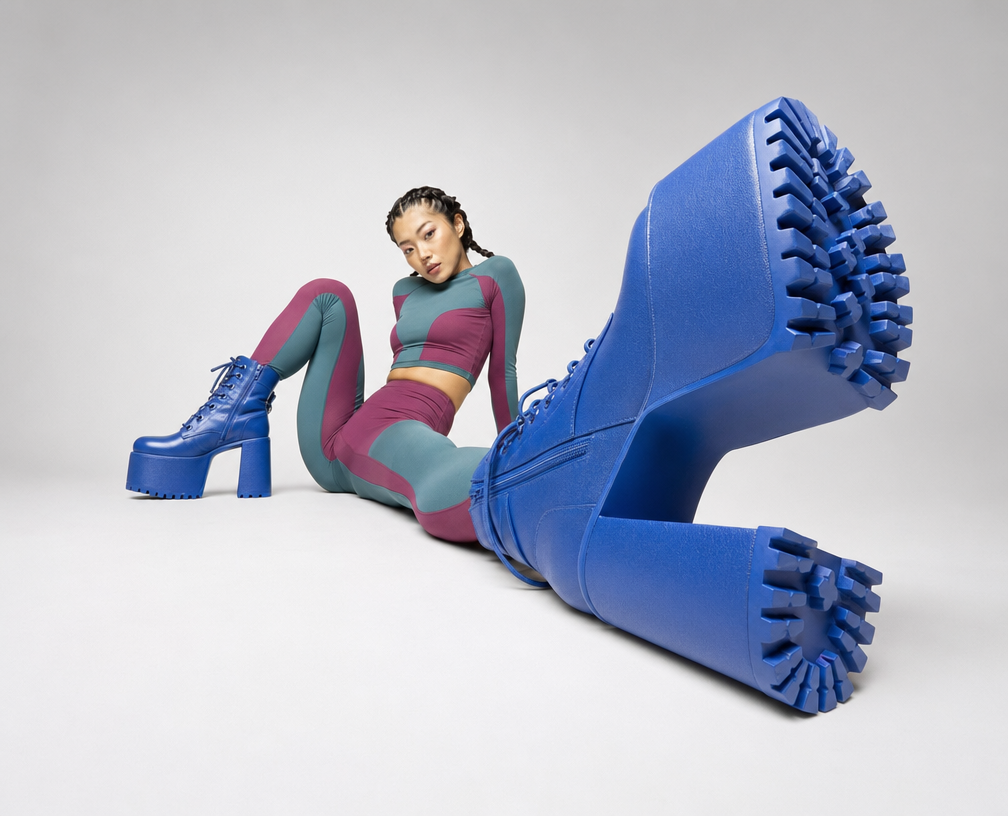
Cobalt Boots in Sleek Studio Edit
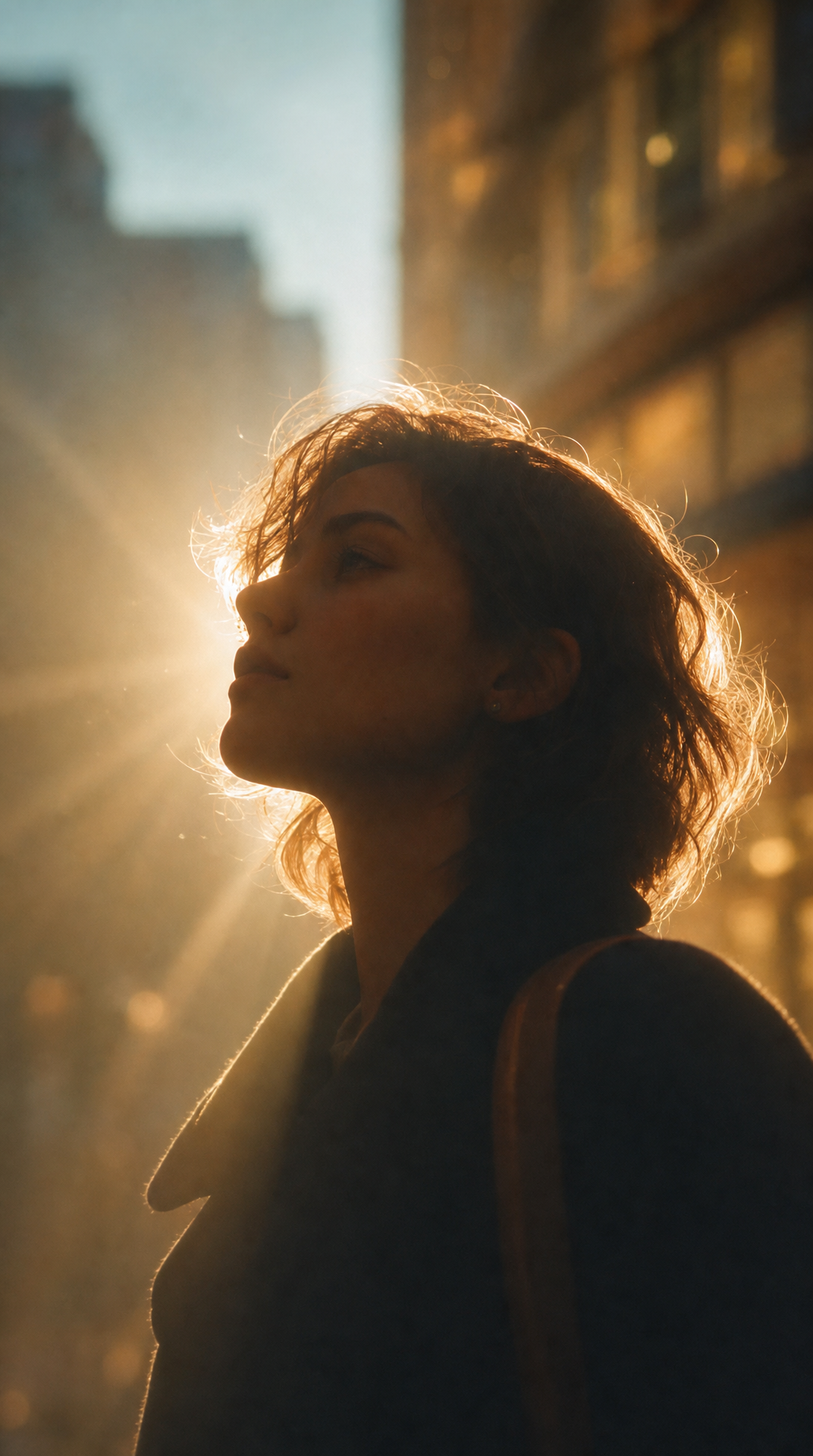
Silhouette Influencer by Sunlit Window
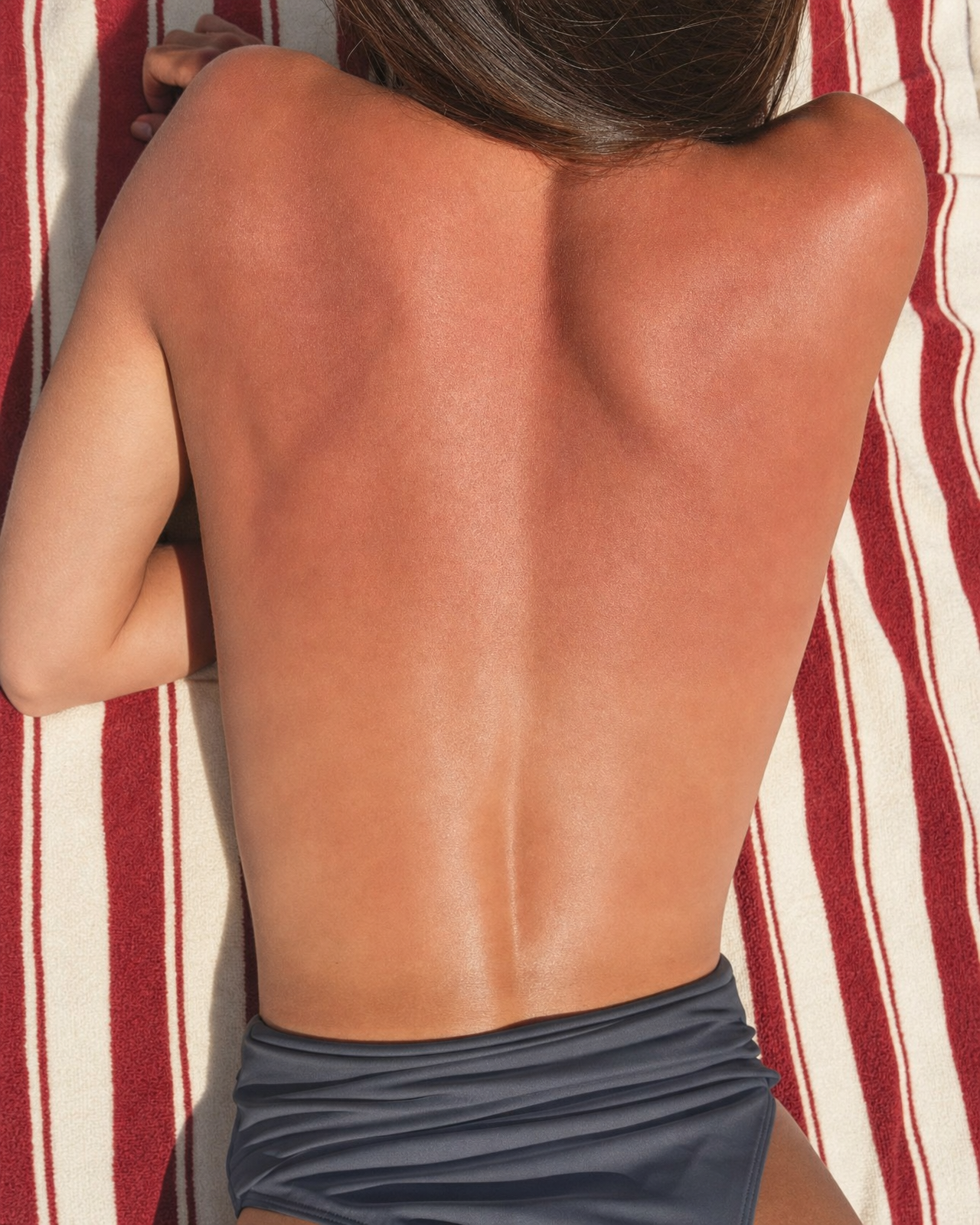
Sunlit editorial on striped beach towel