Why this works
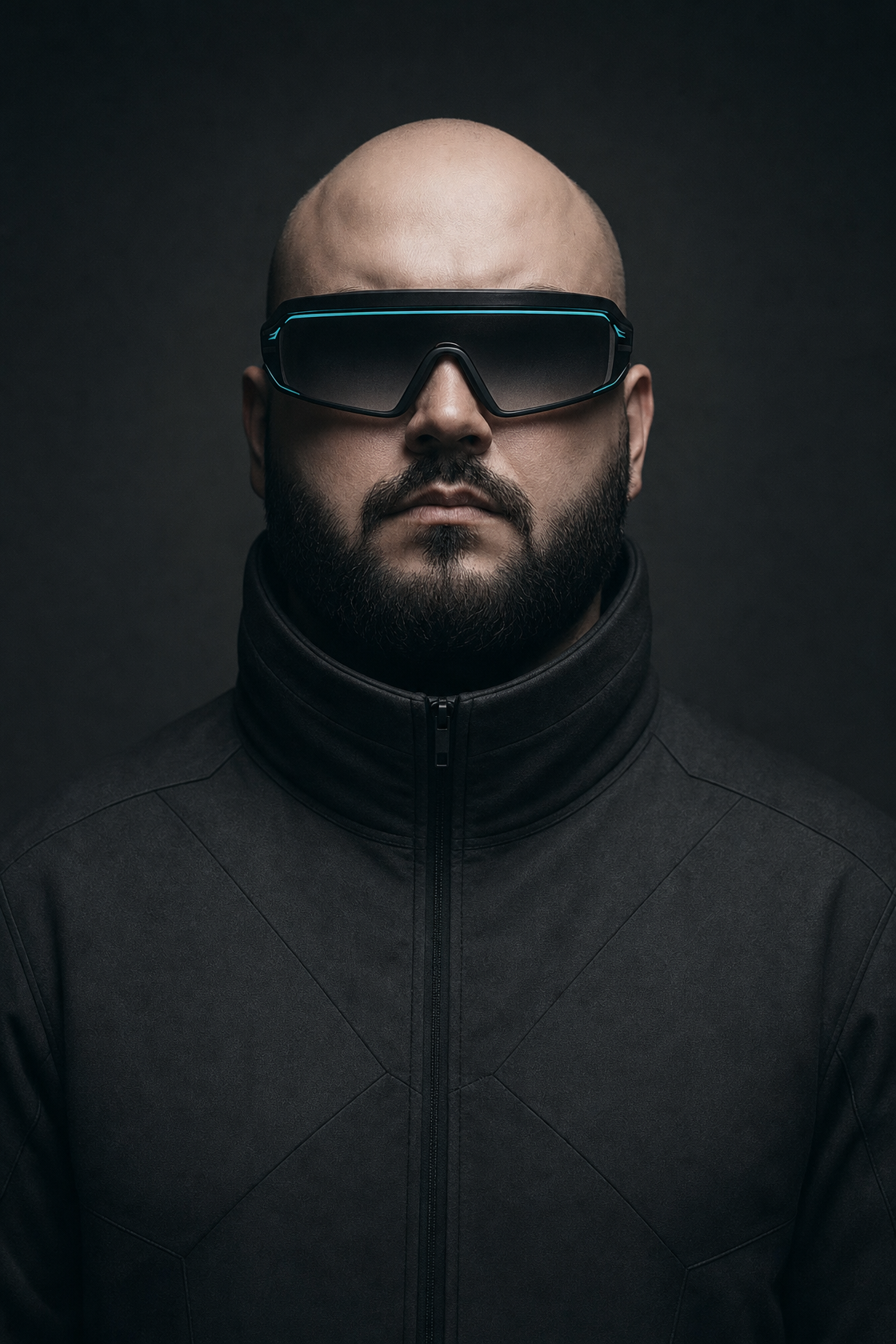
The centered, tightly framed mid-close-up and “single bald man from the upper chest up” make the face, sunglasses, and jacket collar occupy nearly the entire portrait-closeup, while “facing directly forward” reinforces the rigid symmetry. “Deep navy and minimal” paired with “matte charcoal” produces the restrained gray-dominant palette, and the “thin teal accent strips” provide the only sharp color interruption. The sleek, stoic mood comes from “neutral, stoic expression,” “dramatic low-key studio lighting,” and “gentle soft-shadow falloff,” while “clear-to-dark gradient lenses” conceal the eyes and make the futuristic sunglasses the primary focal point.
FAQ
→How do I make the sunglasses more visually dominant?
Replace “high-collar matte charcoal technical jacket” with “minimal matte charcoal jacket, mostly cropped out of frame,” and expand “oversized futuristic wraparound sunglasses” to “very large futuristic wraparound sunglasses dominating the face, reflective gradient lenses with bright teal edge accents.” Keep “fully concealing the eyes” to preserve their graphic authority.
→How do I shift this from moody and stoic to brighter and more approachable?
Replace “dramatic low-key studio lighting” and “deep navy and minimal” with “bright, even high-key studio lighting” and “clean pale gray studio background.” Change “neutral, stoic expression” to “subtle confident smile” and “clear-to-dark gradient lenses” to “lightly tinted translucent lenses” so the expression and eyes read more openly.
→How do I build a consistent series with different futuristic characters?
Keep the fixed phrases “centered, tightly framed mid-close-up,” “straight-on gaze,” “deep navy minimal studio background,” “dramatic low-key studio lighting,” and “centered composition.” Swap only “bald man” and the clothing or eyewear descriptions, using controlled variants such as “short silver-haired woman,” “androgynous android,” or “older man with a shaved head,” while retaining “ultra-realistic professional fashion photography” and “sharp focus, high detail” for visual continuity.
Learn the technique behind this
- How should a prompt be structured, and does word order matter? — A prompt that behaves predictably names one subject first, then what it is doing, then where, then the light, then the lens or medium, then the style.
- Why can't AI spell, and how do I get readable text in an image? — Older diffusion models had no character-level representation of text, so they produced letterform-shaped texture instead of words.
- Which aspect ratio should I use, and how does it change the image? — Aspect ratio determines what the model composes, not how it's cropped afterwards.
Related prompts
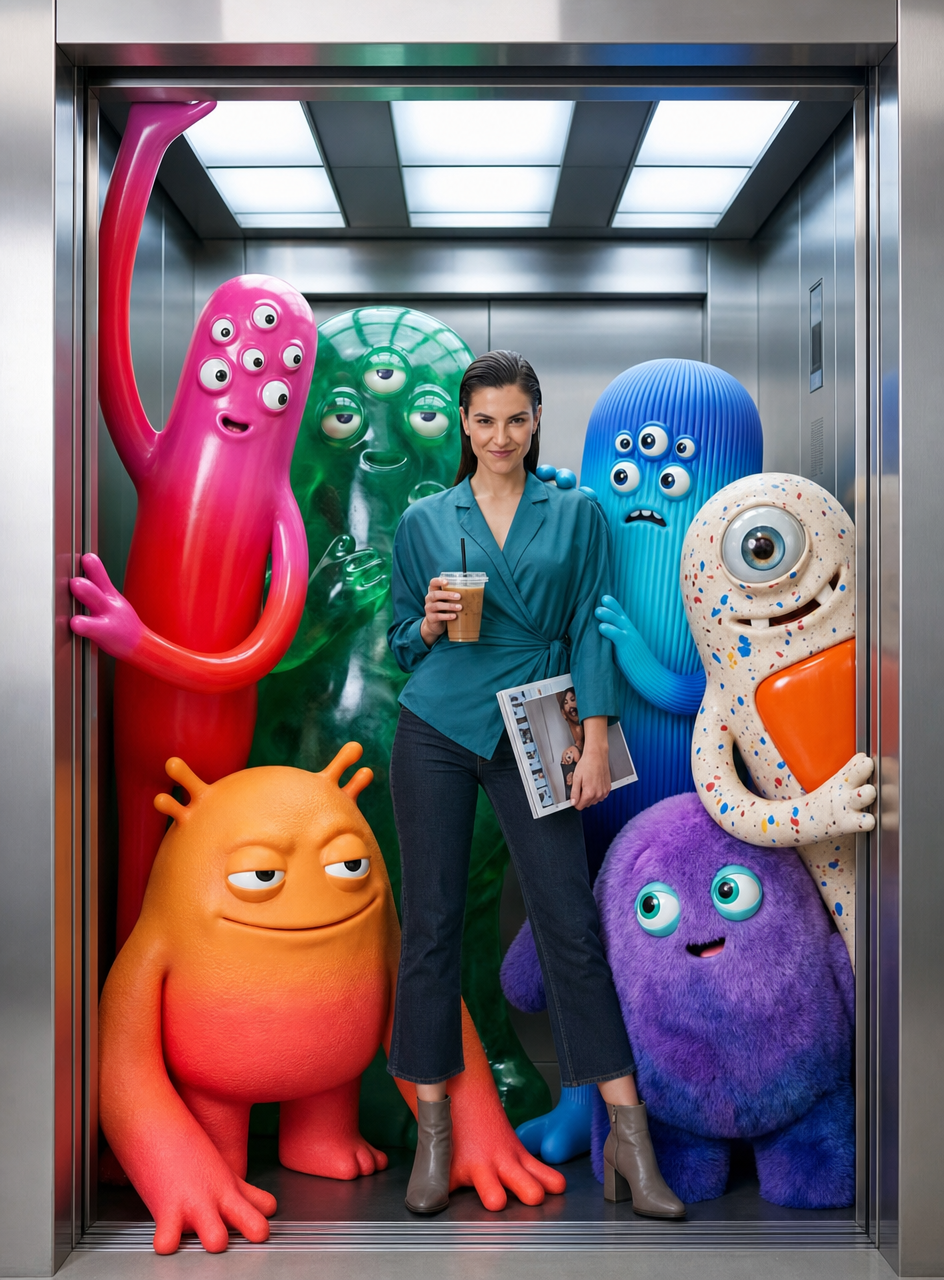
Teal fashion editorial in monster-filled lift
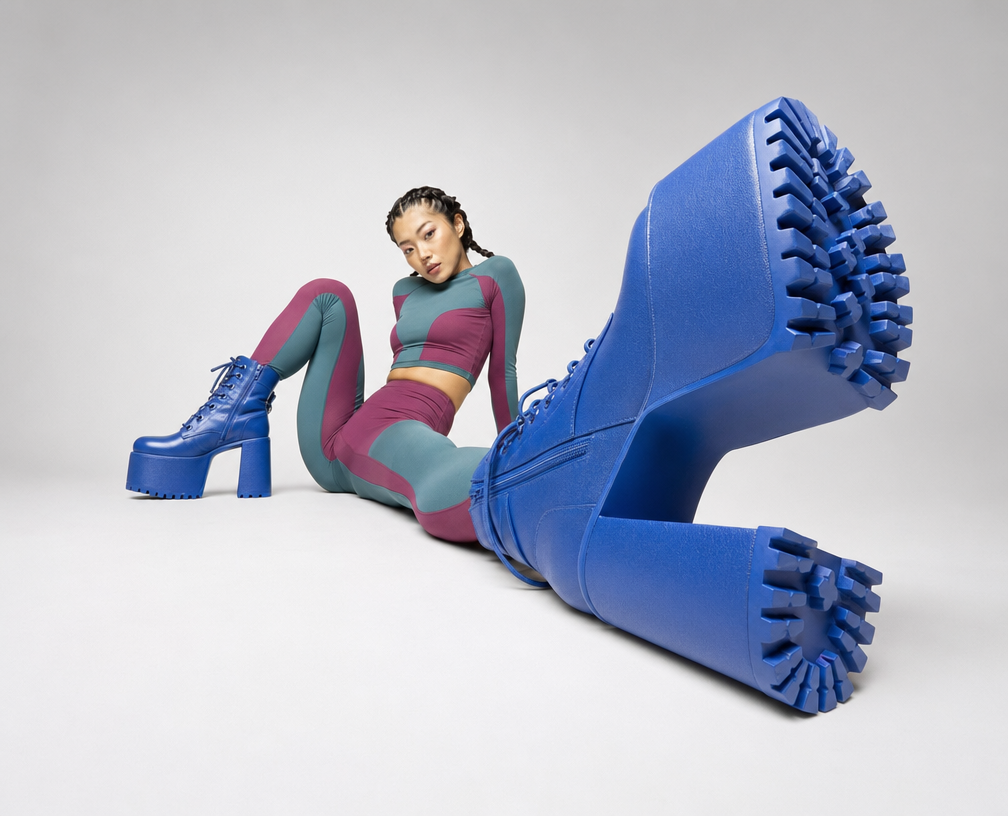
Cobalt Boots in Sleek Studio Edit
Silhouette Influencer by Sunlit Window
Sunlit editorial on striped beach towel